







































An electrolyte panel is a common blood test that measures four minerals your body relies on every minute: sodium, potassium, chloride, and bicarbonate. If you have just received your results and you are trying to work out what the numbers mean, you are in the right place. This guide explains what each electrolyte does, the normal range for each one, and what a high or low value can point to. You will also find a plain-language explanation of how the four results are read together, a list of warning signs that deserve prompt medical attention, and answers to the questions people ask most. The aim is to help you understand your report with confidence, not to replace the conversation you will have with your doctor.
What an electrolyte panel measures
An electrolyte panel checks the levels of the main electrolytes in your blood. Electrolytes are minerals that carry a small electrical charge once they dissolve in body fluid. That charge lets them do jobs no other minerals can: moving water in and out of cells, carrying nerve signals, triggering muscle contractions, and keeping your blood from becoming too acidic or too alkaline.
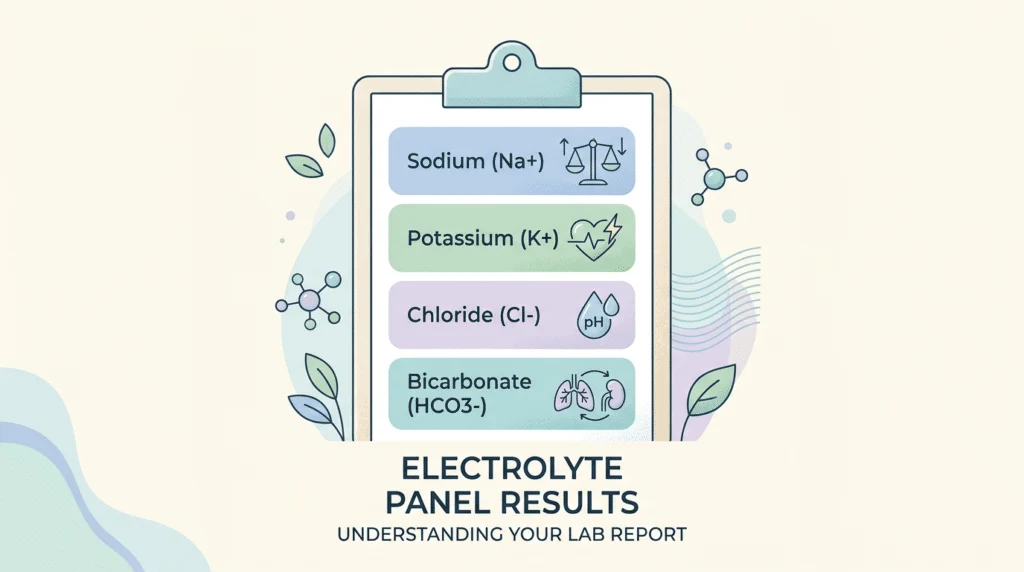
The standard panel reports four values. Sodium (Na+) controls how much water sits in the fluid around your cells. Potassium (K+) works mostly inside cells and is critical for a steady heartbeat. Chloride (Cl−) moves alongside sodium and helps maintain fluid and acid balance. Bicarbonate (HCO3−), often shown as “CO2” or “total CO2” on a report, helps keep your blood at the right acidity.
You will often see these same four markers inside a wider test. A basic metabolic panel and a comprehensive metabolic panel both include the electrolytes plus measures of kidney function and blood sugar. If decoding a full report feels overwhelming, our guide on how to read blood test results walks through the layout line by line.
Normal ranges on an electrolyte panel
Reference ranges vary slightly between laboratories and with the testing method, so always compare your figure to the range printed on your own report. As a general guide for adults, typical serum values look like this:
| Electrolyte | Typical adult range | Unit |
|---|---|---|
| Sodium (Na+) | 135–145 | mmol/L |
| Potassium (K+) | 3.5–5.0 | mmol/L |
| Chloride (Cl−) | 96–106 | mmol/L |
| Bicarbonate (CO2) | 22–29 | mmol/L |
A result just outside these numbers is not automatically a problem. Mild shifts are common and often temporary, caused by something as ordinary as not drinking enough water before the test. What matters is how far the value sits from the range, whether it is rising or falling over repeated tests, and what your symptoms and other results show. Children, older adults, and people who are pregnant can have ranges that differ from the figures above.
What your electrolyte panel results mean, marker by marker
Each electrolyte tells a slightly different story. Here is how to read a high or low value for each one, with the medical terms explained as they appear.
Sodium (Na+)
Sodium is the main driver of your body’s water balance. A low sodium level (hyponatraemia) is one of the most common abnormalities on the panel. It usually reflects too much water relative to sodium rather than a true lack of salt, and can follow heavy fluid loss, certain medications, heart or kidney conditions, or a hormone imbalance. A high sodium level (hypernatraemia) most often signals dehydration or not taking in enough fluid. Mild changes may cause nothing noticeable, while larger shifts can bring headache, nausea, confusion, or weakness as the brain is sensitive to sudden swings. The speed of the change often matters more than the number itself. For a fuller breakdown of causes and symptoms, see our dedicated page on the sodium blood test.
Potassium (K+)
Potassium keeps nerves firing and the heart beating in rhythm, which is why even small shifts get attention. A high potassium level (hyperkalaemia) can be linked to reduced kidney function or to medicines such as some blood pressure drugs. Sometimes a high reading is a false alarm: if red cells break open in the tube during or after the blood draw, they leak potassium and inflate the result, so an unexpectedly high value is often rechecked. A low potassium level (hypokalaemia) can follow vomiting, diarrhoea, or the use of water pills (diuretics), and may show up as muscle weakness, cramps, or fatigue. Because both very high and very low potassium can disturb the heartbeat, this is the one electrolyte most likely to prompt quick action when it falls well outside the range. Our potassium blood test guide covers this in more depth.
Chloride (Cl−)
Chloride tends to move in step with sodium, so its level often mirrors your fluid and acid balance. High chloride (hyperchloraemia) frequently appears with dehydration or with a type of acid build-up in the blood. Low chloride (hypochloraemia) can follow prolonged vomiting or fluid loss. Because chloride rarely changes on its own, doctors read it together with the other three markers rather than in isolation. The chloride blood test page explains the patterns.
Bicarbonate (CO2/HCO3−)
Bicarbonate is your blood’s main acid buffer. A low bicarbonate level can point to metabolic acidosis, meaning the blood is more acidic than it should be, sometimes from uncontrolled diabetes, severe diarrhoea, or kidney problems. A high bicarbonate level can reflect metabolic alkalosis, where the blood is too alkaline, often after sustained vomiting or with certain medications. Because the lungs and kidneys both help regulate this balance, an unusual bicarbonate value sometimes prompts a look at breathing-related causes as well. See the bicarbonate blood test guide for the detail.
Reading the results together: patterns and the anion gap
The real value of an electrolyte panel comes from reading the four numbers as a group, not one at a time. Certain combinations form recognisable patterns. High sodium with high chloride, for example, often points towards dehydration, which is why fluid status and blood pressure are part of the picture; you can read more about that link in our article on dehydration and blood pressure. A low bicarbonate paired with other shifts may signal an acid-base disturbance worth investigating.
To explore acid-base balance more precisely, your laboratory may calculate the anion gap. This is a simple subtraction using your electrolyte results: it estimates the difference between the positively and negatively charged minerals in your blood. A normal gap suggests the charges are reasonably balanced. A wider-than-normal gap can indicate that acids have built up, as happens in uncontrolled diabetes or kidney failure. You do not need to calculate this yourself; it is mentioned here so the term is not a surprise if it appears on your report.
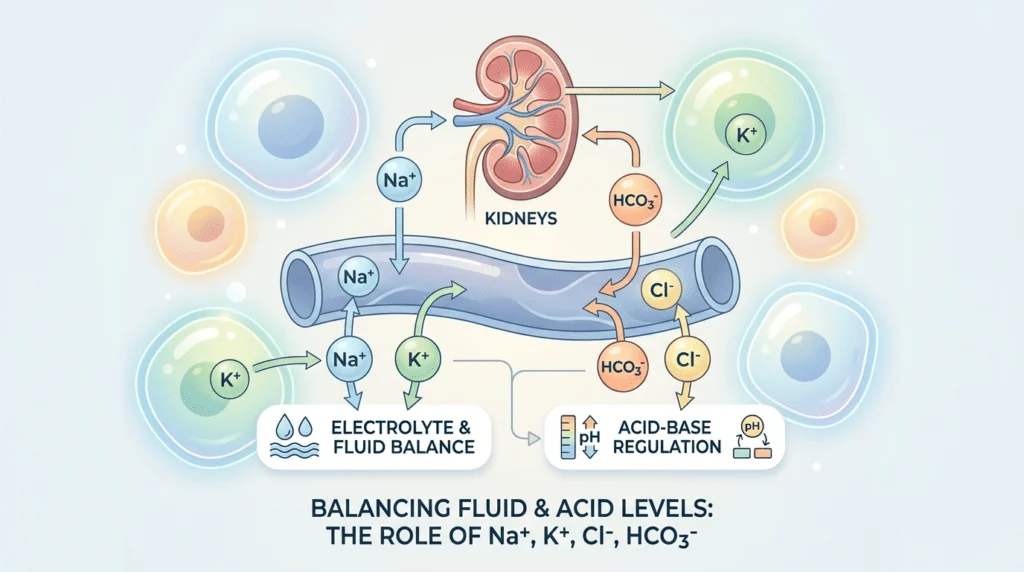
Because three of these four electrolytes are closely tied to how the kidneys filter and reabsorb minerals, an abnormal panel often prompts a look at kidney health. Markers such as creatinine and the wider kidney function panel help complete that view. Your doctor may also check related minerals such as magnesium, since imbalances tend to travel together.
Why your doctor orders an electrolyte panel
An electrolyte panel is one of the most frequently ordered blood tests, and there are several reasons it might appear on your request form. It is a routine part of many general health checks, giving a quick snapshot of fluid balance and kidney function before any symptoms appear. It is also used to investigate specific complaints such as ongoing tiredness, confusion, muscle weakness, cramps, an irregular heartbeat, nausea, or swelling.
Beyond screening and symptoms, the panel is a monitoring tool. People with chronic conditions such as high blood pressure, kidney disease, heart failure, or diabetes may have it repeated regularly. It is also used to keep an eye on the effects of medicines that alter electrolyte levels, including diuretics and some blood pressure treatments. Tracking the trend across several tests is often more informative than any single result.
The test itself is quick and low-risk. A healthcare professional draws a small blood sample from a vein in your arm, usually in under five minutes, and the laboratory measures the four electrolytes from that sample. You may notice a brief sting or a small bruise afterwards, but most people have no lasting effects. Results are typically available within a day or two, though urgent samples can be processed much faster.
What can change your electrolyte results
A value that falls just outside the range does not always reflect a real change in your body. Several everyday factors can nudge an electrolyte panel, and knowing them helps you read your report sensibly.
Hydration is the biggest one. Going into the test dehydrated concentrates the blood and can push sodium and chloride up, whilst drinking a large amount of water beforehand can dilute them. The timing of the draw, recent heavy exercise, and a bout of vomiting or diarrhoea in the days before can all leave a mark.
Medications are another common influence. Diuretics, some blood pressure drugs, certain laxatives, and steroids can each shift one or more electrolytes, which is why your provider will want to know everything you take, including supplements. How the sample is handled matters too: if red blood cells rupture in the tube, a problem called haemolysis, potassium can leak out and produce a falsely high reading. This is why an unexpected result is often repeated before any conclusions are drawn.
Finally, reference ranges themselves differ between laboratories and analysers. A value flagged as borderline by one lab may sit comfortably inside another lab’s range. The practical takeaway is to read your number against the range on your own report, look at the trend across tests rather than a single snapshot, and let a clinician weigh it against the full clinical picture.
When to see a doctor
Most mild electrolyte shifts are managed calmly with follow-up testing, hydration advice, or a medication review. Some situations, however, call for prompt medical attention. Treat the following as reasons to contact a healthcare professional rather than waiting:
- A result that is far outside the reference range, or one your report flags as critical
- An irregular, racing, or pounding heartbeat, especially alongside an abnormal potassium level
- Severe or persistent vomiting or diarrhoea, which can drain electrolytes quickly
- Confusion, marked drowsiness, fainting, or a seizure
- Significant muscle weakness, cramps, or numbness that does not settle
- Very little urine output, or noticeable swelling in the legs or face
If you feel acutely unwell, seek urgent care rather than relying on the test result alone. A number on a page is only part of the picture, and a clinician will weigh it against your symptoms, your history, and your other results before deciding what, if anything, needs to be done.
Glossary
- Anion gap: A value calculated from your electrolyte results that estimates the balance between positively and negatively charged minerals; a wide gap can signal acid build-up.
- Bicarbonate (HCO3−): An electrolyte, often labelled CO2 on a report, that acts as the blood’s main acid buffer.
- Chloride (Cl−): An electrolyte that moves with sodium and helps maintain fluid and acid-base balance.
- Electrolyte: A mineral that carries an electrical charge in body fluid and helps control water balance, nerve signals, and acidity.
- Hyperkalaemia: A higher-than-normal level of potassium in the blood.
- Hypernatraemia: A higher-than-normal level of sodium in the blood.
- Hypokalaemia: A lower-than-normal level of potassium in the blood.
- Hyponatraemia: A lower-than-normal level of sodium in the blood.
- Potassium (K+): An electrolyte found mostly inside cells that is essential for a steady heart rhythm.
- Sodium (Na+): The main electrolyte controlling how much water surrounds your cells.
Frequently asked questions
What does it mean if my electrolytes are abnormal?
An abnormal electrolyte result means one or more minerals sit outside the laboratory’s reference range. On its own this is not a diagnosis. Mild shifts are common and often temporary, caused by hydration, diet, recent illness, or medication. A larger or persistent change can point to an issue with the kidneys, hormones, or fluid balance that deserves a closer look. Your doctor interprets the value alongside your symptoms, your other results, and the trend over time, which is why a single figure is rarely the whole story.
Do I need to fast before an electrolyte panel?
For an electrolyte panel by itself, you usually do not need to fast or make any special preparation. However, this test is frequently bundled with others, such as a glucose or cholesterol test, that do require fasting for several hours beforehand. Because of this, lab instructions often ask you to fast just in case. Follow whatever guidance your doctor or laboratory gives you, and if you are unsure, ask before your appointment so your results are not affected.
What is the difference between an electrolyte panel and a metabolic panel?
An electrolyte panel measures the four main electrolytes only. A basic metabolic panel includes those electrolytes plus a few extra tests, such as kidney markers and blood sugar. A comprehensive metabolic panel adds even more, including liver measures. In short, the electrolyte panel is the smallest of the group and is often part of the larger ones. Which test you receive depends on what your doctor wants to check.
What causes high chloride on a blood test?
High chloride, known as hyperchloraemia, most often accompanies dehydration, because losing fluid concentrates the minerals left behind. It can also appear with a form of acid build-up in the blood, with certain kidney conditions, or with medications and intravenous fluids given in hospital. Since chloride usually shifts in step with sodium and bicarbonate, doctors interpret it as part of the overall pattern rather than as a standalone finding. A mild elevation with no symptoms is frequently rechecked rather than treated immediately.
What does low sodium in a blood test mean?
A low sodium level, called hyponatremia, usually means there is too much water relative to sodium in your blood rather than a simple lack of salt. Common contributors include heavy sweating or fluid loss, some medications, heart or kidney conditions, and certain hormone imbalances. Mild cases may cause no symptoms; more pronounced drops can bring on headache, nausea, confusion, or weakness. Because the causes range widely, your doctor will look at your fluid status and other results to find the reason.
Can dehydration affect my electrolyte results?
Yes. Dehydration is one of the most common reasons for mildly abnormal electrolytes. When you lose fluid, the minerals left in your blood become more concentrated, which can nudge sodium and chloride upward. Rehydrating often brings the values back towards normal, which is why a repeat test after drinking adequate fluids is a frequent next step. Persistent abnormalities that do not settle with hydration, however, warrant further investigation.
Sources
- Electrolyte Panel — MedlinePlus (NIH)
- What Is an Electrolyte Panel? — Cleveland Clinic
- Electrolyte test — NHS
Further reading
- How to read blood test results
- Comprehensive metabolic panel: how to read it
- Kidney function panel explained
- Creatinine and kidney function
- Magnesium blood test
Understand your lab results with AI DiagMe
Seeing sodium, potassium, chloride, and bicarbonate listed on a page with reference ranges and the occasional “H” or “L” flag can leave you with more questions than answers. AI DiagMe helps you make sense of your electrolyte panel and other tests, such as kidney markers (creatinine and eGFR) or a full metabolic panel, in clear language you can actually use. It is built to help you understand what your numbers may mean and what to ask about, not to diagnose you or replace your doctor. Upload your results and get a plain-language interpretation in minutes.
➡️ Get your results interpreted in minutes