



SGPT Blood Test: Normal Range, High Levels, and Causes

目录

ALT(SGPT):解读这一重要肝脏指标

⚕️ 本文仅供参考,不能替代医疗建议。请务必咨询医生以解读您的检查结果。.

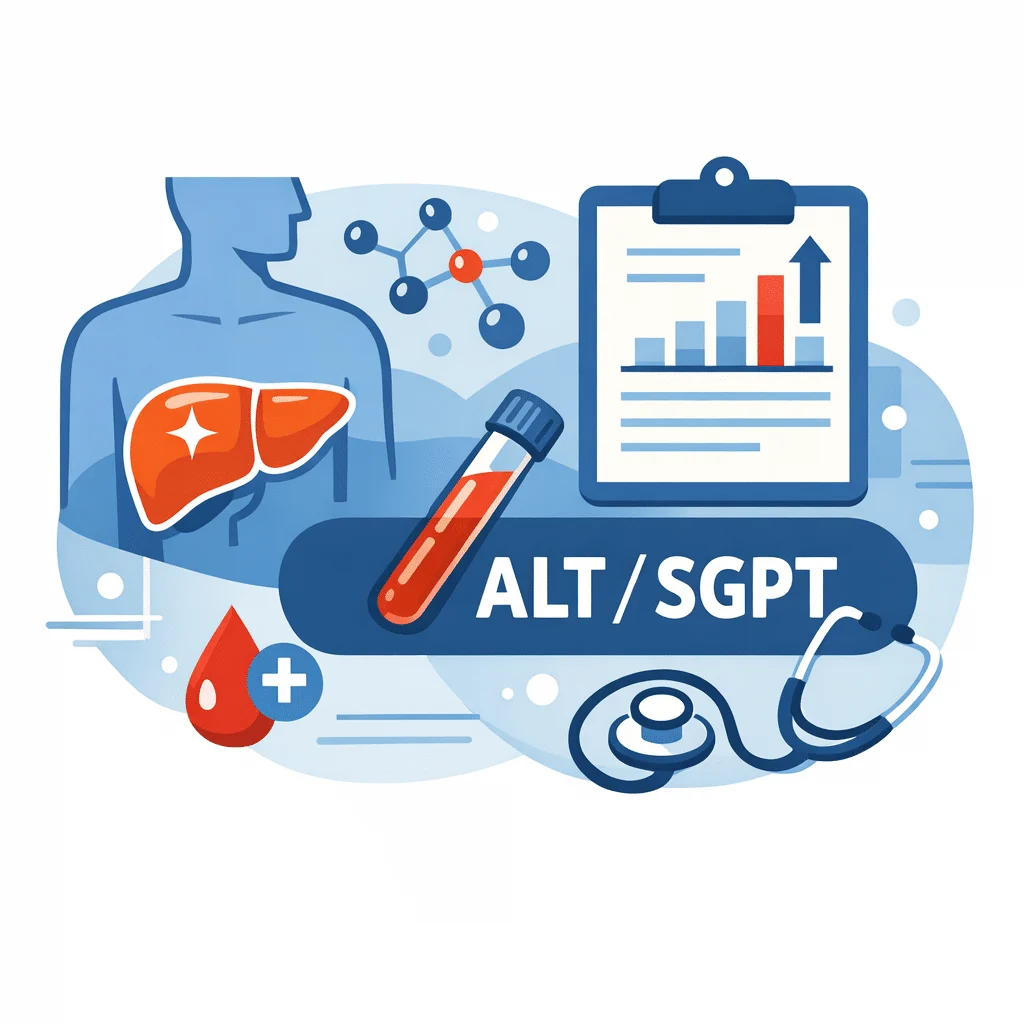
An SGPT blood test measures alanine aminotransferase (ALT), a liver enzyme that leaks into the blood when liver cells are stressed or damaged. SGPT and ALT are two names for exactly the same test: SGPT is the older term (serum glutamic-pyruvic transaminase), still widely used in South Asia and elsewhere, while ALT is the current name on most reports. This guide explains what an SGPT blood test shows, the normal range for men and women, how to read a high or low result, and when a raised value needs a doctor.

What is SGPT, and why is it the same as ALT?

SGPT and ALT refer to one enzyme found mainly inside liver cells, where it helps process amino acids. When those cells are inflamed or injured, the enzyme escapes into the bloodstream, so a higher blood level generally signals liver strain. Laboratories and clinicians may print it as SGPT, ALT, or “alanine aminotransferase,” and all three mean the same thing. Because it is fairly specific to the liver, it is one of the most useful markers on a liver panel, usually measured alongside SGOT (AST) and other enzymes.

SGPT normal range by sex

Reference ranges vary between laboratories, so your own report is the reference that matters. One commonly cited range is 7 to 56 U/L (units per liter), and levels typically run a little higher in men than in women. The figures below are approximate.

团体Typical SGPT (ALT) range备注
成年男性About 7 to 45 U/LUsually runs slightly higher than in women
成年女性About 7 to 34 U/LCan shift across the menstrual cycle
Research “healthy” limitAbout 30 U/L (men) / 19 U/L (women)Lower thresholds proposed to catch early fatty liver

Age and body weight also nudge the number, and it tends to fall slightly in older adults. A result just outside the range is common: about 1 in 20 healthy people fall outside the reference band without having any liver disease.

How to read your SGPT result

The size of the change matters more than crossing the line by a point or two, and the trend over time matters most of all. Use this grid as a general guide, always alongside your lab’s own range and your clinician’s advice.

SGPT result解释通常的下一步
Within the reference range普通的Routine follow-up
Up to about 2 times the upper limit轻度抬头Often temporary; repeat in a few weeks
About 2 to 5 times the upper limit中等海拔Medical evaluation advised
More than about 5 times the upper limit显著升高及时进行医疗评估

What a high SGPT means

A high SGPT points to liver cells releasing more enzyme than usual. The most common reasons are fatty liver (now called MASLD), alcohol, certain medications and supplements, and viral hepatitis; hard exercise and, less often, iron overload, autoimmune liver disease, or reduced blood flow can also raise it. Reassuringly, fewer than 1 in 20 people with an elevated result have a severe liver condition. For a fuller breakdown of causes, severity, and warning signs, read our dedicated guide to a high ALT result, and if you want to bring the number down, our companion article covers practical ways to lower ALT levels.

What a low SGPT means

A low SGPT is uncommon and rarely a concern on its own. Occasionally it reflects a vitamin B6 deficiency or chronic kidney disease, and in advanced liver failure the liver may simply produce less enzyme. If your result is unexpectedly low, your clinician will usually repeat the test or look at other markers rather than treat the number itself.

SGPT vs SGOT: the two liver transaminases

SGPT is often reported next to SGOT, the older name for aspartate aminotransferase (AST). Both enzymes rise when cells are injured, but AST is also present in heart and muscle, so SGPT is the more liver-specific of the pair. Doctors compare the two as the AST/ALT ratio: a ratio above 2 leans toward alcohol-related injury, while a higher ALT with a lower AST is a more typical fatty-liver pattern. To understand the partner enzyme, see our guide to the AST正常范围, and for the whole panel, our overview of 肝功能检查.

Fasting, preparation, and what can skew the result

You do not need to fast for an SGPT test on its own. If it is part of a comprehensive metabolic panel, you will usually be asked to fast for 10 to 12 hours, with water allowed. Several everyday factors can move the number: intense exercise in the days before, many medications and supplements (including acetaminophen), the menstrual cycle, and body weight. Tell your clinician about any medicines and about strenuous workouts before the test, and never stop a prescribed medication without advice.

最新科学进展

Recent research has sharpened how we read a mildly raised SGPT, especially the sex-specific limits. Here is what it adds, in plain terms.

A 2024 editorial highlighted that the traditional upper limit near 40 U/L was set using populations that likely included undiagnosed liver disease, and that a lower healthy threshold, roughly 30 U/L for men and 19 for women, may better flag early fatty liver. What this means for you is that a value your report calls normal is not always fully reassuring if you carry metabolic risk factors such as excess weight or diabetes. A 2024 study of more than 1,300 people having routine check-ups found that an SGPT above 30 U/L, together with fatty liver, was linked to significant liver scarring, particularly after age 65. In everyday language, a modestly high result is worth acting on rather than ignoring. These findings are still being refined, but the message is consistent: read your SGPT alongside your sex, your other liver numbers, and your overall risk.

词汇表

  • SGPT: serum glutamic-pyruvic transaminase, the older name for the ALT enzyme test.
  • ALT (alanine aminotransferase): the current name for the same liver enzyme.
  • SGOT / AST: the related enzyme, found in liver and muscle, often measured alongside SGPT.
  • U/L: units per liter, the unit used to report enzyme activity.
  • MASLD: metabolic dysfunction-associated steatotic liver disease, the current name for most fatty liver.
  • Upper limit of normal: the top of a laboratory’s reference range.
  • AST/ALT ratio: the balance between the two enzymes, which helps point to a cause.

常见问题解答

What is the full form of SGPT? SGPT stands for serum glutamic-pyruvic transaminase, an older name for alanine aminotransferase (ALT), a liver enzyme.

What is a normal SGPT level? Many labs use a range around 7 to 56 U/L, with men usually a little higher than women. Always compare your result with the reference range printed on your report.

What does a high SGPT mean? It usually reflects liver stress from fatty liver, alcohol, medications, or hepatitis. Most mild elevations are reversible, but higher or rising values need evaluation.

Is SGPT the same as SGOT? No. SGPT is ALT, while SGOT is AST. They are related transaminases usually measured together, and doctors compare them as a ratio.

Do I need to fast for an SGPT test? Not for SGPT alone. If it is drawn as part of a metabolic panel, a 10 to 12 hour fast is usually requested.

Can exercise raise SGPT? Yes. Intense or unaccustomed exercise can lift it temporarily, so retesting after a few days of rest often clarifies the result.

延伸阅读

来源

利用 AI DiagMe 了解您的实验室结果

An SGPT value is easiest to act on when you can see it next to your SGOT (AST), GGT, and other liver markers. AI DiagMe reads your uploaded lab report and explains what your SGPT and related numbers may mean, in clear language, so you can prepare focused questions for your doctor. It helps you understand your results; it does not diagnose disease or replace medical care.

几分钟内即可获得结果解读

作者

  • AI DiagMe

    AI DiagMe团队汇聚了医生、临床专家和医学编辑。我们的文章由健康传播专业人士撰写,并由我们科学委员会的医生进行审核和验证。该委员会由在血液科、内分泌科和全科等专科领域执业的医院医生组成。负责编辑工作的Julien Priour拥有巴黎高等商学院(HEC Paris)的MBA学位,并曾在法国国家可持续发展研究所(IRD,FUN-MOOC,2026)接受过科学写作和出版方面的培训。每篇文章都基于最新的临床指南和同行评审的医学出版物。.

相关文章