



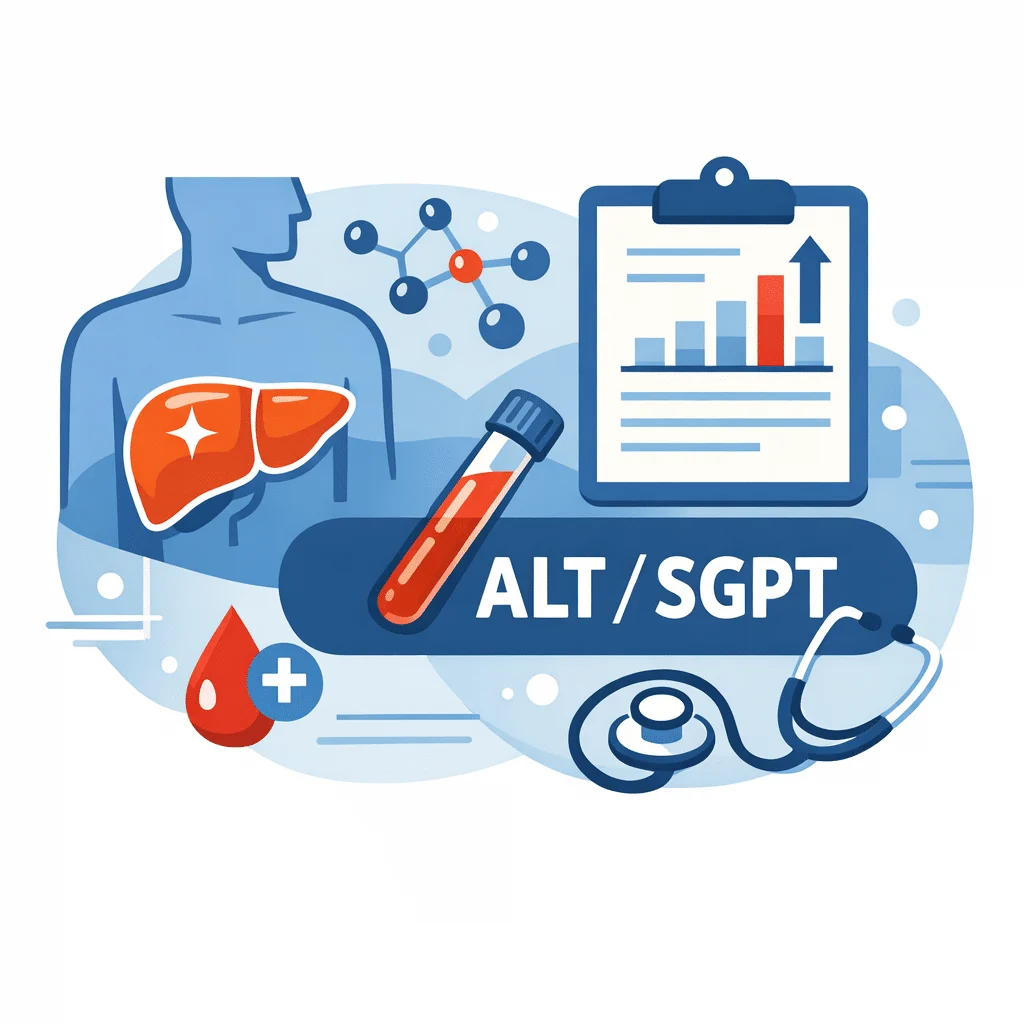
Testul de sânge SGPT măsoară alanin aminotransferaza (ALT), o enzimă hepatică care se eliberează în sânge atunci când celulele ficatului sunt supuse unui stres sau sunt deteriorate. SGPT și ALT sunt două denumiri pentru exact același test: SGPT este termenul mai vechi (transaminaza glutamic-piruvică serică), încă folosit pe scară largă în Asia de Sud și în alte regiuni, în timp ce ALT este denumirea actuală pe majoritatea buletinelor de analiză. Acest ghid explică ce arată testul de sânge SGPT, intervalul normal pentru bărbați și femei, cum să interpretezi un rezultat crescut sau scăzut și când o valoare ridicată necesită consultul unui medic.
Ce este SGPT și de ce este același lucru cu ALT?
SGPT și ALT se referă la același enzim, găsit în principal în interiorul celulelor hepatice, unde ajută la procesarea aminoacizilor. Când aceste celule sunt inflamate sau lezate, enzima se eliberează în sânge, astfel că un nivel sanguin crescut semnalează, în general, o suprasolicitare a ficatului. Laboratoarele și medicii îl pot nota ca SGPT, ALT sau „alanin aminotransferază", toate trei denumind același lucru. Deoarece este destul de specific ficatului, este unul dintre cei mai utili markeri dintr-un panou hepatic, măsurat de obicei alături de SGOT (AST) și alți enzimi.
Valori normale SGPT în funcție de sex
Intervalele de referință variază de la un laborator la altul, deci raportul tău propriu este cel care contează. Un interval frecvent citat este de 7 până la 56 U/L (unități pe litru), iar valorile sunt de obicei puțin mai mari la bărbați decât la femei. Cifrele de mai jos sunt orientative.
| Grup | Interval tipic SGPT (ALT) | Observații |
|---|---|---|
| Bărbați adulți | Aproximativ 7–45 U/L | De obicei puțin mai mare decât la femei |
| Femei adulte | Aproximativ 7–34 U/L | Poate varia pe parcursul ciclului menstrual |
| Limita superioară considerată „normală" în cercetare | Aproximativ 30 U/L (bărbați) / 19 U/L (femei) | Praguri mai scăzute propuse pentru depistarea precoce a ficatului gras |
Vârsta și greutatea corporală pot influența ușor valoarea, iar aceasta tinde să scadă puțin la adulții în vârstă. Un rezultat ușor în afara intervalului de referință este frecvent: aproximativ 1 din 20 de persoane sănătoase se situează în afara acestui interval fără a avea vreo boală hepatică.
Cum să îți citești rezultatul SGPT
Amploarea modificării contează mai mult decât depășirea limitei cu un punct sau două, iar evoluția în timp este cel mai important aspect. Folosește acest tabel ca ghid general, întotdeauna alături de intervalul de referință al laboratorului tău și de sfatul medicului.
| Rezultat SGPT | Interpretare | Pasul următor obișnuit |
|---|---|---|
| În intervalul de referință | Normal | Control de rutină |
| Până la aproximativ de 2 ori limita superioară | Creștere ușoară | Adesea temporar; repetă testul după câteva săptămâni |
| De aproximativ 2 până la 5 ori limita superioară | Creștere moderată | Se recomandă evaluare medicală |
| Mai mult de aproximativ de 5 ori limita superioară | Creștere semnificativă | Evaluare medicală urgentă |
Ce înseamnă un SGPT crescut
Un SGPT crescut indică faptul că celulele hepatice eliberează mai multă enzimă decât de obicei. Cele mai frecvente cauze sunt ficatul gras (denumit acum MASLD), consumul de alcool, anumite medicamente și suplimente, precum și hepatita virală; efortul fizic intens și, mai rar, supraîncărcarea cu fier, bolile hepatice autoimune sau reducerea fluxului sanguin pot, de asemenea, crește valoarea. Vestea bună este că mai puțin de 1 din 20 de persoane cu un rezultat crescut au o afecțiune hepatică gravă. Pentru o analiză mai detaliată a cauzelor, severității și semnelor de alarmă, citește ghidul nostru dedicat unui rezultat ALT crescut, iar dacă vrei să reduci această valoare, articolul nostru complementar acoperă sfaturi practice modalități de a scădea nivelul ALT.
Ce înseamnă un SGPT scăzut
Un SGPT scăzut este neobișnuit și rareori reprezintă un motiv de îngrijorare în sine. Uneori poate reflecta o deficiență de vitamina B6 sau o boală cronică de rinichi, iar în insuficiența hepatică avansată ficatul poate produce pur și simplu mai puțină enzimă. Dacă rezultatul tău este neașteptat de scăzut, medicul va repeta de obicei testul sau va analiza alți markeri, în loc să trateze cifra în sine.
SGPT vs SGOT: cele două transaminaze hepatice
SGPT este adesea raportat alături de SGOT, denumirea mai veche pentru aspartat aminotransferază (AST). Ambii enzimi cresc atunci când celulele sunt lezate, însă AST este prezent și în inimă și mușchi, deci SGPT este cel mai specific pentru ficat dintre cei doi. Medicii compară cei doi enzimi prin raportul AST/ALT: un raport peste 2 indică mai degrabă o leziune de cauză alcoolică, în timp ce un ALT mai mare cu un AST mai mic este un tipar mai tipic pentru ficatul gras. Pentru a înțelege enzima parteneră, consultă ghidul nostru despre Intervalul normal al AST, iar pentru întregul panel, consultă prezentarea noastră generală despre teste ale funcției hepatice.
Post, pregătire și factori care pot influența rezultatul
Nu trebuie să fii pe nemâncate pentru un test SGPT de sine stătător. Dacă face parte dintr-un panou metabolic complet, ți se va cere de obicei să postești 10 până la 12 ore, cu apă permisă. Mai mulți factori obișnuiți pot influența valoarea: exercițiile fizice intense în zilele anterioare, multe medicamente și suplimente (inclusiv acetaminofen), ciclul menstrual și greutatea corporală. Spune-i medicului tău despre orice medicamente și despre antrenamentele intense înainte de test și nu opri niciodată un medicament prescris fără recomandare medicală.
Cele mai recente progrese științifice
Cercetările recente au rafinat modul în care interpretăm o valoare SGPT ușor crescută, în special limitele specifice pe sexe. Iată ce aduc acestea, pe înțelesul tuturor.
Un editorial din 2024 a subliniat că limita superioară tradițională de aproximativ 40 U/L a fost stabilită pe baza unor populații care includeau probabil persoane cu boli hepatice nediagnosticate și că un prag sănătos mai scăzut — aproximativ 30 U/L pentru bărbați și 19 U/L pentru femei — ar putea semnala mai bine un ficat gras în stadiu incipient. Ce înseamnă asta pentru tine: o valoare pe care raportul tău o consideră normală nu este întotdeauna pe deplin liniștitoare dacă ai factori de risc metabolic, cum ar fi excesul de greutate sau diabetul. Un studiu din 2024 realizat pe mai mult de 1.300 de persoane care efectuau controale de rutină a constatat că un SGPT peste 30 U/L, asociat cu ficatul gras, era legat de o cicatrizare hepatică semnificativă, în special după vârsta de 65 de ani. Pe înțelesul tuturor, un rezultat moderat crescut merită luat în serios, nu ignorat. Aceste concluzii sunt încă în curs de rafinare, dar mesajul este clar: interpretează SGPT-ul tău în funcție de sex, de celelalte valori hepatice și de riscul tău general.
Glosar
- SGPT: glutamat-piruvat transaminaza serică, denumirea mai veche a testului enzimatic ALT.
- ALT (alanin aminotransferaza): denumirea actuală pentru aceeași enzimă hepatică.
- SGOT / AST: enzima înrudită, prezentă în ficat și mușchi, măsurată adesea împreună cu SGPT.
- U/L: unități pe litru, unitatea folosită pentru a raporta activitatea enzimatică.
- MASLD: boala hepatică steatotică asociată disfuncției metabolice, denumirea actuală pentru majoritatea cazurilor de ficat gras.
- Limita superioară a normalului: valoarea maximă din intervalul de referință al unui laborator.
- Raportul AST/ALT: echilibrul dintre cele două enzime, care ajută la identificarea cauzei.
Întrebări frecvente
Care este forma completă a SGPT? SGPT înseamnă glutamat-piruvat transaminază serică, un nume mai vechi pentru alanin aminotransferaza (ALT), o enzimă hepatică.
Care este nivelul normal al SGPT? Multe laboratoare folosesc un interval de aproximativ 7 până la 56 U/L, bărbații având de obicei valori puțin mai mari decât femeile. Compară întotdeauna rezultatul tău cu intervalul de referință tipărit pe buletinul de analize.
Ce înseamnă un SGPT crescut? De obicei reflectă un stres hepatic cauzat de ficatul gras, alcool, medicamente sau hepatită. Majoritatea creșterilor ușoare sunt reversibile, dar valorile mai mari sau în creștere necesită evaluare medicală.
SGPT este același lucru cu SGOT? Nu. SGPT este ALT, în timp ce SGOT este AST. Sunt transaminaze înrudite, măsurate de obicei împreună, iar medicii le compară ca raport.
Trebuie să fiu pe nemâncate pentru un test SGPT? Nu pentru SGPT singur. Dacă este recoltat ca parte a unui panou metabolic, se solicită de obicei un post de 10 până la 12 ore.
Poate exercițiul fizic să crească SGPT-ul? Da. Efortul fizic intens sau neobișnuit îl poate crește temporar, astfel că repetarea testului după câteva zile de odihnă clarifică de obicei rezultatul.
Lectură suplimentară
- ALT crescut: cauze, semne de alarmă și ce trebuie să faci
- Nivelurile ALT: semnificație, cauze și valori normale
- Valori normale AST (SGOT) explicate
- Prezentare generală a testelor funcției hepatice
- Cum să scazi nivelul ALT
Surse
- Cleveland Clinic. Alanine Transaminase (ALT) Blood Test (also known as SGPT). https://my.clevelandclinic.org/health/diagnostics/22028-alanine-transaminase-alt
- MedlinePlus, NIH National Library of Medicine. Analiză de sânge ALT. https://medlineplus.gov/lab-tests/alt-blood-test/
- Mayo Clinic. Enzime hepatice crescute: Cauze. https://www.mayoclinic.org/symptoms/elevated-liver-enzymes/basics/causes/sym-20050830
- Moyana TN. Boala hepatică steatotică asociată disfuncției metabolice: ALT crescut în limite normale pe termen lung ca test de screening. World J Gastroenterol, 2024. https://consensus.app/papers/details/086c5d3017ff599a8b78b83163865351/
- Nakano M, et al. Profiluri asociate cu fibroza hepatică semnificativă: ALT >30 U/L, obiceiuri de exercițiu fizic și MASLD. Hepatology Research, 2024. https://consensus.app/papers/details/9c3a790b3683520a906bc7e71fa7d2b1/
Înțelege-ți rezultatele analizelor cu AI DiagMe
O valoare SGPT este mai ușor de interpretat atunci când o poți vedea alături de SGOT (AST), GGT și alți markeri hepatici. AI DiagMe citește raportul tău de analize încărcat și îți explică ce pot însemna SGPT-ul și valorile asociate, într-un limbaj clar, astfel încât să poți pregăti întrebări precise pentru medicul tău. Te ajută să îți înțelegi rezultatele; nu pune diagnostice și nu înlocuiește consultul medical.
Obține interpretarea rezultatelor în câteva minute