Testul de fibrinogen măsoară o proteină de coagulare produsă de ficat, iar un rezultat în afara intervalului de referință poate ridica întrebări despre riscul de sângerare sau de tromboză. Fibrinogenul, cunoscut și ca factorul I, este una dintre proteinele pe care organismul tău se bazează pentru a sigila un vas de sânge lezat și a opri sângerarea. Este totodată un reactant de fază acută, adică nivelul său crește în caz de inflamație, infecție sau leziune tisulară — de aceea același test poate indica două situații foarte diferite, în funcție de direcția în care se modifică valoarea. În acest articol vei afla ce face fibrinogenul, cum să citești rezultatul testului tău față de intervalul de referință, ce poate însemna o valoare crescută sau scăzută și când merită să discuți cu medicul tău.
Ce este fibrinogenul și de ce se testează?
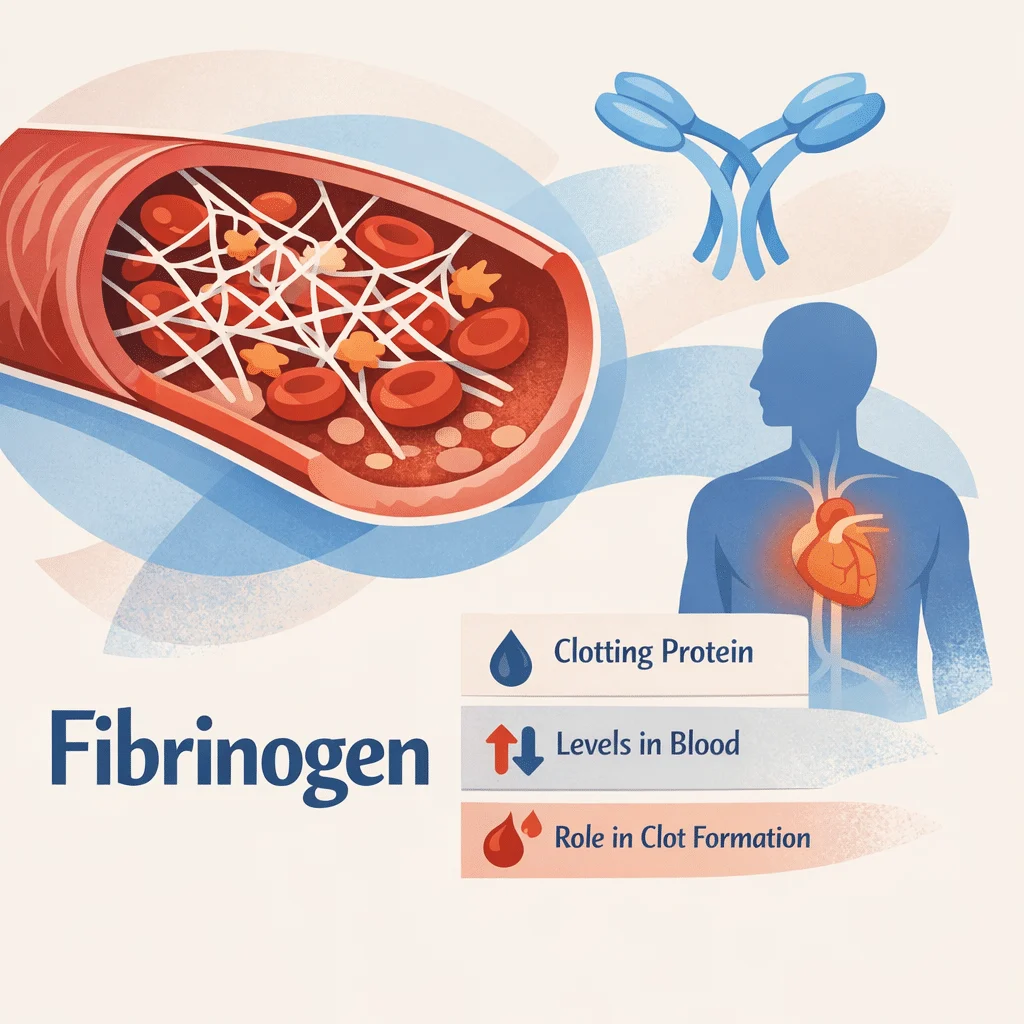
Fibrinogenul este o proteină produsă de ficat care circulă în permanență în plasma sângelui tău, gata să acționeze. Când un vas de sânge este lezat, o enzimă numită trombină transformă fibrinogenul în fibrină — o rețea de fire insolubile. Această rețea captează trombocitele și alte celule sanguine, formând un cheag stabil care sigilează leziunea și limitează pierderea de sânge. Imaginează-ți ficatul ca pe o fabrică ce menține această materie primă în stoc non-stop, astfel încât organismul să poată reacționa în câteva secunde ori de câte ori un vas este deteriorat.
Medicul poate recomanda acest test ca parte a unui panel de coagulare, pentru a verifica cât de bine coagulează sângele tău, pentru a investiga sângerări sau vânătăi inexplicabile sau înainte de o intervenție chirurgicală. Deoarece fibrinogenul crește și în caz de inflamație, uneori este verificat alături de alți markeri inflamatori atunci când se suspectează o infecție sau o afecțiune inflamatorie. Această dublă identitate — atât element de bază al cheagurilor, cât și semnal al inflamației — este cea care face fibrinogenul mai informativ decât multe alte valori de laborator cu un singur scop.
Înțelegerea științifică a fibrinogenului s-a extins considerabil de când a fost identificat pentru prima dată. Ceea ce era considerat cândva o simplă proteină structurală pentru coagulare este acum recunoscut ca parte a unei rețele mai largi care leagă coagularea, vindecarea rănilor și răspunsul imun. Acesta este unul dintre motivele pentru care un test de sânge pentru fibrinogen apare rareori izolat pe o cerere de analize; de obicei face parte dintr-un set de teste alese pentru a răspunde la o întrebare clinică specifică.
Cum folosește procesul de coagulare fibrinogenul
Gândește-te la fibrinogen ca la o materie primă pe care ficatul o menține în aprovizionare constantă. O leziune declanșează o reacție în lanț în cascada coagulării, iar trombina este enzima care transformă în final fibrinogenul în filamente de fibrină ce țin cheagul laolaltă. Fără suficient fibrinogen funcțional, acest pas final nu se poate desfășura corespunzător, iar sângerarea poate fi mai greu de controlat.
Valori normale și unități de măsură pentru testul de fibrinogen
Pe un buletin de analize, fibrinogenul apare de obicei în secțiunea de coagulare sau hematologie, raportat în grame pe litru (g/L) sau miligrame pe decilitru (mg/dL). Un interval de referință tipic pentru adulți este de aproximativ 200–400 mg/dL (2,0–4,0 g/L), deși limitele exacte variază ușor între laboratoare în funcție de metoda de testare utilizată.
Un rezultat afișat ca FIBRINOGEN: 4,2 g/L cu un interval de referință de 2,0 până la 4,0 g/L ar fi marcat ca ridicat, adesea cu o săgeată în sus, text îngroșat sau un asterisc. Este important să îți compari valoarea doar cu intervalul tipărit pe propriul tău buletin de analize, deoarece două laboratoare pot indica limite ușor diferite pentru același test — un principiu valabil pentru aproape orice marker dintr-un buletin de analize, nu doar pentru fibrinogen; ghidul nostru general despre valorile normale ale analizelor de sânge în cele mai frecvente paneluri de laborator explică de ce intervalele de referință diferă de la un laborator la altul.
Listă rapidă pentru citirea rezultatului tău
Câteva întrebări simple te pot ajuta să înțelegi un rezultat al fibrinogenului înainte de consultație:
- Valoarea se încadrează în intervalul de referință al laboratorului și, dacă nu, cu cât se abate?
- Cum se compară cu rezultatele anterioare ale fibrinogenului pe care le-ai avut?
- Sunt și alți markeri ai inflamației, cum ar fi nivelurile de proteină C reactivă care indică o inflamație activă sau viteza de sedimentare a hematiilor, de asemenea în afara limitelor normale?
- A ieșit și testul vitezei de sedimentare a hematiilor în afara intervalului normal, un alt marker care urmărește inflamația pe o perioadă mai lungă decât PCR?
- Ai un istoric personal sau familial de tulburări de sângerare sau coagulare?
- Ar putea un factor temporar, cum ar fi o infecție recentă, sarcina sau un medicament nou, să influențeze rezultatul?
Testul de fibrinogen: rezultate crescute față de rezultate scăzute
Fibrinogenul poate fi prea mare sau prea mic, iar cele două situații indică direcții foarte diferite. Tabelul de mai jos compară cele două tipare dintr-o privire, înainte de cauzele detaliate din secțiunea următoare.
| Caracteristică | Fibrinogen crescut (hiperfibrinogenemie) | Fibrinogen scăzut (hipofibrinogenemie) |
|---|---|---|
| Riscul principal | Coagulare excesivă, risc cardiovascular crescut | Sângerare excesivă, formare deficitară a cheagului |
| Frecvență | Frecvent, adesea reactiv la inflamație | Mai puțin frecvent, uneori o constatare de urgență |
| Cauze frecvente | Infecție, inflamație cronică, sarcină, fumat | Boală hepatică, CID, terapie trombolitică, tulburări genetice rare |
| Verificat adesea împreună cu | PCR, VSH, profil lipidic | Profil hepatic, număr de trombocite, D-dimer, TP/aPTT |
Ce cauzează fibrinogenul crescut (hiperfibrinogenemia)?
Un nivel crescut de fibrinogen reflectă cel mai adesea răspunsul inflamator normal al organismului tău, dar poate apărea și din alte motive. Mai jos sunt cele mai frecvente explicații pe care un medic le va lua în considerare atunci când un test de fibrinogen din sânge revine cu valori ridicate, ordonate aproximativ de la cele mai frecvente la cele mai puțin frecvente.
- Inflamație acută sau cronică, foarte frecventă: ca răspuns la infecție sau inflamație, ficatul pur și simplu își crește producția de fibrinogen și de alte proteine de fază acută.
- Boli cardiovasculare, frecvente: fibrinogenul crescut mărește vâscozitatea sângelui și contribuie la formarea plăcilor de aterom, motiv pentru care este adesea evaluat împreună cu profilul lipidic.
- Cancer, moderat frecvent: unele tumori eliberează substanțe care stimulează ficatul să producă mai mult fibrinogen.
- Sarcina, frecventă și așteptată: fibrinogenul crește în mod natural pe măsură ce organismul se pregătește pentru naștere, astfel că se aplică valori de referință specifice sarcinii.
- Fumatul și obezitatea: ambele sunt asociate cu o stare inflamatorie cronică de grad scăzut, care poate menține fibrinogenul ușor crescut în timp.
Ce cauzează fibrinogenul scăzut (hipofibrinogenemia)?
Un nivel de fibrinogen sub intervalul de referință este mai puțin frecvent și poate avea implicații mai urgente, deoarece indică de obicei fie o producție redusă, fie un proces care consumă factorii de coagulare mai rapid decât poate organismul să îi înlocuiască.
- Afecțiuni hepatice, frecvente: deoarece ficatul produce fibrinogenul, o boală hepatică semnificativă, cum ar fi ciroza, îi poate reduce producția.
- Coagularea intravasculară diseminată, sau CID, neobișnuită dar gravă: factorii de coagulare sunt consumați rapid în tot organismul, ceea ce poate provoca paradoxal sângerări severe.
- Tulburări congenitale, rare: mutațiile moștenite pot cauza afibrinogenemie (lipsa fibrinogenului funcțional) sau hipofibrinogenemie (niveluri foarte scăzute).
- Terapia trombolitică, legată de tratament: medicamentele folosite pentru a dizolva un cheag existent pot descompune și fibrinogenul circulant, de obicei temporar.
Fibrinogenul și sarcina
Nivelurile de fibrinogen cresc în mod normal pe parcursul sarcinii, pe măsură ce organismul se pregătește să limiteze sângerarea la naștere, astfel că o valoare care ar fi semnalată ca ridicată în afara sarcinii poate fi complet normală pe un buletin prenatal. În trimestrul al treilea, fibrinogenul se situează frecvent cu mult peste intervalul de referință standard pentru adulți, fără a indica vreo problemă. Acesta este unul dintre motivele pentru care buletinele de analize folosesc intervale de referință ajustate pentru sarcină, și nu intervalul standard pentru adulți, și de ce o pacientă gravidă nu ar trebui să-și compare rezultatul analizei de fibrinogen cu un tabel elaborat pentru populația generală. Dacă vrei mai mult context despre ce analize se fac de obicei în fiecare etapă, ghidul nostru despre analizele de sânge efectuate pe parcursul fiecărui trimestru de sarcină explică în detaliu calendarul testelor prenatale.
Unele tulburări de sângerare moștenite complică această imagine. Femeile cu boala von Willebrand, de exemplu, pot să nu-și crească suficient factorii de coagulare în timpul sarcinii și pot necesita tratament preventiv în jurul nașterii. Cercetările privind gestionarea acestei afecțiuni în perioada nașterii, discutate în articolul nostru despre strategii de tratament preventiv pentru boala von Willebrand în sarcină, arată de ce monitorizarea individualizată contează chiar și atunci când sunt atinse valorile țintă ale factorilor de coagulare.
Cum se leagă fibrinogenul de sistemul tău cardiovascular și imunitar
Fibrinogenul nu acționează singur. Deoarece se află la intersecția dintre coagulare și inflamație, medicii îl interpretează împreună cu alți markeri, nu izolat. Nivelurile persistente ridicate sunt asociate cu un risc crescut de cheaguri de sânge care pot obstrucționa fluxul sanguin și pot contribui la un infarct sau un accident vascular cerebral, în timp ce un nivel foarte scăzut afectează capacitatea organismului de a forma un cheag, crescând riscul de sângerare chiar și în urma unor leziuni minore.
Acest dublu rol explică și de ce rezultatele fibrinogenului pot influența decizii medicale dincolo de un simplu semnal de alertă pe buletin. Un chirurg poate amâna o intervenție non-urgentă dacă fibrinogenul este semnificativ anormal, iar un medic care gestionează factorii de risc cardiovascular poate folosi un nivel persistent crescut ca un motiv în plus pentru a recomanda o monitorizare mai atentă. Dacă ai deja un buletin de coagulare în mână, ghidul nostru despre interpretarea unui buletin complet de coagulare, inclusiv PT, PTT și D-dimeri arată cum se încadrează fibrinogenul alături de celelalte teste de coagulare pe care medicul tău le poate analiza împreună.
O parte din motivul pentru care fibrinogenul atrage atenția cardiologilor este mai degrabă mecanică decât pur biochimică. Un fibrinogen crescut îngroașă ușor plasma, ceea ce poate face ca sângele să curgă mai greu prin vasele îngustate, și joacă totodată un rol structural direct în plăcile care se acumulează în pereții arterelor de-a lungul anilor. Nimic din toate acestea nu înseamnă că un singur rezultat crescut prezice un infarct; înseamnă că fibrinogenul este un fir dintr-un tablou mult mai complex, care include tensiunea arterială, colesterolul, glicemia și factorii de stil de viață pe care medicul tău îi va analiza împreună.
Când să mergi la medic pentru rezultatul fibrinogenului tău
Majoritatea rezultatelor ușor anormale ale fibrinogenului nu reprezintă urgențe, iar medicul tău va interpreta valoarea alături de simptomele și istoricul tău medical, fără a acționa pe baza unui singur rezultat marcat. Totuși, există situații care necesită o atenție mai promptă decât o consultație de rutină.
Contactează-ți medicul cât mai curând dacă oricare dintre următoarele situații ți se aplică:
- Nivelul tău de fibrinogen este semnificativ peste sau sub intervalul de referință, nu doar marginal în afara acestuia.
- Ai simptome de sângerare, cum ar fi epistaxis frecvent, vânătăi neobișnuit de mari sau sânge în urină ori în scaun, alături de un rezultat scăzut.
- Ai simptome care ar putea sugera un cheag de sânge, cum ar fi umflarea și durerea într-un picior, alături de un rezultat crescut.
- Nivelul tău de fibrinogen rămâne anormal la testele repetate, în ciuda schimbărilor de stil de viață.
- Ai un istoric personal sau familial de tulburare de coagulare sau de sângerare care nu a fost încă evaluată.
Solicită îngrijire urgentă sau de urgență dacă observi brusc dificultăți de respirație, durere în piept, slăbiciune pe o parte a corpului sau sângerare care nu se oprește, indiferent de ce a arătat un rezultat recent al fibrinogenului. Aceste semne necesită evaluare imediată prin ele însele.
Sfaturi practice pentru menținerea unui nivel sănătos al fibrinogenului
Dacă nivelul tău de fibrinogen este anormal, medicul va căuta mai întâi o cauză subiacentă, deoarece tratarea acelei cauze este ceea ce contează cel mai mult. Alături de această evaluare, obiceiurile zilnice asociate cu reducerea inflamației cronice pot contribui la menținerea unui nivel mai sănătos în timp, mai ales când anomalia este ușoară și legată de o stare inflamatorie de grad scăzut, nu de o boală specifică.
- Favorizează alimentele antiinflamatoare: pești grași precum somonul și macroul, nuci, semințe, ulei de măsline și o varietate de fructe și legume colorate.
- Adaugă condimente antiinflamatoare: turmericul și ghimbirul sunt frecvent folosite pentru proprietățile lor antiinflamatoare.
- Limitează alimentele proinflamatoare: reduce consumul de alimente ultraprocesate, zahăr rafinat și carne roșie în exces.
- Mișcă-te regulat: activitatea moderată, cum ar fi mersul alert pe jos, susține sănătatea cardiovasculară.
- Gestionează stresul: stresul cronic contribuie la inflamația de grad scăzut, astfel că practici precum respirația lentă, yoga sau meditația pot fi de ajutor.
- Evită fumatul: fumatul este unul dintre cei mai constanți factori de stil de viață asociați cu niveluri crescute de fibrinogen.
- Menține o greutate sănătoasă: excesul de greutate corporală este asociat cu o stare internă mai inflamatorie.
Cele mai recente progrese științifice
Cercetările despre fibrinogen au depășit viziunea acestuia ca simplu factor de coagulare, iar studiile recente au rafinat utilitatea sa în predicția evenimentelor cardiovasculare viitoare.
O analiză din 2024, care a combinat datele din 11 studii și peste 14.000 de persoane care suferiseră deja un accident vascular cerebral (AVC) ischemic, a constatat că niveluri mai ridicate de fibrinogen erau asociate cu un risc mai mare de un al doilea AVC sau alt eveniment cardiovascular major. Ce înseamnă asta pentru tine: dacă ai avut un AVC, nivelul fibrinogenului măsurat la câteva săptămâni după eveniment — nu în primele două săptămâni — poate ajuta echipa medicală să evalueze riscul tău cardiovascular continuu (prin „eveniment cardiovascular major" se înțeleg rezultate precum un AVC repetat, un infarct miocardic sau deces de cauză cardiovasculară). Precizare privind fiabilitatea: această concluzie este încă în curs de confirmare, iar cercetătorii au subliniat că fibrinogenul era mai informativ când era măsurat la câteva săptămâni după AVC, nu imediat după, deci momentul recoltării sângelui contează pentru interpretarea rezultatului.
Separat, studiile privind AVC-ul asociat cancerului au analizat dacă fibrinogenul poate ajuta la diferențierea unui AVC cauzat de un cancer subiacent față de un AVC cu o cauză mai obișnuită. Ce înseamnă asta pentru tine: fibrinogenul singur nu s-a dovedit a fi o metodă fiabilă pentru a face această distincție în studiile analizate, astfel că, dacă această întrebare este relevantă pentru îngrijirea ta, medicul tău va apela probabil la alți markeri, cum ar fi D-dimerul, alături de tabloul clinic complet, nu la fibrinogen în mod izolat. Precizare privind fiabilitatea: acesta este un domeniu de cercetare în evoluție, iar niciun marker sanguin nu înlocuiește în prezent judecata clinică și imagistica pentru această întrebare specifică.
Analiză de sânge pentru fibrinogen: întrebări frecvente
Poate analiza de fibrinogen să prezică riscul de AVC chiar și cu colesterol normal?
Cercetările sugerează că fibrinogenul poate acționa ca un marker independent al riscului cardiovascular, ceea ce înseamnă că un nivel crescut poate fi semnificativ chiar și atunci când colesterolul și tensiunea arterială par normale. Asta nu înseamnă că fibrinogenul înlocuiește factorii de risc standard; el este considerat în general o informație suplimentară pe care medicul tău o poate lua în calcul alături de profilul tău complet de risc cardiovascular, nu un predictor de sine stătător.
Medicamentele anticoagulante scad nivelul fibrinogenului?
Anticoagulantele standard, cum ar fi warfarina sau anticoagulantele orale directe, nu scad în general fibrinogenul în sine. Ele acționează la alte etape ale cascadei de coagulare pentru a preveni formarea de noi cheaguri, astfel încât nivelul tău de fibrinogen poate rămâne în intervalul normal în timp ce iei aceste medicamente. Acest lucru este diferit de medicamentele trombolitice, care dizolvă activ cheagurile și pot reduce temporar fibrinogenul.
Se modifică fibrinogenul în cursul zilei?
Da, fibrinogenul urmează un tipar zilnic ușor și tinde să fie cel mai ridicat dimineața, scăzând treptat pe parcursul zilei. Dacă faci teste repetate pentru a urmări o tendință, recoltarea la aproximativ aceeași oră din zi face comparația mai relevantă.
Ce înseamnă un nivel de fibrinogen peste 400?
Un rezultat peste 400 mg/dL (4,0 g/L) este considerat în general fibrinogen crescut, deși limita superioară exactă depinde de intervalul de referință al laboratorului tău. În sine, acest lucru nu indică o afecțiune specifică; este mai des asociat cu inflamație, infecție, sarcină sau un factor de risc cardiovascular, iar medicul tău va analiza imaginea de ansamblu, inclusiv celelalte rezultate ale analizelor și simptomele tale, înainte de a decide dacă sunt necesare investigații suplimentare.
Cum pot scădea fibrinogenul crescut în mod natural?
Nu există niciun supliment sau aliment dovedit că scade fibrinogenul de unul singur, însă obiceiurile care reduc inflamația cronică — precum un regim alimentar antiinflamator, exerciții fizice moderate regulate, gestionarea stresului și renunțarea la fumat — sunt asociate cu niveluri medii mai scăzute de fibrinogen în timp. Acești pași susțin sănătatea cardiovasculară generală, dar nu înlocuiesc evaluarea medicală a cauzei unui rezultat anormal.
Afectează mâncatul înainte de test rezultatele fibrinogenului?
O singură masă consumată cu puțin timp înainte de test nu modifică semnificativ nivelul fibrinogenului, iar postul nu este de obicei necesar pentru acest test. Obiceiurile alimentare pe termen lung pot influența inflamația de grad scăzut și nivelul de bază al fibrinogenului pe parcursul mai multor luni, dar ceea ce mănânci cu o zi înainte de un singur test este puțin probabil să distorsioneze rezultatul.
Glosar
| Termen | Definiție |
|---|---|
| Reactant de fază acută | O proteină al cărei nivel în sânge se modifică rapid ca răspuns la inflamație, infecție sau leziuni tisulare. |
| Cascada de coagulare | Lanțul pas cu pas al factorilor de coagulare care acționează împreună pentru a forma un cheag de sânge după o leziune. |
| CID (coagulare intravasculară diseminată) | O afecțiune gravă în care factorii de coagulare sunt consumați în tot organismul, putând provoca simultan atât formarea de cheaguri, cât și sângerări severe. |
| Fibrină | Rețeaua de proteine insolubile formată atunci când trombina acționează asupra fibrinogenului; reprezintă baza structurală a unui cheag de sânge. |
| Hiperfibrinogenemie | Un nivel al fibrinogenului peste intervalul de referință normal. |
| Hipofibrinogenemie | Un nivel al fibrinogenului sub intervalul de referință normal. |
| Interval de referință | Intervalul de valori considerate normale pentru o populație sănătoasă, stabilit de fiecare laborator în parte. |
| Trombină | O enzimă care transformă fibrinogenul solubil în filamente insolubile de fibrină în timpul formării cheagului de sânge. |
Lectură suplimentară
- Cum să interpretezi un panel complet de coagulare, inclusiv PT, PTT și D-dimer
- Înțelegerea rezultatului D-dimerilor și ce indică acesta despre activitatea cheagurilor
- Cum influențează nivelul vitaminei K rezultatele PT și INR la coagulare
- Ghid complet pentru a-ți înțelege rezultatele analizelor de sânge cu încredere
- Cum să citești rezultatele hemoleucogramei complete, indicator cu indicator
Un rezultat al fibrinogenului apare rareori singur pe un buletin de analize și este adesea interpretat împreună cu teste precum hemoleucograma completă, un panel mai larg de coagulare sau markeri de inflamație precum CRP, pentru a obține o imagine mai completă a stării tale de sănătate. Înțelegerea a ceea ce măsoară aceste valori te poate ajuta să pregătești întrebări mai bune pentru medicul tău. Un instrument precum AI DiagMe te ajută să-ți înțelegi rezultatele, dar nu pune un diagnostic și nu înlocuiește medicul tău.
Înțelege-ți rezultatele analizelor cu AI DiagMe
Obține interpretarea rezultatelor în câteva minute
Surse
- Testul fibrinogenului — Cleveland Clinic — https://my.clevelandclinic.org/health/diagnostics/22791-fibrinogen-test
- Analiză de sânge pentru fibrinogen — Enciclopedia Medicală MedlinePlus, Biblioteca Națională de Medicină a SUA (NIH) — https://medlineplus.gov/ency/article/003650.htm
- Tromboza venoasă profundă (TVP): Diagnostic și tratament — Mayo Clinic — https://www.mayoclinic.org/diseases-conditions/deep-vein-thrombosis/diagnosis-treatment/drc-20352563
- J. McCabe et al. — Fibrinogenul plasmatic și riscul de recurență vasculară după accident vascular cerebral ischemic: O meta-analiză a datelor individuale și agregate din 11 studii prospective — European Stroke Journal, 2024 — https://consensus.app/papers/details/d903b6d3903c5f65b174c1b07dedbbba/?utm_source=claude_code
- Mai Erritzøe-Jervild et al. — Diagnosticul accidentului vascular cerebral ischemic asociat cancerului: O revizuire sistematică a biomarkerilor hematologici — International Journal of Stroke, 2024 — https://consensus.app/papers/details/47534599afb1520fa945cd575e56de3e/?utm_source=claude_code