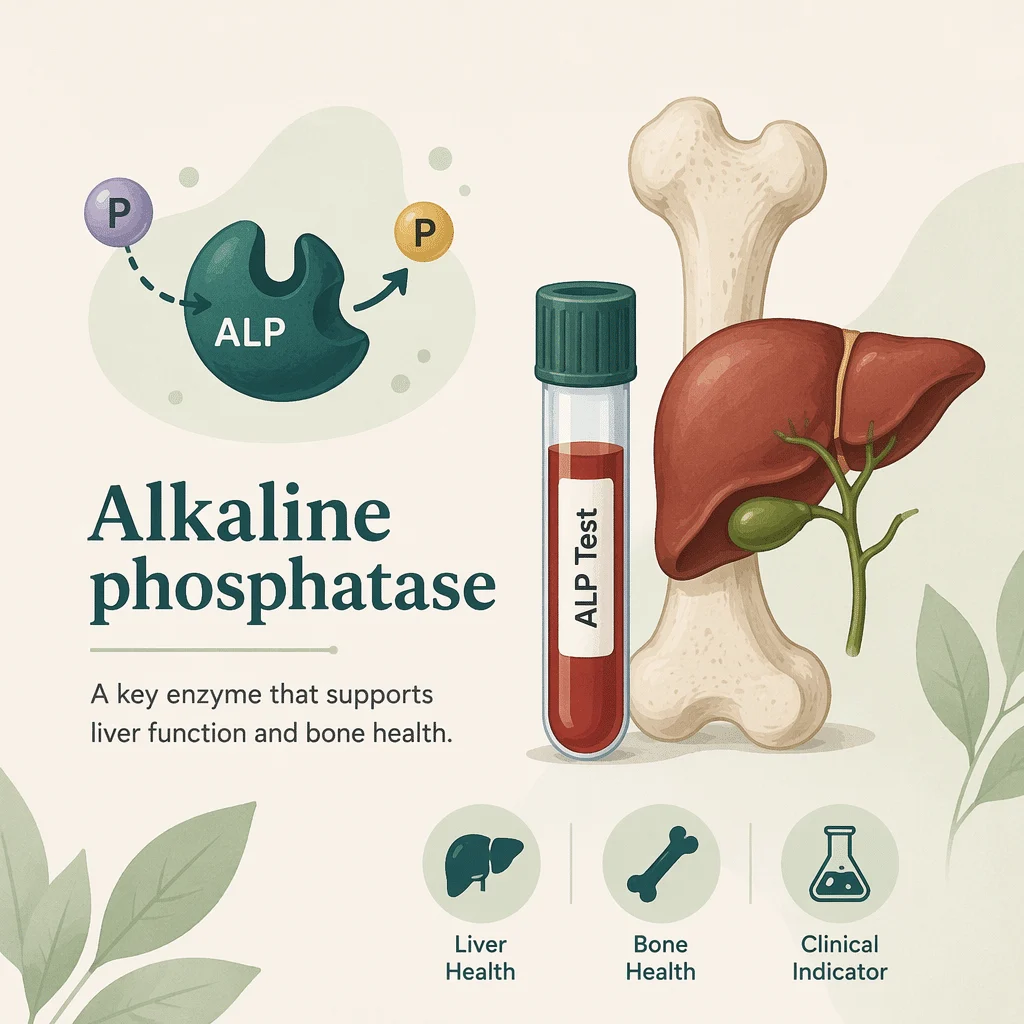
Rezultatul fosfatazei alcaline (ALP) se găsește în secțiunea hepatică a analizelor tale de sânge, iar o valoare în afara intervalului de referință ridică în mod firesc întrebări. Această enzimă reflectă activitatea din două locuri foarte diferite în același timp: ficatul și oasele. Tocmai de aceea un singur număr poate părea confuz. Acest ghid îți explică ce este fosfataza alcalină, de unde provine și cum să interpretezi cu încredere un rezultat crescut sau scăzut. Vei găsi un tabel cu valorile normale în funcție de vârstă, o metodă simplă de a distinge o cauză hepatică de una osoasă, semne de alarmă clare și pași practici de urmat. Nimic din toate acestea nu înlocuiește medicul tău, dar te va ajuta să pui întrebări mai bune.
Ce este fosfataza alcalină (ALP)?
Fosfataza alcalină este o enzimă, adică o proteină care accelerează reacțiile chimice din organism. Funcționează cel mai bine într-un mediu alcalin (ușor bazic), de unde îi vine și numele. Cantitatea măsurată în sângele tău reflectă activitatea mai multor țesuturi simultan, nu a unui singur organ.
De unde provine ALP în corpul tău
Cea mai mare parte a fosfatazei alcaline din sângele tău provine din două surse: ficatul (inclusiv căile biliare) și oasele. Cantități mai mici provin din intestine și rinichi. În timpul sarcinii, placenta devine o sursă suplimentară importantă. Deoarece mai multe țesuturi contribuie la producerea ei, valoarea totală a ALP reflectă activitatea lor combinată. Această origine comună este cel mai important lucru de știut pentru a-ți interpreta corect rezultatul.
Ce face de fapt ALP
Fosfataza alcalină ajută la transportul fosfatului, un element esențial de care organismul tău are nevoie pentru oase puternice, stocarea energiei și semnalizarea celulară. Enzima eliberează fosfatul din molecule mai mari, astfel încât organismul să îl poată reutiliza. Celulele care formează osul, numite osteoblaste, sunt deosebit de bogate în ALP, deoarece depunerea de os nou necesită un aport constant de fosfat și calciu. În ficat, enzima căptușește micile canale care transportă bila, motiv pentru care problemele de flux biliar apar atât de clar în sânge. Orice perturbă echilibrul fosforului, fluxul biliar sau remodelarea osoasă poate, prin urmare, modifica nivelul.
Unde apare fosfataza alcalină în analizele tale de sânge
În majoritatea buletinelor de analize, ALP este listată la „Profil hepatic", „Teste de funcție hepatică (TFH)" sau „Enzime hepatice". Face parte și dintr-un panou metabolic complet (CMP), o analiză de rutină frecventă. Rezultatul este de obicei exprimat în unități pe litru (U/L), alături de intervalul de referință.
O linie tipică arată astfel:
- Fosfatază alcalină (ALP): 87 U/L [Interval de referință: 40–120 U/L]
Multe laboratoare adaugă un cod de culoare sau un simbol. Verde sau absența unui marcaj înseamnă de obicei că valoarea se încadrează în interval. Roșu, un asterisc sau o săgeată (↑ crescut, ↓ scăzut) semnalează o valoare în afara limitelor laboratorului. Aceste marcaje îți arată că un număr este neobișnuit față de grupul de referință; nu îți spun de ce.
De ce intervalul tău „normal" poate diferi de cel al altcuiva
Laboratoarele stabilesc intervalele de referință pe baza unor grupuri mari de persoane sănătoase, păstrând de obicei mijlocul celor 95%. Asta înseamnă că aproximativ 5% dintre persoanele sănătoase se situează ușor în afara limitelor, fără nicio problemă. Intervalele variază și de la un laborator la altul, deoarece se folosesc aparate și metode diferite. Compară întotdeauna rezultatul tău cu intervalul tipărit pe al tău buletinul tău de analize, nu cu un număr găsit pe internet sau cu rezultatele unui prieten.
O listă rapidă pentru a-ți citi valoarea ALP
Când îți primești buletinul de analize, câțiva pași simpli fac ca numărul să pară mult mai puțin intimidant:
- Verifică dacă valoarea se încadrează în intervalul de referință al laboratorului și notează orice marcaj sau săgeată.
- Dacă ai rezultate mai vechi, compară-le pentru a vedea dacă nivelul este stabil, în creștere sau în scădere.
- Uită-te și la ceilalți markeri hepatici din același buletin, în special GGT, ALT, AST și bilirubina.
- Ține cont de vârsta și situația ta: creșterea, pubertatea și sarcina cresc în mod natural ALP.
- Notează medicamentele și suplimentele pe care le iei, deoarece unele pot influența rezultatul.
O singură valoare rareori spune tot. O evoluție în timp, citită împreună cu markerii din jur, este mult mai informativă decât un număr izolat.
Valorile normale ale fosfatazei alcaline în funcție de vârstă și sex
Vârsta influențează ALP mai mult decât aproape orice alt marker uzual din sânge, deoarece osul în creștere produce cantități mari din această enzimă. Valorile de mai jos sunt orientative; folosește-le ca ghid, nu ca diagnostic.
| Grup | Tiparul ALP în funcție de vârstă | De ce |
|---|---|---|
| Nou-născuți și sugari | Mai mare decât la adulți | Formare osoasă rapidă |
| Copii | Ridicat și în creștere | Creștere osoasă continuă |
| Adolescenți (pubertate) | Cele mai mari valori, adesea de 2–3× limita superioară a adultului | Salt de creștere și remodelare osoasă |
| Adulți | Aproximativ 30–120 U/L (unele laboratoare acceptă până la circa 150 U/L) | Remodelare osoasă stabilă |
| Sarcină (trimestrul 3) | Poate aproximativ să se dubleze | Placenta produce ALP suplimentar |
| Femei la menopauză | Ușor mai mare decât la bărbații de aceeași vârstă | Remodelare osoasă mai accelerată după menopauză |
Astfel, un adolescent și o persoană de 50 de ani pot avea valori “normale” foarte diferite. Un rezultat care pare ridicat pentru un adult poate fi perfect așteptat în perioada unui salt de creștere sau în ultimul trimestru de sarcină.
Ce înseamnă un nivel crescut de fosfatază alcalină
Un nivel ridicat este cea mai frecventă anomalie întâlnită. Deoarece enzima provine în principal din două surse, un rezultat crescut indică de obicei fie ficatul și căile biliare, fie oasele.
Cauze hepatice și biliare
Când bila nu poate circula normal, ALP se acumulează în sânge și crește. Această blocare sau încetinire a fluxului biliar se numește colestază. Celulele hepatice răspund producând și mai multă enzimă. Cauzele frecvente includ calculi biliari în canalul biliar, inflamații, anumite medicamente și formațiuni care comprimă căile biliare. Creșterea poate fi semnificativă: în cazul unui blocaj biliar evident, ALP urcă adesea mult peste limita superioară, în timp ce restul analizelor se modifică mai lent.
Să luăm exemplul unei persoane de 45 de ani cu oboseală persistentă de câteva săptămâni, ale cărei analize de rutină arată un ALP de 250 U/L. Deoarece valoarea depășește de mai mult de două ori limita superioară, medicul recomandă o ecografie, care evidențiază un calcul biliar blocat în canalul biliar. Tratarea calculului rezolvă problema. Fără această analiză, cauza ar fi putut trece neobservată luni de zile.
Medicii evaluează rar ficatul doar pe baza ALP. Ei analizează rezultatul împreună cu alți markeri hepatici, cum ar fi ALT, AST, și bilirubină totală. Simptomele care sugerează o cauză hepatică includ îngălbenirea pielii sau a ochilor (icter), mâncărime, urină închisă la culoare și scaune decolorate. O ecografie este adesea pasul următor pentru a depista o obstrucție.
Cauze osoase
Osul este a doua sursă principală. Orice accelerează remodelarea osoasă crește ALP. În boala Paget a osului, ciclul normal de distrugere și reconstrucție a osului se desfășoară prea rapid, ceea ce poate provoca dureri osoase, deformări și un risc crescut de fracturi; ALP este adesea semnificativ crescut. Fracturile în curs de vindecare ridică temporar nivelul, pe măsură ce se formează os nou. Metastazele osoase, în care celulele canceroase perturbă structura osului, pot de asemenea să îl crească. O tiroidă foarte activă sau glandele paratiroide hiperactive accelerează și ele metabolismul osos, motiv pentru care medicul tău poate verifica hormonul paratiroidian (PTH) și calciu. Simptomele legate de os includ dureri osoase, sensibilitate la atingere sau o fractură produsă în urma unui traumatism minor. Pentru a confirma o origine osoasă, medicul poate solicita vitamina D, calciu și investigații imagistice, cum ar fi o scintigrafie osoasă.
Cel mai simplu mod de a diferenția cauza hepatică de cea osoasă: GGT
Iată trucul practic pe care îl folosesc clinicienii. O altă enzimă hepatică, gama-glutamiltransferaza (GGT), crește în afecțiunile ficatului și ale căilor biliare, dar rămâne normală în bolile osoase. Compararea celor două valori ajută la clarificarea rapidă a situației.
| Rezultatul tău | Sursa cea mai probabilă | Pasul următor obișnuit |
|---|---|---|
| ALP crescut + GGT crescut | Ficat sau căi biliare | Ecografie hepatică, bilirubină, ALT/AST |
| ALP crescut + GGT normal | Os | Calciu, vitamina D, imagistică osoasă |
Dacă sursa rămâne neclară, un test specializat de izoenzime ALP poate identifica din ce țesut provine enzima, deși nu toate laboratoarele îl oferă.
Alte cauze ale unui nivel crescut
Mai multe situații inofensive sau previzibile pot crește ALP, inclusiv sarcina (în special trimestrul al treilea), creșterea normală la copii și adolescenți, precum și anumite medicamente, cum ar fi unele antiepileptice. O valoare ușor crescută în aceste contexte nu este, de obicei, un motiv de îngrijorare.
Ce înseamnă un nivel scăzut de fosfatază alcalină
Un nivel scăzut de fosfatază alcalină este mult mai rar și, de obicei, mai puțin urgent, dar nu trebuie ignorat. Poate indica un deficit de nutrienți necesari enzimei sau câteva afecțiuni specifice.
Cauzele posibile includ un nivel scăzut de zinc sau magneziul (enzima are nevoie de acestea pentru a funcționa), malnutriție severă, hipotiroidism și anumite tipuri de anemie. Unele medicamente, inclusiv anumite tratamente pentru oase, pot de asemenea să o scadă. Rar, un nivel persistent foarte scăzut la un copil cu probleme osoase sau dentare poate semnala hipofosfatazia, o tulburare ereditară a dezvoltării oaselor și dinților.
De exemplu, un copil de 8 ani cu creștere întârziată și pierdere timpurie a dinților de lapte ar putea prezenta un ALP neobișnuit de scăzut, mult sub nivelul ridicat așteptat în mod normal la acea vârstă. Aici, valoarea scăzută este un indiciu important, nu o simplă notă de subsol, iar testele genetice pot confirma diagnosticul, astfel încât îngrijirea specializată să înceapă devreme. La majoritatea adulților, însă, un rezultat ușor scăzut determină pur și simplu verificarea dietei și a funcției tiroidiene. Medicul tău va interpreta o valoare scăzută în contextul simptomelor tale și al altor analize, nu tratând cifra în sine.
ALP crescut vs. scăzut – privire de ansamblu
| ALP crescut | ALP scăzut | |
|---|---|---|
| Frecvență | Rezultatul anormal obișnuit | Neobișnuit |
| Surse tipice | Ficat/căi biliare sau oase | Deficit de nutrienți, tiroidă, cauze genetice rare |
| Situații adesea normale | Creștere, sarcină, anumite medicamente | Rareori „doar normal" |
| Analize complementare utile | GGT, ALT, AST, bilirubină, calciu | Zinc, magneziu, analize tiroidiene |
| Urgență generală | Depinde de amploare și context | De obicei mai puțin urgent |
Acest tabel este un punct de plecare pentru o discuție cu medicul tău, nu un instrument de autodiagnosticare.
Când să mergi la medic pentru fosfataza alcalină
Majoritatea rezultatelor ușor în afara intervalului normal sunt urmărite calm printr-un test repetat. Există totuși situații care necesită o consultație medicală promptă. Contactează medicul tău dacă se aplică oricare dintre următoarele.
- ALP-ul tău depășește de aproximativ trei ori limita superioară a intervalului de referință.
- Un nivel crescut persistă mai mult de aproximativ trei luni.
- Ai icter, mâncărime intensă, urină închisă la culoare sau scaune decolorate.
- Ai dureri osoase semnificative sau inexplicabile ori o fractură în urma unui traumatism minor.
- Alți markeri hepatici (ALT, AST, GGT sau bilirubina) sunt și ei modificați.
- Te simți foarte obosit, slăbești fără să vrei sau ai antecedente personale ori familiale de boli hepatice, osoase sau oncologice.
Ce poți face în cazul unui rezultat anormal
Primul și cel mai util pas este să discuți rezultatul cu medicul tău, care îl poate interpreta în contextul stării tale generale de sănătate. Cât de atent este urmărit un rezultat depinde, de obicei, de amploarea sa: o creștere ușoară și izolată este adesea pur și simplu reverificată după una până la două luni, o modificare moderată poate necesita investigații suplimentare, iar o creștere mare sau însoțită de simptome este evaluată prompt. Pe lângă aceasta, câteva obiceiuri generale susțin sistemele pe care le reflectă ALP, fără a pretinde că „rezolvă" un număr.
Dacă se suspectează o cauză hepatică, reducerea sau oprirea consumului de alcool, limitarea alimentelor puternic procesate și foarte grase, precum și atingerea unei greutăți sănătoase reduc solicitarea ficatului. Dacă se suspectează o cauză osoasă, activitatea fizică cu impact, cum ar fi mersul pe jos, împreună cu un aport suficient de calciu și vitamina D, susțin sănătatea oaselor. Pentru un nivel scăzut, o dietă variată care acoperă necesarul de zinc și magneziu este o alegere înțeleaptă. Somnul bun, hidratarea constantă și gestionarea stresului îți ajută organismul în toate aceste situații. Niciunul dintre aceste lucruri nu înlocuiește un diagnostic sau un tratament și nu trebuie să oprești niciodată un medicament prescris fără recomandarea medicului.
Glosar
- Izoenzimele ALP: forme diferite ale fosfatazei alcaline, identificate în funcție de țesutul care le-a produs (ficat, os, intestin, placentă).
- Canalul biliar: tubul mic care transportă bila de la ficat și vezica biliară la intestin.
- Colestaza: o încetinire sau blocare a fluxului biliar, o cauză frecventă a unui ALP crescut.
- Panelul metabolic complet (CMP): un grup de analize de sânge de rutină care include ALP alături de markeri renali, hepatici și electroliți.
- GGT (gama-glutamil transferaza): o enzimă hepatică folosită alături de ALP pentru a diferenția o cauză hepatică de una osoasă.
- Hipofosfatazia: o afecțiune ereditară rară care afectează dezvoltarea oaselor și a dinților, uneori asociată cu un ALP foarte scăzut.
- Panoul hepatic (TGF/probe hepatice): un set de analize de sânge, inclusiv ALP, care depistează problemele hepatice.
- Boala Paget a osului: o afecțiune în care osul se reface prea rapid, ducând la creșterea ALP.
- Interval de referință: setul de valori considerate normale pentru grupul de referință sănătos al unui laborator.
Întrebări frecvente
Ce nivel al fosfatazei alcaline este periculos?
Nu există o valoare unică considerată „periculoasă". Contextul contează mai mult decât cifra în sine. Ca orientare generală, medicii acordă o atenție sporită atunci când ALP depășește de aproximativ trei ori limita superioară a normalului, când rămâne crescut mai mult de trei luni sau când apare însoțit de semne de alarmă precum icter sau dureri osoase semnificative. Valorile foarte mari indică adesea o obstrucție marcată a căilor biliare sau o boală osoasă activă și necesită evaluare promptă. Un rezultat ușor crescut în perioada de creștere sau în sarcină este de obicei așteptat. Medicul tău pune în balanță valoarea obținută cu vârsta, simptomele și celelalte analize înainte de a decide cât de urgentă este situația.
Cum pot scădea fosfataza alcalină crescută și ce alimente ar trebui să evit?
ALP scade prin tratarea cauzei, nu prin urmărirea cifrei în sine. Dacă ficatul este implicat, reducerea sau renunțarea la alcool, limitarea alimentelor foarte grase și intens procesate, precum și atingerea unei greutăți sănătoase sunt măsuri utile. Dacă turnoverul osos este cauza, susținerea sănătății oaselor cu calciu, vitamina D și activitate fizică cu impact este mai relevantă decât orice aliment anume. Nu există o „dietă pentru ALP" dovedită care să funcționeze de una singură. Cel mai eficient pas este să identifici și să tratezi cauza de bază împreună cu medicul tău.
Este normal să ai fosfataza alcalină crescută în sarcină?
Adesea, da. Placenta produce propria fosfatază alcalină, astfel că valorile cresc de obicei în timpul sarcinii și pot aproximativ să se dubleze în trimestrul al treilea. Aceasta este o modificare normală și așteptată pentru majoritatea persoanelor. Cu toate acestea, sarcina poate implica și afecțiuni hepatice, așa că un rezultat mult mai mare decât cel așteptat sau unul însoțit de mâncărimi, icter sau stare generală alterată ar trebui verificat de medicul tău sau de moașă, nu considerat automat inofensiv.
Pot medicamentele să îmi influențeze nivelul de fosfatază alcalină?
Da. Mai multe medicamente pot crește ALP, printre care unele antiepileptice și anumite antibiotice. Altele, cum ar fi unele tratamente pentru osteoporoză, îl pot scădea. Suplimentele pot juca și ele un rol. Din acest motiv, este util să îi dai medicului tău o listă completă cu tot ce iei, inclusiv produse fără prescripție și suplimente. Nu opri și nu modifica niciodată un medicament prescris pe cont propriu doar pentru că o valoare din analize pare neobișnuită.
O fosfatază alcalină crescută înseamnă întotdeauna boală hepatică?
Nu. Deși ficatul este o sursă majoră, oasele sunt la fel de importante, iar creșterea, sarcina și anumite medicamente pot crește nivelul din motive complet benigne. Tocmai de aceea medicii verifică GGT și alți markeri: un ALP crescut cu GGT normal indică de obicei o cauză osoasă, nu hepatică. O singură valoare ridicată este un motiv de investigare suplimentară, nu un diagnostic.
Trebuie să fii pe nemâncate înainte de testul fosfatazei alcaline?
De multe ori da, dar nu întotdeauna. ALP este de obicei recoltat ca parte dintr-un panel mai larg de analize, iar unele dintre acestea necesită un post de aproximativ 8 până la 12 ore. Mâncatul înainte de recoltare poate crește ușor ALP, mai ales la anumite grupe sanguine. Medicul sau laboratorul îți va spune dacă trebuie să fii pe nemâncate și dacă trebuie să întrerupi temporar anumite medicamente. În caz de dubiu, urmează instrucțiunile scrise de pe biletul de trimitere.
Surse
- Fosfataza alcalină — MedlinePlus (Biblioteca Națională de Medicină a SUA)
- Fosfataza alcalină (ALP) — Cleveland Clinic
- Analiză de sânge pentru fosfataza alcalină (ALP) — Mayo Clinic
Lectură suplimentară
- Gama-glutamiltransferaza (GGT): ghid complet
- Alanin aminotransferaza (ALT): valori și semnificație
- Testul AST (SGOT): înțelegerea rezultatelor enzimelor hepatice
- Bilirubina totală: ghid complet
- Hormonul paratiroidian (PTH): înțelege-ți rezultatele analizelor
Înțelege-ți rezultatele analizelor cu AI DiagMe
Fosfataza alcalină rareori spune totul de una singură. Semnificația ei devine clară abia alături de markeri precum GGT, celelalte enzime hepatice (ALT și AST), bilirubina, calciul și vitamina D, iar interpretarea mai multor valori împreună necesită timp. AI DiagMe transformă buletinul tău de analize în explicații clare, pe înțelesul tuturor, în câteva minute — astfel poți vedea cum se leagă rezultatele între ele și poți merge la consultație pregătit cu întrebările potrivite. Te ajută să îți înțelegi rezultatele; nu pune diagnostice și nu înlocuiește niciodată medicul tău.
➡️ Obține interpretarea rezultatelor în câteva minute