




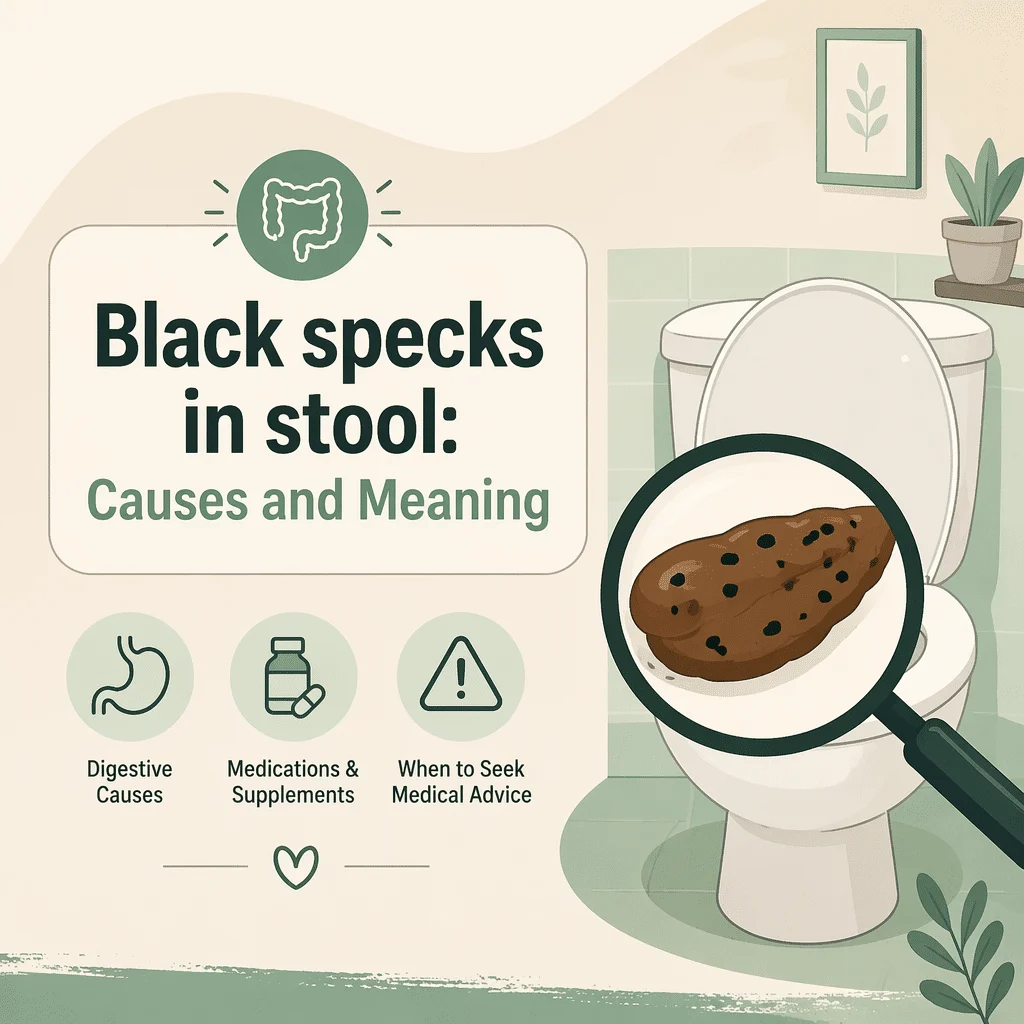
Noticing black specks in stool can be unsettling, but most of the time the cause is completely harmless — usually a food you ate or a supplement you take. Tiny dark flecks often come from seeds, berry skins, iron pills, or bits of fiber that your body did not fully break down. Less often, dark specks or a black, tarry stool can point to bleeding higher up in the digestive tract, which is worth checking. This article explains what black specks in stool usually mean, which causes are reassuring, how to tell a harmless pattern from a concerning one, how doctors evaluate the change, and the warning signs that should prompt a call to your clinician.
What black specks in stool usually mean
In healthy adults, black specks in stool are usually small, scattered, and easy to trace back to something recent in the diet or medicine cabinet. Stool gets its normal brown color from bile, a digestive fluid made by the liver, so dark flecks that stand out against otherwise brown poop are most often stray particles rather than a health problem. The pattern matters more than the color alone: a few dark dots in a normal, formed, brown stool is very different from a whole bowel movement that looks black and tar-like.
What the specks actually are
The dark flecks people notice are frequently the seeds and skins of fruits, fragments of leafy greens, coffee grounds, or the residue left by an iron tablet. They can also be small pieces of fiber your gut did not digest. What matters most is the surrounding context: your recent meals, any new medicine, and whether you feel well otherwise.
Common, harmless causes of black specks in stool
Most everyday cases fall into a few familiar groups. If you can match your black specks in stool to one of the causes below, and you feel fine, there is usually little reason for concern.
Foods, seeds, and food coloring
Dark or deeply pigmented foods are the most common explanation. Blueberries, blackberries, figs, cherries, and the tiny seeds in bananas or kiwi can all appear as dark flecks. Poppy seeds, leafy greens such as spinach and kale, black licorice, and foods with dark blue, purple, or black dye can do the same. These particles keep their color as they pass through the gut.
Iron supplements and bismuth medicines
Iron supplements are a classic cause of dark stool. Extra iron that the body does not absorb can turn bowel movements dark green to near-black and may show up as black flecks. Medicines that contain bismuth subsalicylate, such as Pepto-Bismol and some other upset-stomach or anti-diarrhea products, react with tiny amounts of sulfur in the gut and can darken the whole stool or the tongue. Both effects are harmless and fade within a day or two of stopping the product.
Undigested fiber and normal bile pigment
High-fiber eating is healthy, but some fiber is simply not digestible. Corn skins, seed coats, and tough plant fibers can appear as dark or black bits. Normal variation in bile pigment can also make stool darker on some days than others. Other stool changes, such as pale and greasy bowel movements, can instead signal fatty stool, which points to a different process; you can read more about greasy, hard-to-flush stools in our guide to fatty stool.
When black specks or black stool can signal bleeding
The cause that needs attention is blood from the upper digestive tract — the esophagus, stomach, or the first part of the small intestine. When blood is digested on its way through the gut, it turns dark. The result is usually not a few tiny dots but a distinctive stool doctors call melena: black, sticky, tar-like, and unusually foul-smelling. The U.S. National Library of Medicine describes black or tarry stools as a possible sign of bleeding in the upper digestive tract.
Common sources of this kind of bleeding include stomach ulcers, inflammation of the stomach lining (gastritis), and irritation of the esophagus. Regular use of anti-inflammatory painkillers can contribute by irritating the stomach. Bright red blood, by contrast, usually comes from lower down — for example from hemorrhoids — and looks different from digested, tarry blood. Ongoing hidden bleeding is also one of the patterns that prompts doctors to check for colorectal cancer, although in most people dark stool has a far more ordinary explanation.
Benign versus concerning: how to tell them apart
You do not need to diagnose yourself, but a few simple checks help you decide whether black specks in stool are likely harmless or worth a same-week call. The table below compares the reassuring pattern with the pattern that deserves medical attention.
| What to check | Usually harmless (food or supplements) | Possible bleeding — get it checked |
|---|---|---|
| Color pattern | Small, scattered black flecks in otherwise brown stool | The whole stool looks black |
| Texture and smell | Normal formed stool with the usual smell | Sticky, tar-like, and unusually foul-smelling (melena) |
| Recent diet or medicine | Berries, seeds, iron pills, or bismuth in the last day or two | No food or medication that would explain it |
| How long it lasts | Clears within a day or two after stopping the food or pill | Continues over several days |
| Other symptoms | You feel well otherwise | Tiredness, dizziness, belly pain, or dark vomit |
| Sensible next step | Reassess after adjusting diet or supplements | Contact a clinician; seek urgent care if you feel unwell |
Warning signs and when to see a doctor
Context decides urgency. If dark flecks appear once, you feel healthy, and a recent meal or supplement explains them, watchful waiting is reasonable. Some situations, though, call for prompt medical advice.
Call your doctor soon if
- Dark specks or dark stool continue for more than a few days with no dietary or medication explanation.
- You also feel more tired than usual, short of breath, or lightheaded.
- You take anti-inflammatory painkillers regularly, or blood thinners, and notice a color change.
- You have ongoing stomach pain, heartburn, or unexplained weight loss.
Get emergency care right away if
- Your stool is black, sticky, and tarry, especially with dizziness, fainting, or a racing heartbeat.
- You vomit blood or material that looks like coffee grounds.
- You have severe abdominal pain or pass a large amount of blood.
How doctors evaluate black specks in stool
When you describe black specks in stool, a clinician starts with your history: recent foods, supplements, medicines, and any other symptoms. That conversation often settles harmless cases quickly. When bleeding needs to be ruled out, a few tests are common and straightforward.
Stool tests
A stool test can detect hidden blood that is invisible to the eye — often a fecal immunochemical test, which reacts to human blood. If an infection or another gut problem is suspected, the lab may run a stool culture test, and your doctor may request an ova and parasites stool test. To gauge intestinal inflammation, the lab can run a fecal calprotectin test.
Blood tests
If slow blood loss is a concern, doctors often order a complete blood count, because ongoing bleeding can reveal iron-deficiency anemia. To look at iron stores in more detail, your clinician may order an iron studies panel; a blood test can also measure low ferritin levels, which can accompany slow blood loss. If you want help making sense of a report, you can learn how to read your blood test results.
Looking inside
When results or symptoms suggest bleeding, a doctor may recommend an endoscopy or colonoscopy — a thin camera that examines the digestive tract directly and can find the source. Most people with harmless dark flecks never need this step.
Latest scientific advances
Research continues to sharpen how doctors think about dark stool, hidden blood, and bleeding risk. The findings below come from recent studies indexed in PubMed, translated here into plain language; each links to its published source.
Not all painkillers carry the same bleeding risk
A 2025 systematic review found that the risk of gastrointestinal bleeding varies widely among common anti-inflammatory painkillers — the group known as NSAIDs, non-steroidal anti-inflammatory drugs such as ibuprofen. Some agents were linked to a much higher bleeding risk than others. What this means for you: if you take anti-inflammatory pain relievers often and notice black or tarry stool, mention both to your doctor, who can weigh the specific medicine and suggest safer options. You can read the study through its published record.
Stool blood tests work best in the right setting
A 2025 review of faecal occult blood testing — stool tests that detect hidden blood, including the fecal immunochemical test — reaffirmed that these tools perform best as screening tests for people without symptoms who are at average risk. Using them in the wrong setting can produce misleading results. What this means for you: a stool blood test is genuinely useful, but it is one piece of the picture, and your doctor reads it alongside your symptoms and history rather than on its own. The full review is available through its published record.
A normal result does not always close the case
An updated 2024 review found that the fecal immunochemical test detects most colorectal cancers in people who already have gut symptoms, yet it can still miss some — so a single negative result does not fully rule out a problem when symptoms persist. What this means for you: if dark specks or other digestive symptoms continue after a normal stool test, it is worth following up rather than assuming everything is fine. The analysis can be reviewed through its published record.
Glossary of key terms
| Term | Definition |
|---|---|
| Melena | Black, tarry, foul-smelling stool caused by digested blood from the upper digestive tract. |
| Occult blood | Blood in stool in amounts too small to see, found only by a laboratory test. |
| Fecal immunochemical test (FIT) | A stool test that detects hidden human blood, widely used in bowel screening. |
| Fecal occult blood test | A general term for stool tests that look for hidden blood. |
| Bismuth subsalicylate | An ingredient in some stomach and anti-diarrhea medicines that can turn stool black. |
| Bile | A greenish-brown digestive fluid from the liver that gives stool its normal brown color. |
| Ferritin | A blood protein that reflects stored iron; low levels can follow ongoing blood loss. |
| Endoscopy | A procedure using a thin camera to look inside the digestive tract. |
| Hematochezia | The passage of bright red blood with stool, usually from the lower digestive tract. |
| NSAID | A non-steroidal anti-inflammatory drug, such as ibuprofen, that can irritate the stomach lining. |
Frequently asked questions
Is it normal to have black specks in stool?
Occasional black specks in stool are common and usually normal, especially when you can link them to dark foods, seeds, an iron supplement, or a bismuth medicine. The reassuring pattern is a few scattered flecks in an otherwise brown, well-formed stool while you feel well. It becomes worth checking when the whole stool turns black and tarry, when dark stool lasts several days without a dietary explanation, or when other symptoms appear.
Can black specks in stool be something other than blood?
Yes. Far more often than not, dark flecks are undigested food, seed skins, fiber, coffee grounds, or residue from an iron tablet. Digested blood usually makes the entire stool black and sticky rather than producing a few tiny dots. The overall pattern — scattered specks versus a uniformly black, tar-like stool — is the most useful clue.
Do black specks in stool mean colon cancer?
In most cases, no. Dark specks are usually dietary, and a single finding in someone who feels well is rarely a sign of cancer. That said, ongoing hidden blood loss can be one signal doctors take seriously, particularly with other changes such as unexplained weight loss, persistent belly pain, or a shift in bowel habits. If dark stool continues without explanation, a clinician can arrange simple tests to check.
Can iron supplements cause black specks in stool?
Yes, and this is one of the most frequent explanations. Iron your body does not absorb can darken bowel movements to dark green or near-black and may look like black flecks. The effect is harmless and reversible; stool color usually returns to normal within a day or two of stopping the supplement. If you are unsure whether iron or bleeding is the cause, a stool blood test can help settle the question.
Are black specks in a baby or breastfed infant a concern?
Dark specks in a baby’s diaper often come from swallowed material or, in breastfed infants, small amounts of the parent’s blood from a cracked nipple, which is not dangerous to the baby. Iron-fortified formula can also darken stool. Even so, a baby’s digestive system is best assessed by a pediatrician, so it is sensible to check with your child’s doctor if you are worried or if the pattern continues.
Can a parasite cause black specks in stool?
Intestinal parasites more often cause diarrhea, cramping, or visible worm fragments than true black specks, and the dark flecks people see are usually food or supplement residue. If you have had persistent diarrhea, recent travel, or other digestive symptoms, a doctor can order stool testing to look for parasites rather than relying on guesswork.
Sources
- MedlinePlus (U.S. National Library of Medicine) — Black or tarry stools — MedlinePlus Medical Encyclopedia, 2024 — medlineplus.gov
- National Institute of Diabetes and Digestive and Kidney Diseases (NIDDK) — Gastrointestinal (GI) Bleeding — NIDDK, 2024 — niddk.nih.gov
- Cleveland Clinic — Blood in Stool (Rectal Bleeding): Causes and What It Looks Like — Cleveland Clinic, 2024 — my.clevelandclinic.org
- Tawfik AG, et al. — Nonsteroidal Anti-Inflammatory Drugs and Risk of Gastrointestinal Bleeding: A Systematic Review and Meta-Analysis — Clinical Pharmacology & Therapeutics, 2025 — doi.org/10.1002/cpt.70054
- Méndez G, et al. — Faecal occult blood testing: a review of its use and common misutilisation — BMJ Open Gastroenterology, 2025 — doi.org/10.1136/bmjgast-2025-001876
- Harnan S, et al. — Faecal immunochemical tests for patients with symptoms suggestive of colorectal cancer: an updated systematic review and meta-analysis — Colorectal Disease, 2024 — doi.org/10.1111/codi.17255
Further reading
- Low MCV: causes, symptoms and treatments
- Fecal lactoferrin test: understanding positive results
- Abnormal blood test results: what they mean
- C. diff toxin test: how to read your results
- Normal blood test ranges: a reference chart explained
Understand your lab results with AI DiagMe
Dark flecks in your stool are usually harmless, but when a doctor checks for bleeding the answers often come from lab results — a fecal occult blood test that looks for hidden blood, a complete blood count that can reveal anemia, and ferritin or iron studies that show whether your iron stores are running low. AI DiagMe helps you understand what those numbers mean in plain language, so you can have a better-informed conversation with your clinician. It is designed to help you understand your results, not to diagnose you, and it does not replace your doctor.
Get your results interpreted in minutes