







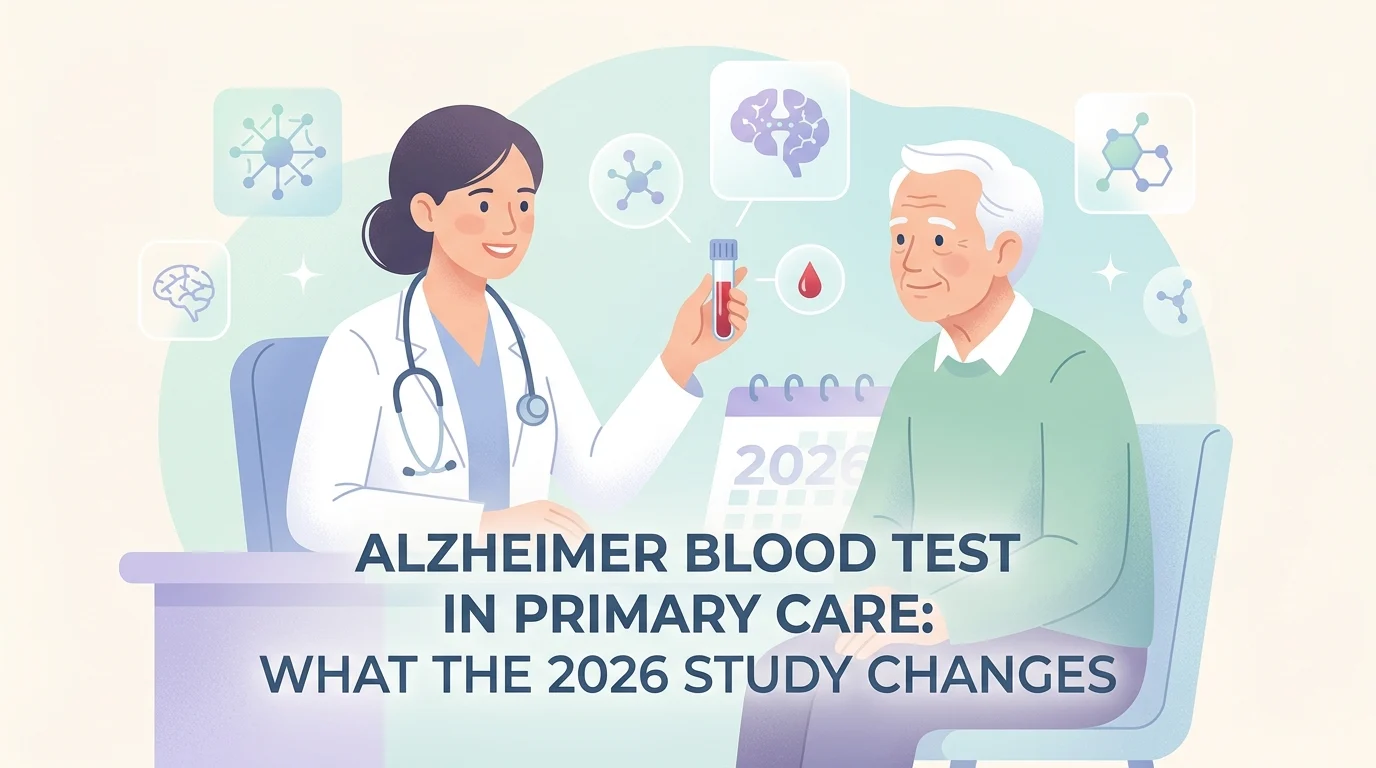
De Alzheimer-bloedtest bij de huisarts zette in juli 2026 een duidelijke stap vooruit tijdens een belangrijk wetenschappelijk congres: in een grootschalig praktijkonderzoek stelden huisartsen de diagnose alzheimer bijna even nauwkeurig als geheugenspecialisten, zodra zij de uitslag van een bloedbiomerker van een patiënt konden inzien. Het gaat hier minder om een gloednieuwe test dan om een nieuwe plek om hem te gebruiken — de huisartsenpraktijk, waar de meeste mensen met geheugenproblemen als eerste terechtkomen. In dit artikel leest u wat het onderzoek heeft aangetoond, waarom een nauwkeurige diagnose dichter bij huis belangrijk is, wat de uitslag wel en niet kan vertellen, en waarom de beoordeling door een arts nog steeds vooropstaat.
Wat het AAIC-onderzoek van 2026 aantoonde
De bevindingen werden voor het eerst gepresenteerd op de Alzheimer’s Association International Conference (AAIC) 2026 in Londen. Onderzoekers voerden een van de eerste praktijkstudies van dit soort uit, waarbij meer dan 1.300 patiënten en 165 artsen betrokken waren. Patiënten die bij de huisarts kwamen, werden ook onafhankelijk beoordeeld door dementiespecialisten, wat een directe vergelijking van de nauwkeurigheid mogelijk maakte.
Voordat ze een bloeduitslag zagen, stelden huisartsen de diagnose alzheimer correct in ongeveer 65% van de gevallen. Nadat ze de bloedbiomarckeruitslag hadden bekeken, steeg hun nauwkeurigheid naar ongeveer 93% — dicht bij de 94% die specialisten bij dezelfde patiënten bereikten. De test die in het onderzoek werd gebruikt, PrecivityAD2, meet amyloïd-bèta en gefosforyleerd tau, twee eiwitten die verband houden met alzheimer. De artsen deden meer dan alleen beter scoren op papier: na het zien van de uitslag veranderden ze de diagnose bij ongeveer één op de drie patiënten in de huisartsenpraktijk en pasten ze het zorgplan aan bij meer dan de helft. De hoofdauteur van het onderzoek, neuroloog Sebastian Palmqvist van de Universiteit van Lund, omschreef het effect als het dichten van de kloof tussen de eerste- en tweedelijnszorg.
Waarom de diagnose alzheimer bij de huisarts zo belangrijk is
De echte verandering zit in de toegankelijkheid. Tegenwoordig vereist het bevestigen van alzheimer doorgaans een PET-hersenscan of een ruggenmergvloeistofmonster — nauwkeurige methoden die kostbaar zijn en voornamelijk beschikbaar zijn in geheugenpoli's. De meeste mensen bespreken geheugenproblemen echter eerst met hun huisarts en wachten vervolgens weken of maanden op een doorverwijzing en specialistisch onderzoek. Een uitslag die een huisarts tijdens een gewoon consult kan beoordelen, verkort dat traject aanzienlijk. Voor meer informatie over wat het afnemen van een monster inhoudt, legt een aparte gids het standaard bloedonderzoekproces stap voor stap uit.
In dit onderzoek was de test in de huisartsenpraktijk het nuttigst voor één specifieke taak: alzheimer uitsluiten. Na een negatieve uitslag verdubbelde de bereidheid van huisartsen om alzheimer met zekerheid uit te sluiten ruwweg, waardoor ze andere — soms behandelbare — oorzaken van geheugen- of denkproblemen kunnen onderzoeken.
Wat de test precies meet
De bloedtest meet twee eiwitten die verband houden met alzheimer: een vorm van tau genaamd p-tau217, en een fragment van amyloïd. Hun verhouding in het bloed weerspiegelt de amyloïdplaques die zich in de hersenen ophopen, waardoor een buisje bloed een indirecte blik biedt op dat proces. Dit is dezelfde biologie als die achter de door de FDA goedgekeurde alzheimerbloodtest die onze redactie al bespreekt, en achter de p-tau217-test die het risico een decennium vóór de eerste symptomen voorspelt. Onze redactie legt de biologie van de ziekte van Alzheimer uit voor wie wil begrijpen hoe deze eiwitten de aandoening veroorzaken.
Wat de nauwkeurigheidsgetallen betekenen
De belangrijkste conclusie is niet dat de test foutloos is, maar dat hij de nauwkeurigheid van een gewone huisarts naar een niveau dicht bij dat van een specialist tilt. De onderstaande tabel toont de cijfers van vóór en na de behandeling zoals gerapporteerd in de tussentijdse analyse.
| Groep | Nauwkeurigheid vóór de bloedtest | Nauwkeurigheid na de uitslag |
|---|---|---|
| Huisartsen | Ongeveer 65% | Ongeveer 93% |
| Dementiespecialisten | Ongeveer 74% | Ongeveer 89% (94% in directe vergelijking bij huisartspatiënten) |
Twee punten zijn het waard om in gedachten te houden. De specialisten bleven nog steeds iets beter scoren, en in de dagelijkse praktijk kwamen beide groepen pas rond de 90% uit nadat ze allebei de bloeduitslag hadden gezien. De grootste praktische winst bij huisartsen lag bovendien in het uitsluiten van de ziekte, niet in het stellen van een definitieve diagnose — veel huisartsen gaven er nog steeds de voorkeur aan een positieve uitslag door te sturen naar een specialist ter bevestiging, en dat is precies zoals het hoort.
Wat een bloedtest bij de huisarts níét betekent
De test is bedoeld voor mensen die al klachten hebben met geheugen of denken en daarvoor worden onderzocht. Het is geen screeningsinstrument voor gezonde mensen zonder klachten, waarbij een afwijkende uitslag veel vaker onjuist is. Een negatieve uitslag is ook specifiek voor de ziekte van Alzheimer: hij sluit niet elke andere neurologische aandoening uit, dus sommige mensen met een normale uitslag worden toch doorverwezen.
Veranderingen in geheugen en denken hebben veel oorzaken die deze test niet meet — waaronder schildklierproblemen, vitaminegebrek en nierproblemen. Onze bibliotheek legt uit wat de symptomen en oorzaken zijn van een laag vitamine B12, een aanvullend artikel behandelt normale schildklierwaarden, en een verwante gids legt het nierfunctiepanel uit. Al deze factoren kunnen de cognitie beïnvloeden en zijn de moeite waard om te controleren voordat conclusies worden getrokken.
Wanneer moet je met een arts praten?
Als u of iemand in uw omgeving geheugenveranderingen opmerkt die het dagelijks leven verstoren, is dat het moment om dit met een arts te bespreken, die kan bepalen welk onderzoek passend is. Af en toe iets vergeten op zichzelf is meestal een normaal onderdeel van het ouder worden. Als er aan testen wordt gedacht, kan een gids voor het lezen van uw bloeduitslagen u helpen het gesprek te volgen.
Recente wetenschappelijke ontwikkelingen
Volgens onderzoek geïndexeerd in PubMed bouwt het in 2026 gerapporteerde huisartsresultaat voort op een solide geheel van eerder werk.
Een eerder onderzoek in JAMA (2024) testte hetzelfde idee bij 1.213 mensen in Zweden. De nauwkeurigheid van huisartsen voor de ziekte van Alzheimer steeg van 61% naar 91% zodra ze de bloeduitslag hadden, terwijl specialisten van 73% naar 91% gingen (DOI). Wat dit voor u betekent: de bevinding uit 2026 is een bevestiging in de praktijk van een voordeel dat al twee jaar eerder was gemeten.
Een studie in Nature Medicine (2025) testte een volledig geautomatiseerde versie van de test — die werkt op standaard laboratoriumapparatuur — bij 1.767 mensen. De nauwkeurigheid bedroeg ongeveer 85% in de eerstelijnszorg, oplopend tot 92–94% wanneer een tweestaps-drempelwaarde de meest onzekere resultaten apart zette (DOI). Wat dit voor u betekent: de test wordt steeds eenvoudiger uitvoerbaar voor gewone laboratoria, en een 'onzekere' zone is ingebouwd in plaats van verborgen gehouden.
Een review uit 2025 in het Journal of Alzheimer’s Disease wees op een praktisch voorbehoud: een verminderde nierfunctie kan op zichzelf al het p-tau217-gehalte in het bloed verhogen (DOI). Wat dit voor u betekent: uw niergezondheid kan de uitslag beïnvloeden — nog een reden waarom een arts het resultaat altijd in samenhang met uw overige gezondheidsgegevens beoordeelt, en niet op zichzelf.
Glossarium
| Termijn | Definitie |
|---|---|
| P-tau217 | Een vorm van het tau-eiwit, meetbaar in het bloed, die stijgt wanneer aan de ziekte van Alzheimer gerelateerde veranderingen aanwezig zijn in de hersenen. |
| Amyloïd bèta | Een proteïnefragment gemeten in een bloedtest en vergeleken met p-tau217 om amyloïde plaques te beoordelen. |
| Eerstelijnszorg | Alledaagse eerstelijnsgezondheidszorg, zoals een huisarts of algemeen arts. |
| Dementiespecialist | Een neuroloog, geriater of psychiater die zich richt op geheugen- en cognitieve stoornissen. |
| Diagnostische nauwkeurigheid | Hoe vaak een test of clinicus de juiste conclusie bereikt ten opzichte van een referentiestandaard. |
| PrecivityAD2 | De merknaam van de bloedtest die in de studie van 2026 werd gebruikt, waarbij amyloïde en p-tau worden gemeten. |
| Biomarker | Een meetbare stof in het lichaam die wijst op een normaal proces of een ziekte. |
| Uitsluiten | Een uitslag gebruiken om te bepalen dat een aandoening onwaarschijnlijk is, zodat andere oorzaken onderzocht kunnen worden. |
| Milde cognitieve stoornis | Een merkbare achteruitgang in geheugen of denkvermogen die het zelfstandig dagelijks functioneren nog niet belemmert. |
| PET-scan | Een hersenbeeldvormingstest die amyloïde plaques kan aantonen en als referentie voor bloedmarkers wordt gebruikt. |
Veelgestelde vragen
Kan mijn huisarts een bloedtest voor alzheimer aanvragen?
Steeds vaker wel, hoewel de beschikbaarheid nog per regio en kliniek verschilt. De bevindingen uit 2026 en de bijbehorende richtlijnen van de Alzheimer’s Association zijn er specifiek op gericht huisartsen te helpen deze tests goed te gebruiken. De beslissing moet worden genomen samen met een clinicus die uw klachten beoordeelt, en mag niet op verzoek worden aangevraagd, omdat de uitslag alleen zinvol is in de context van een gedegen beoordeling.
Is de bloedtest voor alzheimer nauwkeurig genoeg voor de eerstelijnszorg?
In de studie van 2026 bereikten huisartsen een nauwkeurigheid van ongeveer 93% na het zien van de uitslag, dicht bij die van specialisten bij dezelfde patiënten. Dat is sterk, maar dit cijfer weerspiegelt artsen die de test samen met het klinische beeld interpreteren, niet de test op zichzelf. Het is een hulpmiddel bij besluitvorming, geen eindoordeel.
Vervangt de bloedtest een hersenscan of ruggenprik?
Vaak vermindert het de noodzaak daarvoor, wat een groot deel van de aantrekkingskracht is, maar het vervangt ze niet automatisch. Een positieve uitslag in de eerstelijnszorg wordt vaak doorgestuurd naar een specialist ter bevestiging, en bij onduidelijke uitslagen kan alsnog een PET-scan of liquoronderzoek nodig zijn.
Wat betekent een negatieve uitslag?
Een negatieve uitslag maakt aan alzheimer gerelateerde veranderingen op het moment van testen onwaarschijnlijk, wat geruststellend is en de meest nuttige rol van de test in de eerstelijnszorg was. Het sluit echter andere aandoeningen niet uit, dus als de klachten aanhouden kan uw arts toch verder onderzoek doen of u doorverwijzen.
Is deze test bedoeld voor mensen zonder klachten?
Nee. De test is bedoeld voor volwassenen bij wie geheugen- of denkproblemen worden onderzocht. Bij mensen zonder klachten is een afwijkend resultaat veel vaker onjuist, en daarom reserveren de huidige richtlijnen de test voor mensen die al cognitieve veranderingen ervaren.
Wat kost de bloedtest voor de ziekte van Alzheimer?
Kosten en vergoeding verschillen per locatie, laboratorium en zorgverzekering. Over het algemeen wordt de prijs naar verwachting lager dan die van een amyloïd-PET-scan of een ruggenmergvloeistoftest, maar het is verstandig om bij uw zorgverlener en verzekeraar na te vragen wat u kunt verwachten voordat de test wordt aangevraagd.
Bronnen
- Alzheimer Blood Test Could Bring Highly Accurate Diagnosis into Everyday Clinical Care — Alzheimer’s Association International Conference 2026 — aaic.alz.org
- FDA keurt eerste bloedtest goed voor de diagnose van de ziekte van Alzheimer — U.S. Food and Drug Administration — fda.gov
- FDA-Approved Blood Test Detects Early Markers of Alzheimer’s Disease — Johns Hopkins Medicine — hopkinsmedicine.org
- Palmqvist S, et al. — Blood Biomarkers to Detect Alzheimer Disease in Primary Care and Secondary Care — JAMA, 2024 — DOI
- Palmqvist S, et al. — Plasma phospho-tau217 for Alzheimer’s disease diagnosis in primary and secondary care using a fully automated platform — Nature Medicine, 2025 — DOI
- Arslan B, et al. — Integrating kidney function assessment into the clinical interpretation of plasma Alzheimer’s disease biomarkers — Journal of Alzheimer’s Disease, 2025 — DOI
Verder lezen
- De door de FDA goedgekeurde bloedtest voor de ziekte van Alzheimer uitgelegd
- De p-tau217-test die het risico een decennium vroeg voorspelt
- De biologie van de ziekte van Alzheimer
- De vele vormen van dementie
- Uw bloedtestresultaten begrijpen
Begrijp uw laboratoriumresultaten met AI DiagMe.
Nieuws als dit herinnert ons eraan dat een bloedmonster elk jaar meer informatie bevat en dat laboratoriumuitslagen steeds moeilijker zelfstandig te lezen zijn. AI DiagMe helpt je veelvoorkomende bloed-, urine- en ontlastingsuitslagen in begrijpelijke taal te begrijpen: wat elke regel meet, waar een waarde buiten het normale bereik op kan wijzen, en welke vragen je aan je arts kunt stellen. Het is bedoeld om je uitslagen te begrijpen, niet om een diagnose te stellen, en vervangt nooit het oordeel van een zorgprofessional.
Ontvang binnen enkele minuten een interpretatie van uw resultaten.