









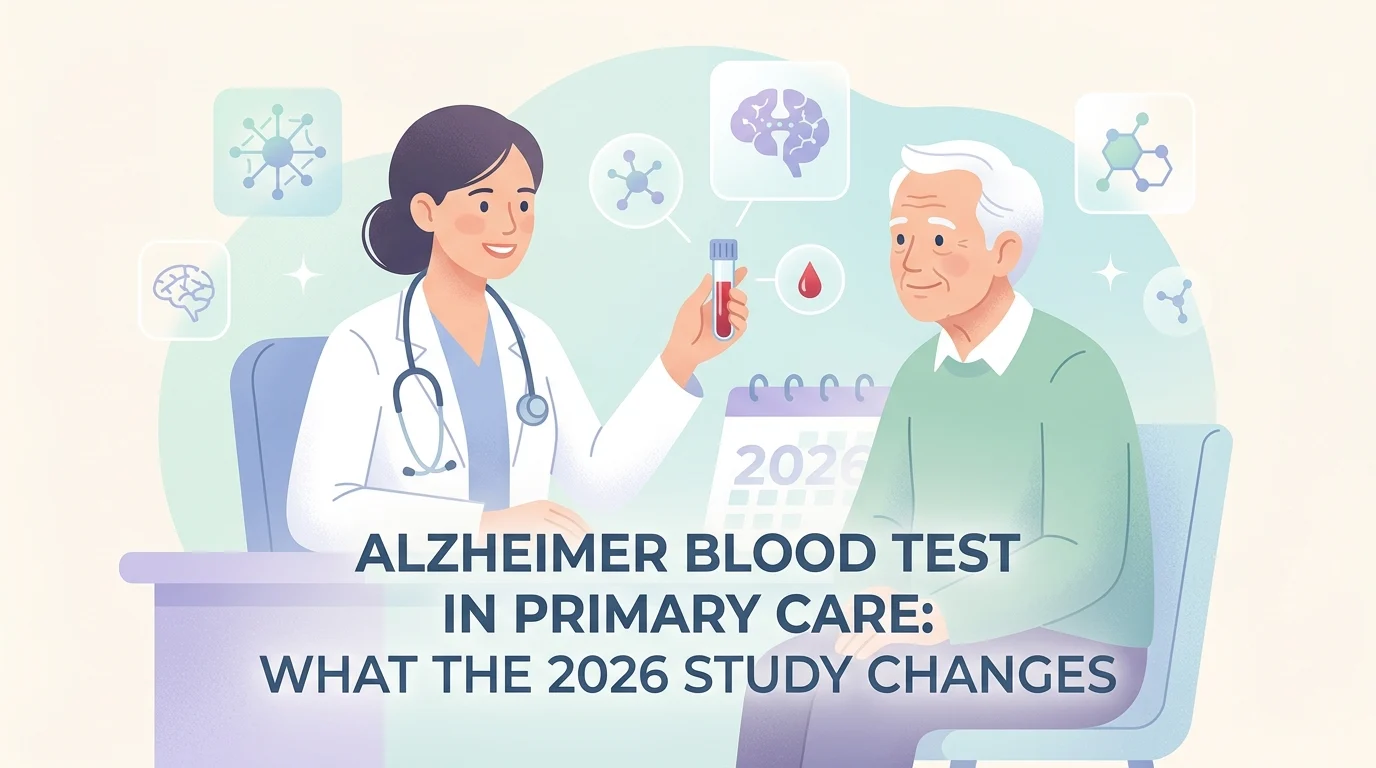
かかりつけ医によるアルツハイマー血液検査は、2026年7月に報告された大規模な実臨床研究によって、大きな前進を遂げました。この研究では、かかりつけ医が患者の血液バイオマーカー結果を確認できるようになると、アルツハイマー病の診断精度が記憶専門医とほぼ同等になることが示されました。これはまったく新しい検査というよりも、既存の検査を新たな場所——多くの記憶に関する悩みを持つ人が最初に訪れるかかりつけ医の診察室——で活用できるようになったことを意味します。この記事では、研究で何がわかったのか、正確な診断をより身近な場所で受けられるようになることがなぜ重要なのか、この検査結果でわかること・わからないこと、そして医師による診察が依然として最優先である理由について解説します。
AAIC 2026の研究で明らかになったこと
この研究結果は、 アルツハイマー協会国際会議(AAIC)2026 (ロンドン開催)で初めて発表されました。研究者たちは、1,300人以上の患者と165人の医師が参加した、この種の研究としては初の大規模な実臨床研究を実施しました。かかりつけ医を受診した患者は認知症専門医による独立した評価も受けており、診断精度を直接比較することが可能でした。
血液検査の結果を見る前、かかりつけ医がアルツハイマー病を正しく診断できた割合は約65%でした。血液バイオマーカーの結果を確認した後、その正確性は約93%に上昇し、同じ患者を対象に専門医が達成した94%に迫る水準となりました。この研究で使用された検査「PrecivityAD2」は、アルツハイマー病に関連する2つのタンパク質であるアミロイドベータとリン酸化タウを測定します。医師たちの変化は数字の改善にとどまりませんでした。結果を確認した後、かかりつけ医の約3人に1人の患者で診断が変更され、半数以上の患者でケアプランが見直されました。研究の主任著者であるルンド大学の神経科医セバスティアン・パルムクヴィスト氏は、この効果を「プライマリケアと専門医療の格差を縮めるもの」と表現しました。
プライマリケアにおけるアルツハイマー病の診断がなぜ重要なのか
本当の変化はアクセスのしやすさにあります。現在、アルツハイマー病の確定診断には通常、PET脳スキャンや脊髄液採取が必要です。これらは精度の高い検査ですが、費用がかかり、主に記憶障害専門クリニックでしか受けられません。しかし多くの人は、まずかかりつけ医に記憶の不安を相談し、その後、紹介状を経て専門医の検査を受けるまで数週間から数か月待つことになります。かかりつけ医が通常の診察中に確認できる検査結果があれば、その道のりを大幅に短縮できます。採血の手順について詳しく知りたい方は、標準的な血液検査のプロセスを解説した別のガイドをご参照ください。
この研究において、検査がプライマリケアで最も役立ったのは、特定の目的、すなわちアルツハイマー病を「除外する」という場面でした。陰性結果が出た後、かかりつけ医がアルツハイマー病を自信を持って除外できる割合はほぼ2倍になりました。これにより、記憶や思考の変化をもたらす他の原因、なかには治療可能なものも含めて、探索に集中できるようになります。
この検査が実際に測定するもの
この血液検査は、アルツハイマー病に関連する2つのタンパク質を読み取ります。p-tau217と呼ばれるタウの一形態と、アミロイドの断片です。血液中のこれらのバランスは、脳内に蓄積するアミロイドプラークの状態を反映するため、1本の採血管がそのプロセスを間接的に映し出す窓となります。これは、当サイトのニュースルームですでに解説しているFDA承認済みアルツハイマー血液検査や、症状が現れる10年前にリスクを予測するp-tau217検査と同じ生物学的メカニズムに基づいています。これらのタンパク質がどのように病態を引き起こすかについては、アルツハイマー病の生物学を解説したコンテンツをご覧ください。
精度の数値が意味すること
注目すべき点は、この検査が完璧だということではなく、一般の医師の診断精度を専門医に近い水準まで引き上げるという点です。以下の表は、中間解析で報告された検査前後の数値を示しています。
| グループ | 血液検査前の精度 | 結果判明後の精度 |
|---|---|---|
| かかりつけ医 | 約65% | 約93% |
| 認知症専門医 | 約74% | 約89%(かかりつけ医の患者を対象とした直接比較では94%) |
ここで注目すべき点が2つあります。専門医はやはりわずかに上回っており、日常診療では、両グループとも血液検査の結果を手にして初めて約90%に近づきました。また、かかりつけ医にとって最も実質的な恩恵は、確定診断ではなく「病気を除外すること」にありました。陽性結果が出た場合、多くのかかりつけ医は確認のために専門医へ紹介することを選びましたが、それはまさに正しい対応です。
かかりつけ医での血液検査が意味しないこと
この検査は、すでに記憶や思考に関する症状があり、その評価を受けている方を対象としています。症状のない健康な方のスクリーニングツールではなく、そのような場合には異常結果が誤りである頻度がはるかに高くなります。また、陰性結果はアルツハイマー病に特異的なものであり、他のすべての神経疾患を除外するわけではないため、正常な結果が出ても専門医への紹介が必要な方もいます。
記憶や思考の変化にはさまざまな原因があり、この検査では測定できないものも多くあります。たとえば、甲状腺の問題、ビタミン不足、腎臓の問題などが挙げられます。当サイトのライブラリでは、ビタミンB12低値の症状と原因、甲状腺の正常値、腎機能パネルについての関連記事も掲載しています。これらはいずれも認知機能に影響を与える可能性があり、結論を出す前に確認する価値があります。
医師に相談すべきタイミング
ご本人または身近な方が、日常生活に支障をきたすような記憶の変化に気づいた場合は、医師に相談するタイミングです。医師がどのような検査が適切かを判断します。たまに物を忘れる程度であれば、通常は加齢に伴う正常な変化です。検査を検討する場合は、血液検査の結果の読み方ガイドを参考にすると、医師との会話についていきやすくなります。
最新の科学的進歩
PubMedに収録された研究によると、2026年に報告されたかかりつけ医での結果は、これまでの着実な研究の積み重ねの上に成り立っています。
スウェーデンで1,213人を対象に行われたJAMA(2024年)の先行研究でも同様の検証が行われました。血液検査の結果を得た後、かかりつけ医のアルツハイマー病に対する正確性は61%から91%に向上し、専門医は73%から91%に上昇しました(DOI)。あなたへの意味:2026年の結果は、2年前にすでに測定されていた効果を実際の臨床現場で裏付けたものです。
『Nature Medicine』(2025年)に掲載された研究では、標準的な検査機器で動作する完全自動化バージョンのテストを1,767人に対して実施しました。プライマリケアでの精度は約85%で、最も不確実な結果を除外する2段階の判定基準を用いると92〜94%に上昇しました(DOI)。あなたへの意味:このテストは一般的な検査機関でも実施しやすくなっており、「判定保留」の範囲が隠されることなく組み込まれています。
『Journal of Alzheimer’s Disease』(2025年)のレビューでは、実用上の注意点が一つ指摘されました。腎機能が低下していると、それだけで血中のp-tau217値が上昇する可能性があるというものです(DOI)。あなたへの意味:腎臓の状態が数値に影響を与えることがあります。そのため、この結果は単独で判断するのではなく、医師があなたの全体的な健康状態と合わせて読み解くことが大切です。
用語集
| 用語 | 定義 |
|---|---|
| P-tau217 | 血液中で測定できるタウタンパク質の一種で、アルツハイマー病に関連した変化が脳内に生じると上昇します。 |
| アミロイドベータ | 血液検査で測定されるタンパク質の断片で、アミロイド斑の程度を評価するためにp-tau217と比較されます。 |
| プライマリケア(一次医療) | かかりつけ医や一般開業医など、日常的な初期診療のこと。 |
| 認知症専門医 | 記憶障害や認知障害を専門とする神経内科医、老年科医、または精神科医。 |
| 診断精度 | 検査や医師が、基準となる標準と照らし合わせて正しい結論に達する頻度のこと。 |
| PrecivityAD2 | 2026年の研究で使用された血液検査の商品名で、アミロイドとp-tauを測定します。 |
| バイオマーカー | 体内で測定できる物質で、正常な状態や病気のプロセスを示すもの。 |
| 除外する | 検査結果を用いて、ある疾患の可能性が低いと判断し、他の原因を探ること。 |
| 軽度認知障害(MCI) | 日常生活の自立は保たれているものの、記憶力や思考力に目立った低下が見られる状態。 |
| PETスキャン | アミロイド斑を確認できる脳画像検査で、血液マーカーの基準として使用されます。 |
よくある質問
かかりつけ医にアルツハイマーの血液検査を依頼できますか?
地域や医療機関によって異なりますが、依頼できるケースは増えています。2026年の研究結果およびアルツハイマー協会のガイダンスは、プライマリケア医がこれらの検査を適切に活用できるよう支援することを主な目的としています。検査結果は適切な診察の文脈でのみ意味を持つため、希望だけで依頼するのではなく、症状を評価している医師と相談のうえで判断することが大切です。
アルツハイマーの血液検査は、プライマリケアで使用できるほど精度が高いですか?
2026年の研究では、プライマリケア医が検査結果を参照した場合の診断精度は約93%に達し、同じ患者を診た専門医に近い水準でした。これは非常に高い数値ですが、医師が臨床所見とあわせて検査結果を読み取った場合の数値であり、検査単独の結果ではありません。あくまでも意思決定を支援するツールであり、最終的な判定を下すものではありません。
血液検査は脳スキャンや腰椎穿刺(髄液検査)に取って代わりますか?
多くの場合、これらの検査の必要性を減らすことができ、それがこの検査の大きな利点の一つです。ただし、自動的に代替できるわけではありません。プライマリケアで陽性結果が出た場合は、確認のために専門医に紹介されることが多く、判断が難しい結果ではPETスキャンや髄液検査が必要になることもあります。
陰性結果はどういう意味ですか?
陰性結果は、検査時点ではアルツハイマー病に関連した変化が起きている可能性が低いことを示しており、安心材料となります。これはプライマリケアにおいてこの検査が最も役立つ場面でもありました。ただし、他の疾患を除外するものではないため、症状が続く場合は医師がさらに検査を進めたり、専門医に紹介したりすることがあります。
この検査は症状のない人を対象としていますか?
いいえ。このテストは、記憶や思考に問題があると評価されている成人を対象としています。症状のない人では、異常な結果が誤りである可能性がはるかに高いため、現在のガイドラインでは、すでに認知機能の変化を経験している人にのみこのテストを推奨しています。
アルツハイマー血液検査の費用はどのくらいですか?
費用と保険適用は、地域、検査機関、保険プランによって異なります。一般的に、アミロイドPETスキャンや脊髄液検査よりも費用が低くなると見込まれていますが、検査を依頼する前に、クリニックや保険会社に確認しておくことをお勧めします。
参考文献
- アルツハイマー血液検査が日常的な臨床診療に高精度な診断をもたらす可能性 — アルツハイマー協会国際会議2026 — aaic.alz.org
- FDAがアルツハイマー病診断に使用される初の血液検査を承認 — 米国食品医薬品局 — fda.gov
- FDAが承認した血液検査でアルツハイマー病の早期マーカーを検出 — ジョンズ・ホプキンス医学部 — hopkinsmedicine.org
- Palmqvist S, et al. — 一次医療および二次医療におけるアルツハイマー病検出のための血液バイオマーカー — JAMA, 2024 — DOI
- Palmqvist S, et al. — 完全自動化プラットフォームを用いた一次・二次医療におけるアルツハイマー病診断のための血漿リン酸化タウ217 — Nature Medicine, 2025 — DOI
- Arslan B, et al. — 血漿アルツハイマー病バイオマーカーの臨床解釈への腎機能評価の統合 — Journal of Alzheimer’s Disease, 2025 — DOI
関連記事
AI DiagMeで血液検査の結果をわかりやすく確認
このようなニュースは、血液サンプルが年々より多くの情報を持つようになっており、検査レポートを一人で読み解くことがますます難しくなっていることを改めて教えてくれます。AI DiagMe は、血液・尿・便の一般的な検査結果をわかりやすい言葉で理解するお手伝いをします。各項目が何を測定しているか、基準値を外れた値が何を示す可能性があるか、そして医師に相談する価値のある質問は何かをお伝えします。あくまでも検査結果を理解するためのサポートツールであり、診断を行うものではなく、医療専門家の判断に取って代わるものでもありません。