



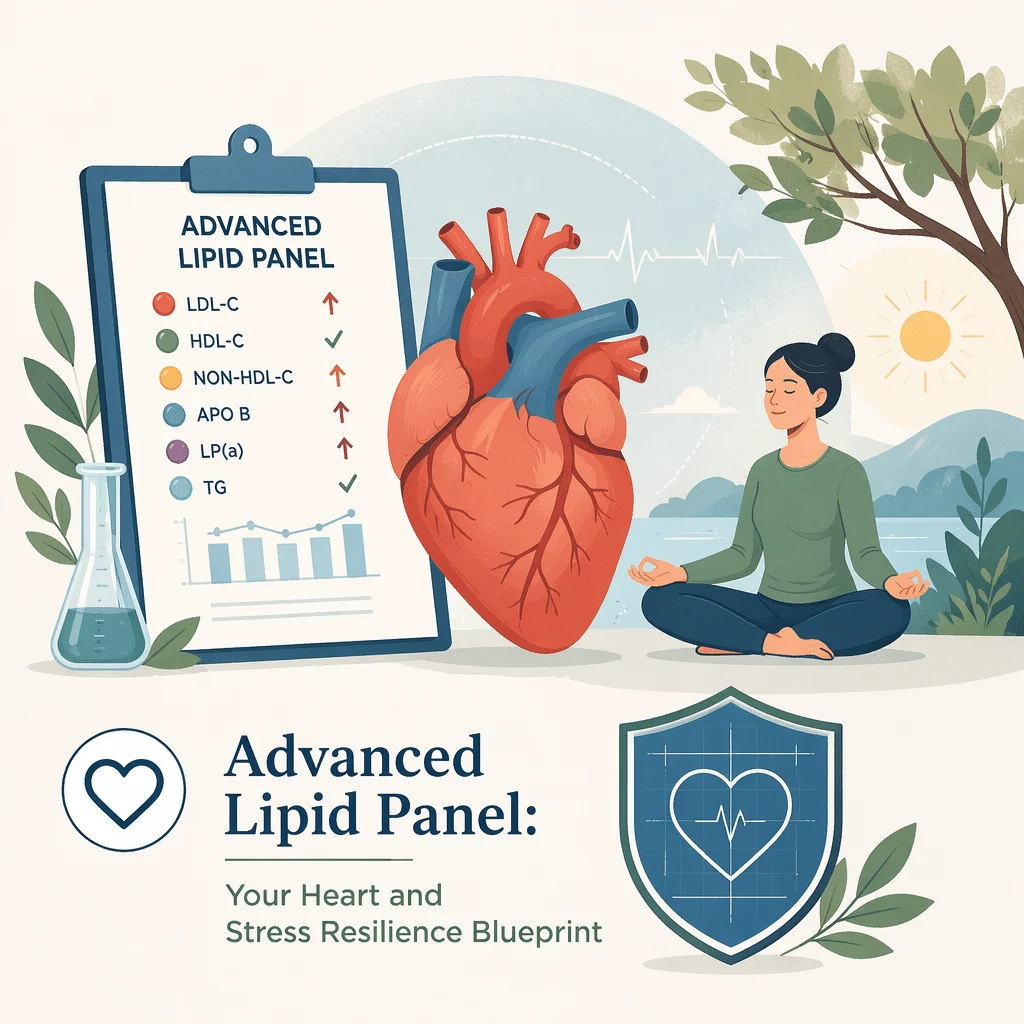
정밀 지질 검사는 기본 콜레스테롤 검사에서 한 단계 나아가, 동맥 플라크 형성 및 심장마비와 가장 밀접하게 연관된 지표들을 측정합니다. 아포지단백 B(ApoB), 지단백(a), LDL 입자 수 등이 여기에 포함됩니다. 기본 검사가 체내 콜레스테롤의 양을 추정하는 데 그친다면, 정밀 지질 검사는 유해한 입자가 얼마나 많은지, 어떤 종류인지까지 파악합니다. 이 추가 정보 덕분에 일반 콜레스테롤 수치가 정상으로 보이는 사람에게서도 숨겨진 위험을 발견할 수 있습니다. 이 글에서는 정밀 지질 검사가 무엇을 측정하는지, 일반 검사와 어떻게 다른지, 누구에게 필요한지, 그리고 결과를 어떻게 읽는지 알아봅니다.
고급 지질 패널이 측정하는 항목
기본 지질 검사는 총 콜레스테롤, LDL 콜레스테롤(LDL-C), HDL 콜레스테롤, 중성지방을 보고합니다. 정밀 지질 검사는 이 항목들을 포함하면서 입자 수, 입자 종류, 유전적 위험을 나타내는 지표들을 추가합니다. 검사 항목은 검사 기관마다 다소 다를 수 있지만, 핵심 추가 항목은 일관됩니다.
| 항목 | 표준 콜레스테롤 검사를 넘어서는 추가 정보 |
|---|---|
| ApoB | 죽상경화성(플라크 형성) 입자의 직접 계수 |
| 지단백(a) | 일반 패널로는 확인할 수 없는 유전적 위험 |
| LDL 입자 수 (LDL-P) | LDL-C가 정상으로 보일 때도 높을 수 있는 총 LDL 입자 수 |
| 소형 고밀도 LDL | 동맥벽을 더 잘 침투하는 작고 밀도 높은 LDL 하위 분획 |
| 비-HDL 콜레스테롤(Non-HDL-C) | 모든 죽상경화성 입자의 콜레스테롤 합산 |
| ApoA1 및 비율 | 보호 역할을 하는 측면, 그리고 유해 입자와 보호 입자 사이의 균형 |
표준 지질 패널과의 차이점
차이는 입자 수 대 콜레스테롤 질량에 있습니다. 일반 검사는 입자 안에 들어 있는 콜레스테롤 양을 측정한 뒤 공식으로 LDL-C를 추정합니다. 대부분의 경우 이 방법으로 충분하지만, 입자가 작고 조밀하거나 중성지방이 높을 때는 결과가 실제 위험을 제대로 반영하지 못할 수 있습니다. 같은 LDL-C 수치라도 입자 수는 크게 다를 수 있기 때문입니다. 정밀 검사는 입자를 보다 직접적으로 측정하여 바로 그런 상황에서 더 정확한 그림을 제공합니다. 정밀 검사가 기반으로 삼는 기준을 확인하려면 표준 지질 패널.
주요 마커 하나씩 살펴보기
ApoB: 입자 수 지표
죽상경화를 일으키는 모든 입자에는 ApoB 분자가 하나씩 있기 때문에, ApoB는 플라크를 형성하는 입자가 얼마나 많은지를 가장 직접적으로 보여주는 지표입니다. 많은 지질 전문의들이 이를 정밀 패널에서 가장 중요한 수치로 봅니다. 충분한 설명이 필요한 만큼, 목표 수치와 해석 방법은 ApoB 검사.
리포단백질(a): 유전적 마커
리포단백질(a), 즉 Lp(a)는 LDL과 유사한 입자로, 수치는 주로 유전자에 의해 결정되며 평생 비교적 안정적으로 유지됩니다. Lp(a)가 높으면 다른 수치와 무관하게 심장 질환 및 뇌졸중 위험이 독립적으로 높아지기 때문에, 가이드라인에서는 성인이 된 후 최소 한 번은 검사를 받도록 권고합니다. 가족 중에 Lp(a)가 높은 분이 있다면 리포단백질(a) 선별 검사.
LDL 입자 수와 소밀도 LDL
LDL 입자 수(LDL-P)는 LDL 입자를 직접 계산하며, 소밀도 LDL은 동맥벽으로 가장 쉽게 침투하는 유형을 표시합니다. LDL-P는 높은데 LDL-C는 정상으로 보일 때, 이 불일치(불협화음)는 숨겨진 위험을 가리킵니다. 이것이 바로 정밀 검사가 존재하는 핵심 이유입니다.
ApoA1 및 비율
ApoA1은 보호 역할을 하는 HDL 입자에 존재하므로, 지질 균형의 긍정적인 측면을 반영합니다. 유해한 분획과 보호적인 분획을 비교하거나 콜레스테롤 비율를 확인하면, 단일 수치만으로는 알 수 없는 맥락을 파악할 수 있습니다. 낮은 HDL 콜레스테롤 이 있는 분들은 이처럼 더 포괄적인 검사에서 가장 큰 도움을 얻는 경우가 많습니다.
정밀 지질 검사를 고려해야 할 사람은?
정밀 지질 패널은 일반 검사만으로는 의문이 해소되지 않을 때 가장 유용합니다. 다음에 해당하는 경우 담당 의사가 권유할 수 있습니다:
- 당뇨병, 당뇨 전단계, 대사증후군 또는 인슐린 저항성이 있는 경우
- 중성지방이 높거나, LDL-C는 정상이지만 위험도와 맞지 않는 것 같은 경우
- 본인 또는 가족 중 이른 나이에 심근경색이나 뇌졸중을 경험한 경우
- 현재 심혈관 질환을 진단받고 관리 중인 경우
- 치료를 시작하거나 강화해야 할지 불확실한 경우
2026년 ACC/AHA 이상지질혈증 가이드라인은 이러한 추가 검사의 선택적 사용을 지지합니다. 이 가이드라인은 Lp(a)를 최소 한 번 측정할 것을 권고하며, 이미 LDL-C 및 비HDL-C 목표를 달성한 심혈관-신장-대사 증후군, 제2형 당뇨병, 고중성지방혈증 또는 기존 심장 질환이 있는 사람들의 위험도를 세밀하게 평가하고 치료 방향을 결정하는 데 ApoB를 활용할 것을 권장합니다.
고급 지질 패널 검사 결과 읽는 법
검사 결과는 개별 수치가 아닌 서로 연관된 단서들의 집합으로 해석하세요. 가장 중요한 신호는 흔히 '불일치(discordance)'입니다. 즉, ApoB나 LDL 입자 수(LDL-P)와 같은 입자 수 지표가 콜레스테롤 수치로 예측되는 것보다 높게 나타나는 경우입니다. 아래의 목표 수치는 일반적으로 인용되는 기준이지만, 개인의 목표는 전반적인 위험도에 따라 달라지므로 담당 의사와 함께 설정해야 합니다.
| 항목 | 일반적으로 인용되는 목표치 또는 주의 기준 |
|---|---|
| ApoB | 80 mg/dL 미만이 최적인 경우가 많으며, 130 mg/dL 이상은 높은 수치 |
| 지단백(a) | 50 mg/dL 이상(약 125 nmol/L)이면 높은 수치 |
| LDL 입자 수 | 불일치 여부를 확인하기 위해 LDL-C와 함께 해석 |
| 비-HDL 콜레스테롤(Non-HDL-C) | 대부분의 성인에서 130 mg/dL 미만, 위험도가 높을수록 더 낮은 수치 권장 |
공복 여부, 비용, 검사 방법
고급 지질 패널 검사는 혈액을 한 번만 채취하면 됩니다. 공복이 반드시 필요하지는 않지만, 중성지방이나 전체 지질 프로필이 포함될 경우 일부 검사 기관에서는 12시간 공복을 요구할 수 있으므로 해당 검사 기관의 안내를 따르세요. 고급 검사는 기본 패널보다 비용이 더 들며 보험이 적용되지 않는 경우도 있으므로, 사전에 비용과 보험 적용 여부를 확인하고 어떤 추가 지표가 본인의 상황에 필요한지 담당 의사와 상담하는 것이 좋습니다.
최신 과학적 발전
이러한 추가 지표들이 위험도 예측을 어떻게 향상시키는지에 대한 연구가 계속 발전하고 있습니다. 최근 연구 결과를 쉬운 말로 정리했습니다.
2025년 연구에서는 관상동맥 질환이 있는 사람과 없는 사람을 대상으로 표준 및 고급 지질 지표와 염증 지표를 비교했습니다. 소밀도 LDL, 지단백(a), 상세한 HDL 입자 분석 등 고급 지표를 추가한 모델이 표준 콜레스테롤만으로 구성된 모델보다 질환을 더 잘 예측했습니다. 쉽게 말하면, 추가적인 세부 정보 덕분에 일반 수치는 약간만 이상해 보였던 고위험군을 더 잘 식별할 수 있었습니다. 이는 더 넓은 집단에서 추가 확인이 필요한 연구 결과이지만, 입자 수준의 검사가 왜 중요할 수 있는지를 뒷받침합니다.
영국 바이오뱅크에 등록된 성인 41,000명 이상을 대상으로 한 2025년 분석 결과(장기 추적 대규모 연구), ApoB와 LDL 입자 수가 서로 다른 결과를 보일 때 ApoB가 심장마비 및 동맥 폐색의 더 정확한 예측 지표였으며, 수치 차이가 작더라도 위험도가 높아지는 것으로 나타났습니다. 이것이 의미하는 바는, 콜레스테롤 수치만이 아닌 입자 수를 측정하면 일반 검사에서는 놓칠 수 있는 위험을 발견할 수 있다는 것입니다.
이러한 최신 결과들은 non-HDL-C, ApoB, LDL 입자 수가 불일치 분석을 통해 위험 평가를 더욱 정밀하게 한다는 오랜 임상 검사 합의를 바탕으로 합니다. 특히 중성지방이 높거나 LDL-C가 매우 낮은 경우에 더욱 유용합니다. 실질적인 결론은 일관됩니다. 표준 검사 결과가 불분명할 때 고급 검사가 가장 큰 가치를 발휘합니다.
용어 설명
- 정밀 지질 검사: 기본 콜레스테롤 검사에 입자 수 및 유전적 위험 지표를 추가한 확장 혈액 검사.
- ApoB (아포지단백 B): 모든 죽상경화성 입자에 존재하는 단백질로, 입자 수를 직접 측정합니다.
- 지단백(a) [Lp(a)]: 유전적으로 결정되는 LDL 유사 입자로, 독립적인 심혈관 위험을 높입니다.
- LDL 입자 수 (LDL-P): 혈액 내 LDL 입자의 총 개수입니다.
- 소형 고밀도 LDL: 동맥벽으로 침투하기 더 쉬운 작고 밀도 높은 LDL 유형입니다.
- Non-HDL-C: 총 콜레스테롤에서 HDL을 뺀 값으로, 모든 죽상경화성 입자를 포함합니다.
- ApoA1: 보호 역할을 하는 HDL 입자의 주요 단백질입니다.
- 불일치(Discordance): 콜레스테롤 질량과 입자 수 사이의 불일치를 의미합니다.
자주 묻는 질문
고급 지질 패널이란 무엇인가요? ApoB, 지단백(a), LDL 입자 수 등의 지표를 추가로 측정하는 확장 콜레스테롤 검사로, 표준 패널보다 심장 위험을 더 폭넓게 파악할 수 있습니다.
표준 지질 패널과 어떻게 다른가요? 표준 패널은 입자가 운반하는 콜레스테롤 양을 추정하는 반면, 고급 패널은 입자의 수와 종류를 직접 측정하여 콜레스테롤 수치만으로는 놓칠 수 있는 위험을 파악할 수 있습니다.
공복 상태로 검사를 받아야 하나요? 대부분의 경우 공복이 필요하지 않지만, 중성지방이나 전체 지질 프로필이 포함될 경우 일부 검사 기관에서 12시간 공복을 요청할 수 있습니다. 검사 기관의 안내에 따르세요.
비용은 얼마나 드나요? 기본 패널보다 비용이 더 들며 보험 적용 여부도 다를 수 있으므로, 검사 전에 가격과 보험 혜택을 미리 확인하세요.
리포단백(a)을 낮출 수 있나요? Lp(a)는 대부분 유전적으로 결정되며 생활 습관으로 크게 바꾸기 어렵기 때문에, 보통은 다른 위험 인자들을 잘 관리하는 데 초점을 맞춥니다. 현재 새로운 표적 치료제가 연구 중입니다.
일반 지질 검사 결과가 정상이라면 어떻게 되나요? 정밀 지질 검사를 통해 일반 검사에서는 정상으로 보이는 사람에게서도 숨겨진 위험 요소, 특히 높은 ApoB, 높은 Lp(a), 또는 높은 입자 수를 발견할 수 있습니다.
추가 읽을거리
출처
- American College of Cardiology / American Heart Association. 2026 Guideline for the Management of Dyslipidemia (news release), 2026. https://newsroom.heart.org/news/accaha-issue-updated-guideline-for-managing-lipids-cholesterol
- Cleveland Clinic. Apo B Test. https://my.clevelandclinic.org/health/diagnostics/24992-apolipoprotein-b-test
- Devaraj S, Semaan JR, Jialal I. Biochemistry, Apolipoprotein B. StatPearls, NIH National Library of Medicine, 2023. https://www.ncbi.nlm.nih.gov/books/NBK538139/
- Langlois MR, et al. Quantifying Atherogenic Lipoproteins: EAS-EFLM Consensus Statement. Clinical Chemistry, 2018. https://consensus.app/papers/details/d00ab47984df5a5b941c198fdd1eb065/
- Stock E, et al. HDL Particles, Inflammation, and Coronary Heart Disease Risk. Nutrients, 2025. https://consensus.app/papers/details/d85453427e575146859d80f3c0e0c721/
- Epstein E, et al. Apolipoprotein B outperforms LDL particle number as a marker of cardiovascular risk in the UK Biobank. Eur J Prev Cardiol, 2025. https://consensus.app/papers/details/4b787ca8162d5dbe969b3f334d8ead3a/
AI DiagMe로 내 검사 결과 이해하기
정밀 지질 검사를 받으면 많은 수치가 나오는데, 그 의미는 수치들이 서로 어떻게 연결되는지에 달려 있습니다. AI DiagMe는 업로드하신 검사 결과지를 분석하여 ApoB, 리포단백(a), 입자 수, 콜레스테롤 수치가 심장 건강에 어떤 의미를 가질 수 있는지 알기 쉬운 언어로 설명해 드립니다. 이를 통해 담당 의사에게 핵심적인 질문을 준비하는 데 도움을 받을 수 있습니다. AI DiagMe는 검사 결과를 이해하는 데 도움을 드리는 서비스이며, 질병을 진단하거나 의사를 대신하지 않습니다.