









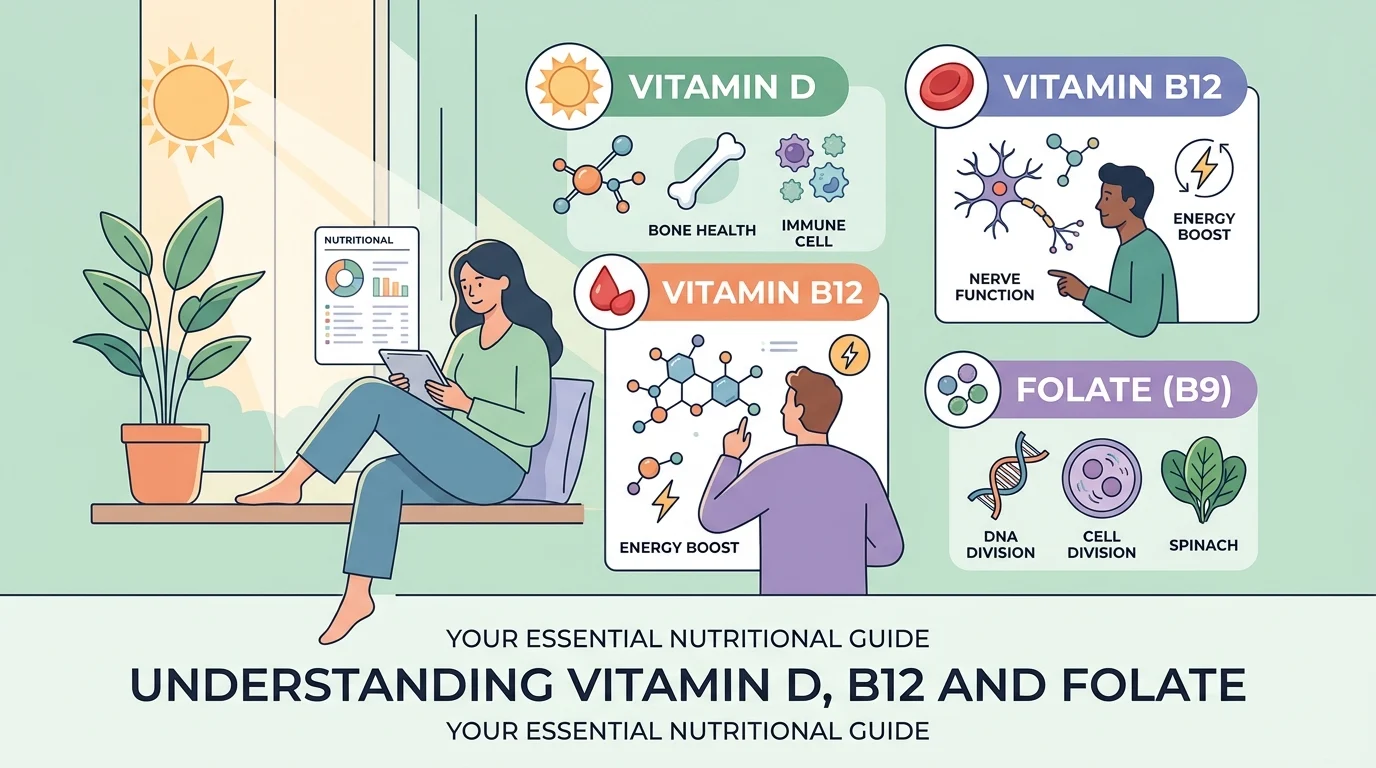
Un esame del sangue per il dosaggio delle vitamine misura contemporaneamente i livelli di diversi nutrienti chiave nel sangue, più spesso vitamina D, vitamina B12 e acido folico (vitamina B9). Fornisce a te e al tuo medico un quadro completo dei nutrienti che influenzano l'energia, il sistema nervoso, il sangue e le ossa. Di solito viene richiesto quando ci si sente stanchi, spossati o "non in forma" senza una ragione apparente, oppure quando si appartiene a un gruppo a maggior rischio di carenza vitaminica.
Questa guida spiega cosa include un esame del sangue per il dosaggio di vitamine, la funzione di ciascuna vitamina e come interpretare i valori riportati nel referto. Troverete anche una semplice tabella con i risultati tipici, un breve elenco di chi trae maggior beneficio da questo test e chiari segnali che indicano quando è opportuno consultare un medico. L'obiettivo è aiutarvi a comprendere i vostri risultati, non sostituire il parere del vostro medico.

Cosa misura un esame del sangue con pannello vitaminico
UN pannello vitaminico (a volte chiamato pannello nutrizionale o pannello per carenze vitaminiche) è un insieme di esami del sangue eseguiti insieme. Invece di controllare un nutriente alla volta, il laboratorio ne misura diversi in un unico prelievo. Questo rende più facile individuare delle anomalie, perché i livelli bassi spesso si presentano insieme piuttosto che singolarmente.
Il contenuto esatto varia a seconda del laboratorio. La maggior parte dei pannelli di analisi incentrati su stanchezza, umore e salute del sangue include tre marcatori principali: vitamina D, vitamina B12 e folati. Molti laboratori aggiungono test correlati per facilitare l'interpretazione dei risultati.
Un tipico pannello vitaminico completo può includere:
- Vitamina D, solitamente misurato come 25-idrossivitamina D, la forma di conservazione che meglio riflette il tuo stato generale di vitamina D.
- Vitamina B12 (chiamata anche cobalamina), segnalata come una livello sierico di vitamina B12.
- Folato (vitamina B9), misurato come un test del folato nel siero o nei globuli rossi.
- Marcatori di supporto come un emocromo completo, esami del ferro, tra cui la ferritina e, a volte, il magnesio.
Alcune cliniche combinano il pannello vitaminico con un più ampio pannello metabolico completo, che controlla la funzionalità renale, la glicemia e i livelli di sali minerali. La vitamina D, la B12 e l'acido folico non sono inclusi nel pannello metabolico standard, quindi di solito è necessario richiederli specificamente.
Perché queste tre vitamine sono raggruppate insieme
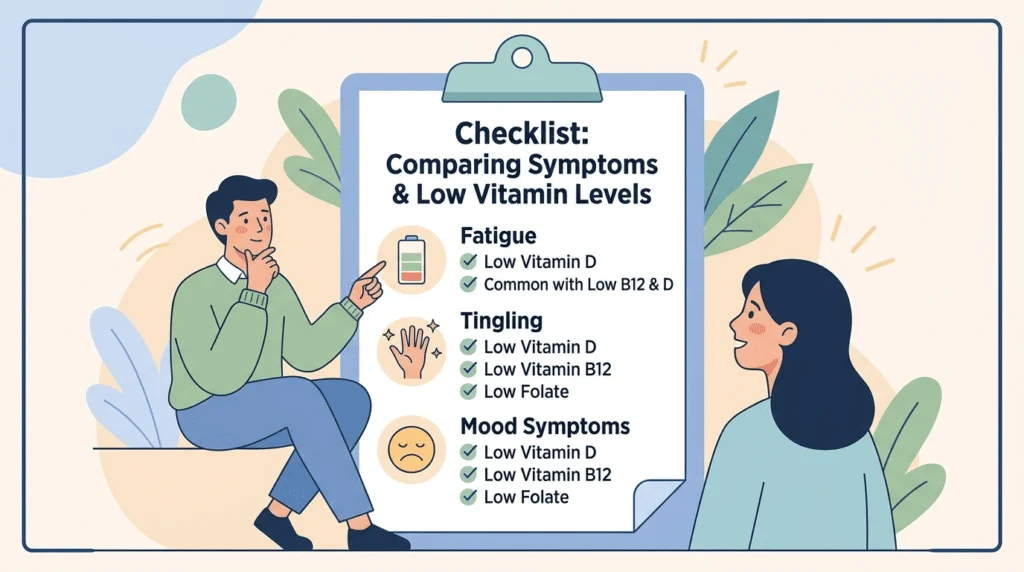
La vitamina D, la B12 e l'acido folico hanno due cose in comune. In primo luogo, i bassi livelli sono frequenti e spesso passano inosservati. In secondo luogo, producono sintomi sovrapposti, come affaticamento e umore basso, quindi un singolo sintomo raramente indica una carenza attribuibile a un solo nutriente.
Analizzare tutti e tre i parametri contemporaneamente elimina ogni incertezza. Se la stanchezza è causata da una carenza di vitamina B12 anziché di vitamina D, un risultato corretto aiuterà il medico a scegliere la terapia più appropriata, evitando di trattare la causa errata.
Vitamina D, B12 e acido folico: a cosa serve ciascuno di essi
Ciascun nutriente presente nell'analisi ha una funzione ben precisa. Comprendere queste funzioni rende l'interpretazione dei risultati molto più semplice.
Vitamina D
Vitamina D Aiuta il corpo ad assorbire il calcio, che mantiene forti ossa e denti. Supporta anche la funzione muscolare e il sistema immunitario. La pelle produce vitamina D grazie all'esposizione alla luce solare e piccole quantità provengono da alimenti come pesce azzurro, uova e prodotti fortificati.
La carenza di vitamina D è diffusa, soprattutto tra le persone che trascorrono poco tempo all'aperto, coprono la pelle, hanno la pelle più scura o vivono in luoghi con inverni lunghi. Poiché il corpo immagazzina la vitamina D, un esame del sangue riflette i livelli di vitamina D nelle ultime settimane, non in base a ciò che si è mangiato il giorno precedente.
Vitamina B12
Vitamina B12 (cobalamina) È necessaria per la produzione di globuli rossi sani, per il corretto funzionamento dei nervi e per la sintesi del DNA. Si trova principalmente negli alimenti di origine animale: carne, pesce, uova e latticini. Le persone che consumano pochi o nessun prodotto di origine animale, e molti anziani, sono più soggette a carenze di vitamina D.
Una carenza può accumularsi lentamente nel corso degli anni perché il corpo ne immagazzina grandi quantità. I primi segnali sono facili da non notare, ed è per questo che un esame del sangue per la vitamina B12 è così utile. Se non trattata, la carenza di B12 può colpire il sistema nervoso, a volte in modo permanente, quindi è importante individuarla e trattarla tempestivamente.
Folato (vitamina B9)
Folato è la forma naturale della vitamina B9, presente nelle verdure a foglia verde, nei legumi, negli agrumi e nei cereali fortificati. Acido folico L'acido folico è la forma sintetica utilizzata negli integratori e aggiunta a molti alimenti. L'acido folico agisce in stretta collaborazione con la vitamina B12 per la produzione dei globuli rossi e per favorire la crescita cellulare. È particolarmente importante prima e durante la gravidanza, in quanto contribuisce a prevenire alcune malformazioni congenite.
La tabella seguente riassume a colpo d'occhio le tre vitamine.
| Vitamina | Principali mansioni | Cause comuni di bassi livelli | Principali fonti alimentari |
|---|---|---|---|
| Vitamina D | Resistenza ossea, assorbimento del calcio, funzione immunitaria e muscolare | Poca esposizione al sole, pelle più scura, determinate patologie intestinali o renali | Pesce azzurro, uova, latte e cereali fortificati, luce solare |
| Vitamina B12 | Globuli rossi, funzione nervosa, costruzione del DNA | dieta vegana o vegetariana, età avanzata, scarso assorbimento, alcuni farmaci | Carne, pesce, uova, latticini, alimenti fortificati |
| Folato (B9) | Globuli rossi, crescita cellulare, gravidanza sana | Basso consumo di verdure, gravidanza, malassorbimento, alcuni farmaci | Verdure a foglia verde, fagioli, agrumi, cereali fortificati |

Come interpretare i risultati del pannello vitaminico
Il tuo referto elenca ogni test con tre elementi uno accanto all'altro: il risultato, l'unità di misura e l'intervallo di riferimento (la banda "normale" del laboratorio). Il risultato da solo significa poco finché non lo si confronta con tale intervallo. Un'abitudine utile è leggi i risultati delle tue analisi del sangue Procedendo indicatore per indicatore, anziché reagire a un singolo numero.
Le unità di misura variano a seconda della vitamina e lo stesso nutriente può essere espresso in due unità diverse a seconda del laboratorio. La vitamina D è spesso espressa in ng/mL o nmol/L. La vitamina B12 è solitamente espressa in pg/mL o pmol/L. L'acido folico è comunemente espresso in ng/mL o nmol/L. Verificate sempre l'unità di misura utilizzata dal vostro laboratorio prima di confrontare un risultato con qualsiasi informazione trovata online.
La tabella seguente mostra i valori tipici. Gli intervalli di riferimento variano a seconda del laboratorio, pertanto questi valori vanno considerati come indicazioni generali e non come una diagnosi.
| Marcatore | Spesso riportato in | Cosa può suggerire un risultato basso | Cosa può suggerire un risultato elevato |
|---|---|---|---|
| Vitamina D (25-OH) | ng/mL o nmol/L | Carenza dovuta a scarsa esposizione al sole o a un insufficiente apporto di nutrienti; possibili effetti su ossa e muscoli. | Solitamente deriva da integratori ad alto dosaggio; livelli molto elevati possono essere dannosi |
| Vitamina B12 | pg/mL o pmol/L | Possibile bassi livelli di vitamina B12 da alimentazione, problemi di assorbimento o farmaci | Aumento della vitamina B12 da integratori, o talvolta da problemi al fegato o di altro tipo |
| Folato (B9) | ng/mL o nmol/L | Possibile carenza di folati da basso apporto o malassorbimento | Solitamente innocuo e legato agli integratori, tuttavia alto contenuto di folati può mascherare la carenza di vitamina B12 |
Per quanto riguarda la vitamina D, le linee guida di salute pubblica degli Stati Uniti sono utili come punto di riferimento. Livelli inferiori a circa 12 ng/mL (30 nmol/L) sono generalmente considerati carenti, da 12 a 20 ng/mL (da 30 a 50 nmol/L) inadeguati e da 20 a 50 ng/mL (da 50 a 125 nmol/L) adeguati per la maggior parte delle persone. Risultati molto elevati, superiori a circa 50 ng/mL (125 nmol/L), possono essere più dannosi che benefici.
Un punto importante collega l'acido folico e la vitamina B12. Assumere un supplemento di acido folico può migliorare i valori ematici a tal punto da mascherare una carenza di vitamina B12, che può continuare a danneggiare il sistema nervoso in modo subdolo. Ecco perché i medici spesso controllano i livelli di vitamina B12 prima di trattare la carenza di acido folico, ed è per questo che è importante testare entrambi i parametri contemporaneamente.
Perché i risultati possono differire tra i vari laboratori e nel tempo
Due referti possono mostrare valori diversi per lo stesso nutriente senza che nessuno dei due sia errato. I laboratori utilizzano apparecchiature diverse e stabiliscono i propri intervalli di riferimento, quindi è sempre consigliabile confrontare un risultato con l'intervallo indicato sul referto piuttosto che con i dati di un amico o un valore trovato online. Anche la tempistica e le abitudini recenti sono importanti. Un integratore assunto di recente, un cambiamento nella dieta o persino il periodo dell'anno possono influenzare i livelli di vitamina D. Per questo motivo, un singolo risultato va considerato come un dato puntuale, non come un verdetto definitivo. Quando un valore è al limite, i medici spesso ripetono l'esame prima di trarre conclusioni certe, e monitorare lo stesso parametro nello stesso laboratorio per diversi mesi rende molto più facile interpretare eventuali cambiamenti reali.
Chi dovrebbe prendere in considerazione un pannello vitaminico?
Un pannello vitaminico è particolarmente utile quando i sintomi o i fattori di rischio indicano una possibile carenza. La scelta del test più adatto per una sospetta carenza spesso inizia con questi segnali quotidiani.
Potrebbe essere utile sottoporsi a un test se si notano le seguenti anomalie:
- Stanchezza o debolezza persistenti che non si risolvono con il riposo.
- Sensazione di formicolio, intorpidimento o "aghi e spilli" alle mani o ai piedi.
- Umore basso, difficoltà di concentrazione o confusione mentale.
- Pelle pallida, affanno o battito cardiaco accelerato.
- Lingua dolente, liscia o arrossata, oppure ulcere della bocca.
Alcuni gruppi sono più inclini a presentare bassi livelli di colesterolo e potrebbero essere sottoposti a test anche in assenza di sintomi evidenti:
- Persone su un dieta vegana o vegetariana, che assumono poca vitamina B12 con la dieta.
- anziani, che assorbono la vitamina B12 in modo meno efficiente.
- Le persone che sono incinta o che sta pianificando una gravidanza, dove il fabbisogno di folati aumenta.
- Quelli con condizioni intestinali come la celiachia o le malattie infiammatorie intestinali che riducono l'assorbimento.
- Le persone che assumono determinati farmaci a lungo termine, inclusi alcuni usati per il diabete e il reflusso acido, possono ridurre i livelli di vitamina B12 nel tempo.
Folato contro acido folico e vitamina D contro D3
Due punti comuni che generano confusione si riscontrano nei referti di laboratorio e nelle etichette degli integratori. Chiarirli vi aiuterà a leggerli correttamente.
Folato e acido folico Si riferiscono alla stessa vitamina, la B9, in forme diverse. Il folato è la forma presente naturalmente negli alimenti. L'acido folico è la forma sintetica utilizzata negli integratori e negli alimenti fortificati, che il corpo converte nella vitamina attiva. Un esame del sangue misura solitamente il livello totale di folato, indipendentemente dalla fonte.
Vitamina D e vitamina D3 sono correlate ma non identiche. La vitamina D è il termine generico che le comprende. D3 (colecalciferolo) La vitamina D1 è la forma che la pelle produce grazie alla luce solare ed è quella utilizzata in molti integratori, mentre la vitamina D2 (ergocalciferolo) proviene principalmente dalle piante. L'esame del sangue standard misura la 25-idrossivitamina D, che rileva entrambe le forme, quindi riflette il livello totale di vitamina D nell'organismo piuttosto che il tipo assunto con gli integratori.
Quando è opportuno consultare un medico in merito ai risultati
Un pannello vitaminico è uno strumento di screening, non una risposta definitiva. Alcuni risultati richiedono una valutazione professionale anziché l'automedicazione.
Consulta immediatamente un medico se hai:
- Intorpidimento, formicolio, problemi di equilibrio o alterazioni della memoria, unitamente a bassi livelli di vitamina B12, possono essere segnali di un coinvolgimento nervoso.
- Un risultato chiaramente basso per qualsiasi vitamina, associato a mancanza di respiro, tachicardia o svenimento.
- Carenza di folati o vitamina B12 durante la gravidanza o nel periodo in cui si cerca di concepire.
- Un risultato inaspettatamente elevato di vitamina D, soprattutto in presenza di nausea, sete eccessiva o confusione.
- Sintomi che persistono o peggiorano nonostante un miglioramento della dieta o l'assunzione di integratori.
Il medico può confermare se un risultato riflette una reale carenza, individuare la causa sottostante e stabilire un trattamento sicuro. L'auto-prescrizione di integratori ad alto dosaggio basandosi su un singolo valore può mascherare i problemi o, nel caso della vitamina D, causare danni.
Come un pannello vitaminico si integra con altri esami del sangue
I risultati degli esami vitaminici raramente sono sufficienti da soli. I medici spesso li interpretano insieme ad altri indicatori per avere un quadro completo.
Quando la vitamina B12 o l'acido folico sono bassi, i globuli rossi possono diventare insolitamente grandi. Questo si manifesta come un alto volume corpuscolare medio (MCV) In un emocromo completo, si può riscontrare un quadro clinico chiamato anemia macrocitica (anemia con cellule ingrossate). Abbinare il pannello vitaminico all'emocromo aiuta a collegare un valore numerico a una causa.
Sia la vitamina B12 che l'acido folico contribuiscono anche a mantenere omocisteina — un amminoacido legato alla salute del cuore e dei vasi sanguigni — entro i limiti normali. Un livello elevato di omocisteina può essere un segnale precoce di una carenza di una di queste vitamine. Lo stato del ferro, misurato tramite esami del ferro e ferritina, aggiunge un ulteriore elemento, poiché la carenza di ferro è una causa frequente e distinta di affaticamento. Poiché queste cause possono sovrapporsi, un risultato vitaminico normale non esclude sempre un'altra ragione per i sintomi, motivo per cui il medico legge l'intero pannello di esami anziché una singola riga. Considerati insieme, questi test trasformano i singoli valori in un quadro coerente sulla salute.
Glossario
- Cobalamina: un altro nome per la vitamina B12, il nutriente necessario per i globuli rossi, i nervi e il DNA.
- Carenza: Un livello di un nutriente troppo basso per soddisfare le esigenze dell'organismo.
- Folato (vitamina B9): La forma naturale della vitamina B9 presente negli alimenti, importante per le cellule del sangue, la crescita cellulare e la gravidanza.
- Acido folico: la forma sintetica di vitamina B9 utilizzata negli integratori e negli alimenti fortificati.
- Anemia macrocitica: Anemia in cui i globuli rossi sono più grandi del normale, spesso causata da una carenza di vitamina B12 o di folati.
- MCV (volume corpuscolare medio): Una misura della dimensione media dei globuli rossi, riportata in un emocromo completo.
- Intervallo di riferimento: L'intervallo di valori che un laboratorio considera normali per un determinato test.
- Siero: la parte trasparente del sangue utilizzata per molte misurazioni vitaminiche.
- 25-idrossivitamina D (25-OH): la forma di deposito della vitamina D misurata per valutare il tuo stato generale.
Domande frequenti
Devo digiunare prima di un esame del sangue per il pannello vitaminico?
Di solito, per assumere vitamina D, B12 e acido folico non è necessario il digiuno. Tuttavia, gli esami di laboratorio spesso includono test aggiuntivi che lo richiedono, come ad esempio gli esami del ferro, la glicemia o il profilo lipidico (colesterolo), che possono necessitare di 8-12 ore di digiuno. Poiché le esigenze specifiche dipendono da cosa viene misurato, è consigliabile chiedere al laboratorio o al proprio medico al momento della prenotazione. Seguire le loro istruzioni garantisce risultati accurati ed evita di dover ripetere l'esame.
Con quale frequenza dovrei sottopormi a un esame del profilo vitaminico?
Non esiste una regola valida per tutti. Se i risultati degli esami sono nella norma e non si presentano sintomi o fattori di rischio, di solito non è necessario ripetere il test per un certo periodo. Se si è in cura per una carenza, il medico potrebbe ripetere gli esami dopo alcuni mesi per verificare che i livelli stiano aumentando. Le persone appartenenti a gruppi a maggior rischio, come chi segue una dieta vegana o ha problemi di assorbimento, potrebbero dover ripetere gli esami periodicamente. È importante che siano i sintomi e i consigli del medico a guidare la scelta degli esami, piuttosto che attenersi a una pianificazione fissa.
Il folato è la stessa cosa dell'acido folico?
Si tratta della stessa vitamina, la B9, in forme diverse. L'acido folico è la forma presente naturalmente in alimenti come verdure a foglia verde e legumi. L'acido folico è la versione sintetica aggiunta agli integratori e a molti alimenti fortificati, che il corpo converte nella vitamina attiva. Un esame del sangue per l'acido folico misura generalmente la quantità totale presente nel sangue, indipendentemente dalla sua origine. Entrambi aumentano i livelli di acido folico, sebbene siano indicati in modo diverso sugli integratori e nei referti.
Una carenza di vitamina B12 può essere sintomo di qualcosa di grave?
Bassi livelli di vitamina B12 sono spesso dovuti a una dieta carente, all'invecchiamento o a problemi di assorbimento della vitamina. In alcuni casi, possono indicare una patologia sottostante, come l'anemia perniciosa, in cui il sistema immunitario impedisce all'intestino di assorbire la vitamina B12, o una malattia dell'apparato digerente. Raramente, di per sé, è un segno di cancro. L'importante è individuarne la causa, perché da essa dipende la corretta terapia. Se i risultati sono bassi o i sintomi persistono, il medico può prescrivere ulteriori esami.
È possibile assumere troppa vitamina D?
Sì. A differenza di molte vitamine, la vitamina D viene immagazzinata nell'organismo, quindi dosi molto elevate assunte nel tempo possono innalzarne eccessivamente i livelli. Questo può causare un aumento del calcio nel sangue e provocare nausea, sete eccessiva, problemi renali e confusione. L'esposizione al sole e l'alimentazione raramente ne sono la causa; la causa più comune è l'assunzione di integratori ad alto dosaggio. Se il risultato è elevato, non continuare semplicemente ad assumere integratori. Consulta un medico per stabilire un dosaggio sicuro per te.
Cosa significa un basso livello di vitamina D?
Un basso livello di vitamina D indica che le tue riserve sono scese al di sotto del livello necessario alla maggior parte delle persone per la salute di ossa e muscoli. Le cause più comuni includono una scarsa esposizione al sole, una carnagione più scura, il coprirsi all'aperto o alcune patologie intestinali e renali. Molte persone con bassi livelli di vitamina D non avvertono alcun sintomo, mentre altre notano stanchezza, dolori muscolari o umore basso. Un medico può consigliarti se hai bisogno di un integratore, quale dosaggio è sicuro e se è opportuno ripetere il controllo in seguito.
Fonti
- Ufficio NIH per gli integratori alimentari - Vitamina D
- NHS — Anemia da carenza di vitamina B12 o folati
- CDC - Informazioni sull'acido folico
Approfondimenti
- Vitamina D (25-OH): come interpretare le analisi del sangue
- Vitamina B12: ruolo e risultati di laboratorio
- Acido folico (folato o vitamina B9): come interpretare le analisi del sangue
- Il miglior esame del sangue per la carenza di vitamine
- Interpretare i risultati delle analisi del sangue: una guida semplice
Scopri i tuoi referti con AI DiagMe
Interpretare un pannello vitaminico può risultare complicato quando ogni riga ha un'unità di misura e un intervallo di riferimento diversi. AI DiagMe ti aiuta a comprendere risultati come quelli relativi alla vitamina D (25-idrossivitamina D), alla vitamina B12 e all'acido folico (vitamina B9), spiegando il significato di ciascun valore in modo semplice e chiaro. È stato creato per aiutarti a capire il tuo referto e a prepararti per la visita medica, non per diagnosticarti o sostituire il tuo medico. Carica i tuoi risultati per visualizzare un'interpretazione chiara e di facile comprensione.
➡️ Ottieni l'interpretazione dei tuoi risultati in pochi minuti