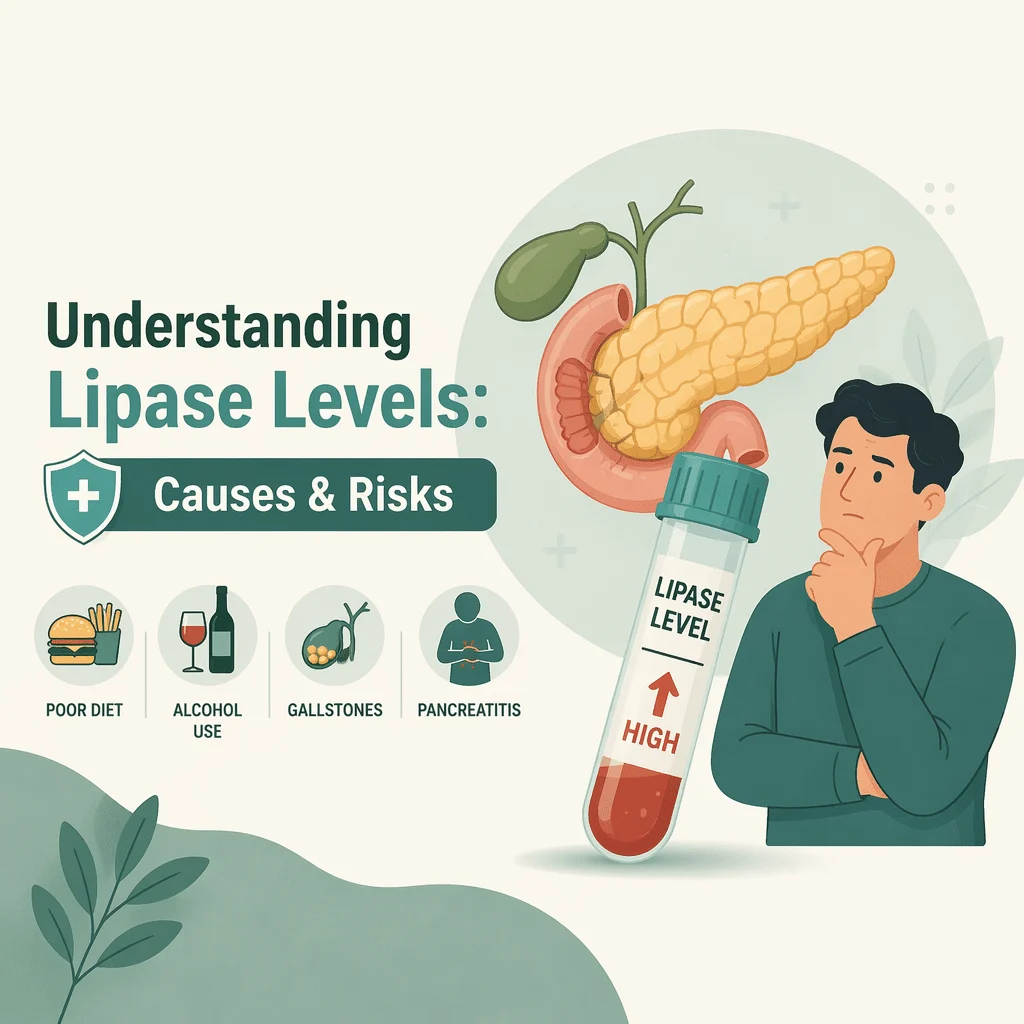
Kadar lipase Anda memberi tahu dokter seberapa banyak enzim pencernaan tertentu yang beredar dalam darah Anda, dan angka tersebut merupakan salah satu cara tercepat untuk mengetahui apakah pankreas Anda mengalami peradangan. Lipase hampir seluruhnya diproduksi oleh pankreas, sehingga hasil yang beberapa kali lebih tinggi dari normal biasanya langsung menunjuk ke kelenjar tersebut. Namun, angka yang tinggi saja belum berarti diagnosis. Penyakit ginjal, obat-obatan tertentu, usus yang tersumbat, dan kelainan laboratorium yang tidak berbahaya yang disebut makrolipasemia semuanya dapat meningkatkan nilai ini pada seseorang yang pankreasnya sepenuhnya sehat. Dalam artikel ini, Anda akan mempelajari apa yang diukur oleh tes ini, gejala apa yang membuat hasil tinggi menjadi kedaruratan medis, bagaimana lipase dibandingkan dengan amilase, penyebab non-pankreas apa yang perlu diperhatikan, apa arti hasil rendah, dan apa yang biasanya terjadi setelah hasil abnormal.
Apa yang sebenarnya diukur oleh tes darah lipase
Lipase adalah enzim, yang berarti protein yang mempercepat reaksi kimia. Tugasnya adalah memecah lemak dari makanan menjadi fragmen yang cukup kecil untuk diserap oleh usus halus Anda. Tanpanya, lemak akan melewati saluran pencernaan sebagian besar tanpa tercerna.
Pankreas Anda adalah kelenjar pipih berbentuk lidah yang terletak di belakang lambung. Pankreas memproduksi hampir semua lipase Anda dan melepaskannya ke usus halus setelah Anda makan. Sejumlah kecil selalu bocor ke dalam aliran darah, itulah mengapa orang yang sehat tetap memiliki hasil yang terukur pada kadar rendah, bukan pembacaan nol.
Mengapa pankreas adalah organ yang penting di sini
Ketika sel-sel pankreas mengalami cedera atau peradangan, isinya tumpah ke jaringan sekitarnya dan kemudian ke dalam darah. Lipase keluar jauh lebih cepat daripada kemampuan ginjal untuk membersihkannya, sehingga kadar dalam darah meningkat dalam beberapa jam setelah cedera dimulai. Karena sangat sedikit lipase yang berasal dari bagian tubuh lain, tes ini lebih spesifik untuk pankreas dibandingkan sebagian besar pengukuran enzim lain yang dapat dilakukan laboratorium. Panduan lain di situs ini menjelaskan amilase dan lipase secara berdampingan.
Mengapa dokter Anda memesannya
Pemicu paling umum adalah nyeri yang tidak dapat dijelaskan di perut bagian atas, terutama jika disertai mual atau muntah. Unit gawat darurat mengandalkan lipase untuk membedakan pankreatitis dari serangan kantong empedu, tukak lambung, dan penyumbatan usus — semuanya dapat menimbulkan nyeri serupa. Dokter juga memeriksanya ketika seseorang dengan penyakit pankreas yang sudah diketahui tampak mengalami kekambuhan, ketika suatu obat baru dicurigai mengiritasi pankreas, dan terkadang ketika hasil pemeriksaan darah rutin tampak tidak normal secara tak terduga. Panduan lain membahas panel metabolik komprehensif.
Pemeriksaan ini sendiri hanyalah pengambilan darah biasa dari pembuluh vena di lengan Anda, dan sebagian besar laboratorium melaporkan hasilnya dalam beberapa jam. Dalam situasi darurat, hasilnya sering tersedia dalam waktu kurang dari satu jam, karena jawabannya menentukan langkah selanjutnya.
Kapan kadar lipase tinggi menjadi kedaruratan medis
Bagian ini sengaja ditempatkan lebih awal. Pankreatitis akut dapat memburuk dengan cepat, dan kombinasi gejala di bawah ini lebih penting daripada angka yang tertera pada laporan.
Pola nyeri yang tidak boleh ditunda
Pankreatitis akut klasik menimbulkan nyeri yang terus-menerus dan hebat di bagian tengah atas perut, tepat di bawah tulang dada, yang terasa menembus hingga ke punggung. Nyeri ini biasanya muncul secara bertahap dalam hitungan menit hingga satu jam, bukan datang bergelombang, sering memburuk setelah makan, dan sedikit mereda saat Anda membungkuk ke depan atau meringkuk. Mual dan muntah yang tidak meredakan nyeri adalah gejala yang umum. Demam, detak jantung yang cepat, serta perut yang kembung dan nyeri saat disentuh menandakan episode yang lebih serius.
Kapan harus mencari perawatan darurat?
Pergi ke unit gawat darurat, atau hubungi layanan darurat, jika Anda mengalami salah satu dari berikut ini:
- Nyeri hebat di perut bagian atas yang menjalar ke punggung dan tidak mereda dalam satu hingga dua jam
- Nyeri perut disertai muntah berulang dan tidak mampu menahan cairan
- Nyeri perut disertai demam, menggigil, atau detak jantung yang cepat
- Nyeri perut disertai menguningnya mata atau kulit, yang bisa menandakan batu empedu menyumbat saluran
- Nyeri disertai kebingungan, sesak napas, pingsan, atau penurunan tekanan darah
- Nyeri perut hebat apa pun jika Anda sudah memiliki kondisi pankreas yang diketahui atau pernah mengalami pankreatitis sebelumnya
Mayo Clinic menyarankan untuk segera mencari pertolongan medis jika mengalami nyeri perut mendadak atau nyeri perut yang tidak membaik. Jika nyeri Anda sesuai dengan pola di atas, jangan menunggu hasil darah keluar sebelum mencari pertolongan. Artikel terpisah di situs ini menjelaskan gejala pankreatitis dan tanda-tanda peringatan.
Kadar lipase normal dan ambang batas tiga kali lipat
Tidak ada satu rentang nilai normal yang berlaku secara universal untuk lipase. Laboratorium yang berbeda menggunakan metode pengukuran dan reagen yang berbeda, sehingga nilai yang normal di satu rumah sakit bisa ditandai sebagai tidak normal di rumah sakit lain. Banyak rentang nilai untuk orang dewasa berkisar antara sekitar 10 hingga 60 unit per liter, tetapi satu-satunya rentang yang berlaku untuk Anda adalah yang tercetak di samping hasil Anda sendiri.
Satuan juga penting. Laboratorium di Amerika Serikat biasanya melaporkan lipase dalam unit per liter, ditulis U/L, namun angka yang terkait dengan satuan tersebut tetap bergantung pada metode uji yang digunakan laboratorium. Membandingkan angka Anda dengan rentang yang disalin dari situs web laboratorium lain adalah salah satu penyebab paling umum dari kekhawatiran yang tidak perlu, dan hal ini mudah dihindari.
Baca terlebih dahulu rentang nilai laboratorium Anda sendiri
Rentang referensi dibuat berdasarkan sampel orang sehat, dan secara desain sebagian kecil individu yang benar-benar sehat memang berada sedikit di luar rentang tersebut. Hasil yang beberapa unit di atas batas atas rentang, pada seseorang tanpa gejala, memiliki makna yang sangat berbeda dibandingkan hasil sepuluh kali lebih tinggi pada seseorang yang kesakitan. Panduan referensi mencantumkan rentang normal tes darah.
Aturan yang sebenarnya digunakan dokter
Untuk mendiagnosis pankreatitis akut, dokter tidak sekadar memeriksa apakah kadar lipase tinggi. Mereka memeriksa apakah kadarnya setidaknya tiga kali batas atas normal untuk laboratorium tersebut. Sebuah tinjauan tahun 2025 mengenai diagnosis dan penanganan pankreatitis akut, yang diterbitkan dalam jurnal Diagnostics dan terindeks di PubMed, menetapkan persyaratan standar: diagnosis memerlukan dua dari tiga kriteria, yaitu nyeri perut bagian atas yang khas dengan penjalaran ke punggung, kadar lipase atau amilase serum setidaknya tiga kali batas atas normal, serta temuan pencitraan yang sesuai dengan pankreatitis. Sebuah tinjauan klinis tahun 2024 dalam FP Essentials menjelaskan aturan tiga bagian yang sama.
Ambang batas tersebut menjelaskan sesuatu yang sering membingungkan pasien. Lipase sebesar, misalnya, 90 dengan batas atas 60 memang di atas rentang normal, tetapi masih jauh dari tiga kali lebih tinggi, sehingga nilai itu sendiri tidak cukup untuk mendiagnosis pankreatitis. Ini lebih merupakan pertanda yang perlu ditelusuri, bukan jawaban pasti.
Tingginya angka juga tidak secara andal menunjukkan seberapa parah serangan yang terjadi. Dokter menilai keparahan berdasarkan tanda-tanda vital Anda, fungsi organ, dan hasil tes darah lainnya — bukan dari angka lipase itu sendiri. Penanda peradangan dan fungsi ginjal berperan dalam penilaian tersebut, dan artikel pendamping membahas kadar CRP tinggi dan apa yang menyebabkannya.
Lipase versus amilase: mengapa lipase biasanya lebih diandalkan
Amilase, enzim yang memecah pati, selama beberapa dekade menjadi tes pankreatitis yang umum digunakan. Lipase kini sebagian besar telah menggantikannya sebagai pengukuran pilihan pertama, dan ada dua alasan konkret untuk hal ini.
Pertama, spesifisitas. Amilase diproduksi oleh pankreas, tetapi juga oleh kelenjar ludah dan usus, sehingga peradangan kelenjar ludah, gondongan, penyakit usus, bahkan beberapa kondisi ovarium dapat meningkatkan kadarnya. Harvard Health Publishing menyatakan hal ini secara tepat, dengan mencatat bahwa amilase juga diproduksi oleh usus dan kelenjar ludah, dan bahwa peningkatan lipase lebih spesifik menunjukkan masalah pada pankreas.
Kedua, soal waktu. Lipase tetap meningkat jauh lebih lama, dan ini sangat penting jika Anda menunggu dua atau tiga hari sebelum menemui dokter.
| Perbedaannya | Lipase | Amilase |
|---|---|---|
| Sumber asalnya | Hampir seluruhnya berasal dari pankreas | Pankreas, kelenjar ludah, dan usus |
| Seberapa cepat kadarnya naik setelah nyeri dimulai | Biasanya dalam beberapa jam | Biasanya dalam beberapa jam, serupa atau sedikit lebih lambat |
| Berapa lama kadarnya tetap tinggi | Sering kali seminggu atau lebih | Sering kali sudah kembali normal dalam beberapa hari |
| Berguna jika Anda datang terlambat | Ya, sering kali masih tinggi | Sering kali sudah normal, sehingga bisa memberikan ketenangan yang keliru |
| Spesifik untuk pankreas | Lebih spesifik | Kurang spesifik |
| Ambang batas yang digunakan untuk diagnosis | Tiga kali batas atas nilai normal | Tiga kali batas atas nilai normal |
Apa yang ditambahkan oleh rasio lipase-terhadap-amilase
Beberapa laboratorium melaporkan kedua enzim ini, dan dokter terkadang membandingkannya sebagai rasio. Sebuah tinjauan sistematis dan meta-analisis tahun 2023 yang diterbitkan di Cureus, menggabungkan sembilan studi dengan lebih dari 1.800 pasien, meneliti apakah rasio lipase-terhadap-amilase di atas tiga dapat membedakan pankreatitis akibat alkohol dari penyebab lainnya. Hasilnya menunjukkan akurasi yang hanya sedang — informasi yang berguna bagi pasien: rasio ini dapat mendukung suatu kecurigaan, tetapi tidak dapat menggantikan riwayat medis, pemeriksaan fisik, dan pencitraan.
Penyebab kadar lipase tinggi yang bukan pankreatitis
Inilah bagian yang paling sering mengejutkan orang-orang yang hasil pemindaiannya ternyata bersih. Lipase bisa meningkat karena alasan yang sama sekali tidak berkaitan dengan peradangan pankreas.
Penyakit ginjal
Ginjal Anda membersihkan lipase dari darah. Ketika fungsi ginjal menurun, proses pembersihan melambat dan kadar lipase cenderung naik meskipun pankreas berfungsi normal. Sebuah seri kasus tahun 2023 dalam jurnal Cureus mendokumentasikan hal ini pada pasien dengan penyakit ginjal akut-pada-kronis yang kadar lipasenya kembali normal setelah masalah ginjalnya ditangani. Inilah salah satu alasan dokter Anda mungkin memeriksa penanda ginjal bersamaan dengan hasil enzim tersebut, dan panduan pendamping menjelaskan panel fungsi ginjal.
Obat-obatan
Daftar panjang obat-obatan telah dikaitkan dengan peningkatan lipase, terkadang disertai iritasi pankreas yang nyata dan terkadang tidak. Imunoterapi kanker modern adalah contoh yang telah banyak diteliti. Sebuah studi tahun 2023 terhadap lebih dari 6.000 pasien yang menjalani terapi dengan immune checkpoint inhibitor, yang diterbitkan dalam Journal of the National Comprehensive Cancer Network, menemukan bahwa ketika lipase meningkat selama pengobatan, kurang dari sepertiga peningkatan tersebut benar-benar disebabkan oleh obat tersebut, dan banyak pasien dengan enzim yang meningkat namun tanpa gejala tetap melanjutkan pengobatan tanpa gangguan. Jangan pernah menghentikan obat yang diresepkan hanya berdasarkan nilai laboratorium semata; keputusan itu adalah wewenang dokter yang meresepkannya.
Kondisi usus dan perut
Obstruksi usus, tukak berlubang, penyakit radang usus, dan berkurangnya suplai darah ke usus semuanya dapat meningkatkan lipase, karena enzim tersebut bocor melalui dinding usus yang meradang atau rusak. Laporan kasus tahun 2023 yang sama melaporkan hiperlipasemia pada pasien yang kemudian didiagnosis dengan penyakit Crohn, serta pada pasien dengan lupus yang memengaruhi ginjal dan pada kasus keracunan organofosfat. Dalam setiap kasus, enzim kembali normal setelah masalah yang mendasarinya ditangani.
Makrolipasemia
Kondisi ini sebenarnya tidak berbahaya dan penting untuk diketahui. Terkadang lipase berikatan dengan antibodi dalam darah, membentuk kompleks yang terlalu besar untuk disaring oleh ginjal. Enzim tersebut menumpuk, kadar yang dilaporkan tampak mengkhawatirkan, padahal pankreas sepenuhnya normal. Sebuah laporan kasus tahun 2024 dalam National Medical Journal of India menggambarkan seorang remaja yang kadar lipasenya yang tinggi memicu pemeriksaan pankreatitis, hingga tes laboratorium sederhana mengonfirmasi makrolipasemia dan menyelamatkannya dari pemeriksaan lebih lanjut. Jika lipase Anda terus-menerus tinggi, hasil pencitraan Anda berulang kali bersih, dan Anda tidak memiliki gejala apa pun, ini adalah kemungkinan yang layak dibicarakan dengan dokter Anda.
Trigliserida yang sangat tinggi
Kadar lemak darah yang sangat tinggi itu sendiri merupakan penyebab pankreatitis, tetapi juga dapat mengganggu pengukuran di laboratorium. Sebuah studi tahun 2024 dalam Internal Medicine Journal meninjau pasien dengan pankreatitis yang terkonfirmasi dalam kondisi hipertrigliseridemia berat dan menemukan bahwa kadar lipase sebenarnya masih dalam rentang normal pada sebagian kecil pasien, dan di bawah ambang batas tiga kali lipat pada hampir separuhnya. Dengan kata sederhana, kadar lipase yang normal tidak sepenuhnya menyingkirkan kemungkinan pankreatitis ketika trigliserida sangat tinggi. Artikel lain membahas kadar trigliserida tinggi dan penanganannya.
Kadar lipase rendah: apa artinya dan apa yang tidak dimaksudkan
Hasil lipase yang rendah mendapat perhatian klinis jauh lebih sedikit dibandingkan yang tinggi, dan itu bukan suatu kelalaian. Lipase darah bukan cara yang andal untuk mengukur seberapa baik pankreas Anda memproduksi enzim pencernaan.
Hasil yang berada di batas bawah rentang normal, atau sedikit di bawahnya, adalah hal yang umum dan biasanya tidak berarti apa-apa pada orang yang merasa sehat. Hal ini tidak dengan sendirinya menunjukkan bahwa pankreas Anda telah berhenti bekerja.
Kerusakan pankreas yang berlangsung lama pada akhirnya dapat mengurangi produksi enzim, suatu kondisi yang disebut insufisiensi pankreas eksokrin. Ketika hal itu terjadi, gejalanyalah — bukan kadar lipase dalam darah — yang menjadi tanda peringatan: tinja pucat, banyak, dan berminyak yang sulit disiram, penurunan berat badan tanpa sebab, kembung dan gas berlebih setelah makan berlemak, serta kekurangan vitamin yang larut dalam lemak. Panduan terpisah menjelaskan tinja berlemak dan penyebabnya.
Untuk menyelidiki kecurigaan tersebut, dokter tidak mengulangi pemeriksaan lipase darah. Panduan Eropa yang diterbitkan pada tahun 2024 merekomendasikan penggabungan penilaian gejala dan status gizi dengan tes fungsi pankreas khusus, yang paling umum berupa tes tinja yang mengukur enzim yang disebut elastase feses. Pengobatan, bila diperlukan, adalah terapi penggantian enzim pankreas yang diminum bersama makanan, disertai dukungan diet.
Apa yang terjadi setelah hasil lipase yang tidak normal
Angka yang tidak terduga pada sebuah laporan memang mengkhawatirkan. Mengetahui urutan yang biasa terjadi akan membuatnya terasa lebih ringan.
Pemeriksaan yang biasanya dilakukan selanjutnya
Jika pankreatitis dicurigai, pemeriksaan lanjutan bertujuan untuk memastikan diagnosis sekaligus mencari penyebabnya. Biasanya akan dilakukan beberapa kombinasi dari pemeriksaan berikut:
- Ultrasonografi perut, yang merupakan pemeriksaan awal standar untuk batu empedu, penyebab paling umum
- CT scan atau MRI jika diagnosis belum jelas atau dicurigai adanya komplikasi
- Enzim hati dan bilirubin, untuk memeriksa apakah batu empedu menyumbat saluran empedu
- Trigliserida dan profil lipid, karena kadar lemak darah yang sangat tinggi merupakan pemicu yang sudah dikenal
- Kalsium, glukosa darah, dan penanda fungsi ginjal, yang membantu menilai tingkat keparahan dan mencari kondisi yang berkontribusi
- Pemeriksaan ulang lipase setelah beberapa hari pada kasus tertentu, untuk melihat apakah kadarnya menurun sesuai yang diharapkan
Pengobatan untuk serangan yang sudah terkonfirmasi sebagian besar bersifat suportif. Tinjauan Diagnostics tahun 2025 menggambarkan inti perawatan modern sebagai pemberian cairan melalui pembuluh darah, pereda nyeri yang memadai, dan kembali makan sesegera mungkin setelah dapat ditoleransi — lebih awal dibandingkan puasa berkepanjangan yang pernah dianjurkan sebelumnya. Menghilangkan penyebab serangan, seperti batu empedu atau obat pemicu, adalah langkah yang mencegah kekambuhan.
Jika pankreatitis sudah disingkirkan dan kadar enzim tetap tinggi, perhatian beralih ke penyebab non-pankreas yang dijelaskan di atas, dan terkadang ke tes laboratorium khusus untuk makrolipasemia. Panduan khusus menjelaskan tes darah diabetes, yang penting di sini karena peradangan pankreas dapat memengaruhi produksi insulin dari waktu ke waktu.
Pertanyaan praktis yang layak ditanyakan
Bawa pertanyaan-pertanyaan ini ke janji temu Anda. Berapa batas atas yang ditetapkan laboratorium saya, dan berapa kali lipat hasil saya melebihi batas tersebut? Apakah gejala saya sesuai dengan penyebab dari pankreas? Apakah ada obat yang sedang saya konsumsi yang mungkin menjadi penyebabnya? Apakah kita perlu memeriksa fungsi ginjal dan trigliserida saya? Apakah kondisi ini memerlukan pencitraan, dan jika ya, kapan? Jika hasil ini mengejutkan saat pemeriksaan darah rutin, tanyakan apakah persiapan sebelum tes mungkin berpengaruh, karena aturan puasa berbeda-beda tergantung jenis tes, dan panduan kami membahas aturan puasa sebelum tes darah.
Kemajuan ilmiah terkini
Studi-studi di bawah ini berasal dari penelitian yang terindeks di PubMed dan diterbitkan antara tahun 2023 hingga 2026. Studi-studi tersebut dikelompokkan berdasarkan apa yang berubah bagi seseorang yang memegang hasil lipase.
Lipase normal tidak selalu berarti tidak ada pankreatitis
Para peneliti yang meninjau pasien dengan pankreatitis akibat kadar lemak darah yang sangat tinggi menemukan bahwa hasil lipase normal pada sebagian kecil pasien dan berada di bawah ambang diagnostik biasa pada hampir separuhnya. Artinya bagi Anda: jika Anda mengalami nyeri perut hebat dan memiliki riwayat trigliserida yang sangat tinggi, angka lipase yang tampak normal tidak boleh mengakhiri diskusi. Sebutkan kadar trigliserida Anda kepada siapa pun yang sedang mengevaluasi Anda. Ini merupakan tinjauan balik terhadap rekam medis rumah sakit, bukan uji coba berskala besar, sehingga temuan ini menandai potensi jebakan yang perlu diwaspadai, bukan aturan yang berlaku untuk semua orang.
Lipase tinggi selama imunoterapi kanker sering kali bukan disebabkan oleh obatnya
Dalam sebuah tinjauan besar di rumah sakit terhadap pasien yang menerima penghambat pos pemeriksaan imun, yaitu kelas obat kanker modern, kurang dari sepertiga hasil lipase yang tinggi dapat dikaitkan dengan pengobatan itu sendiri. Sebagian besar pasien yang memiliki enzim tinggi tanpa gejala tetap melanjutkan terapi tanpa gangguan. Artinya bagi Anda: jika Anda sedang menjalani imunoterapi dan kadar lipase Anda meningkat, ini adalah alasan bagi tim dokter Anda untuk memeriksa dengan cermat, bukan alasan otomatis untuk menghentikan pengobatan yang sedang berhasil.
Membandingkan lipase dengan amilase memiliki keterbatasan
Sebuah analisis gabungan dari sembilan studi yang mencakup lebih dari 1.800 pasien menguji apakah rasio antara kedua enzim tersebut dapat mengidentifikasi pankreatitis akibat alkohol. Tingkat akurasinya hanya sedang. Artinya bagi Anda: tidak ada satu pun perhitungan enzim yang dapat mengidentifikasi penyebab serangan. Menemukan penyebabnya tetap bergantung pada riwayat kesehatan, pemeriksaan fisik, dan pencitraan — dan hal ini penting karena mencegah episode kedua bergantung pada pemahaman tentang apa yang memicu episode pertama.
Serangan pertama memiliki dampak yang perlu ditindaklanjuti
Sebuah tinjauan tahun 2025 dalam jurnal Gastroenterology, yang berfokus pada pankreatitis pada anak-anak, mengumpulkan bukti bahwa satu episode saja dapat meninggalkan efek jangka panjang, termasuk berkurangnya produksi enzim pencernaan, gangguan kontrol gula darah, nyeri berulang, dan dampak yang terukur pada kualitas hidup. Artinya bagi Anda, di usia berapa pun: setelah episode pankreatitis, tindak lanjut yang terencana bukanlah sekadar formalitas. Tanyakan apa yang akan dipantau dan berapa lama.
Pencegahan kini bergerak menuju pemicu yang mendasarinya
Sebuah tinjauan tahun 2025 tentang pankreatitis akibat hipertrigliseridemia melaporkan bahwa uji coba obat-obatan terbaru yang menargetkan protein bernama apolipoprotein C-III berhasil menurunkan trigliserida secara signifikan, dan bahwa penurunan lemak darah tersebut secara substansial dikaitkan dengan risiko pankreatitis yang lebih rendah. Sebuah tinjauan ahli pendamping dari National Lipid Association menggambarkan arah yang sama untuk bentuk langka hipertrigliserida berat yang diturunkan secara genetik. Artinya bagi Anda: ini adalah pengobatan spesialis untuk kelompok orang tertentu, dan masih dalam tahap evaluasi, bukan pengobatan rutin. Poin yang lebih luas justru lebih langsung berguna, yaitu bahwa mengatasi penyebab trigliserida yang sangat tinggi adalah cara yang diakui untuk mengurangi risiko pankreatitis.
Pertanyaan yang sering diajukan
Apa artinya kadar lipase di atas 1.000?
Nilai setinggi itu jauh di atas tiga kali batas atas rentang laboratorium pada umumnya, sehingga pada seseorang dengan nyeri hebat di perut bagian atas, nilai ini sangat mendukung diagnosis pankreatitis akut dan memerlukan penilaian segera. Namun, nilai ini tidak memberi tahu seberapa parah episode tersebut akan berlangsung. Dokter menilai keparahan berdasarkan tanda-tanda vital, fungsi organ, dan tes darah lainnya — bukan dari besarnya angka enzim. Nilai yang sangat tinggi kadang dapat terjadi tanpa pankreatitis, terutama pada gangguan ginjal yang signifikan atau makrolipasemia, itulah mengapa pencitraan dan gambaran klinis selalu menjadi bagian dari penilaian.
Apakah kadar lipase yang sedikit tinggi perlu dikhawatirkan?
Biasanya tidak, jika berdiri sendiri. Hasil yang sedikit di atas batas atas rentang normal pada seseorang tanpa nyeri perut adalah temuan yang umum, dan Harvard Health Publishing mencatat bahwa peningkatan kecil dapat ditemukan pada orang yang sepenuhnya sehat. Angka tersebut menjadi bermakna ketika disertai dengan gejala. Dokter Anda akan mempertimbangkan seberapa jauh nilainya melampaui rentang normal, apakah Anda mengalami nyeri, fungsi ginjal Anda, dan obat-obatan yang Anda konsumsi sebelum memutuskan apakah perlu tindakan lebih lanjut. Seringkali, langkah berikutnya yang paling masuk akal adalah cukup mengulang tes tersebut.
Bisakah saya menurunkan kadar lipase sendiri?
Tidak ada diet atau suplemen yang secara langsung menurunkan kadar lipase dalam darah, dan mengobati angkanya saja bukanlah tujuan utama. Yang membantu adalah mengatasi penyebab yang mendasarinya. Jika penyebabnya adalah pankreatitis, pengobatannya bersifat medis dan sering kali memerlukan perawatan di rumah sakit. Jika kadar trigliserida yang sangat tinggi terlibat, mengurangi alkohol, mengelola diabetes, serta mengikuti pengobatan diet dan obat yang direkomendasikan dokter Anda akan menurunkan risiko tersebut. Jika suatu obat yang menjadi penyebabnya, hanya dokter yang meresepkannya yang boleh mengubahnya. Setelah penyebab yang mendasari ditangani, kadar enzim biasanya akan kembali normal dengan sendirinya.
Apakah kadar lipase normal berubah seiring bertambahnya usia?
Rentang nilai rujukan jauh lebih bervariasi antar laboratorium dibandingkan antar kelompok usia pada orang dewasa, karena metode pengujian yang berbeda menghasilkan angka yang berbeda pula. Beberapa laboratorium menerbitkan rentang tersendiri untuk anak-anak. Fungsi ginjal cenderung menurun secara bertahap seiring bertambahnya usia, dan karena ginjal membuang lipase dari tubuh, orang dewasa yang lebih tua bisa berada sedikit lebih tinggi dalam rentang normal hanya karena alasan tersebut. Aturan praktisnya tetap sama di usia berapa pun: bandingkan hasil Anda dengan rentang yang tercetak pada laporan Anda sendiri, bukan dengan angka yang ditemukan secara daring.
Apakah saya perlu berpuasa sebelum tes lipase?
Banyak laboratorium meminta periode tanpa makan, biasanya delapan hingga dua belas jam, karena makan merangsang pankreas dan makanan berlemak yang baru dikonsumsi dapat mendorong hasil ke atas. Persyaratan berbeda antara satu laboratorium dengan yang lain, dan pemeriksaan lipase dalam kondisi darurat tidak pernah ditunda hanya karena belum berpuasa. Ikuti instruksi khusus yang diberikan kepada Anda. Jika Anda makan sebelumnya dan hasilnya sedikit meningkat, sampaikan hal tersebut kepada siapa pun yang meninjau hasil Anda, karena konteks itu dapat mengubah cara angka tersebut ditafsirkan.
Seberapa cepat kadar lipase kembali normal?
Setelah episode pankreatitis akut, kadar lipase biasanya tetap tinggi selama beberapa hari dan sering kali lebih dari seminggu sebelum kembali normal — jauh lebih lama dibandingkan amilase. Dokter biasanya tidak mengulang tes setiap hari, karena angka yang menurun tidak secara andal mencerminkan seberapa baik pemulihan seseorang. Gejala, kemampuan makan kembali, dan tes darah lainnya adalah panduan yang lebih baik. Kadar yang tetap tinggi selama berminggu-minggu setelah pemulihan mendorong pencarian penjelasan lain, seperti berkurangnya pembersihan oleh ginjal atau makrolipasemia.
Daftar istilah kunci
| Ketentuan | Definisi |
|---|---|
| Lipase | Enzim pencernaan yang terutama diproduksi oleh pankreas, yang memecah lemak dari makanan menjadi bagian-bagian yang dapat diserap oleh usus. |
| Pankreas | Kelenjar pipih di belakang lambung yang menghasilkan enzim pencernaan dan hormon pengatur gula darah, termasuk insulin. |
| Amilase | Enzim pencernaan yang memecah pati. Enzim ini berasal dari pankreas, tetapi juga dari kelenjar ludah dan usus. |
| Pankreatitis akut | Peradangan mendadak pada pankreas, biasanya menyebabkan nyeri hebat di perut bagian atas yang menjalar ke punggung. |
| Pankreatitis kronis | Peradangan jangka panjang yang secara bertahap menimbulkan jaringan parut pada pankreas dan dapat mengurangi kemampuannya dalam memproduksi enzim dan insulin. |
| Batas atas normal | Nilai tertinggi yang dianggap normal oleh laboratorium untuk suatu pemeriksaan. Kriteria pankreatitis menggunakan tiga kali angka ini, bukan angka itu sendiri. |
| Hiperlipasemia | Istilah medis untuk kadar lipase dalam darah yang berada di atas rentang normal, apa pun penyebabnya. |
| Makrolipasemia | Kondisi tidak berbahaya di mana lipase berikatan dengan antibodi, membentuk kompleks yang terlalu besar untuk dibersihkan, sehingga kadar yang terukur tampak tinggi padahal pankreas dalam keadaan normal. |
| Hipertrigliseridemia | Kadar trigliserida yang tinggi, yaitu jenis lemak paling umum dalam darah. Kasus yang parah dapat memicu pankreatitis. |
| Insufisiensi pankreas eksokrin | Kondisi di mana pankreas tidak lagi menghasilkan cukup enzim pencernaan, yang menyebabkan tinja berminyak, penurunan berat badan, dan penyerapan nutrisi yang buruk. |
| Elastase feses | Tes tinja yang memperkirakan seberapa banyak enzim yang diproduksi pankreas. Tes ini digunakan sebagai pengganti lipase darah untuk menyelidiki dugaan insufisiensi enzim. |
Sumber
- MedlinePlus, National Library of Medicine — Lipase Tests, 2025. MedlinePlus
- Mayo Clinic — Pancreatitis: Symptoms and Causes, 2025. Klinik Mayo
- Harvard Health Publishing — Do I need to be worried about elevated levels of pancreas enzymes?, 2026. Harvard Health
- Mittal N, Oza VM, Muniraj T, Kothari TH — Diagnosis and Management of Acute Pancreatitis — Diagnostics, 2025. PubMed — DOI
- Bailey JM — Gastrointestinal Conditions: Pancreatitis — FP Essentials, 2024. PubMed
- Morton A — Serum lipase in acute pancreatitis associated with hypertriglyceridaemia — Internal Medicine Journal, 2024. PubMed — DOI
- Ekka NM, Kujur AD, Guria R, et al. — Serum Lipase Amylase Ratio as an Indicator to Differentiate Alcoholic From Non-alcoholic Acute Pancreatitis: A Systematic Review and Meta-Analysis — Cureus, 2023. PubMed — DOI
- George J, Gnanamoorthy K, Suthakaran PK, Baliga KV — Hyperlipasemia Sans Pancreatitis: A Case Series — Cureus, 2023. PubMed — DOI
- Townsend MJ, Liu M, Giobbie-Hurder A, et al. — Pancreatitis and Hyperlipasemia in the Setting of Immune Checkpoint Inhibitor Therapy — Journal of the National Comprehensive Cancer Network, 2023. PubMed — DOI
- Sharma LK, Datta RR, Aggarwal A, Sharma N, Dutta D — Macrolipasemia variant of macroenzymes: An endocrine laboma — The National Medical Journal of India, 2024. PubMed
- Ahmed F, Abu-El-Haija M — Acute Pancreatitis in Children: It’s Not Just a Simple Attack — Gastroenterology, 2025. PubMed — DOI
- Subramanian S, Soran H, Sikora Kessler A, et al. — Prevention and treatment of hypertriglyceridemia-mediated acute pancreatitis: A narrative review — European Journal of Internal Medicine, 2025. PubMed — DOI
- Javed F, Hegele RA, Garg A, et al. — Familial chylomicronemia syndrome: An expert clinical review from the National Lipid Association — Journal of Clinical Lipidology, 2025. PubMed — DOI
- Dominguez-Munoz JE, Vujasinovic M, de la Iglesia D, et al. — European guidelines for the diagnosis and treatment of pancreatic exocrine insufficiency — United European Gastroenterology Journal, 2024. PubMed — DOI
Bacaan lebih lanjut
- Tes fungsi hati: cara membaca hasil panel fungsi hati Anda
- Kanker pankreas: diagnosis dan pengobatan
- Penjelasan panel lipid: kolesterol, LDL, HDL, dan trigliserida
- Cara membaca hasil tes darah Anda
- CA 19-9: apa yang ditunjukkan oleh penanda darah ini
Pahami hasil lab Anda dengan AI DiagMe.
Hasil lipase baru bermakna jika dilihat bersama bagian lain dari laporan Anda, gejala yang Anda rasakan, dan rentang referensi laboratorium Anda sendiri. AI DiagMe membaca hasil Anda secara menyeluruh dan menjelaskannya dalam bahasa yang mudah dipahami — baik itu lipase dan amilase, penanda ginjal seperti kreatinin, trigliserida pada panel lipid, maupun enzim hati. Layanan ini membantu Anda memahami apa arti angka-angka tersebut dan pertanyaan apa saja yang perlu Anda tanyakan. AI DiagMe tidak mendiagnosis, dan tidak menggantikan dokter Anda.
Dapatkan interpretasi hasil Anda dalam hitungan menit.