




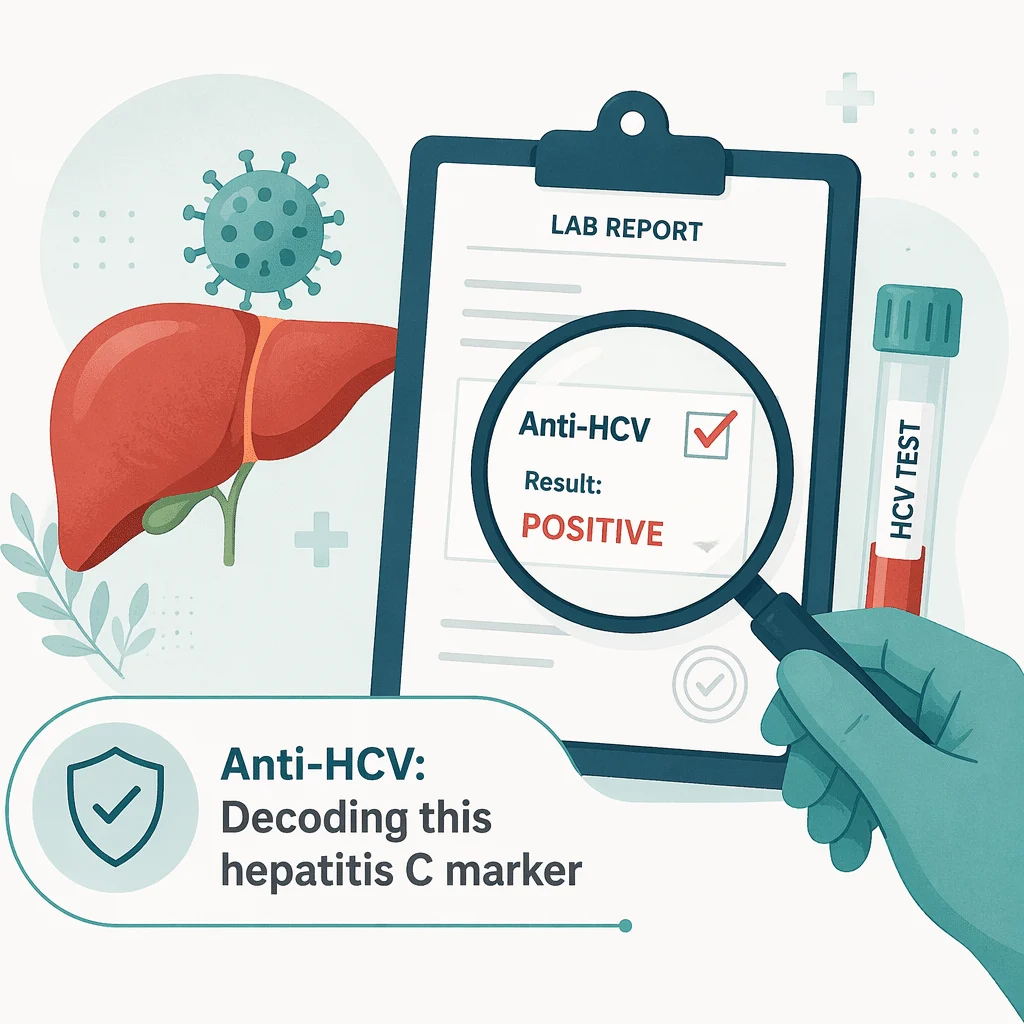
Tes antibodi hepatitis C memberi tahu Anda apakah Anda pernah terpapar virus hepatitis C — bukan apakah Anda terinfeksi saat ini. Perbedaan inilah yang paling penting dalam laporan Anda, dan justru inilah yang paling sering terlewatkan ketika hasil keluar sebagai “reaktif.”
Hasil reaktif berarti sistem imun Anda pernah bertemu virus ini di suatu titik dalam hidup Anda. Bukan berarti Anda sedang terinfeksi sekarang. Bukan berarti Anda menular. Banyak orang yang hasil tesnya reaktif ternyata telah membersihkan virus tersebut bertahun-tahun lalu tanpa pernah menyadarinya, dan orang yang sudah sembuh pun tetap reaktif seumur hidup.
Dalam artikel ini Anda akan mempelajari apa yang sebenarnya diukur oleh tes antibodi, mengapa hasil reaktif adalah titik awal dan bukan diagnosis, bagaimana tes HCV RNA lanjutan menjawab pertanyaan yang sesungguhnya, siapa yang perlu menjalani skrining, dan seperti apa pengobatan yang tersedia saat ini.
Apa yang diukur oleh tes antibodi hepatitis C
Tes antibodi hepatitis C mencari antibodi — protein yang dibuat sistem imun Anda saat bertemu kuman tertentu. Tes ini tidak mencari virus itu sendiri, melainkan jejak yang ditinggalkan sistem imun Anda setelah bertemu virus tersebut.
Pada laporan laboratorium Anda, tes ini mungkin tertulis sebagai anti-HCV, HCV Ab, atau antibodi hepatitis C. Hasilnya bukan berupa angka, melainkan dilaporkan dalam salah satu dari dua kata berikut:
- Non-reaktif (juga ditulis negatif): tidak ditemukan antibodi hepatitis C.
- Reaktif (juga ditulis positif): ditemukan antibodi hepatitis C.
Anggaplah antibodi sebagai catatan, bukan gejala. Begitu tubuh Anda membentuknya, antibodi tersebut umumnya akan tetap ada dalam darah Anda selamanya — ada atau tidaknya virus. Itulah mengapa tes antibodi sangat baik untuk menjawab pertanyaan “apakah Anda pernah bertemu virus ini?” tetapi tidak dapat menjawab “apakah Anda terinfeksi sekarang?”
Tes antibodi ini termasuk dalam kelompok tes darah yang lebih luas yang mencari jejak imun dari infeksi, dan kami menjelaskan kelompok tersebut dalam panduan kami tentang tes serologi.
Mengapa hasil antibodi reaktif bukan berarti diagnosis
Bagian inilah yang paling sering menimbulkan kekhawatiran, jadi penting untuk disampaikan secara langsung: hasil tes antibodi hepatitis C yang reaktif bukanlah diagnosis hepatitis C. Ini adalah sinyal bahwa satu tes lagi perlu dilakukan.
Menurut CDC, hasil antibodi reaktif berarti Anda pernah terinfeksi virus hepatitis C pada suatu waktu dalam hidup Anda. Setelah terinfeksi, antibodi akan selalu ada dalam darah Anda. Hal ini tetap berlaku baik Anda telah berhasil melawan virus tersebut, sudah sembuh, maupun masih membawanya.
Hasil reaktif menempatkan Anda dalam salah satu dari tiga kemungkinan — dan tes antibodi saja tidak dapat memberi tahu Anda yang mana.
Sekitar satu dari empat orang berhasil melawan virus secara alami
Tidak semua orang yang terpapar virus hepatitis C akan terus membawanya. Pada sekitar satu dari empat orang, sistem kekebalan tubuh berhasil melawan virus dengan sendirinya dalam waktu sekitar enam bulan, tanpa pengobatan sama sekali. Dokter menyebut ini sebagai pembersihan spontan.
Banyak dari orang-orang ini tidak pernah mengalami gejala dan tidak pernah mengetahui bahwa mereka pernah terpapar. Antibodi mereka tetap ada, sehingga tes skrining rutin bertahun-tahun atau bahkan berpuluh-puluh tahun kemudian menunjukkan hasil reaktif — meskipun virus tersebut sudah lama pergi.
Orang yang sudah sembuh tetap positif antibodi seumur hidup
Hal yang sama berlaku setelah pengobatan yang berhasil. Penyembuhan hepatitis C menghilangkan virusnya. Namun tidak menghilangkan antibodinya. Seseorang yang sembuh pada tahun 2018 masih akan menunjukkan hasil reaktif pada tahun 2030, dan setiap tahun setelahnya.
Hal ini sering mengejutkan banyak orang, dan bisa terasa mengkhawatirkan jika tidak ada yang menjelaskannya terlebih dahulu. Hasil tes antibodi reaktif pada seseorang yang sudah sembuh bukanlah tanda kambuh. Ini adalah catatan permanen dari sesuatu yang sudah pernah ditangani.
Beberapa hasil reaktif adalah positif palsu
Tes skrining sengaja dirancang untuk sangat sensitif, agar kasus yang nyata tidak terlewat. Konsekuensinya adalah sejumlah kecil hasil reaktif dapat muncul pada orang yang sebenarnya tidak pernah terinfeksi sama sekali. Hasil reaktif yang lemah atau berada di batas ambang paling mungkin masuk dalam kelompok ini.
Anda tidak dapat membedakannya hanya dengan melihat laporan hasil, dan dokter Anda pun tidak bisa. Tes lanjutan yang akan menentukan jawabannya.
Tes HCV RNA lanjutan: bagaimana langkah kedua menjawab pertanyaan yang sebenarnya
Pertanyaan yang tidak bisa dijawab oleh tes antibodi — apakah saya saat ini menderita hepatitis C? — dijawab oleh tes yang berbeda: HCV RNA, yang juga disebut tes asam nukleat, atau NAT.
Alih-alih mencari respons sistem kekebalan tubuh Anda, tes ini mencari materi genetik dari virus itu sendiri. Jika virus ada dalam darah Anda, HCV RNA akan menemukannya. Jika virus sudah tidak ada, tidak ada yang bisa ditemukan. Inilah tes yang mendiagnosis, atau menyingkirkan kemungkinan, infeksi yang sedang berlangsung saat ini.
CDC merekomendasikan agar tes kedua ini dilakukan secara otomatis. Ketika hasil tes antibodi menunjukkan reaktif, laboratorium harus langsung menjalankan pemeriksaan HCV RNA pada sampel darah yang sama, tanpa meminta Anda datang kembali. Ini disebut reflex testing, dan artinya sebagian besar orang mendapatkan jawaban lengkap hanya dari satu kali pengambilan darah.
Berikut adalah cara kedua hasil tersebut dikombinasikan.
| Antibodi Anti-HCV | HCV RNA | Artinya | Langkah selanjutnya yang biasa dilakukan |
|---|---|---|---|
| Non-reaktif | Biasanya tidak diperlukan | Tidak ada tanda bahwa Anda pernah terpapar hepatitis C | Tidak perlu pemeriksaan lebih lanjut, kecuali jika Anda mungkin terpapar dalam 6 bulan terakhir |
| Reaktif | Tidak terdeteksi | Anda pernah berkontak dengan virus ini, tetapi saat ini Anda tidak menderita hepatitis C — tubuh Anda berhasil membersihkannya sendiri atau Anda sudah sembuh | Tidak diperlukan pengobatan hepatitis C; dokter Anda mungkin akan mengulang tes RNA jika kemungkinan paparan terjadi baru-baru ini |
| Reaktif | Terdeteksi | Infeksi hepatitis C aktif terkonfirmasi | Diskusi mengenai pengobatan, ditambah pemeriksaan hati untuk melihat kondisi hati |
| Non-reaktif | Terdeteksi (diperiksa karena paparan terjadi baru-baru ini) | Infeksi sangat dini, terdeteksi sebelum antibodi sempat terbentuk | Dokter Anda mengonfirmasi hasil dan mengatur penanganan selanjutnya |
Membaca tabel tersebut dari kiri ke kanan adalah cara tercepat untuk memahami laporan hasil Anda sendiri. Kolom antibodi menggambarkan masa lalu Anda. Kolom RNA menggambarkan kondisi Anda saat ini.
Periode jendela: mengapa waktu pemeriksaan itu penting
Antibodi tidak langsung muncul begitu virus masuk ke tubuh. Sistem imun Anda membutuhkan waktu untuk membentuknya, dan selama jeda tersebut tes antibodi bisa menunjukkan hasil non-reaktif meskipun virus sudah ada. Jeda ini disebut periode jendela.
Untuk hepatitis C, antibodi biasanya mulai dapat terdeteksi sekitar 8 hingga 11 minggu setelah paparan. Pada sebagian orang, prosesnya lebih lama — hingga sekitar 6 bulan.
Hal ini memiliki satu konsekuensi praktis. Jika Anda merasa mungkin terpapar dalam 6 bulan terakhir, hasil tes antibodi yang non-reaktif belum bisa dijadikan jawaban akhir. CDC menyarankan bahwa dalam situasi ini dokter Anda sebaiknya memesan tes HCV RNA, bukan tes antibodi, karena RNA dapat terdeteksi jauh lebih awal — sering kali dalam beberapa minggu saja.
Jika kemungkinan paparan terjadi lebih dari 6 bulan yang lalu, hasil tes antibodi yang non-reaktif sudah dapat diandalkan dan tidak diperlukan pemeriksaan lanjutan.
Apa arti infeksi aktif yang terkonfirmasi saat ini
Jika tes antibodi Anda reaktif dan HCV RNA Anda terdeteksi, berarti Anda mengalami infeksi hepatitis C aktif. Inilah bagian yang sering keliru dalam artikel-artikel lama: infeksi ini kini sudah bisa disembuhkan.
Menurut CDC, obat-obatan oral yang disebut antivirus kerja langsung (direct-acting antivirals/DAAs) dapat menyembuhkan lebih dari 95% pasien hanya dalam 8 hingga 12 minggu. Obat ini berbentuk pil, mudah dikonsumsi, dan memiliki sangat sedikit efek samping. Ini adalah perubahan yang luar biasa. Sebelum tahun 2014, pengobatan memerlukan suntikan jangka panjang dengan efek samping yang berat dan tingkat keberhasilan yang jauh lebih rendah. Era itu kini telah berlalu.
Kesembuhan tidak bisa diasumsikan — harus dibuktikan. Sekitar 12 minggu setelah pengobatan selesai, dokter Anda akan mengulangi tes HCV RNA. Jika virus masih tidak terdeteksi, kondisi ini disebut respons virologis yang berkelanjutan, atau SVR12, dan itu berarti infeksi telah sembuh.
Ada dua hal penting yang perlu diketahui. Sembuh bukan berarti kebal: Anda tetap bisa tertular hepatitis C kembali setelahnya, karena antibodi yang Anda miliki tidak bersifat protektif. Selain itu, hasil tes antibodi Anda akan tetap reaktif seumur hidup — itulah mengapa tes RNA, bukan tes antibodi, yang digunakan untuk memeriksa status Anda mulai saat itu.
Pilihan obat dan durasi pengobatan adalah keputusan yang harus Anda buat bersama dokter Anda. Artikel ini tidak memberikan saran pengobatan.
Tes fungsi hati dan peran genotipe yang semakin berkurang
Selain hasil RNA, dokter Anda biasanya juga akan memeriksa kondisi hati itu sendiri. Hal ini umumnya mencakup tes fungsi hati, yang meliputi enzim alanin aminotransferase (ALT) dan pasangannya yang erat tes darah AST. Panel hati juga sering mencantumkan tes GGT dan bilirubin total.
ALT meningkat ketika sel-sel hati mengalami peradangan, namun ini bukan panduan yang sempurna: banyak orang dengan hepatitis C aktif memiliki kadar ALT yang sepenuhnya normal. ALT yang normal tidak pernah bisa menyingkirkan kemungkinan infeksi. Hanya HCV RNA yang bisa melakukan itu.
Genotipe — jenis strain virus — dulunya sangat memengaruhi pilihan pengobatan. Di era DAA, perannya telah berkurang secara signifikan, karena beberapa regimen modern bekerja pada semua genotipe. Banyak pasien kini menjalani pengobatan tanpa tes genotipe sama sekali.
Orang yang sudah mengalami jaringan parut hati yang signifikan mungkin akan ditawarkan pemantauan hati secara berkelanjutan bahkan setelah sembuh, yang dapat mencakup tes darah AFP dan pencitraan.
Siapa yang perlu menjalani skrining hepatitis C
Skrining adalah bagian dari layanan kesehatan rutin, bukan penilaian terhadap gaya hidup seseorang. Rekomendasi ini sengaja dibuat bersifat universal, dan itulah tujuannya: ketika semua orang dites, tidak ada yang perlu disingling out atau diminta membenarkan alasan menjalani tes.
Itu CDC merekomendasikan tes hepatitis C untuk:
- Semua orang dewasa berusia 18 tahun ke atas, setidaknya sekali seumur hidup.
- Wanita hamil, pada setiap kehamilan.
- Siapa pun yang meminta tes hepatitis C.
US Preventive Services Task Force mencapai kesimpulan inti yang sama, merekomendasikan skrining satu kali untuk orang dewasa. Beberapa orang disarankan untuk melakukan tes secara berkala, bukan hanya sekali — misalnya mereka yang terus-menerus terpapar risiko, atau orang yang menjalani hemodialisis rutin. Dokter Anda dapat memberi tahu pola mana yang sesuai untuk Anda.
Karena skrining hepatitis C, hepatitis B, dan HIV sering dilakukan dalam satu kunjungan yang sama, Anda mungkin menemukan penanda lain dalam laporan yang sama. Tes terpisah dilakukan untuk memeriksa antigen permukaan hepatitis B, dan kunjungan yang sama sering kali juga mencakup tes skrining HIV. Dalam kehamilan, skrining hepatitis C termasuk dalam rangkaian pemeriksaan yang lebih luas, yaitu tes darah yang dilakukan selama kehamilan.
Kapan harus menemui dokter?
Hubungi tenaga kesehatan jika salah satu dari hal berikut berlaku untuk Anda. Tidak satu pun dari ini merupakan kedaruratan medis, dan tidak ada alasan untuk panik.
- Hasil tes antibodi Anda reaktif dan belum ada tes HCV RNA yang dilakukan. Ini yang paling penting — hasil Anda belum lengkap tanpa tes tersebut.
- Anda mendapat hasil antibodi reaktif dan belum ada yang menjelaskan artinya bagi Anda.
- Anda merasa mungkin pernah terpapar dalam 6 bulan terakhir, apa pun hasil tes antibodi Anda.
- Anda berusia 18 tahun atau lebih dan belum pernah menjalani skrining.
- Anda sedang hamil dan belum menjalani tes selama kehamilan ini.
- Anda memiliki infeksi aktif yang sudah dikonfirmasi dan belum mendiskusikan pengobatan.
- Anda pernah sembuh di masa lalu dan ingin tahu seperti apa pemantauan lanjutan yang perlu Anda jalani sekarang.
Segera cari pertolongan medis jika kulit atau mata menguning, urine berwarna gelap, nyeri perut yang parah, atau muntah terus-menerus. Gejala-gejala ini perlu dievaluasi terlepas dari status hepatitis C seseorang.
Kemajuan ilmiah terbaru dalam pengujian hepatitis C
Penelitian sejak tahun 2023 lebih banyak berfokus bukan pada tes antibodi itu sendiri, melainkan pada masalah praktis: memastikan setiap orang dengan hasil reaktif benar-benar mendapatkan tes RNA yang seharusnya dilakukan setelahnya.
Pengujian refleks otomatis membantu lebih banyak orang mendapatkan jawaban yang lengkap
Tao dan rekan-rekannya mengumpulkan 51 studi dalam sebuah tinjauan sistematis dan meta-analisis — sebuah studi yang menggabungkan hasil dari banyak penelitian sebelumnya untuk mendapatkan gambaran keseluruhan yang lebih jelas. Mereka meneliti pengujian refleks, di mana laboratorium secara otomatis menjalankan tes HCV RNA pada sampel yang reaktif. Pengujian refleks berbasis laboratorium secara signifikan meningkatkan proporsi orang yang mendapatkan tes RNA yang mereka butuhkan, dan mempersingkat waktu tunggu antara kedua hasil menjadi kurang dari satu hari dalam setiap studi refleks yang ditinjau.
Apa artinya bagi Anda: jika hasil tes antibodi Anda reaktif, wajar untuk menanyakan apakah tes RNA dilakukan pada sampel yang sama. Reflex testing inilah yang mengubah dua kali kunjungan menjadi satu, dan Organisasi Kesehatan Dunia kini merekomendasikannya.
Pemeriksaan saat kunjungan mempersingkat jalan menuju pengobatan
Trickey dan rekan-rekannya menggabungkan 45 studi yang membandingkan pemeriksaan RNA HCV di titik perawatan — mesin yang memberikan hasil selama kunjungan — dengan pengiriman sampel ke laboratorium pusat. Waktu dari tes antibodi hingga memulai pengobatan berkurang dari sekitar dua bulan menjadi sekitar tiga minggu, dan lebih banyak orang yang akhirnya memulai pengobatan. Para penulis menilai kualitas keseluruhan bukti ini sebagai rendah, karena ini merupakan studi observasional dan bukan uji coba acak, sehingga arah manfaatnya lebih jelas daripada besarannya yang tepat.
Apa artinya bagi Anda: layanan yang dapat memeriksa dan mengobati di satu tempat, idealnya dalam satu hari, kehilangan jauh lebih sedikit pasien di tengah jalan.
Data nyata dari AS mengonfirmasi tingkat kesembuhan
Ghany dan rekan-rekannya menganalisis catatan dari dua laboratorium komersial besar di AS yang mencakup periode 2014 hingga 2021 — periode yang mencakup hadirnya antivirus modern. Di antara orang-orang yang menjalani pengobatan, diperkirakan 96 dari 100 orang sembuh. Orang yang didiagnosis melalui reflex testing lebih mungkin untuk menjalani pengobatan. Kekhawatiran utama mereka bukan pada obatnya, melainkan akses terhadapnya: hanya sekitar sepertiga orang dengan infeksi aktif yang telah menjalani pengobatan.
Apa artinya bagi Anda: tingkat kesembuhan yang terlihat dalam praktik sehari-hari di Amerika sesuai dengan yang terlihat dalam uji klinis. Kesenjangan bukan pada pengobatannya. Melainkan pada proses diagnosis dan keterhubungan dengan pengobatan tersebut.
Uji antibodi terbaru menghasilkan lebih sedikit hasil positif palsu
Ponnuvel dan rekan-rekannya menjalankan lebih dari 2.000 sampel melalui uji antibodi yang baru dikembangkan dan membandingkannya dengan dua uji yang sudah digunakan sehari-hari. Hampir semua hasil yang berada di batas atau “ekuivokal”, dan sekitar tiga perempat dari hasil yang lemah positif, ternyata negatif pada tes yang lebih baru — artinya orang-orang tersebut tidak pernah terinfeksi. Ini merupakan evaluasi di satu pusat dan perlu dikonfirmasi di tempat lain, namun arahnya menggembirakan.
Apa artinya bagi Anda: hasil reaktif yang lemah atau berada di batas adalah hal yang umum dalam skrining, bukan diagnosis tersembunyi. Inilah situasi yang tepat di mana tes RNA hadir untuk memberikan kepastian.
Menuju diagnosis satu langkah
Dalam sebuah tinjauan tahun 2024, Feld menjelaskan mengapa urutan dua langkah — antibodi dulu, lalu RNA — masih menjadi hambatan utama dalam mendiagnosis hepatitis C di seluruh dunia, dan mengulas teknologi yang suatu hari mungkin bisa menggabungkannya menjadi satu langkah. Penelitian tersebut menjanjikan, tetapi belum menjadi praktik rutin.
Apa artinya bagi Anda: untuk saat ini, jalur dua langkah tetap menjadi standar — dan langkah kedua adalah yang menjawab pertanyaan Anda.
Glosarium
| Ketentuan | Definisi |
|---|---|
| Anti-HCV | Antibodi hepatitis C. Keberadaannya menunjukkan bahwa sistem imun Anda pernah bertemu dengan virus ini pada suatu waktu, bukan bahwa virus tersebut masih ada sekarang. |
| Reaktif | Istilah laboratorium untuk hasil skrining antibodi yang positif. Artinya antibodi ditemukan, dan diperlukan tes kedua. |
| HCV RNA (NAT) | Tes asam nukleat yang mencari materi genetik virus. Inilah tes yang menunjukkan apakah Anda saat ini menderita hepatitis C. |
| Tes refleks | Laboratorium secara otomatis menjalankan HCV RNA pada sampel yang sama ketika tes antibodi reaktif, sehingga Anda tidak perlu pengambilan darah kedua. |
| Periode jendela | Jeda waktu setelah paparan sebelum antibodi dapat terdeteksi, biasanya sekitar 8 hingga 11 minggu dan terkadang hingga 6 bulan. |
| Pembersihan spontan | Ketika sistem imun membasmi virus dengan sendirinya, tanpa pengobatan. Hal ini terjadi pada sekitar satu dari empat orang. |
| Antivirus kerja langsung (DAA) | Tablet modern yang digunakan untuk mengobati hepatitis C. CDC menyatakan bahwa obat ini menyembuhkan lebih dari 95% orang dalam 8 hingga 12 minggu. |
| SVR12 | Respons virologis berkelanjutan: hasil HCV RNA yang tidak terdeteksi sekitar 12 minggu setelah pengobatan selesai. Inilah cara konfirmasi kesembuhan dilakukan. |
| Genotipe | Strain virus hepatitis C. Dulu menjadi panduan pemilihan pengobatan, tetapi kini jauh kurang penting karena banyak regimen yang bekerja pada semua genotipe. |
| ALT | Alanin aminotransferase, enzim hati. Kadarnya bisa meningkat saat hati meradang, tetapi sering kali benar-benar normal pada penderita hepatitis C. |
Pertanyaan yang sering diajukan
Tes antibodi saya positif tetapi HCV RNA saya negatif. Apakah saya menular?
Tidak. Hasil antibodi reaktif dengan hasil HCV RNA yang tidak terdeteksi berarti virus tidak ada dalam darah Anda. Tidak ada yang bisa ditularkan. Kombinasi ini berarti Anda pernah terpapar pada suatu waktu dan entah berhasil membersihkan virus sendiri atau telah berhasil diobati.
Antibodi Anda akan tetap reaktif seumur hidup, dan itu normal serta wajar. Ini bukan tanda bahwa infeksi sedang bersembunyi atau menunggu untuk kembali. Jika kemungkinan paparan Anda sangat baru-baru ini, dokter Anda mungkin akan mengulang tes RNA untuk memastikan hasilnya tidak diambil terlalu dini.
Apa arti hasil antibodi hepatitis C yang non-reaktif?
Non-reaktif berarti tidak ditemukan antibodi hepatitis C. Dalam kebanyakan kasus, ini berarti Anda belum pernah terinfeksi, dan tidak diperlukan tes lanjutan.
Ada satu pengecualian yang perlu diketahui. Jika Anda mungkin terpapar dalam 6 bulan terakhir, tubuh Anda mungkin belum sempat membentuk antibodi, sehingga hasil non-reaktif tidak dapat menyingkirkan kemungkinan infeksi. Dalam situasi tersebut, CDC menyarankan tes HCV RNA sebagai gantinya, karena tes ini mendeteksi virus jauh lebih awal. Jika kemungkinan paparan terjadi lebih dari 6 bulan yang lalu, hasil non-reaktif merupakan jawaban yang dapat diandalkan.
Apakah vaksin dapat menyebabkan hasil antibodi hepatitis C reaktif?
Tidak. Tidak ada vaksin untuk hepatitis C, sehingga tidak ada vaksin yang dapat menghasilkan antibodi hepatitis C.
Vaksin hepatitis B adalah vaksin yang berbeda untuk virus yang berbeda, dan sama sekali tidak memengaruhi pemeriksaan hepatitis C. Kedua infeksi ini diperiksa secara terpisah, dengan penanda yang berbeda. Jika Anda pernah mendapatkan vaksin hepatitis A atau hepatitis B, keduanya tidak akan membuat hasil tes anti-HCV Anda menjadi reaktif.
Apakah hasil antibodi hepatitis C bisa bersifat ekuivokal atau tidak dapat ditentukan?
Ya. Terkadang sinyal berada dekat dengan nilai batas, dan laboratorium melaporkannya sebagai ekuivokal, tidak dapat ditentukan, atau lemah reaktif. Hasil seperti ini memang tidak nyaman untuk dibaca, namun ini adalah hal yang umum terjadi dalam skrining, bukan suatu diagnosis tersembunyi.
Hasil yang berada di batas inilah yang paling mungkin ternyata merupakan positif palsu. Langkah selanjutnya sama seperti untuk hasil reaktif apa pun: tes HCV RNA akan memastikan apakah virus benar-benar ada. Dokter Anda mungkin juga akan mengulangi tes antibodi dengan sampel baru.
Apa arti diagnosis hepatitis C saat kehamilan?
Skrining dianjurkan pada setiap kehamilan, itulah mengapa Anda mungkin melihat tes ini dalam hasil pemeriksaan Anda meskipun tidak mengharapkannya. Sebagian besar orang yang menjalani skrining mendapatkan hasil non-reaktif.
Jika infeksi aktif terkonfirmasi, risiko penularan virus ke bayi tergolong rendah, dan tim perawatan Anda akan mendiskusikan pemantauan untuk Anda dan bayi Anda. Antivirus kerja langsung umumnya tidak dimulai selama kehamilan, namun pengobatan dapat didiskusikan untuk setelah melahirkan. Hepatitis C bukan alasan untuk menghindari menyusui dalam sebagian besar keadaan. Hal-hal ini perlu didiskusikan dengan tim kebidanan Anda sendiri, yang mengetahui kondisi Anda.
Di mana saya bisa menjalani tes, dan berapa biayanya?
Anda dapat meminta tes hepatitis C kepada dokter layanan primer mana pun — CDC mencantumkan “siapa pun yang meminta tes” di antara mereka yang sebaiknya diperiksa, sehingga Anda tidak perlu menjelaskan atau membenarkan permintaan tersebut.
Karena skrining satu kali untuk orang dewasa direkomendasikan oleh CDC dan US Preventive Services Task Force, biaya ini sering ditanggung oleh asuransi sebagai perawatan preventif, meskipun cakupannya bervariasi. Pemeriksaan gratis dan rahasia juga tersedia di banyak pusat layanan komunitas. CDC menyediakan alat pencari lokasi di gettested.cdc.gov tempat Anda dapat menemukan pilihan terdekat berdasarkan kode pos.
Sumber
- Centers for Disease Control and Prevention — Pemeriksaan Hepatitis C
- Centers for Disease Control and Prevention — Pengobatan Hepatitis C
- MedlinePlus, National Library of Medicine — Hepatitis C
- US Preventive Services Task Force — Infeksi Virus Hepatitis C pada Remaja dan Orang Dewasa: Skrining
- Tao Y, Tang W, Fajardo E, et al. — Reflex Hepatitis C Virus Viral Load Testing Following an Initial Positive Hepatitis C Virus Antibody Test: A Global Systematic Review and Meta-analysis — Clinical Infectious Diseases, 2023 — https://doi.org/10.1093/cid/ciad126
- Trickey A, Fajardo E, Alemu D, Artenie AA, Easterbrook P — Impact of hepatitis C virus point-of-care RNA viral load testing compared with laboratory-based testing on uptake of RNA testing and treatment, and turnaround times: a systematic review and meta-analysis — The Lancet Gastroenterology & Hepatology, 2023 — https://doi.org/10.1016/S2468-1253(22)00346-6
- Ghany MG, Ward JW, Baldwin Z, et al. — HCV Testing and Treatment of Adults in the United States: 2014 Through 2021 — Data From Two National Commercial Testing Laboratories — Journal of Viral Hepatitis, 2025 — https://doi.org/10.1111/jvh.70087
- Ponnuvel S, Ali H, Prakash A, et al. — Superior Performance of Newly Developed Alinity Anti-HCV Next Assay in the Diagnosis of HCV Infection — Journal of Medical Virology, 2025 — https://doi.org/10.1002/jmv.70307
- Feld JJ — What Is Needed to Move Toward Single-Step Diagnosis of Current HCV Infection? — The Journal of Infectious Diseases, 2024 — https://doi.org/10.1093/infdis/jiad453
Bacaan lebih lanjut
- HBsAg positif: artinya apa dan apa langkah selanjutnya
- Tes darah HIV: cara kerja skrining dan arti hasilnya
- Tes fungsi hati: cara membaca hasilnya
- Tes serologi: apa yang terdeteksi dalam panel IMS
- Cara membaca hasil tes darah: panduan sederhana.
Pahami hasil lab Anda dengan AI DiagMe.
Laporan yang memuat anti-HCV, RNA HCV, ALT, dan serangkaian tes fungsi hati sekaligus bisa sulit dipahami, terutama ketika kata “reaktif” atau “positif” muncul tanpa penjelasan di sampingnya. AI DiagMe membaca hasil Anda dan menyajikannya dalam bahasa yang mudah dimengerti, sehingga Anda bisa datang ke janji dokter dengan sudah memahami arti angka dan istilah tersebut. Layanan ini membantu Anda memahami laporan Anda — bukan mendiagnosis Anda, dan bukan pengganti dokter Anda.
Dapatkan interpretasi hasil Anda dalam hitungan menit.