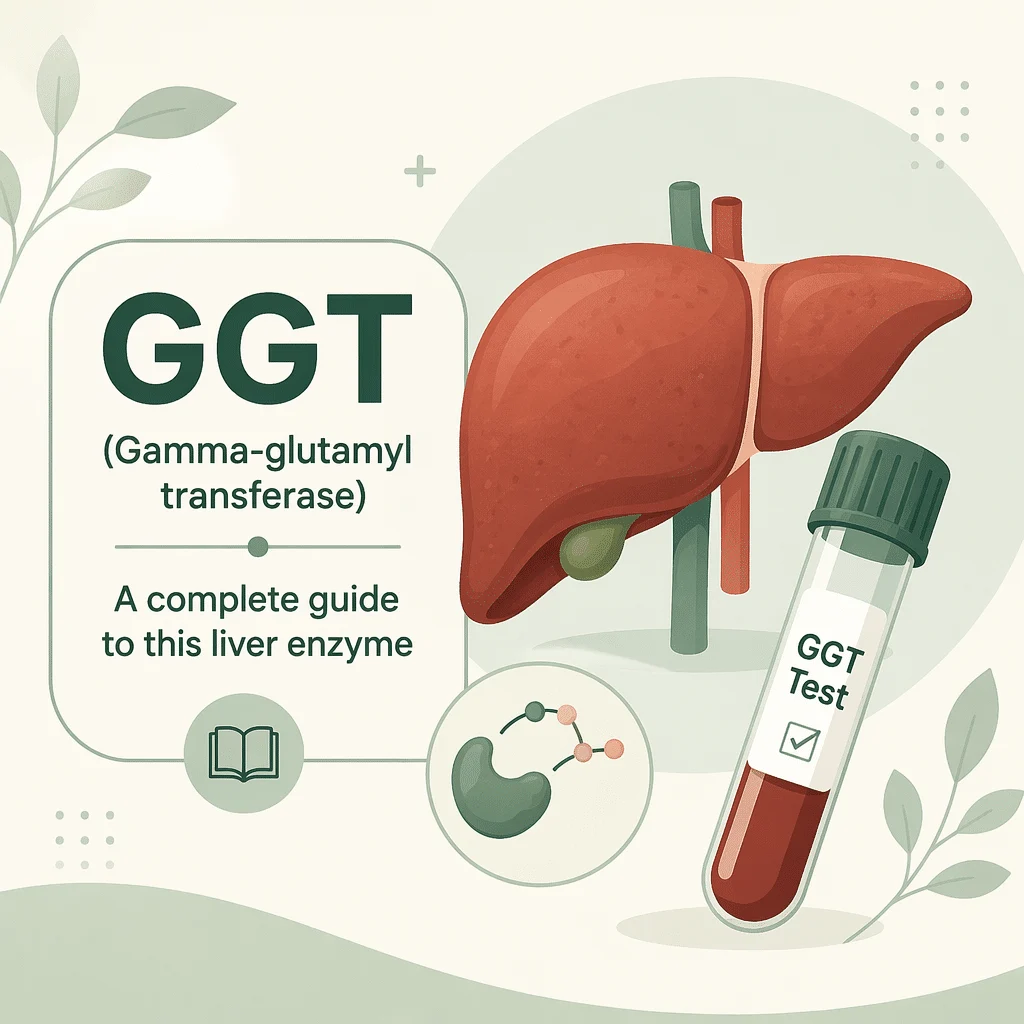
Tes GGT mengukur gamma-glutamyl transferase, yaitu enzim yang sebagian besar diproduksi oleh hati, untuk membantu mendeteksi tanda-tanda awal gangguan pada hati atau saluran empedu. Jika panel darah terbaru Anda menandai penanda ini sebagai tinggi atau rendah, Anda mungkin bertanya-tanya apa artinya dan apakah ini perlu dikhawatirkan. Panduan ini menjelaskan fungsi GGT dalam tubuh, apa yang dianggap sebagai nilai normal, alasan paling umum kadarnya meningkat, serta perbandingannya dengan enzim hati lain dalam laporan Anda. Anda juga akan menemukan penjelasan praktis tentang kapan suatu hasil memerlukan konsultasi lanjutan dengan dokter, dan kapan kemungkinan besar tidak ada yang perlu dikhawatirkan.
Apa itu GGT dan dari mana asalnya
Gamma-glutamyl transferase terdapat di dalam sel-sel di seluruh tubuh, namun hati memiliki konsentrasi terbesar sejauh ini. Jumlah yang lebih kecil juga terdapat di ginjal, pankreas, limpa, dan usus. Karena hati adalah sumber utamanya, dokter menganggap peningkatan GGT dalam darah sebagai sinyal yang cukup spesifik untuk hati, terutama ketika nilainya sejalan dengan penanda hati lainnya seperti tes darah AST atau tes hasil tes ALT.
Di dalam sel, GGT membantu mendaur ulang glutathione, salah satu antioksidan utama dalam tubuh. Glutathione melindungi sel dari kerusakan yang disebabkan oleh racun, obat-obatan, dan produk sampingan metabolisme sehari-hari. GGT secara khusus membantu mengangkut asam amino melintasi membran sel agar glutathione dapat dibangun kembali secara efisien. Ketika sel-sel hati mengalami stres, peradangan, atau terpapar zat-zat tertentu, sel-sel tersebut cenderung memproduksi dan melepaskan lebih banyak GGT dari biasanya — itulah mengapa tes darah dapat mendeteksi perubahan ini sebelum gejala muncul.
GGT juga dikenal karena perannya dalam mengonfirmasi dari mana masalah aliran empedu berasal. Saluran empedu membawa cairan pencernaan keluar dari hati, dan ketika aliran tersebut tersumbat, kadar GGT biasanya meningkat bersamaan dengan enzim lain yang disebut fosfatase alkali. Karena ALP juga dapat meningkat akibat aktivitas tulang, menggabungkannya dengan hasil GGT membantu dokter memastikan apakah hati atau saluran empedu yang benar-benar terlibat.
Nilai normal GGT dan cara laboratorium menetapkannya
Rentang nilai rujukan GGT sedikit berbeda-beda tergantung laboratorium, jenis kelamin, dan terkadang usia, sehingga angka yang tercetak di samping hasil Anda adalah yang paling penting. Meski demikian, banyak laboratorium di AS menggunakan rentang yang serupa dengan yang ditampilkan di bawah ini untuk orang dewasa.
| Kelompok | Kisaran tipikal dewasa | Unit umum |
|---|---|---|
| Pria | 8–61 | U/L |
| Wanita | 5–36 | U/L |
Angka-angka ini bersifat perkiraan dan bervariasi antar laboratorium, jadi selalu bandingkan hasil Anda sendiri dengan rentang yang tercetak pada laporan Anda, bukan dengan angka yang ditemukan secara daring. Laboratorium menetapkan rentang ini dengan menguji kelompok besar orang sehat dan menetapkan batas pada sekitar persentil ke-95 atau ke-97,5 — itulah mengapa sebagian kecil orang dewasa sehat bisa berada sedikit di luar rentang yang tercetak tanpa adanya masalah yang mendasarinya.
GGT biasanya dilaporkan bersama nilai panel hati lainnya, dan umum ditemukan tercantum di dekat bilirubin total dan bilirubin direk di bawah bagian yang berjudul panel hati atau panel fungsi hepatik. Dokter jarang menginterpretasikan GGT secara terpisah, karena pola dari beberapa penanda biasanya memberikan gambaran yang lebih jelas dibandingkan satu nilai saja.
Penyebab umum kadar GGT tinggi
Kadar GGT yang tinggi memiliki banyak kemungkinan penjelasan, mulai dari faktor yang umum dan dapat pulih sendiri hingga kondisi yang memerlukan perhatian medis. Tingkat kenaikannya sering kali memberikan petunjuk berguna mengenai tingkat urgensinya.
Stres hati akibat alkohol
Alkohol adalah salah satu pemicu paling umum untuk GGT yang meningkat, dan kadarnya bisa naik bahkan dengan konsumsi alkohol sedang secara rutin, bukan hanya akibat konsumsi berat. GGT sering kali naik sebelum enzim hati lainnya berubah, itulah sebabnya dokter lebih memilih penanda ini saat menyaring atau memantau stres hati akibat alkohol. Kadar GGT biasanya mulai turun dalam dua hingga tiga minggu setelah berhenti minum alkohol dan dapat kembali normal dalam empat hingga delapan minggu, menjadikan GGT penanda yang berguna untuk memantau perkembangan dari waktu ke waktu.
Perlemakan hati dan penyebab metabolik
Penyakit hati berlemak terkait disfungsi metabolik, yang sebelumnya dikenal sebagai penyakit hati berlemak non-alkohol, kini menjadi penyebab paling umum peningkatan ringan enzim hati di seluruh dunia. Kondisi ini berkembang ketika lemak menumpuk di dalam sel-sel hati, yang sering dikaitkan dengan kelebihan berat badan, resistensi insulin, atau trigliserida tinggi, dan kondisi ini sering menghasilkan peningkatan GGT sedang bersamaan dengan perubahan ALT dan AST.
Masalah saluran empedu
Ketika empedu tidak dapat mengalir dengan normal keluar dari hati, GGT dan fosfatase alkali cenderung naik bersamaan, sering kali lebih tajam dibandingkan transaminase. Batu empedu, tumor yang menekan saluran empedu, atau peradangan pada saluran empedu itu sendiri semuanya dapat menghasilkan pola ini. Penyakit kuning, tinja berwarna pucat, dan urine berwarna gelap adalah gejala penyerta yang khas dan mendorong pemeriksaan pencitraan lebih lanjut, seperti USG perut.
Obat-obatan dan suplemen
Beberapa golongan obat umum dapat meningkatkan GGT tanpa menunjukkan kerusakan hati yang serius. Ini termasuk beberapa antikonvulsan, sejumlah antibiotik, dan beberapa obat tekanan darah. Jenis peningkatan ini sering mencerminkan respons enzim adaptif daripada cedera aktif, tetapi setiap kenaikan baru atau yang tidak dapat dijelaskan tetap perlu disampaikan kepada dokter yang meresepkan obat Anda, bukan dengan menyesuaikan obat sendiri.
Faktor penyebab lainnya
Hepatitis virus, jaringan parut hati kronis, pankreatitis, dan sindrom metabolik semuanya dapat meningkatkan GGT dalam berbagai derajat. Merokok dan berat badan yang lebih tinggi juga dikaitkan dengan kadar dasar yang sedikit lebih tinggi dalam studi populasi, yang menjadi salah satu alasan mengapa satu hasil yang tinggi tidak secara otomatis menunjukkan adanya penyakit.
Apa arti kadar GGT yang rendah
Hasil GGT di bawah rentang normal jarang menjadi sumber kekhawatiran dan hampir tidak pernah memerlukan pemeriksaan lebih lanjut. Berbeda dengan hasil yang tinggi, nilai yang rendah tidak dikaitkan dengan pola penyakit serius yang dikenal. Kondisi langka yang terkait dengan GGT rendah antara lain kelenjar tiroid yang kurang aktif, yang memperlambat metabolisme secara keseluruhan, serta kekurangan gizi berat, di mana asupan protein yang sangat terbatas dapat mengurangi produksi enzim secara umum. Pada sebagian besar orang dewasa yang sehat, GGT yang sedikit di bawah rentang yang tercetak hanyalah variasi individual yang normal.
GGT dibandingkan dengan enzim hati lainnya
Membaca satu enzim secara terpisah jarang memberikan gambaran lengkap. Dokter biasanya melihat pola keseluruhan dari panel tes fungsi hati untuk menentukan apakah masalahnya tampak seperti cedera sel, gangguan aliran empedu, atau kombinasi keduanya.
| Penanda | Apa yang terutama tercermin di dalamnya | Spesifisitas hati |
|---|---|---|
| GGT | Aktivitas saluran empedu, alkohol, dan paparan yang menginduksi enzim | Cukup tinggi, tetapi juga dipengaruhi oleh faktor di luar hati |
| ALT | Cedera sel hati | Tertinggi di antara enzim hati yang umum |
| AST | Cedera sel hati dan otot | Lebih rendah, karena juga berasal dari jaringan otot dan jantung |
| PUNCAK GUNUNG | Saluran empedu dan tulang | Sedang; GGT membantu memastikan asal dari hati |
Aturan praktis yang digunakan dokter adalah: ketika ALP dan GGT sama-sama meningkat, kemungkinan besar sumbernya berasal dari saluran empedu atau hati, bukan dari tulang — karena kondisi tulang meningkatkan ALP tanpa mengubah GGT. Membandingkan AST dan ALT juga dapat memberikan petunjuk tambahan, karena pola di mana AST jelas lebih tinggi dari ALT lebih sering ditemukan pada gangguan hati akibat alkohol, sementara ALT cenderung lebih tinggi pada penyakit hati berlemak.
GGT dan risiko kardiometabolik
Penelitian selama dua dekade terakhir telah memperluas penggunaan GGT jauh melampaui sekadar penanda hati. Studi populasi secara konsisten mengaitkan GGT yang lebih tinggi — bahkan nilai yang masih dalam rentang normal — dengan peningkatan risiko diabetes tipe 2, sindrom metabolik, dan penyakit kardiovaskular. Salah satu penjelasan yang diajukan adalah bahwa GGT sendiri berperan dalam mengelola stres oksidatif, sehingga kadar yang terus-menerus tinggi mungkin mencerminkan tekanan metabolik yang lebih luas, bukan hanya kerusakan hati semata. Itulah mengapa sebagian dokter kini memandang GGT sebagai sinyal awal yang perlu dibahas bersama tren ALT dari waktu ke waktu dan penanda kardiometabolik yang lebih luas, bukan sekadar dibaca sebagai nilai yang hanya berkaitan dengan hati.
Faktor gaya hidup yang memengaruhi hasil GGT Anda
Beberapa kebiasaan sehari-hari dapat mengubah hasil GGT naik atau turun bahkan sebelum Anda mengunjungi dokter, sehingga penting untuk mempertimbangkan hal-hal ini bersama angka yang tertera.
- Konsumsi alkohol dalam beberapa hari sebelum tes, bahkan dalam jumlah sedang, dapat meningkatkan GGT untuk sementara.
- Merokok dikaitkan dengan kadar GGT rata-rata yang sedikit lebih tinggi berdasarkan data populasi.
- Kelebihan berat badan dan resistensi insulin berhubungan dengan kadar dasar yang lebih tinggi melalui perubahan pada hati berlemak.
- Olahraga rutin dan penurunan berat badan secara bertahap, bahkan sebesar lima hingga sepuluh persen dari berat badan, dikaitkan dengan perbaikan yang terukur pada enzim hati seiring waktu.
- Pola makan yang mengutamakan sayuran, serat, dan lemak tak jenuh, sekaligus membatasi gula olahan dan makanan ultra-proses, mendukung kesehatan hati secara keseluruhan.
Kapan harus menemui dokter mengenai GGT Anda
Sebagian besar hasil GGT yang sedikit tinggi pada satu kali pemeriksaan bukanlah keadaan darurat, dan dokter Anda akan memandu tindak lanjut yang tepat. Namun, ada beberapa situasi yang perlu segera didiskusikan.
- GGT Anda lebih dari tiga kali batas atas rentang referensi laboratorium Anda.
- Peningkatan tersebut menetap atau terus naik pada pemeriksaan ulang meskipun sudah melakukan perubahan gaya hidup.
- Hasil panel hati lainnya, seperti ALT, AST, atau bilirubin, juga tidak normal pada saat yang bersamaan.
- Anda mengalami penyakit kuning, kelelahan berkepanjangan, nyeri perut, urine berwarna gelap, atau tinja berwarna pucat.
- Anda memiliki faktor risiko seperti konsumsi alkohol berlebihan, diabetes, atau riwayat penyakit hati dalam keluarga.
Membawa daftar lengkap obat-obatan, suplemen, dan konsumsi alkohol terbaru saat berkonsultasi akan membantu dokter Anda menafsirkan hasil dengan lebih akurat, karena ketiganya umumnya memengaruhi GGT.
Kemajuan ilmiah terkini
Tes darah hati telah digunakan selama beberapa dekade, namun para peneliti terus menyempurnakan batas nilai normal yang tepat dan seberapa baik tes ini memprediksi kondisi kesehatan nyata. Sebuah studi tahun 2025 yang diterbitkan dalam Liver International mengamati lebih dari 5.000 orang dewasa sehat yang telah disaring dengan cermat di Finlandia untuk menentukan batas referensi terbaru bagi panel hati standar, termasuk GGT, kemudian membandingkan batas tersebut dengan hasil kesehatan nyata selama sepuluh tahun pada lebih dari 20.000 orang tambahan.
Temuan sederhananya: GGT dan AST ternyata menjadi prediktor masalah hati di masa depan yang lebih kuat dibandingkan ALT, enzim yang banyak orang anggap paling penting untuk dipantau. Secara khusus, kadar GGT lebih dari tiga kali batas atas laboratorium dikaitkan dengan risiko komplikasi hati yang serius dalam sepuluh tahun yang jauh lebih tinggi — risiko yang tidak muncul dengan cara yang sama pada peningkatan ALT dengan besaran serupa.
Apa artinya bagi Anda: jika GGT Anda sangat tinggi, terutama bersamaan dengan AST yang juga meningkat, kombinasi tersebut merupakan tanda peringatan yang lebih informatif dibandingkan hanya melihat ALT saja. Ini bukan berarti komplikasi pasti akan terjadi, tetapi hal ini membantu menjelaskan mengapa dokter Anda mungkin menganggap GGT yang tinggi lebih serius dari yang Anda duga — mengingat banyak pasien menganggapnya sebagai penanda sekunder. Secara sederhana, batas referensi atas adalah nilai tertinggi yang dianggap normal pada orang sehat, dan kadar tiga kali angka tersebut hanyalah ukuran seberapa tinggi nilainya, bukan diagnosis tersendiri.
Serangkaian penelitian lain juga semakin memperkuat betapa eratnya hubungan GGT dengan stres hati akibat alkohol secara khusus. Sebuah studi intervensi nutraceutical dan konseling tahun 2026 memantau orang-orang dengan GGT tinggi yang berkaitan dengan konsumsi alkohol, dan menemukan bahwa kadarnya turun secara signifikan dengan dukungan pantang alkohol, terutama pada mereka yang memiliki kadar awal paling tinggi. Secara praktis, hal ini menegaskan bahwa GGT adalah penanda yang responsif dan dapat dipantau: ketika penyebab dasarnya ditangani — baik itu pengurangan konsumsi alkohol, penurunan berat badan, maupun perubahan obat — kadar GGT biasanya ikut membaik dalam beberapa minggu hingga bulan ke depan.
Glosarium
| Ketentuan | Arti dalam bahasa sederhana |
|---|---|
| Gamma-glutamyl transferase (GGT) | Enzim hati yang membantu mendaur ulang glutathione, yaitu antioksidan yang melindungi sel. Kadarnya meningkat ketika sel-sel hati mengalami stres atau aliran empedu terganggu. |
| Alanine aminotransferase (ALT) | Enzim yang cukup spesifik untuk hati dan bocor ke dalam darah ketika sel-sel hati mengalami kerusakan. |
| Aspartat aminotransferase (AST) | Enzim yang ditemukan di hati, otot, dan jantung, sehingga kurang spesifik untuk hati dibandingkan ALT. |
| Fosfatase alkali (ALP) | Enzim yang terutama meningkat saat aliran empedu tersumbat, dan kadang-kadang berkaitan dengan aktivitas tulang. |
| Saluran empedu | Saluran yang mengalirkan cairan pencernaan yang disebut empedu dari hati ke usus. |
| Glutathione | Antioksidan alami yang diproduksi di dalam sel, berfungsi menetralkan racun dan mengurangi kerusakan sel. |
| Sindrom metabolik | Sekumpulan kondisi yang meliputi kelebihan lemak perut, tekanan darah tinggi, dan resistensi insulin, yang meningkatkan risiko diabetes dan penyakit jantung. |
| Rentang referensi | Rentang nilai yang dianggap normal oleh laboratorium untuk orang sehat, yang dapat berbeda-beda tergantung laboratorium, jenis kelamin, dan usia. |
| Batas atas normal (ULN) | Nilai tertinggi dari rentang referensi. Tiga kali ULN berarti tiga kali lipat angka tertinggi tersebut. |
Pertanyaan yang sering diajukan
Apakah GGT yang tinggi selalu berarti ada masalah dengan alkohol?
Tidak. Alkohol adalah salah satu penyebab paling umum, tetapi banyak kondisi lain yang juga dapat meningkatkan GGT. Penyakit hati berlemak, obat-obatan tertentu, masalah saluran empedu, dan sindrom metabolik semuanya merupakan penjelasan umum yang tidak berkaitan dengan alkohol. Dokter Anda akan mempertimbangkan nilai GGT bersama riwayat kesehatan, penanda hati lainnya, dan gejala yang ada sebelum menarik kesimpulan.
Apakah obat-obatan dapat memengaruhi kadar GGT saya?
Ya. Beberapa golongan obat, termasuk sebagian antikonvulsan, antibiotik, dan obat tekanan darah, dapat meningkatkan GGT tanpa harus menandakan kerusakan hati. Hal ini kadang disebut sebagai efek induksi enzim, bukan cedera. Jangan pernah menghentikan atau mengubah dosis obat yang diresepkan tanpa berkonsultasi dengan dokter terlebih dahulu, karena perubahan tersebut mungkin hanya perlu dipantau, bukan dihentikan.
Berapa lama GGT bisa kembali normal setelah mengurangi konsumsi alkohol?
Kadar GGT umumnya mulai menurun dalam dua hingga tiga minggu setelah mengurangi atau berhenti minum alkohol, dan dapat kembali normal sepenuhnya dalam empat hingga delapan minggu. Namun, jangka waktu pastinya bergantung pada seberapa tinggi nilai awalnya dan sudah berapa lama terpapar alkohol. Karena responsivitasnya ini, dokter terkadang menggunakan tes GGT ulang untuk memantau perkembangan.
Apakah kadar GGT yang sedikit rendah perlu dikhawatirkan?
Umumnya, tidak. Hasil GGT di bawah rentang referensi jarang diteliti lebih lanjut dan tidak dikaitkan dengan pola penyakit yang dikenal, berbeda dengan hasil yang tinggi. Biasanya ini hanya variasi normal pada setiap individu.
Apakah GGT bisa meningkat selama kehamilan?
Peningkatan kecil yang bersifat fisiologis dapat terjadi, terutama pada akhir kehamilan, tetapi peningkatan yang signifikan tidak dianggap normal dan perlu dievaluasi, karena kadang dapat menunjukkan kondisi yang memengaruhi aliran empedu. Setiap perubahan pada panel hati yang berkaitan dengan kehamilan sebaiknya segera didiskusikan dengan dokter kandungan Anda.
Apakah GGT berkaitan dengan kondisi di luar hati?
Ya. Selain kesehatan hati dan saluran empedu, penelitian populasi mengaitkan GGT yang terus-menerus tinggi dengan risiko jangka panjang yang lebih besar terhadap diabetes tipe 2, sindrom metabolik, dan penyakit kardiovaskular, bahkan pada nilai yang masih dalam rentang normal. Inilah salah satu alasan sebagian dokter memandang GGT sebagai penanda tekanan metabolik yang lebih luas, bukan sekadar nilai khusus hati.
Sumber
- Cleveland Clinic — Gamma-Glutamyl Transferase (GGT) Blood Test — Health Library, 2024 — link
- National Library of Medicine (MedlinePlus) — Gamma-glutamyl Transferase (GGT) Test — NIH, 2024 — link
- Mayo Clinic — Liver function tests — Mayo Foundation for Medical Education and Research, 2025 — link
- Åberg F, Jula A, Salomaa V, et al. — Updated Reference Limits for Liver Blood Tests With Validation Against Long-Term Liver-Related Outcomes — Liver International, 2025 — link
- Diana NS, Monica T, Florina G — Multimodal Nutraceutical and Psychological Intervention for GGT Reduction in Individuals with Alcohol Use Disorder — Nutrients, 2026 — link
Bacaan lebih lanjut
- Tes fungsi hati: cara membaca hasil panel fungsi hati Anda
- Tes darah AST: apa arti kadar enzim hati Anda
- Penjelasan tentang kadar alanin aminotransferase (ALT)
- Tes alkali fosfatase (ALP): memahami hasil Anda
- Kadar bilirubin total: nilai normal, penyebab, dan cara mengatasinya
Membaca hasil GGT secara terpisah hanya memberikan sebagian gambaran, karena panel hati Anda biasanya mencakup beberapa penanda terkait seperti ALT, AST, ALP, dan bilirubin yang bersama-sama memberikan gambaran lebih lengkap. AI DiagMe membantu Anda memahami nilai-nilai ini dalam bahasa yang mudah dimengerti dan melihat bagaimana kaitannya satu sama lain, sehingga Anda dapat menyiapkan pertanyaan yang lebih terarah untuk kunjungan dokter berikutnya. Layanan ini dirancang untuk membantu Anda memahami angka-angka Anda, bukan untuk mendiagnosis suatu kondisi atau menggantikan saran dokter Anda.
Pahami hasil lab Anda dengan AI DiagMe.
Dapatkan interpretasi hasil Anda dalam hitungan menit.