





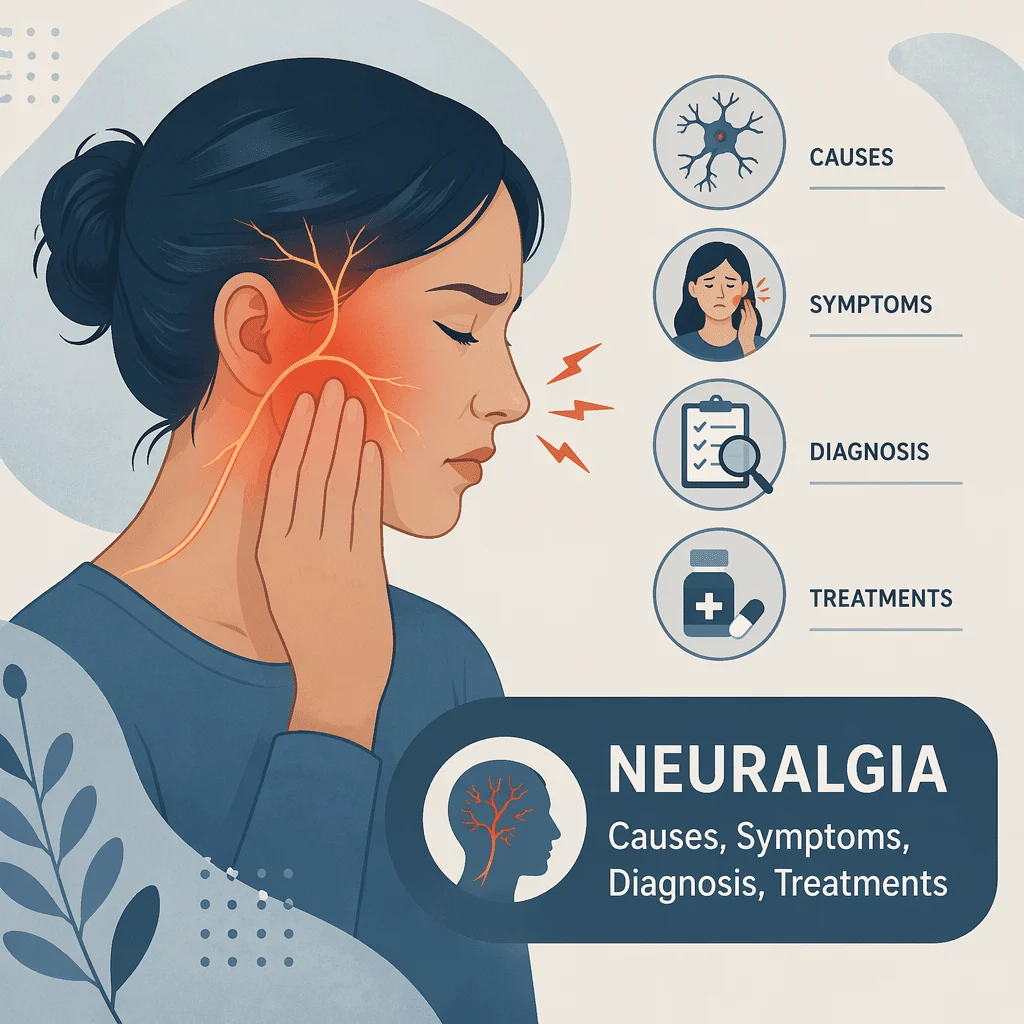
Neuralgia is sharp, shock-like pain that travels along the path of a nerve, often described as burning, stabbing, or electric. It is a symptom rather than a single disease, which means the same kind of pain can come from very different problems, from a compressed nerve to a past bout of shingles or long-term high blood sugar. Because the discomfort can be intense and come in sudden bursts, many people worry that something serious is wrong. In most cases, the pain is treatable once its source is understood. In this article you will learn what neuralgia is, the main types, what causes it, how it is diagnosed, and which treatments and blood tests can help find and manage an underlying cause.
What Is Neuralgia?
The word neuralgia comes from Greek roots meaning nerve pain. It describes pain that follows the route of a specific nerve because that nerve is irritated, compressed, inflamed, or damaged. Instead of the dull ache of a pulled muscle, neuralgia tends to feel sharp, sudden, and shooting, and it often tracks in a line or band across the skin the affected nerve serves.
People sometimes use the words neuralgia and neuropathy as if they were the same thing, but they describe different ideas. Neuralgia refers to the pain itself, felt along one or more nerves. Neuropathy refers to actual nerve damage or dysfunction, which may cause pain along with numbness, tingling, or weakness. Neuralgia can occur with or without measurable nerve damage, and neuropathy does not always hurt. Understanding this difference helps explain why two people with nerve symptoms may need very different tests and treatments.
Neuralgia can affect nerves almost anywhere in the body. Some forms involve the face and head, others the chest, the pelvis, or the legs. The location, the trigger, and the pattern of the pain give clinicians important clues about which nerve is involved and what may be irritating it.
The Main Types of Neuralgia
Doctors usually name each form of neuralgia after the nerve or region it affects. Recognising the type matters because the cause and the best treatment can differ widely. The table below summarises the most common forms and what typically drives them.
| Type of neuralgia | Nerve or area affected | Common triggers or causes |
|---|---|---|
| Trigeminal neuralgia | Face (trigeminal nerve) | A blood vessel pressing on the nerve; sometimes multiple sclerosis or a tumour |
| Occipital neuralgia | Back of the head and scalp (occipital nerves) | Tight neck muscles, injury, or irritation of the nerves at the skull base |
| Postherpetic neuralgia | Any area where a shingles rash appeared | Lingering nerve damage after a shingles outbreak |
| Glossopharyngeal neuralgia | Throat, tongue, and ear | Irritation or compression of the glossopharyngeal nerve |
| Intercostal neuralgia | Chest and ribs (intercostal nerves) | Injury, chest surgery, or shingles |
| Pudendal neuralgia | Pelvic and genital area (pudendal nerve) | Prolonged pressure, childbirth, or injury |
| Sciatic nerve pain (sciatica) | Lower back down one leg (sciatic nerve) | A herniated disc or other pressure on the nerve root |
Trigeminal neuralgia is one of the best-known facial forms and can cause brief, severe jolts of pain triggered by eating, talking, or even a light breeze. Occipital neuralgia sits at the back of the head, and because the pain reaches the scalp, doctors sometimes need to rule out migraine. When a herniated disc presses on the sciatic nerve, it can cause sciatica, a shooting pain that runs from the lower back into the leg.
What Causes Neuralgia?
Neuralgia has many possible causes, and finding the right one is the key to effective treatment. Sometimes the trigger is obvious, such as a recent shingles rash. Other times the cause is a slow process, such as years of high blood sugar quietly affecting the nerves.
Pressure and compression
Nerves can be squeezed by nearby structures. A blood vessel resting against the trigeminal nerve, a herniated spinal disc, tight muscles, scar tissue, or a tumour can all irritate a nerve and set off pain. Compression is one of the most common mechanisms behind facial and spinal neuralgia.
Infections and inflammation
Postherpetic neuralgia is a lasting form of nerve pain that can follow shingles, the reactivation of the chickenpox virus. Other infections and inflammatory conditions can also inflame nerves. When inflammation is suspected, blood tests can help confirm whether the body is fighting an infection or an immune process.
Metabolic and nutritional causes
Long-term high blood sugar is a leading cause of nerve damage, so as part of the work-up your doctor will often want to rule out diabetes. A shortage of certain vitamins can do the same. A low level of vitamin B12, for example, can leave nerves poorly protected and lead to tingling, numbness, and pain. Thyroid problems and kidney disease can contribute as well.
Injury, ageing, and other factors
Physical trauma, surgery, and even repetitive strain can injure a nerve and trigger neuralgia. Age matters too, because nerves become more vulnerable over time, and several forms of neuralgia are more common after age 50. In some cases no clear cause is found, and the pain is described as idiopathic.
Symptoms and Warning Signs of Neuralgia
The hallmark of neuralgia is sudden, intense pain that follows a nerve. People often compare it to an electric shock, a burning wire, or a stabbing jolt. The pain may last only seconds or persist for longer periods, and it can return in waves throughout the day.
Beyond the pain itself, an affected nerve can produce other sensations in the same area. These may include:
- Tingling, prickling, or a pins-and-needles feeling
- Numbness or reduced sensation along the nerve
- Heightened sensitivity, so that a light touch, cold air, or chewing sets off pain
- Muscle weakness in the region the nerve serves
- Tenderness along the path of the nerve
Neuralgia can be exhausting because attacks are unpredictable and can interfere with eating, sleeping, and daily activities. Many people also notice that stress, cold weather, or fatigue makes flare-ups more likely.
When to See a Doctor
Most nerve pain deserves a professional evaluation, both to relieve the pain and to identify any underlying condition. Seek medical care promptly if you notice any of the following:
- New, severe, or worsening pain in the face, head, or body
- Nerve pain that appears after a rash or blistering, which may point to shingles
- Pain accompanied by spreading weakness, numbness, or loss of function
- Pain that disrupts eating, drinking, sleeping, or daily life
- Sudden severe pain with fever, confusion, or changes in vision, which needs urgent attention
How Neuralgia Is Diagnosed
There is no single test that confirms neuralgia. Diagnosis begins with a careful conversation and physical examination. Your clinician will ask where the pain is, what it feels like, what triggers it, and how long attacks last. The pattern of the pain often points directly to the nerve involved.
From there, testing focuses on finding a cause. Imaging such as an MRI or CT scan can reveal a blood vessel pressing on a nerve, a herniated disc, or other structural problems. Nerve conduction studies and electromyography measure how well nerves and muscles are working. These tests help distinguish neuralgia from other sources of pain and guide treatment.
Blood Tests That Help Find an Underlying Cause
Blood tests do not diagnose neuralgia directly, but they are valuable for uncovering conditions that can inflame or damage nerves. When nerve pain has no obvious explanation, a doctor may look for problems such as diabetes, a vitamin deficiency, or inflammation. The table below shows tests that are often part of that search.
| Blood test | What it checks | Why it matters for nerve pain |
|---|---|---|
| Fasting blood glucose | Current blood sugar level | High blood sugar over time can damage nerves and cause pain |
| Hemoglobin A1c (HbA1c) | Average blood sugar over about three months | Flags diabetes or prediabetes behind unexplained nerve symptoms |
| Vitamin B12 | Level of vitamin B12 in the blood | Low B12 can cause tingling, numbness, and nerve damage |
| Complete blood count (CBC) | Red cells, white cells, and platelets | Can signal infection, anaemia, or an inflammatory process |
| C-reactive protein (CRP) or ESR | Markers of inflammation in the body | Raised levels suggest an inflammatory cause worth exploring |
| Thyroid function (TSH) | How well the thyroid is working | An underactive thyroid can contribute to nerve symptoms |
For example, if diabetes is suspected, a clinician can estimate your average blood sugar over about three months with a haemoglobin A1c test, and a simple blood draw can check your blood glucose levels. A blood test can also reveal low vitamin B12 levels, and to look for hidden inflammation a doctor may measure C-reactive protein. Reading these results in context is what turns numbers into an explanation for the pain.
Treatment and Management of Neuralgia
Treatment has two goals: to ease the pain and, when possible, to correct the underlying cause. The right plan depends on the type of neuralgia and what is driving it, so care is usually tailored to the individual.
Medications
Ordinary painkillers often do little for nerve pain, so doctors turn to medicines that calm overactive nerve signals. Anticonvulsants such as carbamazepine and oxcarbazepine are the standard first choice for trigeminal neuralgia. Certain antidepressants and gabapentinoids, a group of medicines that quiet excitable nerves, are widely used for other forms of neuralgia. Topical treatments such as lidocaine or capsaicin patches can help localised pain, especially after shingles.
Procedures and surgery
When medication is not enough, other options exist. Nerve blocks deliver a numbing medicine directly to the affected nerve. For trigeminal neuralgia caused by a blood vessel pressing on the nerve, a surgery called microvascular decompression can relieve that pressure and provide long-lasting relief. Other targeted procedures can interrupt pain signals when surgery is not suitable.
Physical and supportive therapies
Physical therapy, gentle stretching, and posture work can ease forms of neuralgia linked to muscle tension or nerve compression. Transcutaneous electrical nerve stimulation, or TENS, uses mild electrical pulses to reduce pain for some people. Managing an underlying condition, such as bringing blood sugar under control or correcting a vitamin deficiency, is often the most important step of all.
Latest Scientific Advances in Neuralgia Care
Research over the past few years has sharpened how doctors prevent and treat nerve pain. The findings below are written in plain language, with a note on what each one may mean for you. As always, these are general research trends, not personal medical advice.
Clearer, up-to-date treatment for trigeminal neuralgia
A major 2024 international overview confirmed that medicines like carbamazepine remain the first-line treatment for trigeminal neuralgia, while microvascular decompression surgery offers durable relief when a blood vessel is compressing the nerve. What this means for you: if you are diagnosed with this condition, doctors usually try medication first and keep surgery as a strong option if pain persists.
Less invasive decompression surgery
A 2024 surgical review described the growing use of endoscopic microvascular decompression, in which surgeons operate with a tiny camera through a smaller opening. What this means for you: if surgery becomes necessary, newer techniques may allow a more precise, less invasive approach, which is worth discussing with a specialist.
Preventing one common cause of lasting nerve pain
Because postherpetic neuralgia follows shingles, preventing shingles matters. A 2024 systematic review and meta-analysis, a study that pools results from many trials, found that the recombinant shingles vaccine strongly lowers the risk of shingles, and a 2026 study in United States adults aged 50 and older confirmed that protection in everyday practice. What this means for you: if you are 50 or older, the shingles vaccine is a concrete way to reduce your chance of a painful and long-lasting complication.
Newer medication options
A 2025 pooled analysis looked at mirogabalin, a newer gabapentinoid, and found it can ease nerve pain and improve the sleep that pain so often disrupts. What this means for you: if standard medicines do not work well or cause side effects, newer drugs are expanding the options your doctor can consider.
Why follow-up matters
A 2025 review found that many people stop their nerve-pain medicines within the first year, frequently because of side effects. What this means for you: it is common to need dose adjustments and follow-up, so it helps to tell your doctor about side effects rather than stopping a medicine on your own.
Stimulation-based relief for stubborn pain
A 2023 review of high-quality randomised trials, the most reliable kind of study, reported that neuromodulation, the use of devices that deliver gentle electrical pulses to nerves or the spinal cord, can provide lasting relief for some people with chronic pain. What this means for you: when pain resists other treatments, stimulation-based therapies may be an option a pain specialist can explore.
Living With Neuralgia
Chronic nerve pain affects more than the body. Unpredictable flare-ups can disrupt sleep, work, and mood, so a good management plan looks after emotional wellbeing as well as physical symptoms. Many people find that pacing activities, gentle exercise, and stress-reduction techniques such as meditation or breathing exercises help reduce the frequency of attacks.
Keeping a simple pain diary can reveal personal triggers, whether that is cold weather, certain foods, fatigue, or specific movements. Sharing that record with your clinician makes it easier to fine-tune treatment. Support from family, friends, or a patient group can also make a real difference, and professional psychological support is valuable when pain becomes overwhelming. With the right combination of treatment and self-care, most people can meaningfully reduce the impact of neuralgia on daily life.
Glossary of Key Terms
| Term | Definition |
|---|---|
| Neuralgia | Sharp pain that travels along the path of a nerve because the nerve is irritated or damaged. |
| Neuropathy | Damage to or dysfunction of a nerve, which may cause pain, numbness, tingling, or weakness. |
| Trigeminal nerve | The main nerve that carries sensation from the face; the source of trigeminal neuralgia. |
| Postherpetic neuralgia | Lasting nerve pain that can remain after a shingles rash has healed. |
| Anticonvulsant | A medicine originally developed for seizures that also calms overactive nerve pain signals. |
| Gabapentinoid | A class of medicines, such as gabapentin and mirogabalin, used to quiet excitable nerves. |
| Microvascular decompression | Surgery that relieves pressure when a blood vessel is pressing on a nerve. |
| Neuromodulation | The use of devices that deliver gentle electrical pulses to change how nerves signal pain. |
| Nerve conduction study | A test that measures how quickly and strongly electrical signals travel along a nerve. |
Frequently Asked Questions
What is the difference between neuralgia and neuropathy?
Neuralgia is the pain that runs along a nerve, whilst neuropathy is actual damage to or dysfunction of a nerve. You can have neuralgia without measurable nerve damage, and you can have neuropathy that causes numbness or weakness without much pain. The two often overlap, which is why doctors examine the pattern of symptoms and may order tests to find the cause.
What are the first symptoms of occipital neuralgia?
Occipital neuralgia usually begins with sharp, shooting, or throbbing pain that starts at the base of the skull and spreads over the back of the head and scalp. Some people feel tenderness on the scalp, sensitivity to light, or pain when moving the neck. Because these symptoms can resemble certain headaches, a clinical evaluation helps confirm which nerve is involved.
Can neuralgia be cured?
It depends on the cause. When neuralgia comes from a treatable problem, such as a vitamin deficiency or a compressed nerve, correcting that problem can resolve the pain. Other forms, like postherpetic neuralgia, may become chronic but can still be managed well with medication and other therapies. Many people achieve significant, lasting relief even when a complete cure is not possible.
How is carbamazepine used to treat trigeminal neuralgia?
Carbamazepine is an anticonvulsant that is considered the first-line medicine for trigeminal neuralgia. It works by calming the overactive nerve signals that produce facial pain attacks. Doctors usually start at a low dose and adjust gradually to balance relief against side effects, and they may monitor blood tests during treatment. Only a prescribing clinician can decide whether it is right for you.
Does cold weather make neuralgia worse?
Many people with nerve pain report that cold air or a sudden drop in temperature can trigger a flare, particularly in facial forms such as trigeminal neuralgia. Cold is not harmful in itself, but protecting the affected area, for example with a scarf, may reduce how often attacks are set off. Triggers vary from person to person, so tracking your own can help.
Can a blood test detect neuralgia?
No blood test can diagnose neuralgia directly, because the diagnosis is based on symptoms and examination. Blood tests are still useful, however, for uncovering conditions that inflame or damage nerves, such as diabetes, low vitamin B12, thyroid problems, or inflammation. Interpreting those results in context helps your doctor find and treat a cause behind the pain.
Sources
- MedlinePlus (U.S. National Library of Medicine). Neuralgia. MedlinePlus Medical Encyclopedia. https://medlineplus.gov/ency/article/001407.htm
- National Institute of Neurological Disorders and Stroke (NINDS). Trigeminal Neuralgia. https://www.ninds.nih.gov/health-information/disorders/trigeminal-neuralgia
- Mayo Clinic. Trigeminal neuralgia: Symptoms and causes. https://www.mayoclinic.org/diseases-conditions/trigeminal-neuralgia/symptoms-causes/syc-20353344
- Ashina S, Robertson CE, Srikiatkhachorn A, et al. Trigeminal neuralgia. Nature Reviews Disease Primers, 2024. https://doi.org/10.1038/s41572-024-00523-z
- Ajmera S, Blue R, Lee JYK, et al. Endoscopic Microvascular Decompression. Advances and Technical Standards in Neurosurgery, 2024. https://doi.org/10.1007/978-3-031-61925-0_17
- Bengolea A, Chamorro FJ, Ramos G, et al. Effectiveness and safety of the recombinant herpes zoster vaccine in different population groups: a systematic review and meta-analysis. Medicina, 2024. https://pubmed.ncbi.nlm.nih.gov/39399936/
- Tseng HF, Sy LS, Ackerson BK, et al. Effectiveness of the Adjuvanted Recombinant Zoster Vaccine in Adults 50 Years and Older in the United States. Clinical Infectious Diseases, 2026. https://doi.org/10.1093/cid/ciaf329
- Mirogabalin for treatment of neuropathic pain and associated sleep interference: an updated meta-analysis. European Journal of Pain, 2025. https://doi.org/10.1002/ejp.70112
- Koponen M, Senaratne D, Hebert C, et al. Identifying predictors of neuropathic pain medication prescribing, adherence, and discontinuation: a systematic review and meta-analysis. British Journal of Anaesthesia, 2025. https://doi.org/10.1016/j.bja.2025.10.047
- Zheng Y, Liu CW, Hui Chan CW, et al. Neurostimulation for Chronic Pain: A Systematic Review of High-Quality Randomised Controlled Trials With Long-Term Follow-Up. Neuromodulation, 2023. https://doi.org/10.1016/j.neurom.2023.05.003
Further reading
- Full Blood Count (FBC): How to Read Your Results
- Diabetes Blood Tests: Glucose, HbA1c, and Insulin Explained
- Vitamin B12 Guide: Benefits, Sources, and Levels
- Erythrocyte Sedimentation Rate (ESR): Understanding This Marker
- High CRP Levels: Causes, Symptoms, and Treatments
Understand your lab results with AI DiagMe
Neuralgia is diagnosed by your doctor, but the right blood tests can help uncover a cause behind the pain, from high blood sugar to a vitamin B12 deficiency or hidden inflammation. AI DiagMe interprets your lab results online in minutes, explaining what values like glucose, HbA1c, vitamin B12, and inflammation markers mean in plain language. It is built to help you understand your results and prepare better questions for your doctor. It does not provide a diagnosis and does not replace medical advice.
Get your results interpreted in minutes