






Irritable bowel syndrome is one of the most common reasons people see a doctor about their gut, yet it remains widely misunderstood. It is a long-term condition that changes how your bowel works and how your brain and gut communicate, without causing visible damage to the intestine. The reassuring part is that it is manageable, and a confident diagnosis usually does not require endless testing. In this article you will learn what irritable bowel syndrome is, how its main subtypes differ, which symptoms matter, how doctors reach a positive diagnosis, and which simple stool and blood tests help rule out look-alike conditions. You will also see what the latest research says about diet, medication, and gut-brain therapies, all explained in plain language.
If you are weighing up a home kit to find trigger foods, our guide explains which food intolerance tests give reliable answers and which do not.
What is irritable bowel syndrome?
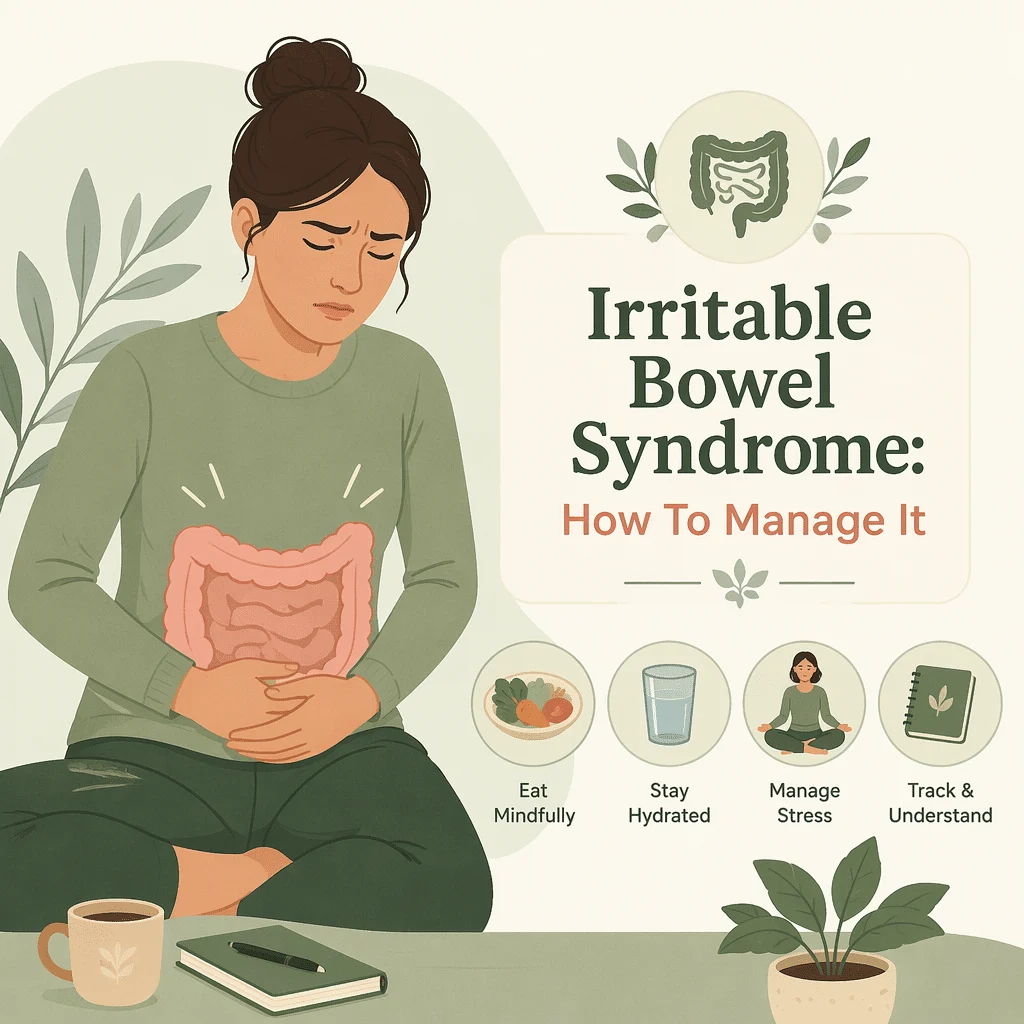
Irritable bowel syndrome (IBS) is what doctors call a disorder of gut-brain interaction, a condition where the nerves of the digestive tract and the brain send signals that are out of step. In people with IBS, the gut can become extra sensitive, so ordinary digestion is felt as pain, cramping, or urgency. The muscles of the bowel may also squeeze too quickly or too slowly, which changes how often you go and what your stools look like.
Crucially, IBS is a functional condition: standard tests, scans, and biopsies usually come back normal, because there is no ulcer, inflammation, or tumour to find. This is what sets it apart from inflammatory bowel disease such as Crohn’s disease or ulcerative colitis, which cause visible damage to the bowel wall. If you want to understand that distinction, explore our guide to Crohn’s disease and its symptoms.
Who gets IBS?
IBS is common, affecting roughly 5% of adults worldwide. It is diagnosed more often in women than in men, and it usually begins in the teens through the forties, though it can start at any age. It tends to run in families and to follow a relapsing pattern, with calmer spells and flare-ups over time. Importantly, IBS does not damage the bowel, does not shorten life, and does not turn into cancer, points we return to below.
The main types of IBS
Doctors sort irritable bowel syndrome into subtypes based on your usual stool pattern on the days when bowel habits are abnormal. Knowing your subtype matters because it steers diet and treatment choices. Stool form is judged using the Bristol Stool Scale, a simple chart that runs from hard lumps to liquid; to learn how to read that pattern, see our guide to normal and abnormal stool consistency.
| Subtype | Main bowel pattern | Everyday description |
|---|---|---|
| IBS-C (constipation) | Mostly hard or lumpy stools | Infrequent, difficult bowel movements |
| IBS-D (diarrhoea) | Mostly loose or watery stools | Frequent, urgent bowel movements |
| IBS-M (mixed) | Both hard and loose stools | Habits swing between the two |
| IBS-U (unclassified) | Symptoms that do not fit a clear pattern | Changes that vary week to week |
Your subtype can shift over months or years, so it is worth revisiting with your clinician rather than treating it as fixed.
Symptoms and warning signs to know
The core symptoms of irritable bowel syndrome are abdominal pain that is linked to bowel movements, along with bloating and a change in how often or how urgently you go. A classic clue is that the pain often eases, or sometimes worsens, after passing stool. Many people also notice mucus in the stool, a feeling of incomplete emptying, or symptoms that flare after meals or during stressful periods. Tiredness and poor sleep are common companions, because gut symptoms and rest disturb each other.
IBS symptoms are real and can be genuinely disruptive, but they do not include certain alarm features. Those warning signs point away from IBS and towards conditions that need direct testing.
When to see a doctor
See a doctor promptly if you notice any of these red-flag symptoms, especially alongside gut complaints:
- Blood in the stool, or black, tarry stools
- Unintentional weight loss
- Symptoms that wake you from sleep at night
- A first onset of symptoms after the age of 50
- Fever, or a family history of bowel cancer, coeliac disease, or inflammatory bowel disease
- Signs of anaemia, such as unusual tiredness or paleness
Anaemia is a frequent reason for further tests, because it can signal bleeding or poor absorption that IBS does not cause; for background, see our overview of anaemia symptoms, causes, and tests. None of these features belongs to IBS itself, which is exactly why doctors check for them.
How doctors diagnose IBS
One of the most reassuring facts about irritable bowel syndrome is that it is a positive diagnosis, not a guess made only after ruling everything else out. Doctors recognise IBS by its pattern of symptoms, most often using the Rome IV criteria, a widely used checklist that defines IBS as recurring abdominal pain, on average at least one day a week over the past three months, linked to bowel movements or to a change in stool frequency or form.
Because that pattern is fairly specific, exhaustive testing is usually unnecessary and low-yield. Ordering scan after scan rarely changes the answer and can add worry and cost. Instead, your doctor takes a history, examines you, and orders a small, targeted set of tests to exclude the conditions that most often imitate IBS.
Tests that help rule out other conditions
A few simple blood and stool tests do most of the work. They are not looking for IBS itself; they are checking that something else is not causing your symptoms. Normal results are common, and far from being a dead end, they support the diagnosis and are genuinely reassuring.
| Test | What it checks for | Why it helps with IBS |
|---|---|---|
| Faecal calprotectin (stool) | Inflammation in the bowel wall | A normal level makes inflammatory bowel disease very unlikely |
| C-reactive protein, or CRP (blood) | General inflammation in the body | Helps separate IBS from inflammatory conditions |
| Coeliac blood test, tTG-IgA (blood) | Antibodies linked to coeliac disease | Rules out gluten-driven damage that can mimic IBS |
| Full blood count, or FBC (blood) | Anaemia and other blood clues | Flags bleeding or absorption problems that are not part of IBS |
Faecal calprotectin is especially useful. It measures a protein released when the bowel lining is inflamed, so a low result points away from Crohn’s disease or ulcerative colitis. To go further, read our full guide to faecal calprotectin test results. Another stool marker, lactoferrin, works on a similar principle; you can also review our explainer on the faecal lactoferrin test.
On the blood side, a raised C-reactive protein can hint at inflammation that IBS does not produce, so it helps to read our explainer on the C-reactive protein inflammation marker. A full blood count screens for anaemia and infection, and you can review our guide to reading a full blood count. If the blood count suggests low iron, that can reflect depleted stores; to dig deeper, read our guide to low ferritin causes and symptoms. Finally, a coeliac blood test checks for the antibodies of coeliac disease, which can cause very similar symptoms; to learn more, read our guide to coeliac disease and gluten intolerance.
Managing and treating IBS
There is no single cure for irritable bowel syndrome, but most people get real relief by combining a few approaches. Treatment is tailored to your subtype and to your most bothersome symptoms, and it often takes some trial and error before you land on the right mix. Setting realistic expectations helps: the aim is steady control, not perfection.
Diet and the low FODMAP approach
Diet is usually the first step. General advice, such as eating regular meals, limiting caffeine, alcohol, and fatty or spicy foods, and keeping a food-and-symptom diary, helps many people. When that is not enough, a low FODMAP diet is the best-studied option. FODMAPs are a group of poorly absorbed carbohydrates found in foods like onions, wheat, some fruits, and dairy that can ferment in the gut and trigger bloating, wind, and pain. The diet works in phases: strict removal, then careful reintroduction to find your personal triggers, ideally with a dietitian. It is meant to be personalised, not permanent.
Fibre and everyday habits
Soluble fibre, such as psyllium, can ease constipation-predominant IBS, while coarse insoluble fibre like wheat bran sometimes makes symptoms worse. Regular physical activity, steady sleep, and stress management also make a measurable difference, because stress and gut symptoms feed each other in both directions.
Medications
When symptoms persist, several medicines can help, usually chosen by subtype and prescribed by a doctor:
- For pain and cramping, antispasmodics relax the gut muscle, and peppermint oil can work in a similar way.
- For constipation (IBS-C), laxatives are the first choice, followed by prescription secretagogues such as linaclotide, which draws more fluid into the intestine to soften stools and ease movement.
- For diarrhoea (IBS-D), antidiarrhoeals such as loperamide help; where needed, doctors may consider rifaximin, a poorly absorbed antibiotic that acts mainly inside the gut, or eluxadoline, which acts on opioid receptors in the bowel to slow it down.
- For persistent pain, low-dose gut-brain neuromodulators such as the tricyclic antidepressant amitriptyline are used at doses far lower than for depression, to calm nerve signalling between the gut and brain.
A national gastroenterology guideline reviewed these options for diarrhoea-predominant IBS and offered practical, evidence-based recommendations to match the drug to the patient, which your doctor can weigh against your symptoms and preferences.
Gut-brain (behavioural) therapies
Because IBS is a gut-brain condition, therapies that target that connection can be as effective as medication for some people. Cognitive behavioural therapy and gut-directed hypnotherapy both have solid evidence, particularly for abdominal pain, and they are sensible options when standard treatments fall short. These are skills-based treatments, not a suggestion that symptoms are only in your head.
Latest scientific advances in IBS
Research on irritable bowel syndrome has moved quickly, and the findings below are translated here into plain terms. These are mostly reviews that pool many trials together, which is the strongest kind of everyday evidence, though experts note that the quality of individual studies still varies.
- Diet keeps its lead. An earlier network analysis in the journal Gut, a study design that compares many treatments at once, ranked the low FODMAP diet first amongst dietary options, and a 2025 update pooling 28 trials confirmed it has the strongest evidence of any diet for easing overall IBS symptoms, while newer approaches such as a sugar-reduced diet are emerging and need more study. What this means for you: a structured low FODMAP trial, guided by a dietitian, is a reasonable first move, but it is one tool amongst several, not a lifelong rulebook.
- One stool test can spare bigger ones. A 2023 review that combined 17 studies found that faecal calprotectin, the stool marker of inflammation, is very good at telling IBS apart from inflammatory bowel disease: a normal result makes IBD very unlikely. What this means for you: a single, simple stool test can save many people from invasive procedures and offer real reassurance.
- Gut-brain therapies are legitimate. A 2024 analysis of 42 trials found that behavioural treatments, including self-guided cognitive behavioural therapy and gut-directed hypnotherapy, meaningfully improve IBS abdominal pain, with no single method clearly beating the others. What this means for you: these therapies are evidence-backed options, not a last resort.
- A confident diagnosis needs few tests. A 2025 evidence-based update stressed that IBS should be diagnosed positively, alongside a simple test for coeliac disease, rather than through exhaustive investigation that rarely changes the answer. What this means for you: if your doctor makes a firm IBS diagnosis with only a handful of tests, that reflects current best practice.
Living well with IBS
Irritable bowel syndrome is a long-term condition, but it is not a dangerous one, and most people find a combination that works for them. Learning your triggers, sticking with a plan for a few weeks before judging it, and keeping the lines open with your care team all help. Because symptoms can shift over time, revisiting your subtype and treatment now and then is worthwhile. Above all, remember that IBS does not damage the bowel or raise your risk of cancer, a fact worth holding onto during a difficult flare.
Glossary
| Term | Definition |
|---|---|
| Disorder of gut-brain interaction (DGBI) | The modern name for conditions like IBS, where the gut and brain communicate abnormally without visible disease. |
| FODMAPs | A group of fermentable carbohydrates, found in some fruits, vegetables, wheat, and dairy, that can trigger gas, bloating, and pain in sensitive guts. |
| Rome IV criteria | The symptom-based checklist doctors use to make a positive diagnosis of IBS. |
| Bristol Stool Scale | A visual chart that rates stool form from hard lumps to liquid, used to describe bowel patterns. |
| Faecal calprotectin | A protein measured in stool that rises when the bowel lining is inflamed; used to tell IBS from inflammatory bowel disease. |
| C-reactive protein (CRP) | A blood marker that rises with inflammation in the body. |
| Coeliac serology (tTG-IgA) | A blood test for antibodies linked to coeliac disease, an immune reaction to gluten. |
| Complete blood count (CBC) | A common blood test that measures red and white blood cells and can reveal anaemia. |
| Visceral hypersensitivity | An increased sensitivity of the gut, so normal digestion is felt as pain or discomfort. |
| Gut-brain neuromodulator | A medicine, often a low-dose antidepressant, used to calm pain signals between the gut and brain. |
Frequently asked questions
What causes irritable bowel syndrome?
There is no single cause. IBS is linked to a mix of factors: an oversensitive gut, changes in how fast the bowel moves, altered gut bacteria, a previous gut infection (sometimes called post-infectious IBS), and the two-way stress connection between the brain and gut. Genetics and early-life experiences may also play a part. Because these factors combine differently in each person, treatment usually works best when it is tailored rather than one-size-fits-all.
Can IBS cause blood in your stool?
No. Visible blood in the stool is not a feature of irritable bowel syndrome and should always be checked by a doctor. Bleeding can come from haemorrhoids or a small tear, but it can also signal inflammatory bowel disease, an infection, or, less often, something more serious. This is one of the alarm symptoms that prompts tests such as faecal calprotectin and a full blood count to look for another cause.
What foods should you avoid with IBS?
Triggers vary from person to person, but common culprits include onions and garlic, wheat-based foods, certain fruits, beans, dairy high in lactose, caffeine, alcohol, and fatty or spicy meals. Rather than cutting out foods at random, a structured low FODMAP diet with a reintroduction phase helps you find your personal triggers while keeping your diet as varied as possible. A dietitian can make this much easier and safer.
Can irritable bowel syndrome be cured?
IBS cannot usually be cured in the sense of disappearing forever, but it can very often be controlled well enough that it stops running your life. Many people reach long stretches with few or no symptoms by combining diet, lifestyle changes, medication, and sometimes gut-brain therapy. Because IBS tends to come and go, the goal is steady, reliable control rather than a one-time fix.
Does stress make IBS worse?
For many people, yes. Stress does not cause IBS on its own, but the gut and brain are closely connected, so anxiety, poor sleep, or major life events can trigger or worsen flares. This is also why stress-focused approaches, such as exercise, relaxation, and cognitive behavioural therapy, can ease gut symptoms. Managing stress is a genuine part of managing IBS, not a sign that the symptoms are imagined.
Are probiotics helpful for IBS?
Some people find that probiotics ease bloating and discomfort, but the evidence is mixed and no single strain stands out as clearly best. If you want to try them, choose one product, take it consistently for about four weeks, and judge whether it helps. Stop if it makes no difference. It is sensible to mention any supplement to your doctor, especially if your symptoms are changing.
Sources
- National Institute of Diabetes and Digestive and Kidney Diseases (NIDDK) — Diagnosis of Irritable Bowel Syndrome. https://www.niddk.nih.gov/health-information/digestive-diseases/irritable-bowel-syndrome/diagnosis
- American College of Gastroenterology — Irritable Bowel Syndrome (IBS). https://gi.org/topics/irritable-bowel-syndrome/
- Mayo Clinic — Irritable bowel syndrome: Symptoms and causes. https://www.mayoclinic.org/diseases-conditions/irritable-bowel-syndrome/symptoms-causes/syc-20360016
- Black CJ, Staudacher HM, Ford AC — Efficacy of a low FODMAP diet in irritable bowel syndrome: systematic review and network meta-analysis — Gut, 2022. https://doi.org/10.1136/gutjnl-2021-325214
- Cuffe MS, Staudacher HM, Aziz I, et al — Efficacy of dietary interventions in irritable bowel syndrome: a systematic review and network meta-analysis — The Lancet Gastroenterology & Hepatology, 2025. https://doi.org/10.1016/S2468-1253(25)00054-8
- Dajti E, Frazzoni L, Iascone V, et al — Diagnostic performance of faecal calprotectin in distinguishing inflammatory bowel disease from irritable bowel syndrome in adults: systematic review with meta-analysis — Alimentary Pharmacology & Therapeutics, 2023. https://doi.org/10.1111/apt.17754
- Lembo A, Sultan S, Chang L, et al — AGA Clinical Practice Guideline on the Pharmacological Management of Irritable Bowel Syndrome With Diarrhoea — Gastroenterology, 2022. https://doi.org/10.1053/j.gastro.2022.04.017
- Goodoory VC, Khasawneh M, Thakur ER, et al — Effect of Brain-Gut Behavioural Treatments on Abdominal Pain in Irritable Bowel Syndrome: systematic review and network meta-analysis — Gastroenterology, 2024. https://doi.org/10.1053/j.gastro.2024.05.010
- Black CJ, Ford AC — An evidence-based update on the diagnosis and management of irritable bowel syndrome — Expert Review of Gastroenterology & Hepatology, 2025. https://doi.org/10.1080/17474124.2025.2455586
Further reading
- Read our full guide to faecal calprotectin test results. https://aidiagme.com/health-library/fecal-calprotectin-understanding-test-results/
- See our explainer on reading a full blood count. https://aidiagme.com/blood-markers/complete-blood-count/
- Consult our guide to the iron studies panel. https://aidiagme.com/blood-markers/iron-studies-panel/
- Review our guide to coeliac disease and gluten intolerance. https://aidiagme.com/pathologies-and-diseases/gluten-intolerance-celiac-disease/
- Explore our guide to diarrhoea after fasting. https://aidiagme.com/health-library/diarrhea-after-fasting-causes-and-treatments/
Understand your lab results with AI DiagMe
Get your results interpreted in minutes
If your doctor has ordered tests to check for conditions that mimic irritable bowel syndrome, the results can be hard to read on your own. AI DiagMe helps you make sense of everyday tests such as faecal calprotectin, C-reactive protein, a coeliac blood test, and a full blood count, explaining what each number means in plain language. It is built to help you understand your results and prepare for your appointment. It does not diagnose IBS and does not replace your doctor.