




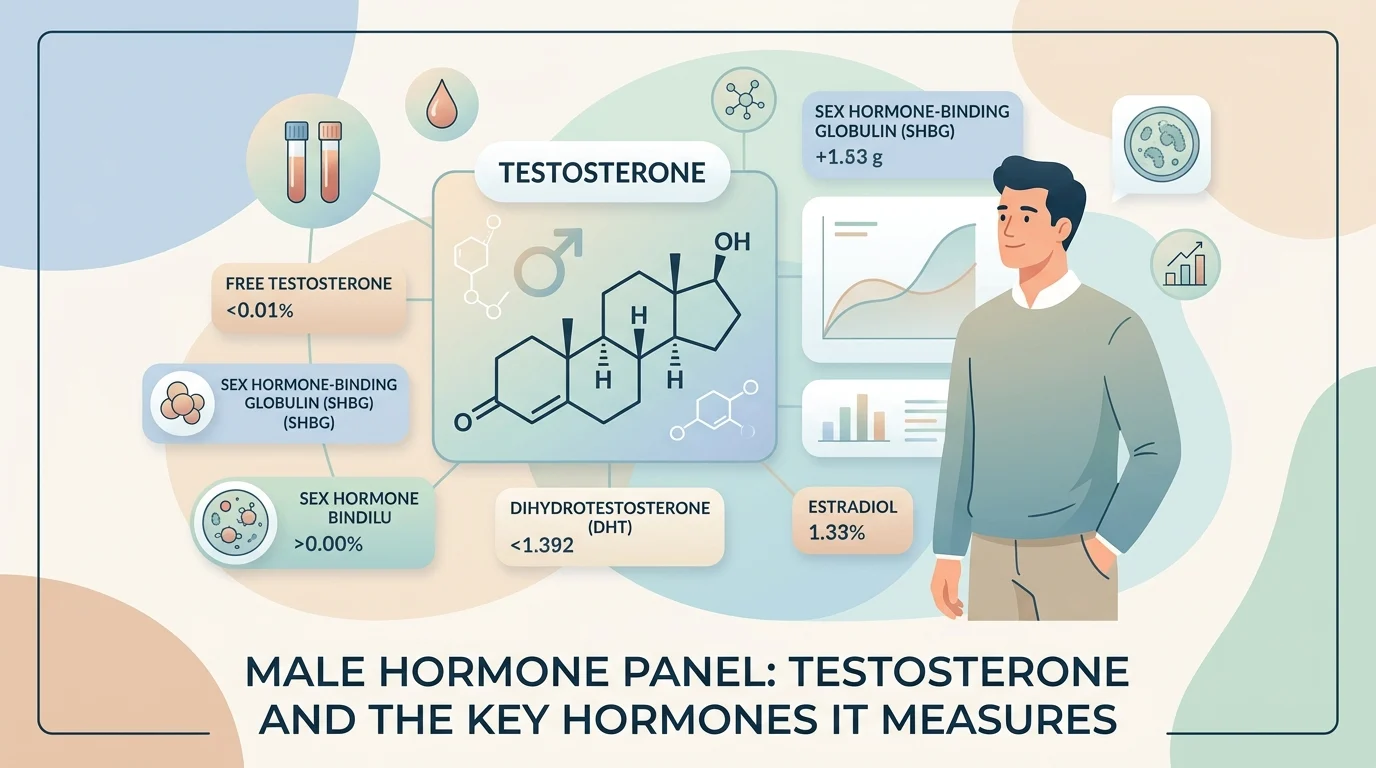
A male hormone panel is a single blood test that measures testosterone along with the other hormones that control it, giving a fuller picture than a testosterone reading on its own. If you have just received your results, or a doctor has suggested the test, the list of abbreviations can be confusing. This article explains what a male hormone panel measures, what each hormone tells you, how to read the numbers against reference ranges, how to prepare for the test, and when symptoms are worth discussing with a doctor. The goal is to help you understand your results clearly, not to replace the conversation with your clinician.
What is a male hormone panel?
A male hormone panel is a group of blood tests ordered together to assess how a man’s hormone system is working. Instead of looking at one value in isolation, it checks several hormones at the same time so the results can be read in context.
The core of the panel is testosterone, the main male sex hormone. But testosterone does not act alone. Its production is controlled by signals from the brain, and a large share of it travels through the blood attached to a carrier protein. A panel measures these related pieces so a doctor can see not just how much testosterone you have, but why the level is what it is.
Panels vary between laboratories. A basic version may include total testosterone and a couple of pituitary hormones. A more complete panel adds free testosterone, a binding protein, and one or two other hormones that influence the picture. The exact list depends on your symptoms and what your doctor is trying to understand.
Which hormones a male hormone panel measures
Most male hormone panels draw from the same short list of markers. Each one answers a slightly different question. The table below summarises what they are and why they matter.
| Hormone | What it is | Why it is on the panel |
|---|---|---|
| Total testosterone | All testosterone in the blood, bound and unbound | The headline marker of male hormone status |
| Free testosterone | The small fraction not attached to proteins | The portion your tissues can actually use |
| SHBG | Sex hormone-binding globulin, a carrier protein | Controls how much testosterone is “free” |
| LH | Luteinising hormone, made by the pituitary | Signals the testicles to make testosterone |
| FSH | Follicle-stimulating hormone, made by the pituitary | Drives sperm production; helps locate the problem |
| Estradiol | A form of oestrogen, present in men too | Balances testosterone; affects bone and libido |
| Prolactin | A pituitary hormone | When high, it can lower testosterone |
Testosterone: total and free
Total testosterone counts every molecule of the hormone in your sample. Free testosterone counts only the small share that floats unattached and can enter your cells. This distinction matters more than many people expect.
Most testosterone in your blood is bound to proteins, mainly SHBG and albumin. Bound testosterone is essentially held in reserve and cannot act on tissues. So two men can have the same total testosterone yet very different amounts of usable hormone, depending on their binding proteins. When symptoms do not match the total number, a doctor will often look at free testosterone to clarify the picture.
If a result comes back high rather than low, the panel helps explain it too. You can read more about the causes of high testosterone in men, which range from supplement use to less common medical reasons.
LH and FSH: the signals from the brain
Testosterone production is not decided by the testes alone. The pituitary gland, a small gland at the base of the brain, sends two messenger hormones that set the pace.
Luteinising hormone (LH) tells the testes to produce testosterone. FSH (follicle-stimulating hormone) supports sperm production. Measuring them alongside testosterone is what makes a panel genuinely useful, because the pattern points to where a problem lies.
If testosterone is low but LH and FSH are high, the testes are being told to work but cannot keep up, which points to a testicular cause. If testosterone is low and LH and FSH are also low, the signal from the brain may be the issue. This is why a panel beats a lone testosterone reading: the combination locates the source.
SHBG, oestradiol, and prolactin
Three supporting markers round out a fuller panel.
SHBG is the protein that binds testosterone and determines how much remains free. When SHBG is high, more testosterone is locked away and less is available, even if the total looks fine. When SHBG is low, the opposite happens. Understanding your SHBG level is often the key to interpreting a confusing testosterone result.
Estradiol is a form of oestrogen. Men produce it in small amounts, partly by converting testosterone, and it matters for bone strength, mood, and libido. A balance that tips too far in either direction can cause symptoms.
Prolactin is another pituitary hormone. When it is raised, it can suppress the signals that drive testosterone, so doctors sometimes check it when testosterone is unexpectedly low. Some extended panels also add DHEA, an adrenal hormone; you can read more about DHEA levels if it appears on your report.
What the pattern of results can reveal
The real value of a male hormone panel is in the combination of results, not any single line. When testosterone is low, doctors use the pituitary hormones to sort the cause into one of two broad patterns. This is what turns a list of numbers into useful information.
| Pattern | Testosterone | LH and FSH | What it suggests |
|---|---|---|---|
| Primary (testicular) | Low | High | The testicles are being told to work but cannot keep up |
| Secondary (central) | Low | Low or unexpectedly normal | The signal from the brain or pituitary is weak |
In the first pattern, the brain is sending a strong signal, shown by raised LH and FSH, but the testicles are not responding. This points to a problem in the testicles themselves, such as past injury, infection, or a genetic condition. In the second pattern, testosterone is low and the pituitary hormones are also low, which means the instruction to produce testosterone is not getting through. Causes here can include a pituitary problem, raised prolactin, significant excess weight, or certain medications.
You cannot tell these two situations apart from a testosterone reading alone, which is exactly why a panel is ordered. The pattern also guides what comes next: the two causes are investigated and managed differently, so identifying which one fits is an important first step for your doctor.
Why a doctor might order a male hormone panel
A male hormone panel is usually requested when symptoms suggest a hormone imbalance, or to investigate fertility. It is not a routine screen for healthy men with no complaints.
Common reasons include:
- Low sex drive, erectile difficulties, or reduced morning erections
- Ongoing fatigue, low mood, or trouble concentrating
- Loss of muscle mass or strength, or increased body fat
- Reduced body or facial hair, or breast tissue development
- Difficulty conceiving with a partner
- Delayed or early puberty in adolescents
These symptoms have many possible causes, and hormones are only one of them. A panel helps confirm or rule out a hormonal explanation rather than guessing from symptoms alone. The Endocrine Society notes that a diagnosis of low testosterone usually requires both symptoms and low blood levels confirmed on testing, not one or the other.
How to read your male hormone panel results
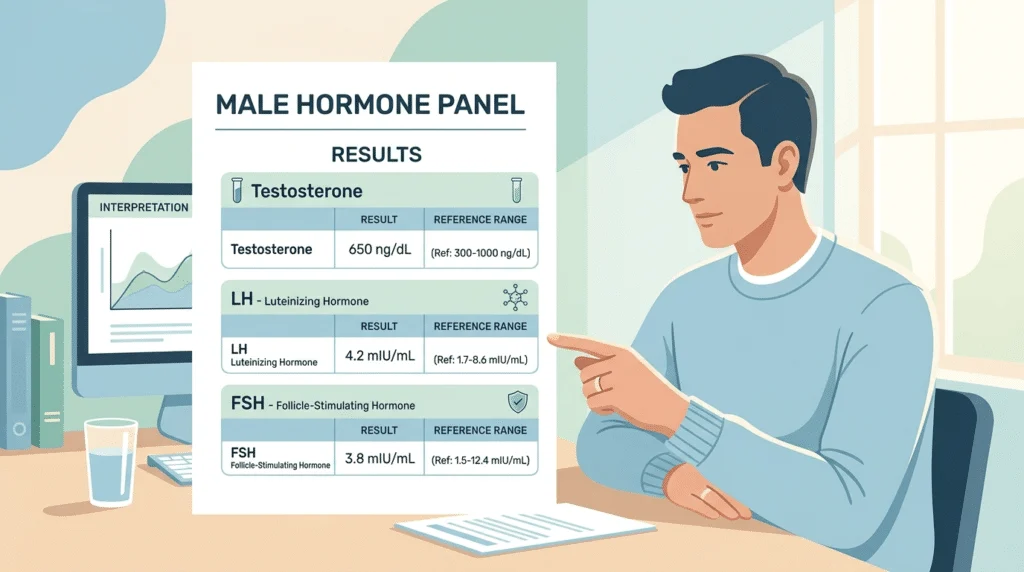
Your report will list each hormone next to a reference range, often with an “H” or “L” flag if a value sits outside it. Reading the panel well means looking at the pattern, not just chasing flagged numbers. A single value slightly outside the range is common and not always meaningful, whilst a value that is normal on its own can still be a problem once the other hormones are taken into account.
It also helps to know that a flag is a prompt to look closer, not a diagnosis. Laboratories set their ranges to capture most healthy people, which means some healthy men fall just outside, and some men with symptoms sit just inside. The numbers are one input; how you feel and your medical history are the others.
A few principles help:
- Reference ranges vary by laboratory. Each lab uses its own equipment and population, so compare your value to the range printed on your report, not one from the internet.
- Levels change throughout the day. Testosterone is typically highest in the morning, so the time of your blood draw affects the number.
- One result is rarely the whole story. Because levels fluctuate, doctors often repeat an abnormal testosterone on a second morning before drawing conclusions.
- The hormones interact. LH and FSH give meaning to a testosterone value, and SHBG explains the gap between total and free.
If you want a general grounding first, our guide on how to read your blood test results explains reference ranges and flags across common panels.
Why a “normal” testosterone can still cause symptoms
This is one of the most common sources of confusion. A man can have a total testosterone within the reference range yet still feel the classic symptoms of low testosterone in men: low energy, low libido, and brain fog.
The usual explanation is binding. If SHBG is high, much of that “normal” testosterone is bound and unavailable, leaving little free hormone for your tissues. This is why a panel that includes free testosterone and SHBG can reveal a problem that a single total testosterone reading would miss. It is also why interpreting the panel as a whole, with help from a clinician, matters more than reacting to any one figure.
How the test is done and how to prepare
A male hormone panel is a standard blood draw, usually from a vein in your arm, and takes only a few minutes. The preparation, though, can affect your results, so it is worth getting right.
Practical tips that commonly apply:
- Go in the morning. Testosterone peaks in the early hours, and many reference ranges assume a morning sample. Aim for a draw before about 10 a.m. where possible.
- Ask about fasting. Some panels, especially those bundled with glucose or cholesterol, ask you to fast beforehand. Check the instructions when you book.
- Mention your medications. Steroids, opioids, and some other drugs change hormone levels. Tell the lab or your doctor what you take.
- Reschedule if you are acutely unwell. A short-term illness can temporarily lower testosterone and muddy the result.
Turnaround is usually quick. Hormone results often come back within a few days, though it depends on the laboratory; our guide on how long blood test results take explains the typical timelines and why some are slower.
When to see a doctor
A male hormone panel is a tool to support a medical conversation, not a verdict you should act on alone. Certain situations clearly warrant professional advice.
Speak to a doctor if:
- Your symptoms are affecting your daily life, mood, relationships, or work
- A result is flagged outside the reference range, especially testosterone, prolactin, or LH and FSH together
- You are struggling to conceive and want fertility assessed properly
- You are considering testosterone therapy, which has real benefits for some men but also risks and is not appropriate for everyone
- An adolescent shows signs of unusually early or delayed puberty
A doctor can confirm whether a result is meaningful, arrange a repeat test if needed, and look for underlying causes before any treatment is considered. They can also weigh your results against your full history and any medications, which a number on a page cannot do. Hormone results are a starting point for that discussion, not a substitute for it.
Glossary
- Androgen: A group of hormones, including testosterone, that drive male physical traits.
- Estradiol: A form of oestrogen present in men in small amounts; important for bone, mood, and libido.
- Free testosterone: The fraction of testosterone not bound to proteins, available for your tissues to use.
- FSH (follicle-stimulating hormone): A pituitary hormone that supports sperm production.
- Hypogonadism: The medical term for the body producing too little sex hormone, such as low testosterone in men.
- LH (luteinising hormone): A pituitary hormone that signals the testicles to make testosterone.
- Prolactin: A pituitary hormone that, when raised, can lower testosterone.
- Reference range: The set of values a lab considers typical; the band your result is compared against.
- SHBG (sex hormone-binding globulin): A protein that binds testosterone and controls how much stays free.
- Total testosterone: All testosterone in the blood, both bound to proteins and free.
Frequently asked questions
How do I know if I have low testosterone?
You cannot diagnose it from symptoms alone, because tiredness, low libido, and low mood have many causes. The reliable way is a blood test, ideally a morning sample, interpreted alongside your symptoms. A doctor usually looks for both clear symptoms and a confirmed low level, often repeating an abnormal result on a second morning before concluding anything. A full panel that includes free testosterone and SHBG gives a clearer answer than total testosterone alone, since binding proteins can hide a problem.
Can my testosterone be normal but I still have symptoms?
Yes, and it is more common than people expect. Most testosterone in your blood is bound to proteins and cannot act on your tissues. If your binding protein, SHBG, is high, a “normal” total testosterone can leave you with too little free hormone to feel well. This is exactly why a panel measures free testosterone and SHBG rather than total testosterone on its own. If your numbers look fine but symptoms persist, raise the free testosterone question with your doctor.
Do I need to fast before a male hormone panel?
For the hormone markers themselves, fasting is usually not required. However, hormone panels are often bundled with other tests, such as glucose or cholesterol, that do need fasting, so check the instructions when you book. What matters most for accuracy is timing: testosterone is highest in the morning, so an early appointment generally gives the most representative result. Tell the lab about any medications, as some can affect the values.
What causes low testosterone in younger men?
In younger men, low testosterone is less often about age. Common contributors include significant excess weight, poorly controlled diabetes, chronic stress or sleep problems, certain medications such as opioids or anabolic steroids, and problems with the testicles or the pituitary gland. Measuring LH and FSH alongside testosterone helps point to where the issue lies. Because the causes differ from those in older men, a proper assessment matters rather than assuming the result is simply “normal for your age.”
How often should men check their hormone levels?
There is no fixed schedule for healthy men without symptoms; routine hormone screening is generally not recommended. Testing is appropriate when symptoms suggest an imbalance, when investigating fertility, or to monitor a known condition or treatment. If you are on testosterone therapy, your doctor will set a follow-up schedule to check that levels are on target and watch for side effects. Outside those situations, repeat testing is usually driven by new or changing symptoms rather than the calendar.
Sources
- Testosterone Levels Test — MedlinePlus (U.S. National Library of Medicine)
- Testosterone Test — Cleveland Clinic
- Hypogonadism in Men — Endocrine Society
Further reading
- How to read your blood test results
- Female hormone panel: what your results mean
- Low testosterone in men: symptoms and treatments
- How long do blood test results take?
- DHEA levels, benefits and risks explained
Understand your lab results with AI DiagMe
Reading a male hormone panel means weighing several results at once: testosterone, the carrier protein SHBG, and the brain's signals (LH and FSH), plus estradiol and prolactin. AI DiagMe helps you make sense of these numbers in plain language, so you walk into your appointment understanding what each value means rather than guessing. It is built to help you understand your results, not to diagnose you or replace your doctor. Upload your panel and get a clear, structured explanation in minutes.
➡️ Get your results interpreted in minutes