


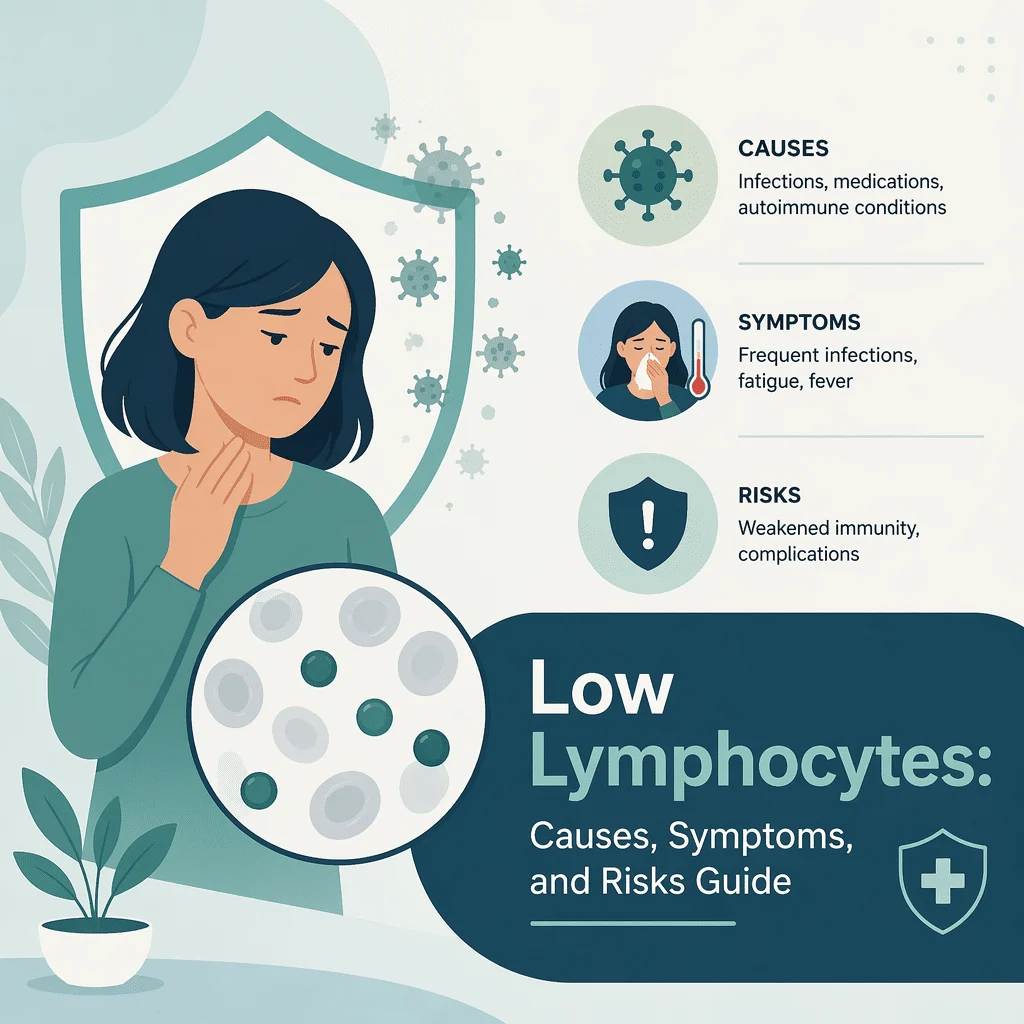
Seeing “low lymphocytes” flagged on a blood test can feel alarming, but in most cases it is a clue rather than a diagnosis. Lymphocytes are a type of white blood cell that anchors your immune defense, and a lower-than-expected count usually reflects something temporary, such as a recent viral infection or a course of medication. Occasionally it points to a condition that needs closer follow-up. This article explains what a low lymphocyte count means, why it happens, the symptoms and infection risks to keep in mind, and when to call your doctor or ask for a repeat test. It also answers common questions and looks at what recent research says about low lymphocytes and infection risk.
What a low lymphocyte count means
Lymphocytes are one of the five kinds of white blood cell your body makes to fight infection. They travel through your blood and lymph system, patrolling for viruses, bacteria, and abnormal cells. When a lab reports low lymphocytes, the number or proportion of these cells has fallen below the expected range for your age. Doctors call this lymphocytopenia, or lymphopenia for short. On its own, the finding describes your blood at one moment in time; it does not name a cause.
The three main types of lymphocytes
Your immune system leans on three specialized lymphocyte families, each with a distinct job:
- B cells (B lymphocytes) make antibodies, the proteins that lock onto specific germs and flag them for removal.
- T cells (T lymphocytes) coordinate the wider immune response and directly kill cells that are infected or turning cancerous.
- Natural killer (NK) cells act as rapid first responders, destroying infected and abnormal cells without needing a prior encounter.
Because these cells cover both the fast, general defense and the slower, targeted response, a shortage can leave gaps in how your body handles certain infections. To see how they fit into your wider results, read our detailed explainer on the immune cells known as lymphocytes.
Absolute count versus percentage
A lab measures your lymphocytes whenever it runs the complete blood count with differential. The result appears two ways: as a percentage of all white blood cells, and as an absolute number known as the absolute lymphocyte count. The absolute count matters most, because a normal-looking percentage can still hide a low total when your overall white cell count is off. In most adults, an absolute lymphocyte count below roughly 1,000 to 1,500 cells per microliter is considered low, while children and infants naturally run higher.
Common causes of low lymphocytes
Low lymphocytes have many possible triggers, and most are temporary. According to the National Heart, Lung, and Blood Institute, poor nutrition is the most common cause worldwide, followed by infections, certain medicines, and, less often, inherited conditions.
Infections
Many everyday infections temporarily pull lymphocytes into the tissues where they are fighting, or briefly slow their production. Viral illnesses are the usual suspects, and the dip normally reverses as you recover; one common example is covered in our guide to influenza and its symptoms. Some infections lower the count for longer: HIV specifically targets and destroys a type of T cell, which is why many people first read our guide to HIV testing and prevention. Tuberculosis and viral hepatitis can also depress the count. When a recent bug is to blame, a repeat test a few weeks later usually shows recovery.
Medicines and cancer treatments
Several treatments lower lymphocytes as a side effect. Corticosteroids, taken for asthma, allergies, or inflammatory disease, are a frequent cause. Chemotherapy and radiation therapy reduce the count because they act on fast-dividing cells, including immune cells, and immunosuppressant drugs that dampen the immune system do the same. This kind of drop is usually expected, monitored, and reversible once treatment ends or the dose changes, and your care team already factors your count into your follow-up.
Autoimmune and chronic conditions
Autoimmune diseases, in which the immune system mistakenly attacks the body’s own tissues, can lower lymphocytes as part of the disease process. Lupus is a classic example, and the count often rises and falls with disease activity; for more depth, read our guide to lupus and how it affects immunity. Rheumatoid arthritis, chronic kidney disease, and heavy alcohol use can each contribute too. For a fuller picture, explore our overview of autoimmune disease and its effects.
Nutrition, stress, and rarer causes
Undernutrition and low levels of protein, zinc, or other nutrients limit the materials your body needs to build lymphocytes. Intense physical stress, major surgery, and serious injury can briefly push the count down through a surge of the hormone cortisol. Rarely, low lymphocytes stem from inherited immune disorders present from birth, from problems in the bone marrow where blood cells are made, or from certain cancers such as lymphoma. These rarer causes tend to be persistent rather than passing, which is why a count that stays low deserves review.
Causes at a glance
| Cause group | Common examples | Typical pattern |
|---|---|---|
| Infections | Flu, COVID-19, HIV, hepatitis, tuberculosis | Often temporary and recovers after the illness; HIV is ongoing |
| Medicines and treatments | Corticosteroids, chemotherapy, radiation, immunosuppressants | Tied to the drug or treatment cycle; usually reversible |
| Autoimmune conditions | Lupus, rheumatoid arthritis | May rise and fall with disease activity |
| Nutrition and lifestyle | Undernutrition, heavy alcohol use, severe stress | Improves once the underlying issue is addressed |
| Rarer causes | Inherited immune disorders, bone marrow conditions, some cancers | Usually persistent and needs specialist review |
Symptoms and the main risk
Here is the part that surprises many people: low lymphocytes usually cause no symptoms at all. The number itself is silent, and most people discover it only because a blood test was run for another reason. When symptoms do appear, they come from the underlying cause rather than the low count, so a viral infection, an autoimmune flare, or a medication side effect is what you feel.
The risk that matters most is greater vulnerability to infection. Because lymphocytes are central to fighting germs, a count that stays low can make infections more frequent, severe, or slower to clear. Mild, short-lived dips carry little risk, while a marked and lasting shortage is what raises concern. Warning signs include repeated colds or chest infections, returning fevers, frequent cold sores or shingles, and slow-healing wounds.
How to interpret your lymphocyte results
Reading a lymphocyte result well means looking beyond the single number: how low is it, is it stable across tests, and what else on the panel has changed?
Low lymphocytes with high neutrophils
A very common pattern is a low lymphocyte percentage paired with a high neutrophil reading, sometimes reported as high granulocytes. This often reflects an ordinary response to a recent infection or physical stress, in which the same differential also counts the neutrophils that tackle bacteria. Looking at the absolute numbers, rather than percentages alone, usually shows whether your lymphocytes are truly low or simply crowded out by a temporary rise in other cells.
One low result versus a trend
A single low reading is far less meaningful than a pattern. Counts move naturally with recent illness, sleep, stress, and even the time of day, which is why doctors often repeat the test before acting on it. A value that returns to normal on retesting points to a passing cause, while a count that stays low, or keeps drifting down, prompts further tests. For a broader walkthrough, see our practical guide to reading your blood test results.
When to see a doctor
Most low lymphocyte results are mild and resolve on their own, but some situations deserve prompt attention. Contact your doctor if a low count comes with any of the following:
- Infections that keep coming back, are hard to shake, or turn severe.
- Fever, drenching night sweats, or unexplained weight loss.
- Swollen lymph nodes that persist for more than a couple of weeks.
- Unusual, ongoing fatigue that does not improve with rest.
- A lymphocyte count that stays low on a repeat test, or falls further.
If you are treated for cancer or take medicines that suppress the immune system, your team will tell you the specific warning signs to watch for. When in doubt, a quick conversation with your doctor is always reasonable.
Diagnosis and what happens next
Diagnosis starts by confirming the result. A repeat complete blood count, often with a fresh look at the differential, shows whether the low count is real and lasting. Your doctor then pieces together your history: recent infections, current medicines, nutrition, and symptoms. Targeted tests may follow, chosen to fit your situation.
To gauge inflammation, your doctor may add the C-reactive protein (CRP) test. They may also screen for infections such as HIV, or check how well your immune system makes protective proteins by ordering the IgG antibody test. Management then targets the cause, not the number: treating an infection, adjusting a medicine, improving nutrition, or referring you to a specialist. Often no treatment is needed and the count recovers on its own.
Latest scientific advances
Researchers have looked closely at what a low lymphocyte count predicts, and the takeaway is reassuringly practical: the count is a useful signal, not a verdict.
A large 2023 review that pooled many hospital studies found that low lymphocytes were common among adults admitted to hospital, affecting around four in ten, and that people with a low count were more likely to develop septic shock, a dangerous whole-body reaction to infection, and had higher rates of death. For you, this is why doctors treat a low count as an early warning; it is a flag, not a diagnosis.
Two further reviews looked at cancer treatment. A 2024 pooled analysis of patients with glioblastoma, a type of brain tumor, found that those who developed low lymphocytes during radiation and chemotherapy tended to have shorter survival than those who kept a healthier count, and a 2023 meta-analysis reached a similar conclusion in women treated for cervical cancer. In short, if you are treated for cancer, your team watches your count closely, because protecting these cells is part of protecting your recovery. These are associations seen in specific groups, so they guide monitoring rather than promising any single outcome.
Glossary of key terms
| Term | Definition |
|---|---|
| Lymphocytes | White blood cells (B, T, and NK cells) that form a core part of the immune defense against infection. |
| Absolute lymphocyte count (ALC) | The actual number of lymphocytes per microliter of blood, the figure doctors rely on most. |
| Lymphocytopenia (lymphopenia) | The medical terms for a lymphocyte count that is below the normal range. |
| Complete blood count (CBC) | A common blood test that measures red cells, white cells, and platelets. |
| Differential | The part of the CBC that breaks white blood cells into their separate types. |
| T cells and B cells | Lymphocytes that coordinate defense and kill infected cells (T) or make antibodies (B). |
| Natural killer (NK) cells | Lymphocytes that quickly destroy infected or abnormal cells without prior exposure. |
| Neutrophils | The most common white blood cells, which mainly fight bacterial infection. |
| Septic shock | A life-threatening, body-wide response to infection that causes blood pressure to fall. |
Frequently asked questions
When should I worry about low lymphocytes?
A mild, one-off dip after a cold or a stressful week is rarely a concern and often corrects itself. It is worth calling your doctor when a low count comes with repeated or severe infections, persistent fever, night sweats, unexplained weight loss, or swollen lymph nodes, or when a repeat test shows it staying low or falling further. Context matters far more than a single number.
What is the most common cause of low lymphocytes?
Worldwide, poor nutrition is the leading cause, but in day-to-day practice recent viral infections are the most frequent reason a count dips, followed by medicines such as corticosteroids. These causes are usually temporary, and the count typically recovers once the infection clears or the medicine is adjusted.
Does a low lymphocyte count mean cancer?
Usually not. The large majority of low counts trace back to infections, medicines, stress, or nutrition rather than to cancer. Certain blood cancers, such as lymphoma, can affect lymphocyte numbers, but they almost always bring other findings and symptoms alongside the count. If your doctor has any concern, they will look at the full picture; for background, read our guide to the symptoms of lymphoma.
Is a low lymphocyte count dangerous?
For most people, a mild reduction carries little day-to-day risk. The danger rises only when the count is markedly low and stays that way, because a lasting shortage of these cells makes infections more likely and harder to clear. How low is too low depends on the cause and your overall health, which your doctor weighs alongside your symptoms.
Can stress cause low lymphocytes?
Yes. Severe physical stress, such as major surgery, serious injury, or acute illness, can lower lymphocytes for a short time through a rise in the hormone cortisol. Everyday emotional stress has a much smaller, briefer effect, and a follow-up test once things settle usually shows the count returning toward normal.
How are low lymphocytes treated?
There is no treatment aimed at the number itself; care is directed at whatever is behind it — letting an infection run its course, adjusting a medication, improving nutrition, or managing an autoimmune condition. In rarer cases linked to inherited immune problems, a specialist may recommend antibody replacement. Often no specific treatment is needed and the count recovers on its own.
Sources
- National Heart, Lung, and Blood Institute (NHLBI) — Lymphopenia — U.S. Department of Health and Human Services, 2024 — https://www.nhlbi.nih.gov/health/lymphopenia
- Mayo Clinic — Low white blood cell count — Mayo Clinic, 2024 — https://www.mayoclinic.org/symptoms/low-white-blood-cell-count
- Merck Manual (Consumer Version) — Lymphocytopenia — Merck & Co., 2026 — https://www.merckmanuals.com/home/blood-disorders/white-blood-cell-disorders/lymphocytopenia
- Elcioglu ZC, et al. — Pooled prevalence of lymphopenia in all-cause hospitalisations and association with infection: a systematic review and meta-analysis — BMC Infectious Diseases, 2023 — https://doi.org/10.1186/s12879-023-08845-1
- Saeed AM, et al. — Systematic review and pooled analysis of the impact of treatment-induced lymphopenia on survival of glioblastoma patients — Radiation Oncology, 2024 — https://doi.org/10.1186/s13014-023-02393-3
- Cao H, et al. — Radiation-induced lymphopenia and the survival of women with cervical cancer: a meta-analysis — Journal of Obstetrics and Gynaecology, 2023 — https://doi.org/10.1080/01443615.2023.2194991
Further reading
- High lymphocytes: causes, symptoms, and treatments
- High neutrophils: causes, symptoms, and risks explained
- Monocytes: a guide to understanding your blood test results
- Normal blood test ranges
- CBC vs CMP: understanding the tests
Understand your lab results with AI DiagMe
A low lymphocyte result rarely tells the whole story on its own, and it makes the most sense alongside the rest of your blood work. AI DiagMe helps you read values like your complete blood count, your white cell differential, and your immunoglobulin levels in clear, everyday language, so you can walk into your next appointment knowing what to ask. It is built to help you understand your results, not to diagnose a condition or replace the judgment of your doctor.
Get your results interpreted in minutes