





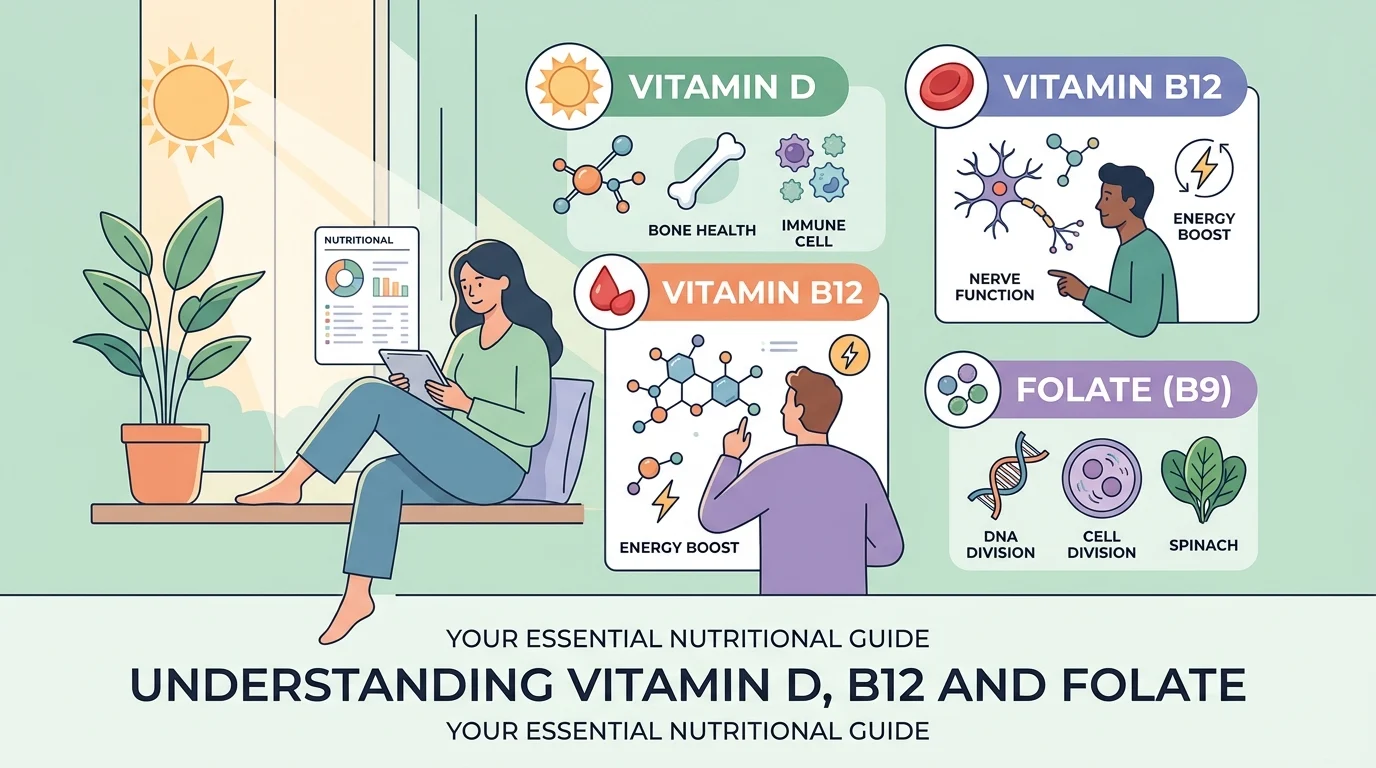
A vitamin panel blood test measures the level of several key nutrients in your blood at the same time, most often vitamin D, vitamin B12 and folate (vitamin B9). It gives you and your doctor a single snapshot of nutrients that affect your energy, your nerves, your blood and your bones. People usually order one when they feel tired, run-down or “off” without a clear reason, or when they belong to a group at higher risk of low levels.
This guide explains what a vitamin panel blood test includes, what each vitamin does, and how to make sense of the numbers on your report. You will also find a simple table of typical results, a short checklist of who benefits most from testing, and clear signs of when to see a doctor. The goal is to help you understand your results, not to replace your physician’s advice.
What a vitamin panel blood test measures
A vitamin panel (sometimes called a nutritional panel or vitamin deficiency panel) is a group of blood tests bundled together. Instead of checking one nutrient at a time, the lab measures several in a single draw. This makes it easier to spot patterns, because low levels often appear together rather than alone.
The exact contents vary by laboratory. Most panels built around tiredness, mood and blood health include three core markers: vitamin D, vitamin B12 and folate. Many labs add related tests to help interpret the results.
A typical comprehensive vitamin panel may include:
- Vitamin D, usually measured as 25-hydroxyvitamin D, the storage form that best reflects your overall vitamin D status.
- Vitamin B12 (also called cobalamin), reported as a serum B12 level.
- Folate (vitamin B9), measured as a serum or red-cell folate test.
- Supporting markers such as a complete blood count, iron studies including ferritin, and sometimes magnesium.
Some clinics combine the vitamin panel with a broader comprehensive metabolic panel, which checks kidney function, blood sugar and salts. Vitamin D, B12 and folate are not part of a standard metabolic panel, so they usually need to be requested specifically.
Why these three vitamins are grouped together
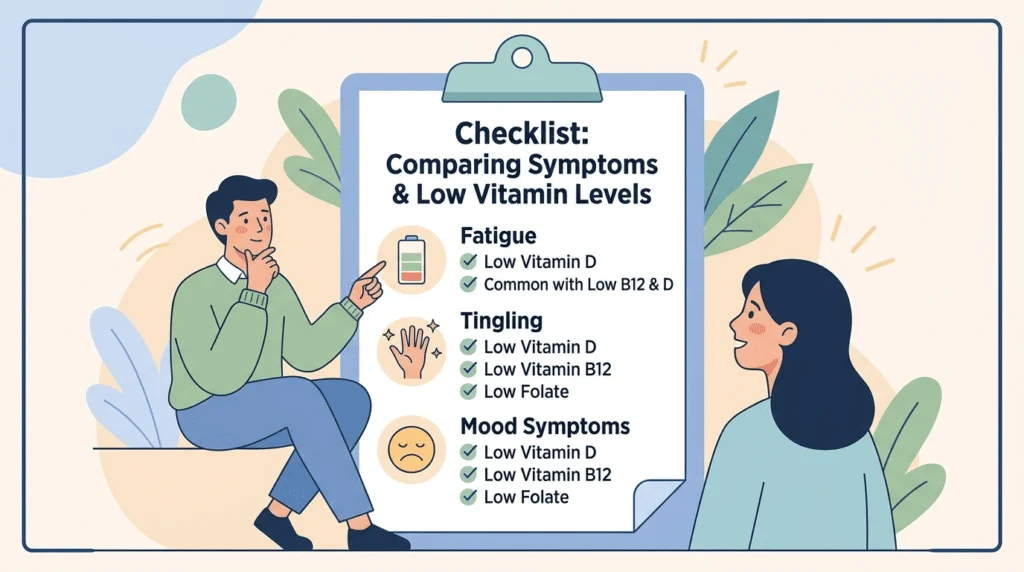
Vitamin D, B12 and folate share two things. First, low levels are common and often go unnoticed. Second, they produce overlapping symptoms, such as fatigue and low mood, so a single symptom rarely points to just one nutrient.
Testing all three at once removes the guesswork. If your tiredness comes from low B12 rather than low vitamin D, the right result helps your doctor choose the right next step instead of treating the wrong cause.
Vitamin D, B12 and folate: what each one does
Each nutrient on the panel has a distinct job. Understanding these roles makes your results far easier to read.
Vitamin D
Vitamin D helps your body absorb calcium, which keeps bones and teeth strong. It also supports muscle function and the immune system. Your skin makes vitamin D from sunlight, and small amounts come from foods such as oily fish, eggs and fortified products.
Low vitamin D is widespread, especially in people who spend little time outdoors, cover their skin, have darker skin, or live in places with long winters. Because the body stores vitamin D, a blood test reflects your status over recent weeks rather than what you ate yesterday.
Vitamin B12
Vitamin B12 (cobalamin) is needed to make healthy red blood cells, to keep nerves working, and to build DNA. It is found mainly in animal foods: meat, fish, eggs and dairy. People who eat little or no animal produce, and many older adults, are more likely to run low.
A shortage can build up slowly over years because the body holds large stores. Early signs are easy to miss, which is one reason a vitamin B12 blood test is so useful. Left untreated, low B12 can affect the nervous system, sometimes permanently, so it should be picked up and treated promptly.
Folate (vitamin B9)
Folate is the natural form of vitamin B9, found in leafy greens, beans, citrus fruit and fortified grains. Folic acid is the man-made form used in supplements and added to many foods. Folate works closely with B12 to make red blood cells and to support cell growth. It is especially important before and during pregnancy, where it helps prevent certain birth defects.
The table below summarises the three vitamins at a glance.
| Vitamin | Main jobs | Common reasons for low levels | Main food sources |
|---|---|---|---|
| Vitamin D | Bone strength, calcium absorption, immune and muscle function | Little sun exposure, darker skin, certain gut or kidney conditions | Oily fish, eggs, fortified milk and cereals, sunlight |
| Vitamin B12 | Red blood cells, nerve function, DNA building | Vegan or vegetarian diet, older age, poor absorption, some medicines | Meat, fish, eggs, dairy, fortified foods |
| Folate (B9) | Red blood cells, cell growth, healthy pregnancy | Low intake of greens, pregnancy, malabsorption, some medicines | Leafy greens, beans, citrus, fortified grains |

How to read your vitamin panel results
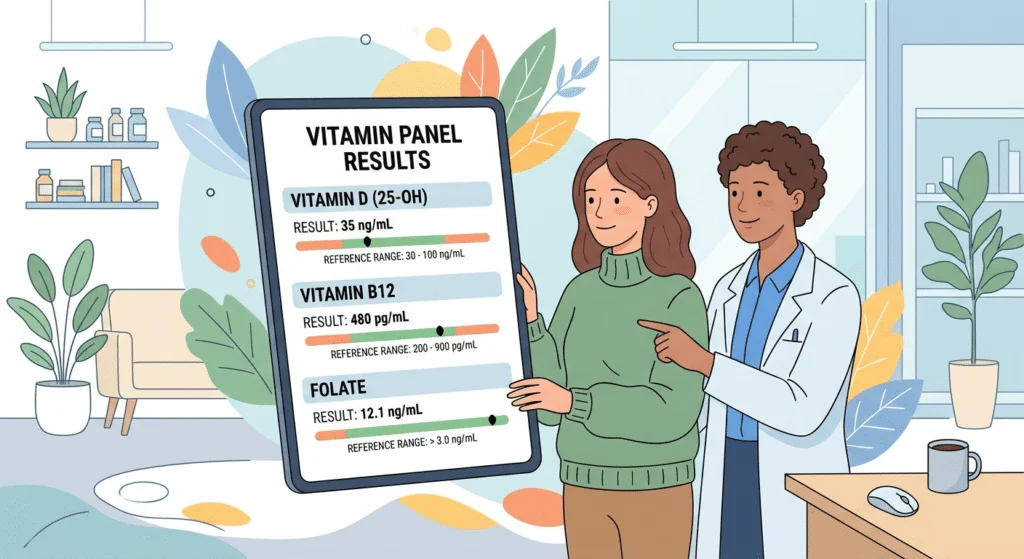
Your report lists each test with three things side by side: the result, the unit of measurement, and the reference range (the lab’s “normal” band). The result on its own means little until you compare it with that range. A helpful habit is to read your blood test results marker by marker rather than reacting to a single number.
Units differ between vitamins, and the same nutrient can be reported in two different units depending on the lab. Vitamin D often appears in ng/mL or nmol/L. Vitamin B12 is usually in pg/mL or pmol/L. Folate is commonly in ng/mL or nmol/L. Always check which unit your lab used before comparing a result to anything you read online.
The table below shows typical patterns. Reference ranges vary by laboratory, so treat these as general guidance, not a diagnosis.
| Marker | Often reported in | What a low result may suggest | What a high result may suggest |
|---|---|---|---|
| Vitamin D (25-OH) | ng/mL or nmol/L | Deficiency from low sun or intake; possible bone and muscle effects | Usually from high-dose supplements; very high levels can be harmful |
| Vitamin B12 | pg/mL or pmol/L | Possible low B12 from diet, absorption problems or medicines | Raised B12 from supplements, or sometimes liver or other conditions |
| Folate (B9) | ng/mL or nmol/L | Possible folate deficiency from low intake or malabsorption | Usually harmless and linked to supplements, though high folate can mask low B12 |
For vitamin D, public health guidance from the United States is useful as a reference point. Levels below about 12 ng/mL (30 nmol/L) are generally considered deficient, 12 to 20 ng/mL (30 to 50 nmol/L) inadequate, and 20 to 50 ng/mL (50 to 125 nmol/L) adequate for most people. Very high results, above roughly 50 ng/mL (125 nmol/L), can do more harm than good.
One important point links folate and B12. Taking extra folic acid can improve blood results so much that it hides an underlying B12 shortage, which may quietly keep harming the nerves. This is why doctors often check B12 before treating low folate, and why testing both together matters.
Why results can differ between labs and over time
Two reports can show different numbers for the same nutrient without either being wrong. Laboratories use different equipment and set their own reference ranges, so always compare a result to the range printed on that report rather than to a friend’s figures or an online value. Timing and recent habits matter too. A recent supplement, a change in diet, or even the time of year can shift a vitamin D level. For this reason a single result is best seen as one point in time, not a verdict. When a value is borderline, doctors often repeat the test before drawing firm conclusions, and tracking the same marker at the same lab over months makes any real change far easier to interpret.
Who should consider a vitamin panel?
A vitamin panel is most useful when symptoms or risk factors point toward a possible shortage. Choosing the right test for a suspected deficiency often starts with these everyday signs.
You may benefit from testing if you notice:
- Persistent tiredness or weakness that rest does not fix.
- Tingling, numbness or “pins and needles” in the hands or feet.
- Low mood, brain fog or trouble concentrating.
- Pale skin, breathlessness or a fast heartbeat.
- A sore, smooth or red tongue, or mouth ulcers.
Certain groups are more likely to run low and may be tested even without strong symptoms:
- People on a vegan or vegetarian diet, who get little dietary B12.
- Older adults, who absorb B12 less efficiently.
- People who are pregnant or planning a pregnancy, where folate needs rise.
- Those with gut conditions such as coeliac or inflammatory bowel disease that reduce absorption.
- People taking certain long-term medicines, including some used for diabetes and acid reflux, which can lower B12 over time.
Folate versus folic acid, and vitamin D versus D3
Two common points of confusion appear on lab reports and supplement labels. Clearing them up helps you read both correctly.
Folate and folic acid refer to the same vitamin, B9, in different forms. Folate is the form found naturally in food. Folic acid is the synthetic form used in supplements and fortified foods, which the body converts into the active vitamin. A blood test usually measures total folate regardless of the source.
Vitamin D and vitamin D3 are related but not identical. Vitamin D is the umbrella term. D3 (cholecalciferol) is the form your skin makes from sunlight and the one used in many supplements, while D2 (ergocalciferol) comes mainly from plants. The standard blood test measures 25-hydroxyvitamin D, which captures both forms, so it reflects your total vitamin D status rather than the type you take.
When to see a doctor about your results
A vitamin panel is a screening tool, not a final answer. Some results need professional review rather than self-treatment.
Speak to a doctor promptly if you have:
- Numbness, tingling, balance problems or memory changes alongside a low B12 result, as these can signal nerve involvement.
- A clearly low result on any vitamin combined with breathlessness, a racing heart or fainting.
- Low folate or B12 during pregnancy or while trying to conceive.
- An unexpectedly high vitamin D result, especially with nausea, excessive thirst or confusion.
- Symptoms that continue or worsen despite improving your diet or taking supplements.
Your doctor can confirm whether a result reflects a true deficiency, look for the underlying cause, and decide on safe treatment. Self-prescribing high-dose supplements based on a single number can mask problems or, in the case of vitamin D, cause harm.
How a vitamin panel fits with other blood tests
Vitamin results rarely stand alone. Doctors often read them alongside other markers to understand the full picture.
When B12 or folate runs low, red blood cells can become unusually large. This shows up as a high mean corpuscular volume (MCV) on a complete blood count, a pattern called macrocytic anaemia (anaemia with enlarged cells). Pairing the vitamin panel with a blood count helps connect a number to a cause.
Both B12 and folate also help keep homocysteine — an amino acid linked to heart and blood-vessel health — within a normal range. A raised homocysteine level can be an early clue to a shortage of one of these vitamins. Iron status, measured through iron studies and ferritin, adds another layer, since iron deficiency is a frequent and separate cause of fatigue. Because these causes can overlap, a normal vitamin result does not always rule out another reason for your symptoms, which is why your doctor reads the whole panel rather than one line. Looked at together, these tests turn isolated numbers into a coherent story about your health.
Glossary
- Cobalamin: another name for vitamin B12, the nutrient needed for red blood cells, nerves and DNA.
- Deficiency: a level of a nutrient that is too low to meet the body’s needs.
- Folate (vitamin B9): the natural form of vitamin B9 found in food, important for blood cells, cell growth and pregnancy.
- Folic acid: the man-made form of vitamin B9 used in supplements and fortified foods.
- Macrocytic anaemia: anaemia in which red blood cells are larger than normal, often caused by low B12 or folate.
- MCV (mean corpuscular volume): a measure of the average size of red blood cells, reported on a complete blood count.
- Reference range: the band of values a laboratory considers normal for a given test.
- Serum: the clear part of the blood used for many vitamin measurements.
- 25-hydroxyvitamin D (25-OH): the storage form of vitamin D measured to assess your overall status.
Frequently asked questions
Do I need to fast before a vitamin panel blood test?
Vitamin D, B12 and folate themselves do not usually require fasting. However, panels often include extra tests that do, such as iron studies, blood sugar or a lipid (cholesterol) test, which may need 8 to 12 hours without food. Because requirements depend on exactly what is being measured, ask the lab or your doctor when you book. Following their instructions keeps your results accurate and avoids a repeat draw.
How often should I get a vitamin panel?
There is no single rule for everyone. If a panel is normal and you have no symptoms or risk factors, repeat testing is usually not needed for some time. If you are being treated for a deficiency, your doctor may retest after a few months to check that levels are rising. People in higher-risk groups, such as those on a vegan diet or with absorption problems, may test periodically. Let your symptoms and your doctor’s advice guide the timing rather than testing on a fixed schedule.
Is folate the same as folic acid?
They are the same vitamin, B9, in different forms. Folate is the form found naturally in foods such as leafy greens and beans. Folic acid is the synthetic version added to supplements and many fortified foods, which your body converts into the active vitamin. A folate blood test generally measures the total amount in your blood regardless of where it came from. Both raise your folate level, though they are labelled differently on supplements and reports.
Can a vitamin B12 deficiency be a sign of something serious?
Low B12 most often comes from diet, ageing or trouble absorbing the vitamin. In some cases it points to an underlying condition, such as pernicious anaemia, where the immune system stops the gut absorbing B12, or a digestive disease. It is rarely a sign of cancer on its own. What matters is finding the cause, because the right treatment depends on it. A doctor can run follow-up tests if your result is low or your symptoms continue.
Can you have too much vitamin D?
Yes. Unlike many vitamins, vitamin D is stored in the body, so very high doses over time can push levels too high. This can raise blood calcium and cause nausea, excessive thirst, kidney problems and confusion. Sunlight and food rarely cause this; the usual cause is high-dose supplements. If your result is high, do not simply continue supplementing. Speak with a doctor about a safe amount for you.
What does a low vitamin D result mean?
A low vitamin D result means your stores have dropped below the level most people need for healthy bones and muscles. Common causes include limited sun exposure, darker skin, covering up outdoors, or certain gut and kidney conditions. Many people with low vitamin D feel no symptoms, while others notice tiredness, aches or low mood. A doctor can advise whether you need a supplement, what dose is safe, and whether to recheck the level later.
Sources
- NIH Office of Dietary Supplements — Vitamin D
- NHS — Vitamin B12 or folate deficiency anaemia
- CDC — About Folic Acid
Further reading
- Vitamin D (25-OH): understanding your blood test
- Vitamin B12: role and lab results
- Folic acid (folate or vitamin B9): understanding your blood test
- Best blood test for vitamin deficiencies
- Read blood test results: a simple guide
Understand your lab results with AI DiagMe
Reading a vitamin panel can feel overwhelming when every line has a different unit and reference range. AI DiagMe helps you make sense of results such as vitamin D (25-hydroxyvitamin D), vitamin B12 and folate (vitamin B9), explaining what each value means in plain language. It is built to help you understand your report and prepare for your appointment, not to diagnose you or replace your doctor. Upload your results to see a clear, easy-to-follow interpretation.
➡️ Get your results interpreted in minutes