






























AST blood test: what your liver enzyme levels mean

目录

AST (SGOT) test and understanding your liver enzyme results
经医学审核: Julien Priour

⚕️ 本文仅供参考,不能替代医疗建议。请务必咨询医生以解读您的检查结果。.

An AST blood test measures aspartate aminotransferase, an enzyme found mainly in the liver and also in muscle and heart tissue, and it is one of the most common ways doctors check for liver cell stress. This guide explains what the test measures, what counts as a normal range, what pushes AST up or down, how it fits into a wider liver panel, and when a result deserves a closer look. Whether your report calls it AST or uses its older name SGOT, the same enzyme and the same interpretation principles apply.

What an AST blood test actually measures

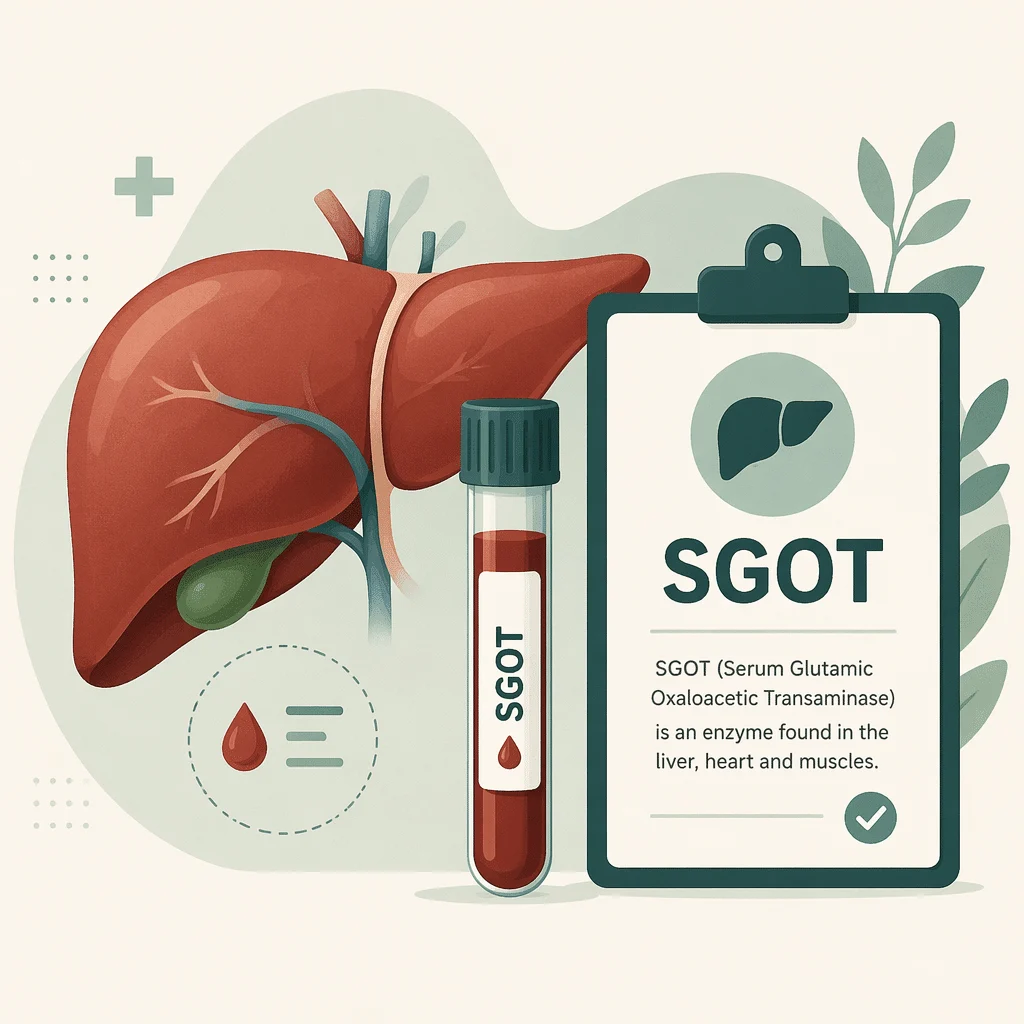
Aspartate aminotransferase, abbreviated AST, is an enzyme that helps liver cells process amino acids as part of normal metabolism. Small amounts also live inside heart muscle, skeletal muscle, kidneys, and red blood cells. Under normal conditions, AST stays inside these cells and only a small amount circulates in the blood. When cells are damaged or under stress, whether from inflammation, toxins, or injury, they release extra AST into the bloodstream, which is exactly what an AST blood test is designed to detect.

An older name for this same enzyme is SGOT, short for serum glutamic-oxaloacetic transaminase. Some laboratories still print “SGOT” on older report templates, while most modern ones use “AST.” Both terms describe the identical measurement, so seeing one or the other on your printout changes nothing about how to read the number.

Doctors rarely order an AST blood test completely alone. It usually travels with a companion enzyme called alanine aminotransferase, and both are typically bundled inside a broader liver function test panel. Ordering them together helps a clinician judge whether an elevated result specifically points toward the liver or toward another tissue such as muscle.

Normal AST blood test ranges and what they mean

Reference ranges vary somewhat between laboratories, but a commonly used adult range for an AST blood test is about 8 to 48 U/L in men and 8 to 43 U/L in women, with children sometimes running a little higher due to normal growth-related tissue turnover. The number that matters most is the one printed next to your own result, since equipment and local population data shift the exact cutoffs from one lab to another.

A result that sits just outside the printed range is not automatically alarming. Roughly one in twenty healthy people will land outside a statistically defined “normal” band purely by chance, since reference ranges are built to capture the middle 95 percent of a healthy population. Age, sex, body composition, recent exercise, and even a particular lab’s testing method can nudge the number slightly.

Very low results on an AST blood test rarely raise concern on their own. Clinicians pay far more attention to elevated results, since a rise reflects something happening at the cellular level that is usually worth understanding, even when the underlying cause turns out to be minor and temporary.

How doctors judge the size of an elevation

The degree of an elevation on an AST blood test carries as much diagnostic weight as the fact that it is elevated at all. Clinicians commonly group results into rough tiers to help decide how quickly to act.

Degree of elevation大概有多高它通常暗示什么典型的下一步
温和的Under 3 times the upper limitFatty liver, recent alcohol, a new medication, recent intense exerciseOften a repeat test in several weeks
缓和3 to 10 times the upper limitActive hepatitis, a drug reaction, a more established liver conditionAdditional blood work, sometimes imaging
标记Over 10 times the upper limitAcute liver injury, such as a medication overdose or severe acute hepatitisPrompt medical evaluation

These tiers are general patterns rather than fixed rules, and your own clinician will weigh the exact number against your symptoms, history, and other test results before deciding what it means for you.

Common causes of a high AST blood test result

A high AST blood test result has many possible explanations, and most of them are common, well understood, and often reversible. Reviewing the usual categories can help you frame a useful conversation with your doctor rather than jumping to worst-case assumptions.

Liver-related causes

The most frequent reason for a mildly raised AST blood test worldwide is metabolic dysfunction-associated steatotic liver disease, a condition previously called nonalcoholic fatty liver disease, which is closely tied to excess weight, insulin resistance, and elevated blood lipids. Viral hepatitis, whether from hepatitis A, B, or C, can also inflame liver cells and push levels upward, sometimes dramatically during an acute infection. Regular or heavy alcohol use is another well-established driver, and long-standing liver scarring, known as cirrhosis, can produce persistently abnormal results even when the degree of elevation looks modest.

Non-liver causes

Because AST also lives inside muscle and heart tissue, a hard workout, a muscle injury, or a cardiac event can raise an AST blood test result without any liver problem at all. This is one reason AST is considered less liver-specific than ALT, which stays much more concentrated inside liver cells. Certain medications and supplements, including some common painkillers, cholesterol-lowering drugs, and high-dose herbal products, can also nudge the result higher as a side effect rather than a sign of underlying disease.

AST versus ALT: reading the two together

Comparing AST and ALT side by side gives a clinician more insight than either value alone, since the pattern between them often narrows down the likely cause. The table below sketches the broad differences in what each enzyme tends to signal.

特征AST备用
Main tissue sourceLiver, heart, muscle, kidneys主要为肝脏
Liver specificityLower, since other tissues contributeHigher, a more direct liver signal
Typical pattern in fatty liverOften mildly raisedUsually raised more than AST
Typical pattern in heavy alcohol useOften raised more than ALTRaised, but usually less than AST

AST/ALT 比值

Dividing AST by ALT produces a simple ratio that offers an extra clue, though it is a hint rather than a standalone diagnosis. In most common causes of liver stress, including fatty liver, ALT tends to run higher than AST, so the ratio sits below 1. When AST is clearly higher than ALT, with a ratio above roughly 2, alcohol-related liver disease becomes more likely, since chronic alcohol exposure affects AST-producing tissue more than ALT-producing tissue. Your clinician always interprets this ratio alongside your history, medication list, and other liver panel results rather than in isolation.

How an AST blood test fits into a full liver panel

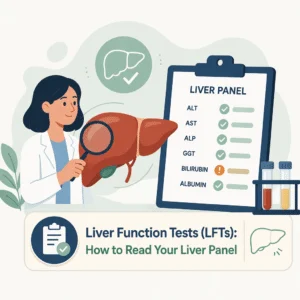
An AST blood test rarely stands alone in practice. It is usually grouped inside a wider liver panel alongside ALT, 碱性磷酸酶, gamma-glutamyl transferase, , 和 总胆红素. This grouping lets a clinician sort a result into a recognizable pattern rather than reacting to a single isolated number.

Broadly, when AST and ALT rise together more than the other markers, doctors call this a hepatocellular pattern, which usually points toward liver cell injury from causes like fatty liver, viral hepatitis, or alcohol. When alkaline phosphatase and GGT rise more, often together with bilirubin, this suggests a cholestatic pattern, meaning a problem with bile flow rather than liver cell injury itself. Many results show a mix of both patterns, which nudges the workup in a broader direction.

Markers that measure the liver’s actual working function, rather than cell injury, include 白蛋白总蛋白, since the liver manufactures both. A falling albumin or a rising bilirubin sometimes carries more weight than a modest AST elevation, particularly in longer-standing liver disease where enzyme leakage can plateau even as underlying damage continues.

Lifestyle factors that influence your AST blood test result

Several everyday factors can shift an AST blood test result without necessarily reflecting ongoing liver disease, and recognizing them helps put an unexpected number into context.

  • Recent intense or unaccustomed exercise, since AST also comes from stressed or damaged muscle tissue.
  • Alcohol consumed in the day or two before the blood draw, which can temporarily raise several liver enzymes.
  • A diet high in processed foods, added sugar, or saturated fat, which over time contributes to fatty liver changes.
  • Body weight and metabolic health, since excess weight and insulin resistance are strongly linked to fatty liver disease.
  • New medications or supplements, including some common over-the-counter painkillers and herbal products.
  • Adequate sleep and stress management, which support overall metabolic and liver health over time.

Addressing these everyday factors, particularly reducing alcohol intake and working toward a healthy weight through balanced nutrition and regular movement, often improves a mildly elevated AST within weeks to months, which is one reason doctors frequently suggest a repeat test before pursuing more extensive investigation.

When to see a doctor about your AST blood test results

Most abnormal AST blood test results are not emergencies, and your clinician will guide the appropriate pace of follow-up. Still, some situations deserve prompt attention rather than waiting for a routine appointment.

  • Yellowing of the skin or the whites of the eyes, known as jaundice.
  • Dark-colored urine paired with pale or clay-colored stools.
  • Severe or persistent pain in the upper right side of the abdomen.
  • Unusual bruising, bleeding, or vomiting that looks like blood or coffee grounds.
  • Confusion, unusual drowsiness, or difficulty staying alert.
  • Significant swelling of the abdomen or legs that develops without an obvious cause.

It is also reasonable to schedule a non-urgent review if an elevated AST blood test result persists on a repeat test, climbs over successive results, or appears alongside other abnormal liver panel markers. Bringing a full list of medications, supplements, and recent alcohol intake to that appointment helps your doctor interpret the pattern accurately.

Recent scientific advances

A large 2025 study published in the journal Liver International looked at whether the “normal” cutoffs labs use for liver blood tests, including the AST blood test, ALT, GGT, alkaline phosphatase, and bilirubin, actually predict long-term liver problems. Researchers studied thousands of healthy middle-aged adults and then checked, years later, which of them went on to develop serious liver-related health issues.

What this means for you: the study found that an AST blood test, alongside GGT, was a better early warning sign of future liver trouble than ALT, the enzyme often treated as the “main” liver marker. People whose AST sat above about twice the typical upper limit carried a meaningfully higher long-term risk of serious liver outcomes, even when they felt completely well at the time of testing. This suggests that an AST blood test deserves just as much attention as ALT when your results come back, rather than being dismissed as the less important of the two.

As an aside on some of the terms involved: a cohort is simply a group of people who are followed over time so researchers can see what happens to their health down the road, and a reference limit is the cutoff number a lab uses to separate a “normal” result from an “abnormal” one.

The findings are still relatively new and were built on one specific population, so wider confirmation across other groups of people is a reasonable next step before reference ranges change everywhere. In the meantime, the takeaway is reassuring rather than alarming: it reinforces that repeat testing and attention to a persistently raised AST, even a modest one, is a sensible and proportionate response, not an overreaction.

词汇表

学期定义
AST(天冬氨酸氨基转移酶)An enzyme found mainly in the liver and also in muscle, heart, and kidney tissue, measured to help assess liver cell injury.
SGOTAn older name for AST, standing for serum glutamic-oxaloacetic transaminase; it refers to the exact same enzyme.
ALT(丙氨酸氨基转移酶)A companion liver enzyme that is more concentrated in liver cells than AST, making it a more liver-specific marker.
AST/ALT 比值The result of dividing AST by ALT; a ratio above roughly 2 raises suspicion for alcohol-related liver disease.
Hepatocellular patternA liver panel pattern where AST and ALT are the most raised markers, suggesting injury to liver cells themselves.
Cholestatic patternA liver panel pattern where alkaline phosphatase and GGT are the most raised markers, suggesting a bile flow problem.
参考范围The set of values a laboratory considers typical for a healthy population, which can vary by lab, age, and sex.
MASLDMetabolic dysfunction-associated steatotic liver disease, the current name for what was previously called nonalcoholic fatty liver disease.

常见问题解答

Can a normal AST result rule out liver disease completely?

Not entirely. The liver has considerable reserve capacity, so enzyme levels can look normal even when scarring or fat buildup is present, especially in early or slow-moving conditions. A single normal AST blood test is a reassuring snapshot rather than a lifetime guarantee, which is why clinicians combine it with your symptoms, history, and sometimes imaging when there is a specific concern.

Does fasting affect an AST blood test?

Fasting is usually not required for AST itself, since the enzyme is not significantly changed by a recent meal. However, an AST test is often ordered alongside glucose or cholesterol tests that do require fasting, so it is worth following whatever instructions came with your specific lab order.

How quickly can a high AST level improve?

It depends heavily on the cause. A mild elevation linked to recent alcohol or intense exercise can settle within one to two weeks. Elevations tied to fatty liver disease may take several months of sustained lifestyle changes to meaningfully improve, while elevations from an acute infection often follow the course of that illness rather than a fixed timeline.

Is a slightly low AST level ever a problem?

A low AST value is rarely a cause for concern on its own and is usually not investigated further, since clinicians focus their attention on elevated results. In uncommon cases, a low value has been linked to conditions like advanced malnutrition or a vitamin B6 deficiency, but this is not a typical finding in an otherwise healthy person.

Can children have a different normal AST range than adults?

Yes. Children and adolescents often show somewhat higher AST values than adults due to normal tissue growth and turnover. Pediatric reference ranges account for this, so a pediatrician will compare a child’s result to an age-appropriate range rather than an adult one.

Does pregnancy change AST levels?

AST usually stays within typical adult ranges throughout most of pregnancy. However, certain pregnancy-related complications, including preeclampsia and rare liver conditions specific to pregnancy, can raise AST, which is why obstetric teams sometimes monitor liver panels more closely in the later stages.

来源

延伸阅读

Understanding an AST blood test is easier when you can see it alongside related markers such as ALT, GGT, alkaline phosphatase, and bilirubin, since liver health is best read as a pattern rather than a single number. AI DiagMe helps you make sense of a full liver panel and other lab results in plain language, so you can prepare better questions for your appointment. It is designed to help you understand your numbers, not to diagnose a condition or replace the judgment of your doctor.

利用 AI DiagMe 了解您的实验室结果

几分钟内即可获得结果解读

作者

  • AI DiagMe

    AI DiagMe团队汇聚了医生、临床专家和医学编辑。我们的文章由健康传播专业人士撰写,并由我们科学委员会的医生进行审核和验证。该委员会由在血液科、内分泌科和全科等专科领域执业的医院医生组成。负责编辑工作的Julien Priour拥有巴黎高等商学院(HEC Paris)的MBA学位,并曾在法国国家可持续发展研究所(IRD,FUN-MOOC,2026)接受过科学写作和出版方面的培训。每篇文章都基于最新的临床指南和同行评审的医学出版物。.

相关文章