








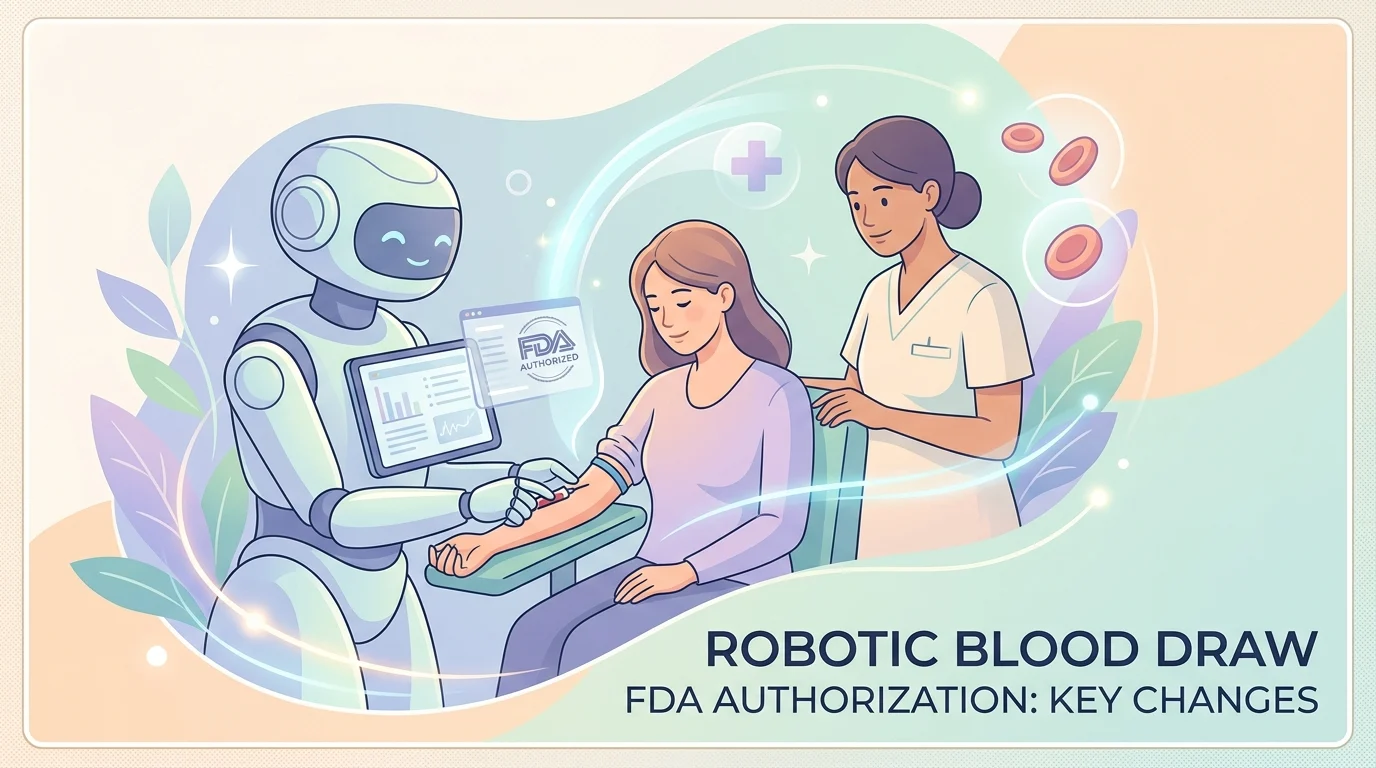
Recoltarea robotizată de sânge nu mai este un prototip de laborator: în august 2026, Administrația pentru Alimente și Medicamente din SUA (FDA) a autorizat primul dispozitiv de sine stătător capabil să recolteze sânge din brațul unui adult fără ca o mână umană să țină acul. Știrile despre această decizie au continuat pe parcursul primei săptămâni din septembrie 2026, iar întrebarea pe care și-o pun cei mai mulți oameni este simplă: o mașinărie este la fel de bună ca un om și îți afectează rezultatele? Acest articol explică ce a fost autorizat, cum funcționează dispozitivul pas cu pas, ce arată cu adevărat datele din studiile publicate și ce rămâne exact la fel odată ce eprubeta ajunge la laborator.
Ce a autorizat FDA în august 2026
Pe 19 august 2026, FDA a acordat autorizație de comercializare dispozitivului Aletta, fabricat de compania olandeză Vitestro, prin procedura De Novo. De Novo este calea utilizată pentru un tip cu adevărat nou de dispozitiv cu risc scăzut până la moderat, atunci când nu există niciun produs comparabil cu care să fie comparat. Odată cu autorizarea, agenția a stabilit controale speciale privind etichetarea, testarea performanței și testarea clinică.
Două limitări sunt importante pentru pacienți. Dispozitivul este autorizat doar pentru adulți în regim ambulatoriu, nu pentru copii și nici pentru pacienții internați în spital. Și nu funcționează fără supraveghere: un flebotomist instruit în recoltarea de sânge inițiază fiecare sesiune și rămâne disponibil pe tot parcursul acesteia. Un singur supraveghetor poate monitoriza simultan până la trei dispozitive — acesta este motivul practic pentru care FDA a justificat decizia prin lipsa flebotomiștilor calificați din Statele Unite.
Cum funcționează efectiv recoltarea robotizată de sânge
Procesul seamănă mai mult cu un bancomat automat decât cu un robot chirurgical. Dispozitivul te ghidează să îți poziționezi brațul, apoi tu sau supraveghetorul apăsați un buton pentru a începe.
- Scanează brațul cu lumină în infraroșu apropiat și ecografie Doppler pentru a găsi o venă potrivită și pentru a distinge venele de artere.
- Dacă nu este identificată nicio venă corespunzătoare, dispozitivul pur și simplu nu încearcă procedura.
- Odată ce o venă este identificată, aplică garoul, dezinfectează pielea, introduce acul, schimbă tuburile de recoltare, scoate și aruncă acul și aplică un pansament.
- Flebotomistul supervizor confirmă că tuburile au fost umplute în ordinea corectă și că fiecare este suficient de plin.
Mai multe niveluri de siguranță funcționează continuu. Dezinfectantul este aplicat pe piele în timpul scanării cu ultrasunete, dispozitivul este curățat de un profesionist instruit între pacienți, iar dacă te miști prea mult, acul se detașează automat și recoltarea se oprește. Senzorii interni pot, de asemenea, să întrerupă procedura și să alerteze supervizorul. Nimic din toate acestea nu elimină regulile de bază de pregătire pe care le cunoști deja — ghidul nostru explică procesul de recoltare a sângelui, iar un articol separat acoperă postul înainte de analizele de sânge.
Ce arată datele din studiile publicate
Decizia FDA se bazează pe date clinice, iar cel mai amplu studiu a fost publicat în Clinical Chemistry în august 2026. Pe baza articolelor regăsite pe PubMed, studiul multicentric ADOPT s-a desfășurat în departamente de flebotomie ambulatorie din Țările de Jos și a avut două părți: o comparație restrânsă a rezultatelor obținute din probe recoltate de robot și probe recoltate manual de la aceleași persoane, urmată de utilizarea de rutină într-un grup mult mai mare.
| Ce s-a măsurat | Ce a constatat studiul |
|---|---|
| Persoane studiate în utilizarea de rutină | 1.633 de pacienți ambulatorii |
| Succes la prima înțepătură, când a fost găsită o venă | Aproximativ 95 din 100 de recoltări |
| Persoane descrise ca având vene dificile | Aproximativ 93 din 100 |
| Adulți cu vârsta de 65 de ani și peste | Aproximativ 93 din 100 |
| Efecte secundare | Rare și toate ușoare |
| Durere comparativ cu o recoltare manuală | 9 din 10 persoane au raportat mai puțină durere sau aceeași |
Prima parte a studiului este cea mai importantă pentru oricine se îngrijorează în legătură cu valorile din buletin. Testele de coagulare, două enzime și numărul de trombocite au fost măsurate atât pe proba recoltată de robot, cât și pe cea recoltată manual de la aceeași persoană, și nu a apărut nicio diferență semnificativă. Pe înțelesul tuturor: metoda de recoltare nu a influențat rezultatele. Acesta este rezultatul de care are nevoie un laborator înainte să poată avea încredere într-o nouă modalitate de umplere a unui tub și este motivul pentru care autorizarea a fost posibilă. Ghidul nostru comparativ explică CBC și CMP dacă vrei să vezi care dintre acele valori apar pe un panou de rutină.
Cele mai recente progrese științifice
Trei direcții de cercetare stau la baza acestei autorizări, și fiecare merită tradusă în limbaj accesibil.
În primul rând, studiul multicentric descris mai sus. Ce s-a descoperit: un robot care alege singur vena și introduce singur acul a nimerit vena din prima tentativă cam la fel de des ca profesioniștii instruiți, inclusiv la persoanele cu vene dificile, și a produs probe care au dat aceleași valori. Ce înseamnă asta pentru tine: dacă laboratorul tău instalează unul dintre aceste dispozitive, intervalele de referință de pe raportul tău nu trebuie modificate, iar o recoltare repetată nu ar trebui să fie mai probabilă.
În al doilea rând, studii anterioare pe dispozitive automatizate mai mici. Un studiu de primă utilizare la om, realizat în 2019, a testat un dispozitiv portabil automatizat de recoltare venoasă pe 31 de voluntari și a raportat rate de succes comparabile cu standardele clinice, fiecare recoltare durând aproximativ un minut și jumătate. Ce înseamnă asta pentru tine: ideea s-a maturizat de-a lungul anilor, nu a apărut peste noapte, iar dispozitivul din 2026 reprezintă momentul în care a devenit un produs reglementat, nu un instrument de cercetare.
În al treilea rând, literatura despre frica de ace, care este principalul motiv pentru care această tehnologie este discutată și în afara cercurilor de laborator. O analiză sistematică și meta-analiză publicată în 2018 a identificat frica de ace la aproximativ 20 până la 30 de procente dintre adulții tineri, mai frecventă la femei decât la bărbați și diminuând odată cu vârsta. Un sondaj internațional amplu publicat în 2022 a constatat că, dintre persoanele care au declarat că suferă de fobie față de ace, aproximativ jumătate au spus că evitau complet recoltarea de sânge, iar alternativele neinvazive și acele mai subțiri erau schimbările pe care și le doreau cel mai mult. Ce înseamnă asta pentru tine: evitarea unei analize de sânge din cauza acului este ceva obișnuit, nu este un eșec personal și are un cost real atunci când o afecțiune rămâne nedetectată.
O precauție se aplică tuturor acestor informații. Studiul a fost desfășurat în Olanda, în mare parte de compania care a dezvoltat dispozitivul, în clinici ambulatorii care s-au oferit voluntar. Performanța în clinici obișnuite din multe țări rămâne încă de confirmat, iar niciun studiu nu demonstrează deocamdată că recoltarea robotizată îmbunătățește starea de sănătate a cuiva — doar că umple tuburile în mod fiabil.
Ce nu schimbă un robot: înțelegerea rezultatelor tale
Automatizarea acului schimbă cine îl ține, nu ce înseamnă valorile. Tubul ajunge în continuare la același analizor, aceleași intervale de referință se aplică în continuare, iar un biolog sau un medic trebuie în continuare să interpreteze raportul în contextul vârstei, sexului, tratamentului și simptomelor tale. Prin urmare, două lucruri rămân valabile.
- O valoare în afara intervalului de referință nu înseamnă automat o boală. Ghidul nostru prezintă valorile normale ale analizelor de sânge, iar un articol complementar explică rezultatele anormale ale analizelor de sânge.
- Compararea rezultatelor în timp funcționează cel mai bine în cadrul aceluiași laborator, deoarece tehnicile de dozare diferă ușor de la un loc la altul.
Merită, de asemenea, să știi ce nu acoperă această autorizație. Nu există nicio metodă fără ac: un ac intră în continuare într-o venă. Dispozitivul nu decide ce analize să efectueze și nu citește raportul. Dacă te pregătești pentru o intervenție chirurgicală, articolul nostru descrie analizele de sânge înainte de operație, iar un articol separat detaliază numărul de trombocite care apare în aproape orice set de analize.
Dacă te temi de ac: ce să spui și ce te poate ajuta
Indiferent dacă acul este ținut de o persoană sau de un dispozitiv, cel mai util lucru pe care îl poți face este să spui că ești anxios înainte de a începe recoltarea. Personalul poate astfel să schimbe abordarea, în loc să reacționeze la o problemă.
- Cere să te întinzi. Leșinul în timpul recoltării de sânge este o reacție vasovagală: sistemul nervos reacționează exagerat, tensiunea arterială și ritmul cardiac scad, iar tu îți pierzi cunoștința pentru mai puțin de un minut. Poziția culcat elimină riscul de cădere, care este de fapt cea care poate provoca o rănire.
- Recunoaște semnele de avertizare — oboseală bruscă, o senzație de căldură, paloare, greață, transpirație, vedere în tunel. Acestea apar de obicei cu 30 până la 60 de secunde înainte, timp suficient pentru a te întinde.
- Tensionează-ți mușchii. Strângerea pumnului, împletirea mâinilor și tragerea lor în direcții opuse sau încrucișarea picioarelor și strângerea lor cresc tensiunea arterială și pot preveni un episod.
- Bea apă înainte, cu excepția cazului în care ți s-a spus să ții un post complet, și nu te ridica prea repede după recoltare.
- Pentru copii, un plasture anestezic topic aplicat cu aproximativ o oră înainte de puncție este o opțiune standard; întreabă medicul prescriptor, nu laboratorul în ziua respectivă.
Un istoric de leșin merită menționat de fiecare dată, nu doar o singură dată. Și dacă frica te-a determinat să amâni o analiză prescrisă, spune și asta — este un fapt clinic, nu o mărturisire.
Glosar
| Termen | Definiție |
|---|---|
| Venipunctură | Recoltarea de sânge dintr-o venă, de obicei din interiorul cotului. Denumirea medicală pentru o recoltare standard de sânge. |
| Flebotomist | Un profesionist instruit să recolteze probe de sânge și să eticheteze și să manipuleze corect tuburile. |
| Calea De Novo | O cale de reglementare din SUA pentru un nou tip de dispozitiv cu risc scăzut până la moderat, utilizată atunci când nu există un dispozitiv comparabil cu care să fie comparat. |
| Controale speciale | Condiții pe care FDA le impune unui dispozitiv, referitoare la etichetare și la testele de performanță și clinice obligatorii. |
| Rata de succes la prima înțepătură | Proporția recoltărilor în care se obține suficient sânge la prima introducere a acului, fără o a doua încercare. |
| Ecografie Doppler | O tehnică ecografică care detectează mișcarea sângelui, prin care dispozitivul distinge o venă de o arteră. |
| Reacție vasovagală | O scădere reflexă a tensiunii arteriale și a frecvenței cardiace, declanșată adesea de ace sau de vederea sângelui, care provoacă o leșinare de scurtă durată. |
| Interval de referință | Intervalul de valori așteptat la majoritatea persoanelor sănătoase pentru un anumit test, care variază în funcție de metodă, vârstă și sex. |
| Studiu multicentric | Un studiu desfășurat simultan în mai multe centre, ceea ce face ca rezultatele să fie mai puțin dependente de obiceiurile unei singure echipe. |
Întrebări frecvente
Va schimba un robot rezultatele analizelor mele de sânge?
Studiul publicat a comparat mai multe analize efectuate pe probe recoltate de robot și pe probe recoltate manual de la aceleași persoane — timpi de coagulare, două enzime și numărul de trombocite — și nu a găsit nicio diferență semnificativă. Aceasta a fost întrebarea specifică la care laboratoarele au trebuit să răspundă înainte de a adopta această metodă, iar răspunsul a fost că modul de recoltare nu a modificat valorile. Intervalele de referință rămân, prin urmare, aceleași. Ca întotdeauna, un rezultat trebuie interpretat împreună cu istoricul tău medical și cu simptomele tale, nu de sine stătător.
Recoltarea robotizată de sânge doare mai puțin?
În cadrul studiului, nouă din zece persoane au declarat că recoltarea efectuată de robot a fost mai puțin dureroasă decât cea manuală sau aproximativ la fel; aproximativ una din cinci a descris-o ca fiind mult mai puțin dureroasă. O minoritate a considerat-o mai incomodă. Prin urmare, „mai puțin dureroasă pentru majoritatea oamenilor" este un rezumat corect, iar „nedureroasă" nu este — acul intră totuși în venă.
Poate recolta sânge dacă venele mele sunt greu de găsit?
Acesta a fost unul dintre rezultatele mai încurajatoare: în rândul persoanelor care și-au descris propriul acces venos ca fiind dificil, rata de succes la prima înțepătură a rămas peste nouă din zece, odată ce dispozitivul a identificat o venă potrivită. Precizarea importantă se află în a doua parte a acelei propoziții. Dacă scanarea nu găsește nicio venă adecvată, dispozitivul nu încearcă recoltarea, iar un cadru medical preia procedura.
Este sigur să lași o mașină să introducă un ac?
Efectele secundare înregistrate în studiu au fost rare și toate ușoare. Designul dispozitivului include, de asemenea, un ac care se detașează automat dacă te miști prea mult, senzori care pot întrerupe procedura și un supraveghetor instruit prezent pe tot parcursul. Niciun dispozitiv nu este lipsit de riscuri, dar autorizarea a necesitat dovezi că profilul de siguranță era comparabil cu cel al unei recoltări manuale.
Este disponibil în țara mea?
Decizia din august 2026 se aplică în Statele Unite, pentru adulți în regim ambulatoriu. Disponibilitatea într-o anumită clinică depinde de rețeaua de laboratoare care achiziționează și instalează dispozitivele, proces care necesită timp. În afara Statelor Unite, fiecare autoritate de reglementare decide separat, așa că întreabă direct laboratorul tău în loc să presupui.
Înseamnă că mai puțini oameni vor lucra în laboratoare?
FDA a justificat autorizarea prin lipsa de flebotomiști calificați, nu printr-un surplus. Modelul descris permite unui singur flebotomist să supravegheze până la trei dispozitive, astfel că rolul se transformă mai degrabă într-unul de supraveghere și verificare a tuburilor, fără a dispărea. Un profesionist calificat este în continuare necesar pentru fiecare sesiune.
Surse
- US Food and Drug Administration — FDA Authorizes First-Of-Its-Kind Robotic Blood Draw Device, 19 August 2026 — fda.gov
- MedlinePlus, US National Library of Medicine — Venipuncture, Medical Encyclopedia, reviewed 2025 — medlineplus.gov
- Cleveland Clinic — Vasovagal Syncope: symptoms, causes and treatment, updated 2025 — my.clevelandclinic.org
- Giesen LFP, Roest JA, Koopman FMA, et al. — Performance, Safety, and Patient Experience of an Autonomous Robotic Phlebotomy Device: A Multicenter Trial — Clinical Chemistry, 2026 — doi.org/10.1093/clinchem/hvag029
- Leipheimer JM, et al. — First-in-human evaluation of a hand-held automated venipuncture device for rapid venous blood draws — Technology, 2019 — consensus.app
- McLenon J, Rogers MAM — The fear of needles: a systematic review and meta-analysis — Journal of Advanced Nursing, 2018 — consensus.app
- Alsbrooks K, Hoerauf K — Prevalence, causes, impacts, and management of needle phobia: an international survey of a general adult population — PLOS ONE, 2022 — consensus.app
Lectură suplimentară
- Cum se face o recoltare de sânge, pas cu pas
- Postul înainte de analize: ce schimbă
- Valorile normale ale analizelor de sânge explicate
- Ce include un set complet de analize de sânge
- Analize de sânge folosite pentru investigarea oboselii
Înțelege-ți rezultatele analizelor cu AI DiagMe
Indiferent cine recoltează sângele, partea dificilă este de obicei pagina cu cifre care vine înapoi două zile mai târziu. AI DiagMe citește buletinul de analize pe care îl ai deja și îl explică pe înțelesul tău — hemoleucograma completă, profilul renal și hepatic, glicemia, colesterolul, feritina și celelalte — astfel încât să ajungi la consultație cu întrebări, nu cu anxietate. Te ajută să îți înțelegi rezultatele; nu pune diagnostice și nu înlocuiește medicul tău.
Obține interpretarea rezultatelor în câteva minute