What is platelet distribution width (PDW)?
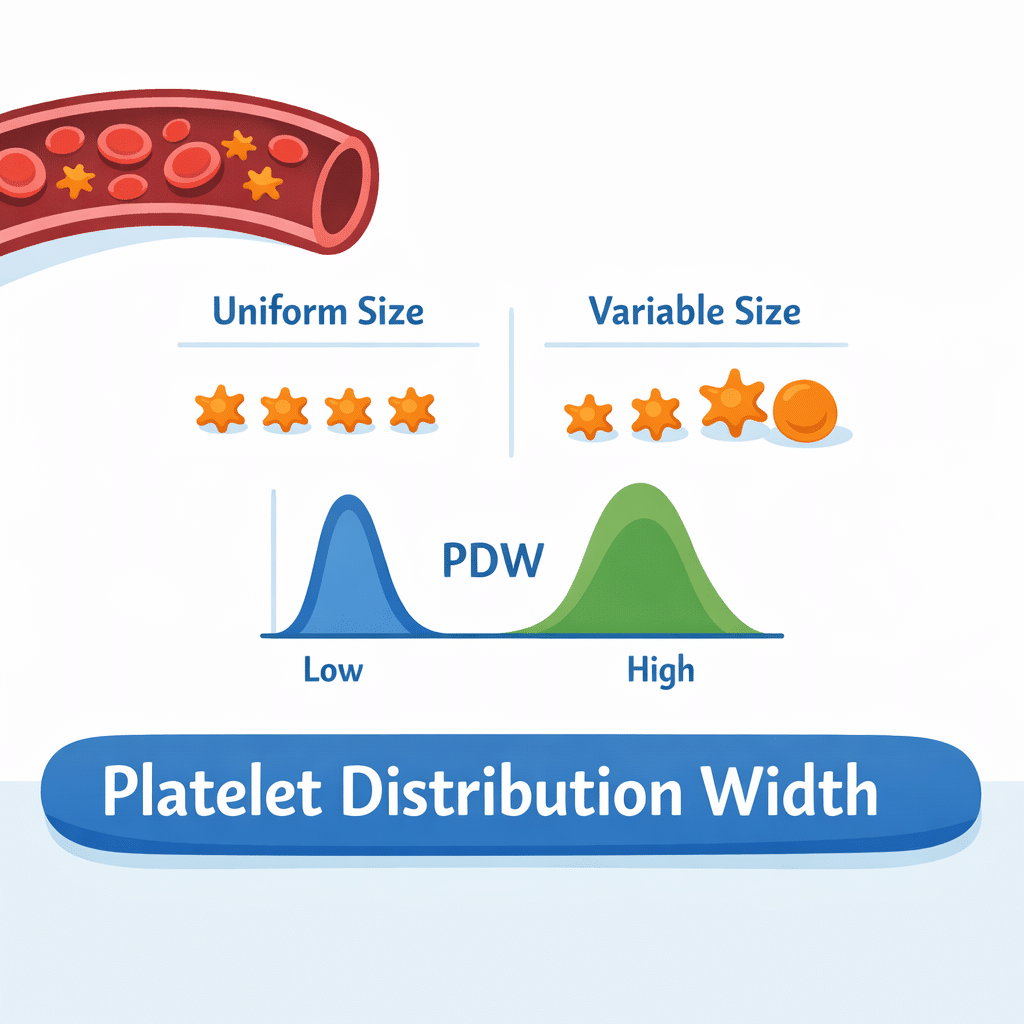
Platelet Distribution Width, or PDW, is a standard blood parameter. It specifically measures the variation in the size of your platelets. Platelets are tiny cells that circulate in your blood. Therefore, this indicator assesses whether your platelets are all similar in size or if they vary significantly.
The vital role of platelets
Platelets, also known as thrombocytes, are small blood cells produced by the bone marrow. They play a crucial part in hemostasis, which is the process of blood clotting. They act as “repair agents” by plugging gaps when a blood vessel is damaged. Without effective platelets, even a simple cut could lead to complications.
How the PDW blood test reflects bone marrow activity
When a doctor reviews your PDW, they are seeking information about the functioning of your bone marrow. Platelets that have widely varying sizes can suggest that your bone marrow is working intensively. It might be producing new platelets rapidly. This often means a specific mechanism is stimulating this accelerated production.
How results are expressed
PDW is usually expressed as a percentage. It reflects the coefficient of variation in platelet size. Imagine lining up all your platelets by size. The PDW would indicate how uniform that line is. A relatively straight line signifies a low PDW, while a highly irregular line means a high PDW. The body typically produces platelets of a fairly uniform size. Consequently, significant variation can be an early indicator of various medical conditions.
Why is understanding your platelet distribution width important?
Understanding your PDW is highly informative. This indicator can act as an early warning system for your cardiovascular and hematological health. If platelets are the workers of clotting, the PDW is their performance report.
An early barometer of your health status
Over the last two decades, medical research has highlighted the importance of the PDW blood test. Once considered a secondary parameter, it is now recognized as a significant biomarker. It helps in the evaluation of many conditions. In fact, studies show that PDW can change even before the total platelet count does, offering an earlier window for intervention.
Evolving medical recognition of the PDW test
A prolonged, undetected PDW abnormality can have consequences, particularly for your circulatory system. For example, a persistently high PDW is linked to a higher risk of cardiovascular events in certain populations. Some studies have found that patients with an elevated PDW may have a greater risk of thrombotic complications.
Interactions with bodily systems
PDW also interacts with other systems in your body. For instance, chronic inflammation can affect platelet production, which in turn alters the PDW. Conversely, platelets that vary in size can influence the inflammatory response. This can create a cycle that may impact your overall immunity. In practice, a primary care physician uses the PDW as one piece of a larger diagnostic puzzle.
Reading and interpreting your PDW blood test results
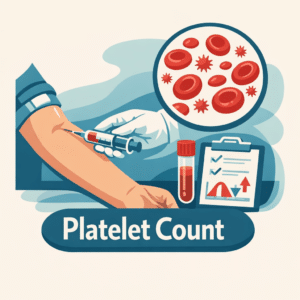
When you receive your lab report, the PDW value usually appears in a specific section. Look for headings like “Platelet Count” or “Platelet Parameters.”
Finding the value on your report
On your lab report, you might see a line like: “PDW: 16.4% (Reference Range: 9.0–17.0%).” Laboratories often use color coding to highlight results. Green or no color typically indicates a normal value, while red signals a value outside the reference limits. An asterisk (*) or an arrow (↑ or ↓) may also appear next to abnormal results.
Decoding reference ranges
Laboratories determine PDW reference values by analyzing results from a large population of healthy individuals. These reference intervals may vary slightly between labs, often due to the equipment used. Typically, the normal range is between 9% and 17%. It is important to note that age and sex can influence these ranges. For example, women and older adults may have slightly different intervals.
Keys for a meaningful personal analysis
Here are some tips for interpreting your blood test results:
- First, identify any parameters marked in red or with symbols.
- Check if your PDW is high (>17%) or low (<9%).
- Then, look at the total platelet count and the Mean Platelet Volume (MPV) at the same time.
- Note any trends if you have previous results for comparison.
- Finally, consider your personal context, such as medications or chronic conditions.
Remember that interpreting a single parameter in isolation has limited value. The overall clinical picture, which includes your symptoms and medical history, is what truly matters for a meaningful evaluation.
PDW vs MPV vs platelet count: how these three platelet parameters work together
A complete blood count (CBC) usually shows three platelet-related numbers, not just one. Each tells you something different, and looking at them together gives a clearer picture than any single value on its own.
A quick comparison of the three
| Parameter | Ce măsoară | Typical normal range* | What it can suggest |
|---|---|---|---|
| Numărul de trombocite | The total number of platelets in a sample of blood | 150,000–400,000 per microliter | Too few platelets (thrombocytopenia) or too many (thrombocytosis) |
| MPV (mean platelet volume) | The average size of your platelets | 7–9 femtoliters (fL) | Whether your platelets tend to be larger than usual — large platelets are often younger and more active |
| PDW (platelet distribution width) | The variation in platelet size from one platelet to another | 9–17% | Whether your platelets are uniform in size or vary widely, which can reflect active production in the bone marrow |
*Reference ranges vary slightly between laboratories and may be different for children, older adults, or during pregnancy.
Why reading them together is more useful
A single value taken on its own can be misleading. When doctors look at the three platelet parameters side by side, certain patterns become more meaningful. Some examples often discussed in the medical literature:
- Normal platelet count + high PDW + high MPV: the bone marrow may be releasing many young, larger platelets, a pattern sometimes seen after bleeding or in some inflammatory conditions.
- Low platelet count + high PDW: can occur in immune thrombocytopenia, a condition where platelets are destroyed quickly and the body responds by making new, larger ones.
- High platelet count + normal PDW: often points to reactive thrombocytosis, for example during an infection or inflammation.
- High platelet count + high PDW: more suggestive of a primary bone marrow disorder, such as essential thrombocythemia.
What this means for you
You do not need to interpret these patterns on your own. Bring all three values, along with the rest of your CBC, to your healthcare provider. They can read them in light of your symptoms, medical history, medications, and any other tests you have had. If something stands out, your provider may suggest repeating the test in a few weeks or doing additional checks before drawing any conclusions.
Conditions and variations of platelet distribution width
Variations in platelet distribution width can signal different medical situations. It is crucial to understand what these changes might mean.
What does a high PDW mean?
When your PDW exceeds the normal range, it often indicates that platelet production is active and possibly irregular. The main causes include:
- Immune Thrombocytopenia: In this condition, the immune system destroys platelets, forcing the bone marrow to make new ones quickly. These young platelets are often larger, increasing size variability and raising the PDW.
- Deficiency Anemias: A lack of iron, vitamin B12, or folate (B9) can disrupt the production of all blood cells, including platelets. This alters cell maturation in the bone marrow, resulting in irregularly sized platelets.
- Myeloproliferative Syndromes: These rare disorders trigger excessive, uncontrolled blood cell production. The resulting platelets are often dysfunctional and vary in size.
- Recovery After Hemorrhage: After major blood loss, the body speeds up platelet production to restore balance. This rapid production leads to platelets of varying sizes. This change is usually temporary and normalizes over time.
What does a low PDW blood test indicate?
A below-normal PDW indicates a very homogeneous platelet population. While this might seem good, it can sometimes reflect dysfunction. Potential causes are:
- Certain Chronic Inflammatory Diseases: Ongoing inflammation can standardize platelet production, resulting in cells that are uniform but possibly less effective.
- Thrombotic Microangiopathies: These severe but rare conditions consume small platelets in tiny clots, which leaves a more homogeneous population of larger platelets in circulation.
- Chemotherapy: Certain chemotherapy agents can directly affect platelet precursors. This often results in a reduced but homogeneous platelet population.
A clinical example illustrates this well. A 42-year-old woman reported fatigue and frequent bruising. Her bloodwork showed a PDW of 19.2% (high). Her platelet count was normal. Further investigation revealed an iron deficiency. This demonstrates how the PDW can be an early indicator, sometimes before other blood counts change.
How to respond to an abnormal result
If your platelet distribution width is abnormal, a clear action plan can be helpful.
When and how to react
- Slightly Abnormal PDW (±2% outside range): It is often sufficient to repeat the analysis in 2–3 months. Document any new symptoms during this time.
- Moderately Abnormal PDW (±5% outside range): A medical consultation within the month is recommended. Your doctor will likely plan a repeat test in 4–6 weeks.
- Severely Abnormal PDW (>8% outside range): You should consult a doctor within the week. Further investigations will likely be planned promptly.
Adapting your diet and lifestyle
For an elevated PDW potentially linked to nutritional deficiencies, consider increasing your intake of iron, vitamin B12, and folates. If inflammation is a concern, an anti-inflammatory diet rich in omega-3s and antioxidants may be beneficial.
Lifestyle also plays a role. Managing stress, ensuring restful sleep, and avoiding tobacco can support healthy platelet function. If your PDW anomaly is linked to a low platelet count (thrombocytopenia), you should avoid contact sports due to an increased risk of bleeding. Regular, moderate activities like walking or swimming are preferable.
When to consult a specialist
You should see a hematologist promptly if your abnormal PDW is accompanied by:
- Unexplained bleeding (nose, gums).
- Spontaneous or disproportionate bruising.
- Severe and persistent fatigue.
- Unexplained fever.
On the other hand, simple monitoring with your primary doctor may be enough if the PDW anomaly is mild and you have no symptoms.
Frequently asked questions about the PDW blood test
Here are answers to some common questions about platelet distribution width.
Can PDW vary naturally throughout the day?
Unlike some markers, PDW remains quite stable during the day. However, minor variations of about ±1% can occur. Hydration, recent physical activity, or acute stress may play a small role. For the most accurate measurement, blood should be drawn in the morning from a fasting and resting individual.
Is there a link between the PDW blood test and cardiovascular risk?
Yes, recent research has established a connection. A high PDW is associated with an increased risk of cardiovascular events. This is because platelets of different sizes are often more reactive and prone to forming clots. This link can exist independently of classic risk factors.
How do anticoagulants affect PDW?
Most anticoagulants, like warfarin or direct oral anticoagulants (DOACs), do not directly affect PDW because they act on clotting factors, not platelets. However, anti-platelet drugs like aspirin can influence platelet dynamics and may indirectly change the PDW over time. Always inform your doctor and the lab of any medications you are taking.
Is the PDW blood test used to monitor treatment?
Yes, PDW is a useful biomarker for tracking treatment response in several hematological diseases. For example, in immune thrombocytopenia, a normalizing PDW can be an early sign of effective treatment, sometimes appearing before the platelet count returns to normal.
Does a normal PDW exclude all platelet function disorders?
No, a normal PDW does not rule out qualitative platelet issues. Conditions like von Willebrand disease can impair platelet function without changing platelet size. Therefore, specialized functional tests may be necessary if a platelet disorder is suspected despite a normal PDW.
Do PDW reference ranges differ by ethnicity?
Studies have found small but significant variations. For example, slightly higher mean values are often observed among individuals of African descent compared to Caucasian or Asian populations. These differences likely reflect genetic variations in platelet production, highlighting the need for contextual interpretation.
Does the PDW test help distinguish types of thrombocytosis?
Yes, the PDW is particularly helpful for this distinction. In reactive thrombocytosis (high platelets due to inflammation or infection), the PDW is often normal. In contrast, in neoplastic thrombocytosis (e.g., essential thrombocythemia), the PDW is typically high, reflecting unregulated production.
Conclusion
Platelet Distribution Width (PDW) is much more than just a number on your blood test. It provides a real window into the health of your hematological system. This article has explored how this parameter reflects the diversity in platelet size and helps guide diagnosis.
Key Takeaways:
- The PDW blood test measures variability in platelet size, which sheds light on bone marrow activity.
- An abnormal PDW can flag potential issues, sometimes before your platelet count changes.
- You should always interpret results in context with other markers and your medical history.
- A wide range of conditions, from nutrient deficiencies to complex diseases, can affect PDW.
- Diet and lifestyle changes can positively influence your values in some cases.
Preventive medicine is evolving. Markers like PDW are gaining importance as we learn more about their predictive power. Don’t let your blood test results be a source of confusion. Take charge of your health information by understanding what the numbers mean. Interpretation platforms can help turn your lab data into actionable insights, empowering you to participate actively in your healthcare.
Surse
- Overview of Platelet Physiology and Platelet Indices (PMC, NIH)
- Complete Blood Count (CBC) — Cleveland Clinic
- Complete blood count (CBC) — Mayo Clinic
Lecturi suplimentare
- High MPV: causes, symptoms and risks
- RDW blood test explained: what your red cell size variation means
Înțelege-ți analizele de laborator cu AI DiagMe
Understanding a PDW value usually means looking at the rest of your blood test as well. Related measurements often include your complete blood count (CBC), your platelet count, your mean platelet volume (MPV), and inflammation markers such as CRP (C-reactive protein). AI DiagMe can help you make sense of these numbers in plain language, so you know what they may suggest and what to discuss with your doctor.
➡️ Obține interpretarea analizelor în câteva minute