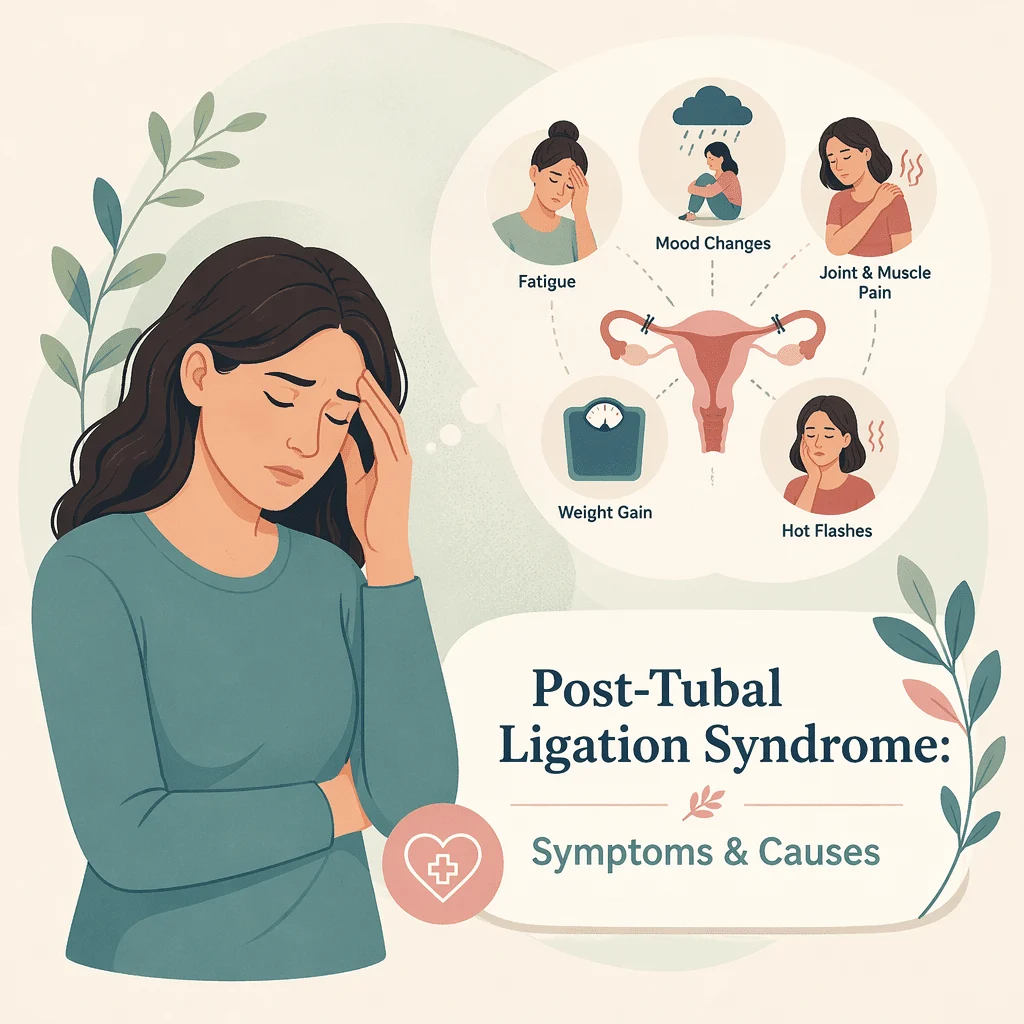
Sindromul post-ligatură tubară este numele pe care femeile îl dau unui grup de simptome — menstruații mai abundente, crampe, bufeuri, schimbări de dispoziție, libido scăzut, oboseală — care apar în lunile de după sterilizarea tubară. Nu este un diagnostic medical recunoscut, iar studiile mai ample care au căutat un sindrom hormonal distinct după această procedură nu l-au găsit. Asta nu înseamnă că simptomele sunt imaginare. Înseamnă că eticheta rareori indică adevărata cauză, iar adevărata cauză este de obicei identificabilă și tratabilă.
În acest articol vei afla ce modifică și ce nu modifică o ligatură tubară la nivelul ovarelor, care explicații acoperă cel mai bine ceea ce relatează femeile, ce analize de laborator pot diferenția aceste explicații între ele și care semne de alarmă necesită atenție medicală în aceeași zi, nu o abordare de tip „așteptăm și vedem".
De ce sindromul post-ligatură tubară nu este un diagnostic oficial
Niciun sistem de clasificare medicală nu recunoaște sindromul post-ligatură tubară ca afecțiune. Nu are o definiție agreată, nu are criterii de diagnostic și nu există niciun test care să îl confirme. Ideea a prins contur cu decenii în urmă, când tehnicile de sterilizare distrugeau mult mai mult țesut decât cele moderne, iar femeile operate erau rareori comparate cu femei similare care nu suferiseră intervenția.
Când cercetătorii au realizat în cele din urmă aceste comparații, imaginea s-a schimbat. Marile centre medicale afirmă acum clar că procedura nu modifică ciclul menstrual. Johns Hopkins Medicine le spune pacientelor că vor continua să aibă menstruație și viață sexuală ca înainte. Mayo Clinic precizează direct că ligatura tubară nu afectează ciclul menstrual.
Ce anume greșește această etichetă
A numi un set de simptome „sindrom" implică existența unui mecanism unic. Aici nu există niciunul stabilit. Mai mult, odată ce o femeie și medicul ei se fixează pe eticheta de sindrom, căutarea se oprește de obicei — iar o afecțiune tiroidiană, o deficiență de fier sau o problemă uterină care ar fi răspuns la tratament rămâne neabordată ani de zile.
Ce anume surprinde corect această etichetă
Ceva s-a schimbat cu adevărat pentru multe dintre aceste femei, iar momentul nu este o coincidență. Greșeala este să presupunem că intervenția chirurgicală în sine a cauzat totul. De obicei, mai multe lucruri se întâmplă simultan în jurul unei sterilizări, iar descâlcirea lor este munca utilă.
Ce modifică efectiv o ligatură tubară
Procedura pe înțelesul tuturor
O ligatură tubară blochează, taie, sigilează sau clipsează trompele uterine, astfel încât ovulul și spermatozoidul să nu se poată întâlni. Ovarele rămân la locul lor. Uterul rămâne la locul lui. Nu se îndepărtează nimic din ceea ce produce estrogen sau progesteron.
Ovarele tale continuă să funcționeze
Acesta este miezul dezbaterii. Îngrijorarea a fost întotdeauna că operarea în apropierea trompelor ar putea perturba micile vase care trec prin țesutul ce leagă trompa de ovar, reducând fluxul sanguin și producția de hormoni. Tehnicile moderne rămân aproape de trompa în sine, departe de acea rețea vasculară. Ovarele tale continuă să elibereze ovule și să producă hormoni în același ritm ca întotdeauna; ovulul este pur și simplu reabsorbit în loc să parcurgă trompa.
Deoarece ovarele continuă să funcționeze, tabloul hormonal rămâne același. Ghidul nostru îți explică markerul hormonal estradiol dacă vrei să vezi cum este interpretat efectiv acel hormon.
Ligatura versus îndepărtarea trompelor
Mulți chirurgi aleg acum să îndepărteze complet trompele uterine în loc să le lege, o intervenție numită salpingectomie oportunistă. Motivul nu este contraceptiv: se consideră acum că majoritatea cazurilor de cancer ovarian de tip comun își au originea în trompa uterină, astfel că îndepărtarea acesteia reduce riscul respectiv. Biblioteca noastră acoperă și simptomele și testele pentru cancerul ovarian.
Ce descriu femeile după intervenție
Relatările sunt remarcabil de consistente, tocmai de aceea merită să fie investigate, nu ignorate:
- Menstruații mai abundente, mai lungi sau mai dureroase decât înainte
- Cicluri care au devenit neregulate sau imprevizibile
- Crampe și dureri pelviene între menstruații
- Bufeuri și transpirații nocturne
- Schimbări de dispoziție, iritabilitate, stare depresivă sau anxietate
- Scăderea dorinței sexuale
- Oboseală persistentă care nu dispare după somn
- Dureri de cap, dureri articulare sau modificări în greutate
Citește din nou această listă și ceva devine evident: este aproape identică cu lista simptomelor de perimenopauză, cu cea pentru hipotiroidism și cu cea pentru deficiența de fier. Această suprapunere este tocmai problema — și totodată oportunitatea.
Explicațiile care justifică majoritatea acestor simptome
Ai oprit contracepția hormonală în același timp
Aceasta este cea mai importantă explicație și, totodată, cea mai des trecută cu vederea. Femeile care aleg sterilizarea opresc de obicei pilula, plasturele, inelul, injecția sau steriletul hormonal în aceeași săptămână. Aceste metode subțiau mucoasa uterină, reduceau sângerarea, atenuau crampele și impuneau un ciclu regulat — uneori timp de cincisprezece sau douăzeci de ani.
Odată ce renunți la ele, ciclul tău revine la ce ar fi fost oricum, la vârsta pe care o ai acum. Menstruațiile devin mai abundente pentru că nu mai sunt suprimate. Crampele revin pentru că hormonul care le atenua a dispărut. Dispoziția și libidoul se schimbă pentru că doza zilnică constantă s-a oprit. Nimic din toate acestea nu reprezintă o consecință a intervenției chirurgicale. Este efectul renunțării la un tratament pe care îl uitaseși că era un tratament.
Vârsta face ce face vârsta
Majoritatea sterilizărilor au loc între mijlocul anilor treizeci și mijlocul anilor patruzeci — exact fereastra în care începe tranziția spre menopauză. Ciclurile se scurtează, apoi se lungesc, sângerarea devine imprevizibilă, apar bufeurile, somnul se fragmentează. Echipa noastră îți explică simptomele și etapele menopauzei în detaliu și acoperă și cauzele grețurilor din perimenopauză, una dintre caracteristicile sale mai puțin discutate.
Dacă ai folosit contracepție hormonală până la sfârșitul anilor treizeci, este posibil ca aceasta să fi mascat complet primii ani ai acestei tranziții. Oprirea ei nu declanșează perimenopauza; o dezvăluie.
Tiroida ta poate fi dezechilibrată
Bolile tiroidiene sunt frecvente la femeile de această vârstă și produc aproape fiecare simptom de pe listă: menstruații abundente sau neregulate, oboseală, schimbări de dispoziție, variații în greutate, intoleranță la temperaturi. Este și unul dintre lucrurile cel mai ușor de verificat și tratat. Ghidul nostru explică valorile normale ale hormonilor tiroidieni, iar biblioteca noastră acoperă simptomele și tratamentul hipotiroidismului.
Sângerările mai abundente ți-au epuizat fierul
Dacă menstruațiile au devenit mai abundente după oprirea contracepției, este posibil să pierzi lunar mai mult fier decât reușești să înlocuiești. Deficiența de fier provoacă epuizare, dificultăți de respirație, concentrare slabă, căderea părului și dispoziție scăzută cu mult înainte de a cauza anemia clasică. Echipa noastră explică cauzele feritinei scăzute și descrie simptomele și cauzele anemiei.
O afecțiune uterină era deja prezentă
Adenomioza, fibroamele și endometrioza cauzează toate menstruații abundente și dureroase, iar contracepția hormonală este un tratament standard pentru toate trei. Oprește tratamentul și afecțiunea devine din nou vizibilă. Nu a fost cauzată de intervenție; era suprimată până în săptămâna intervenției. Biblioteca noastră acoperă diagnosticul și tratamentul endometriozei.
Decizia în sine are o greutate
Sterilizarea este menită să fie permanentă, iar permanența are un cost psihologic de care nimeni nu ar trebui să se rușineze. Unele femei simt ușurare. Altele simt durere, sau senzația că o ușă se închide, sau o suferință reînnoită dacă decizia a fost luată sub presiune, în timpul unei nașteri dificile sau la o vârstă foarte tânără. Aceasta nu este slăbiciune și nu este imaginară — dispoziția scăzută, somnul prost și libidoul redus sunt expresia fizică obișnuită a acesteia și merită să fie numite cu voce tare în fața medicului tău.
Potrivirea a ceea ce observi cu ce merită verificat mai întâi
Folosește aceasta ca punct de plecare pentru conversație, nu ca autodiagnostic. Ordinea corectă a testelor depinde de vârsta ta, istoricul tău medical și examinarea ta.
| Ce observi | Explicații care merită verificate mai întâi | Ce ajută de obicei la clarificare |
|---|---|---|
| Menstruații mult mai abundente sau mai lungi decât înainte | Revenirea la ciclul natural după oprirea contracepției hormonale; fibroame sau adenomioză; tulburare tiroidiană | Jurnal de ciclu, hemoleucogramă completă cu feritină, panel tiroidian, ecografie pelvină |
| Cicluri neregulate sau absente | Perimenopauză; tulburare tiroidiană; sarcină | Test de sarcină mai întâi, apoi panel tiroidian, apoi FSH cu estradiol |
| Bufeuri și transpirații nocturne | Perimenopauză; pierderea dozei hormonale constante din pilulă, plasture sau inel; hipertiroidism | FSH și estradiol sincronizate cu ciclul tău, panel tiroidian |
| Oboseală constantă pe care somnul nu o rezolvă | Deficit de fier din cauza sângerărilor mai abundente; tulburare tiroidiană; somn perturbat | Hemoleucogramă completă, feritină, panel tiroidian |
| Durere pelvină sau crampe care se agravează | Adenomioză, fibroame sau endometrioză dezvăluite după oprirea contracepției hormonale | Examen pelvin și ecografie, trimitere la ginecologie |
| Libido scăzut sau schimbări de dispoziție | Oprirea contracepției hormonale; perimenopauza; greutatea emoțională a unei decizii permanente; anemie sau boală tiroidiană netratată | Panel tiroidian, hemoleucogramă completă cu feritină, o discuție deschisă despre starea de spirit și suport |
| O menstruație întârziată sau durere pelvină pe o singură parte | Sarcină, inclusiv sarcină ectopică | Test de sarcină astăzi și consultație medicală în aceeași zi |
Analizele de laborator care separă posibilitățile
Aici un sindrom inexplicabil devine un răspuns. Patru grupe de analize fac cea mai mare parte din treabă.
Funcția tiroidiană
TSH cu T4 liber este de obicei primul test, deoarece boala tiroidiană imită aproape întreaga listă de simptome și răspunde bine la tratament.
Hemoleucogramă completă și feritină
Dacă sângerările au devenit mai abundente, aceste două analize arată dacă pierzi mai mult fier decât înlocuiești. Feritina scade înainte de hemoglobină, astfel că depistează problema devreme — o hemoleucogramă normală cu feritină scăzută este o descoperire frecventă și foarte tratabilă. Echipa noastră explică cum să citești o hemogramă completă.
Un test de sarcină
Orice menstruație întârziată sau neobișnuită după o ligatură tubară justifică un test, chiar și la ani distanță și chiar dacă ți s-a spus că procedura este permanentă. Ghidul nostru explică cum să interpretezi un test de sarcină de acasă, iar biblioteca noastră analizează cauzele unei menstruații întârziate cu cinci zile.
FSH și estradiol
Când perimenopauza este întrebarea, aceste două analize citite împreună oferă cea mai clară imagine, interpretate alături de vârsta ta și tiparul ciclului, nu în izolare. Echipa noastră detaliază rolul hormonului foliculostimulant.
Ce poate și ce nu poate să îți spună AMH
Hormonul anti-Müllerian estimează cât de mare este rezerva ta de ovule rămase. Împreună cu FSH, conturează rezerva ovariană, ceea ce oferă un context util. Niciun test nu prezice data ultimei tale menstruații și nicio combinație a lor nu face asta. Fii precaută cu orice serviciu care îți oferă să îți spună exact când vei ajunge la menopauză.
Semne de alarmă care necesită evaluare urgentă
Majoritatea simptomelor după o sterilizare nu sunt urgențe. Acestea sunt.
- O menstruație întârziată sau un test de sarcină pozitiv după o ligatură tubară. Sterilizarea poate eșua, rar, iar atunci când apare o sarcină ulterior, există șanse mult mai mari să fie ectopică — implantată în afara uterului, de obicei într-o trompă. Consultă un medic în aceeași zi.
- Durere pelviană sau abdominală pe o singură parte, cu sau fără sângerare, la o persoană care ar putea fi însărcinată. O sarcină ectopică este o urgență medicală și poate pune viața în pericol dacă trompa se rupe. Nu aștepta să vezi dacă trece de la sine.
- Durere în vârful umărului, senzație de leșin, amețeală sau pierderea cunoștinței însoțite de durere pelviană. Mergi imediat la urgențe.
- Sângerare suficient de abundentă încât să îmbibi un absorbant sau un tampon la fiecare oră, timp de mai multe ore, sau eliminarea unor cheaguri mari.
- Febră, durere care se agravează sau roșeață și secreții la nivelul inciziei în zilele de după intervenție.
Cele mai recente progrese științifice
Cercetările recente s-au îndepărtat de căutarea unui sindrom hormonal și s-au concentrat pe două întrebări mai utile: îndepărtarea sau blocarea trompelor afectează ovarele și cum se simt femeile în legătură cu decizia luată ulterior? Iată ce au adăugat ultimii trei ani, pe înțelesul tuturor.
Îndepărtarea trompelor nu pare să afecteze ovarele
Un studiu clinic randomizat publicat în 2026 a urmărit femei cărora li s-au îndepărtat ambele trompe pentru contracepție permanentă și le-a măsurat rezerva ovariană — dimensiunea rezervei de ovule rămase — înainte de operație și la trei luni după, folosind un marker sanguin și o numărătoare ecografică a foliculilor mici. Niciunul dintre indicatori nu a scăzut, indiferent de calea chirurgicală folosită. Ce înseamnă asta pentru tine: operația care îndepărtează mai mult țesut decât o ligatură tubară clasică a lăsat totuși ovarele măsurabil intacte. A fost un studiu mic și de scurtă durată, deci rezultatele sunt încurajatoare, nu definitive.
Un al doilea studiu din 2026 a analizat femei cărora li s-a îndepărtat uterul împreună cu ambele trompe și a constatat că unii markeri hormonali s-au modificat la trei luni, în timp ce numărul foliculilor a rămas stabil — și, în mod notabil, simptomele menstruale s-au ameliorat. Ce înseamnă asta pentru tine: a fost o operație mult mai amplă decât o sterilizare, deci rezultatele nu se aplică direct, dar chiar și în acel caz tabloul ovarian a fost mixt, nu clar afectat.
Îndepărtarea trompelor a devenit abordarea preferată
O analiză din 2025 privind contracepția permanentă descrie cum îndepărtarea trompelor uterine a devenit metoda preferată față de ligaturarea lor, în principal pentru că se crede acum că majoritatea cazurilor de cancer ovarian cel mai frecvent întâlnit își au originea în trompă. Ce înseamnă asta pentru tine: dacă te gândești la sterilizare, aceasta este o întrebare specifică pe care merită să o adresezi chirurgului tău.
Aproximativ una din cinci femei regretă ulterior decizia
O analiză a datelor dintr-un sondaj reprezentativ la nivel național în Statele Unite, acoperind perioada 2006–2023, a constatat că aproximativ una din cinci femei care au suferit o sterilizare tubară a declarat ulterior că și-ar dori să fie reversată — față de aproximativ una din patru în 2006. Mai puțin de una din o sută dintre aceste femei a apelat efectiv la o intervenție de reversare. Regretul a fost mai frecvent în rândul femeilor sterilizate înainte de 30 de ani, al celor fără copii și al celor cu venituri mici. Ce înseamnă asta pentru tine: dacă simți regret, nu ești singură — este un rezultat recunoscut, nu un eșec personal, și merită sprijin real, nu tăcere.
Sterilizarea este foarte eficientă, dar nu absolută
Un comentariu din 2024 publicat în NEJM Evidence a reexaminat cât de eficientă este cu adevărat sterilizarea tubară modernă și a concluzionat că sarcinile apărute ulterior sunt mai puțin rare decât sunt lăsate să creadă multe femei. Ce înseamnă asta pentru tine: acest lucru nu face din sterilizare o alegere proastă — rămâne una dintre cele mai eficiente metode disponibile. Înseamnă că o întârziere a menstruației după intervenție trebuie testată, nu ignorată.
Glosar
| Termen | Definiție |
|---|---|
| Ligatura tubară | O procedură care blochează, taie sau sigilează trompele uterine, astfel încât ovulul și spermatozoizii nu se pot întâlni. Ovarele și uterul rămân la locul lor. |
| Salpingectomia | Îndepărtarea completă a trompelor uterine, în loc de ligaturarea lor. Este adesea preferată în prezent deoarece reduce și riscul unui anumit tip de cancer ovarian. |
| Rezerva ovariană | Rezerva ovariană reprezintă totalul ovulelor rămase în ovare. Este estimată prin analize de sânge și numărătoare ecografică, niciodată măsurată direct. |
| AMH (hormonul anti-Müllerian) | Un marker sangvin produs de foliculii ovarieni mici. Reflectă dimensiunea rezervei de ovule rămase, dar nu poate prezice când va apărea menopauza. |
| FSH (hormonul foliculostimulant) | Un hormon hipofizar care crește pe măsură ce ovarele devin mai puțin receptive. Este unul dintre markerii folosiți atunci când se pune întrebarea perimenopauzei. |
| Numărul de foliculi antrali | O numărătoare ecografică a micilor saci plini cu lichid vizibili în ovare la începutul ciclului, utilizată împreună cu AMH pentru a estima rezerva ovariană. |
| Perimenopauza | Tranziția de câțiva ani dinaintea opririi definitive a menstruației, caracterizată prin fluctuații hormonale, cicluri neregulate și bufeuri. |
| Adenomioza | O afecțiune în care țesutul mucoasei uterine crește în peretele muscular al uterului, cauzând adesea menstruații abundente și dureroase. |
| Feritină | Marker-ul sanguin care reflectă rezervele de fier din organism. Scade înainte de hemoglobină, dezvăluind astfel deficiența de fier din timp. |
| Sarcina ectopică | O sarcină care se implantează în afara uterului, cel mai adesea într-o trompă uterină. Este o urgență medicală. |
Întrebări frecvente
Sindromul post-ligatură tubară este un diagnostic real?
Este o descriere reală a unor simptome reale, dar nu este un diagnostic oficial. Niciun sistem de clasificare nu îl recunoaște, nu există criterii de diagnostic, iar studiile care au comparat femei sterilizate cu femei similare nesterilizate nu au identificat un sindrom hormonal distinct. Simptomele merită totuși o investigație corespunzătoare — de obicei au o cauză diferită, care poate fi identificată.
Cât durează simptomele după o ligatură tubară?
Depinde în totalitate de cauza lor. Vânătăile și durerile de la operație dispar în câteva săptămâni. Modificările ciclului menstrual care apar după oprirea contracepției hormonale durează adesea trei până la șase luni până se stabilizează, iar noul tipar poate persista, deoarece este cel natural al tău. Simptomele cauzate de o afecțiune tiroidiană sau de deficiența de fier continuă până când aceste probleme sunt tratate, după care se ameliorează. Simptomele legate de perimenopauză urmează tranziția în sine. De aceea, identificarea cauzei contează mai mult decât simpla așteptare.
Cât de frecvent este sindromul post-ligatură tubară?
Nu există o cifră semnificativă privind prevalența, deoarece nu există o definiție agreată pe baza căreia să se facă numărătoarea. Ceea ce se poate măsura este cât de des raportează femeile simptome noi după sterilizare și cât de des aceste simptome sunt explicate de altceva — cel mai adesea de oprirea contracepției hormonale, de tranziția spre menopauză, de o afecțiune tiroidiană sau de deficiența de fier.
Poate un test confirma sindromul post-ligatură tubară?
Niciun test nu îl poate confirma, deoarece nu există o afecțiune definită care să fie confirmată. Testele sunt totuși utile, dar în sens invers: un panel tiroidian, o hemogramă completă cu feritină, un test de sarcină și markeri hormonali precum FSH și estradiol îi permit medicului tău să excludă sau să confirme explicații una câte una, în loc să rămâi cu o etichetă și fără un plan.
Ligatura tubară cauzează creștere în greutate?
Nu există dovezi că procedura în sine cauzează creștere în greutate. Modificările de greutate din aceeași perioadă sunt de obicei explicate de altceva: oprirea contracepției hormonale, o tiroidă hipoactivă, schimbările metabolice ale perimenopauze sau tendința obișnuită de creștere în greutate din perioada de la mijlocul anilor treizeci până la mijlocul anilor patruzeci. Un panel tiroidian este o primă verificare rezonabilă.
Poate ligatura tubară să declanșeze menopauza precoce?
Ovarele nu sunt îndepărtate și continuă să funcționeze, deci procedura nu declanșează menopauza. Ce se întâmplă frecvent este că o femeie renunță în același timp la contracepția hormonală și descoperă că se află deja în perimenopauză — contracepția o mascase. Dacă apar bufeuri, transpirații nocturne sau cicluri neregulate, FSH și estradiolul interpretate împreună cu vârsta și tiparul ciclului tău vor ajuta la clarificarea situației.
Surse
- MedlinePlus Medical Encyclopedia — Tubal ligation — U.S. National Library of Medicine, 2025 — medlineplus.gov
- Mayo Clinic — Tubal ligation: what you can expect — Mayo Foundation for Medical Education and Research — mayoclinic.org
- Johns Hopkins Medicine — Tubal Ligation — Health Library — hopkinsmedicine.org
- Centers for Disease Control and Prevention — Contraception and Birth Control Methods — cdc.gov
- MedlinePlus — Ectopic Pregnancy — U.S. National Library of Medicine — medlineplus.gov
- Yildiz E, Coskun ES, Timur GY, et al. — When Performing vNOTES Salpingectomy, Are We Damaging the Ovarian Reserve? Results From a Randomized, Controlled Trial — Journal of Minimally Invasive Gynecology, 2026 — doi.org/10.1016/j.jmig.2026.02.009
- Radu T, Mar M, Gliga M, Marginean C — The Impact of Bilateral Salpingectomy on Ovarian Reserve: A Prospective Analysis of Hormonal, Ultrasound and Clinical Correlations — Medical Sciences, 2026 — doi.org/10.3390/medsci14030416
- Kaak K, Crebessa R, Zite N — Permanent Contraception: Epidemiology and Access — Obstetrics and Gynecology Clinics of North America, 2025 — doi.org/10.1016/j.ogc.2024.12.007
- Chiang AY, Gariepy AM, Leon-Martinez D, Treder KM, Schwarz EB — Desire for reversal after tubal sterilization in the United States, 2006-2023 — F&S Reports, 2026 — doi.org/10.1016/j.xfre.2026.02.002
- Tasset J, Rodriguez M — “Permanent” Contraception: Reexamining Modern Tubal Sterilization Effectiveness — NEJM Evidence, 2024 — doi.org/10.1056/EVIDe2400263
Lectură suplimentară
- Panoul hormonal feminin: cum se interpretează împreună FSH, LH, estradiolul și prolactina
- Transpirații nocturne înainte de menstruație: cauze și tratamente
- Feritina crescută: cauze, simptome și riscuri
- PCOS: simptome, cauze, diagnostic și analize
- Hormonul luteinizant (LH): cum să înțelegi rezultatele analizei de sânge
Înțelege-ți rezultatele analizelor cu AI DiagMe
Dacă perioadele menstruale, energia sau starea ta de spirit s-au schimbat după o sterilizare, cel mai rapid mod de a ieși din incertitudine este să te uiți la cifre, nu la etichete. Un panel tiroidian, o hemogramă completă cu feritină, un test de sarcină și markeri hormonali precum FSH și estradiol separă de obicei explicațiile plauzibile în urma unui singur set de analize. AI DiagMe te ajută să înțelegi ce înseamnă acele rezultate în limbaj simplu, astfel încât să ajungi la consultație cu întrebări clare. Nu îți pune un diagnostic și nu îți înlocuiește medicul.
Obține interpretarea rezultatelor în câteva minute