Ce este eritropoietina (EPO)?
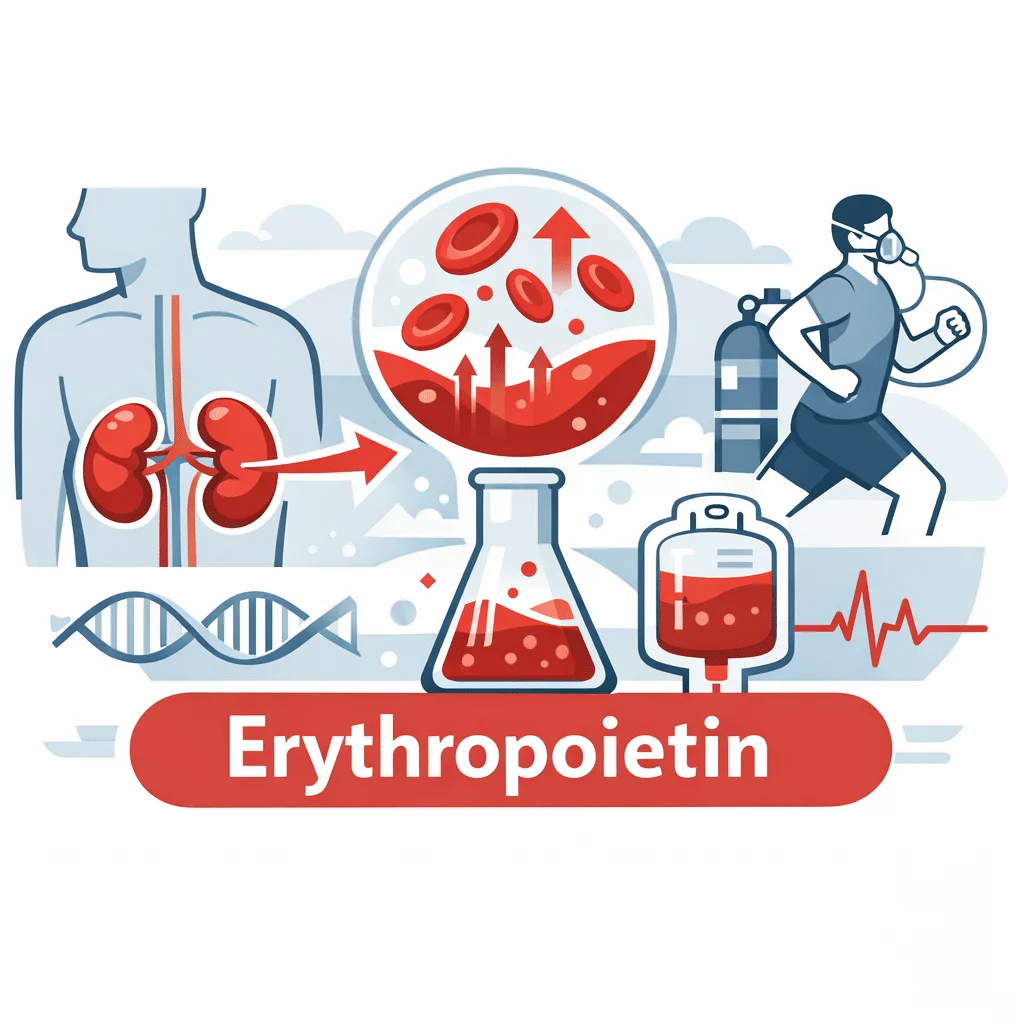
Eritropoietina este un hormon glicoproteic. Aceasta înseamnă că este alcătuită atât din proteine, cât și din carbohidrați. Funcția sa principală este esențială pentru organismul nostru. Ea dirijează producția de globule roșii, numite și eritrocite.
Rinichii sunt principalii responsabili de producerea eritropoietinei. Ficatul contribuie și el, dar într-o măsură mai mică. EPO poate fi privită ca dirijorul eritropoiezei — procesul de formare a globulelor roșii în măduva osoasă. Acest hormon inițiază și coordonează dezvoltarea acestor celule esențiale, care transportă oxigenul în tot organismul. Fără acțiunea sa, echilibrul sistemului nostru sanguin ar fi perturbat.
Mai concret, rinichii detectează scăderea nivelului de oxigen din sânge (o stare numită hipoxie) și răspund prin eliberarea de eritropoietină. Hormonul ajunge apoi prin sânge la măduva osoasă, unde stimulează activ producerea de noi globule roșii. Acest proces seamănă cu o fabrică care își mărește producția pentru a face față unei cereri urgente. Astfel, EPO îndeplinește o misiune vitală: menține un număr optim de globule roșii, care asigură transportul eficient al oxigenului către toate organele și țesuturile.
De ce este importantă măsurarea eritropoietinei?
Medicii pot recomanda o analiză EPO din sânge pentru a-ți evalua starea de sănătate. Această analiză poate ajuta la identificarea problemelor renale sau a disfuncțiilor în producția de globule roșii. Poate, de asemenea, să dezvăluie cauzele unei anemii inexplicabile. Nivelul eritropoietinei poate funcționa ca un bec de avertizare pe tabloul de bord. Poate semnala o problemă ascunsă înainte ca simptomele clare să apară.
Rolul central al EPO în echilibrul fiziologic
Eritropoietina face parte dintr-un sistem de reglare complex. Rolul său depășește cu mult simpla producție de globule roșii. De exemplu, interacționează strâns cu sistemele cardiovascular, renal și respirator. Aceasta o face o verigă esențială în menținerea echilibrului tău fiziologic general.
Progrese istorice și terapeutice
Înțelegerea noastră despre EPO a avansat remarcabil de la descoperirea sa în anii 1950. Totuși, cercetătorii nu au izolat gena responsabilă de producția sa decât în 1985. Această descoperire a deschis calea pentru EPO recombinantă — o formă sintetică folosită acum pentru tratarea anumitor anemii. Acest progres a revoluționat îngrijirea pacienților cu insuficiență renală cronică, pentru care anemia reprezenta odinioară o povară grea.
Consecințele unui dezechilibru al EPO
Ignorarea unui nivel anormal de eritropoietină poate duce la probleme grave pe termen lung. De exemplu, un nivel scăzut netratat poate provoca anemie cronică, cu oboseală persistentă, dificultăți de respirație și capacitate fizică și mentală redusă. Pe de altă parte, un nivel persistent crescut de EPO poate semnala o afecțiune mai gravă, cum ar fi o tumoare renală sau o tulburare a măduvei osoase.
Importanța monitorizării eritropoietinei la grupurile cu risc
Studiile arată că mulți pacienți cu anemie inexplicabilă au o problemă legată de EPO — fie un defect în producerea eritropoietinei, fie în semnalizarea acesteia. Mai mult, majoritatea persoanelor cu boală cronică de rinichi în stadiu avansat dezvoltă anemie din cauza deficienței de EPO. Aceste date subliniază importanța monitorizării acestui marker, în special la populațiile cu risc crescut.
Cum îți interpretezi rezultatele testului de eritropoietină?
Atunci când analizele tale de sânge includ un test pentru eritropoietină, mai mulți factori contribuie la interpretarea valorilor. Este esențial să privești nivelul EPO în context cu celelalte rezultate.
Unități de măsură și valori de referință pentru EPO
Raportul tău va arăta concentrația EPO în mIU/mL sau IU/L. Valorile normale se situează de obicei între 4 și 24 mIU/mL. Totuși, aceste intervale de referință pot varia ușor de la un laborator la altul. Această variație provine din diferite metode și echipamente de testare. Prin urmare, folosește întotdeauna intervalul tipărit pe raportul tău.
Laboratoarele își stabilesc propriile valori de referință analizând rezultatele unui număr mare de persoane sănătoase. Ele definesc un interval care acoperă 95% din valorile acestui grup sănătos. De aceea există mici diferențe între standardele diferitelor laboratoare.
Raportul tău poate folosi și coduri de culoare sau simboluri. Roșul semnalează adesea o valoare în afara intervalului de referință. Negrul sau verdele indică de obicei o valoare normală. Unele laboratoare folosesc săgeți (↑ pentru valori crescute, ↓ pentru valori scăzute) sau asteriscuri (*) pentru a evidenția rezultatele anormale.
Corelarea EPO cu hemoglobina și hematocritul
Pentru a interpreta corect nivelul tău de eritropoietină, acesta trebuie analizat împreună cu Hemoglobină și Hematocrit niveluri. Dacă hemoglobina ta este scăzută (anemie) și EPO este de asemenea scăzut, acest lucru sugerează o problemă renală. Dimpotrivă, dacă hemoglobina este scăzută, dar EPO este crescut, înseamnă că organismul tău răspunde corect — încearcă să stimuleze producția de globule roșii pentru a combate anemia.
Referință rapidă: ce indică împreună nivelurile tale de EPO și hemoglobină
Medicii interpretează rareori un rezultat EPO de sine stătător. Citirea lui alături de hemoglobina (proteina bogată în fier din interiorul globulelor roșii care transportă oxigenul) și hematocritul (procentul din sângele tău format din globule roșii) ajută la identificarea cauzei de bază. Tabelul de mai jos rezumă cele patru tipare principale pe care pacienții le întâlnesc de obicei într-un buletin de analize.
| Hemoglobină | Nivel EPO | Ce poate sugera | Teste de urmărire frecvente |
|---|---|---|---|
| Scăzut (anemie) | Scăzut | Este posibil ca rinichii să nu producă suficientă EPO. Acest tipar este întâlnit cel mai frecvent în boala cronică de rinichi. | Creatinină, eGFR (rata de filtrare renală), analiză de urină. |
| Scăzut (anemie) | Crescută | Organismul răspunde corect la anemie, încercând să producă mai multe globule roșii. Cauza se află în altă parte, cum ar fi deficiența de fier, deficiența de vitamine sau pierderea de sânge. | Feritină și profil al fierului, vitamina B12, folat. |
| Crescut (policitemie sau număr prea mare de globule roșii) | Scăzut sau normal | Măduva osoasă produce prea multe globule roșii pe cont propriu. Acesta este tiparul caracteristic al policitemia vera, o tulburare a măduvei osoase. | Trimitere la hematologie, test pentru mutația genei JAK2. |
| Crescut (policitemie) | Crescută | Organismul produce globule roșii în exces ca răspuns la un factor declanșator, cum ar fi nivelul scăzut de oxigen (altitudine mare, boală pulmonară cronică, fumat intens) sau, mai rar, o tumoare producătoare de EPO. | Măsurarea oxigenului din sânge, teste de funcție pulmonară, imagistică a rinichilor sau ficatului dacă se suspectează o tumoare. |
Câteva lucruri importante de reținut:
- O singură valoare în afara intervalului de referință nu înseamnă un diagnostic. Intervalele de referință variază ușor de la un laborator la altul, iar mulți oameni au un rezultat ușor anormal fără a exista o problemă reală.
- Expunerea recentă la altitudine, fumatul intens, deshidratarea sau sarcina pot modifica temporar aceste valori.
- Doar un cadru medical poate interpreta rezultatele tale în contextul simptomelor, istoricului medical, medicamentelor actuale și al celorlalte analize.
Ce afecțiuni medicale influențează nivelul eritropoietinei?
Înțelegerea afecțiunilor legate de variațiile EPO te ajută să înțelegi importanța acestui marker. Anomaliile sunt clasificate în funcție de faptul că nivelul eritropoietinei este prea scăzut sau prea ridicat.
Afecțiuni asociate cu un nivel anormal de scăzut al EPO
Boala cronică de rinichi
Această afecțiune frecventă reprezintă principala cauză a deficienței de eritropoietină. Rinichii afectați nu pot produce suficient hormon, ceea ce duce la anemie progresivă.
- Mecanism: Celulele renale specializate care produc EPO sunt distruse sau deteriorate treptat.
- Simptome: Oboseală severă, paloarea pielii, dificultăți de respirație la efort ușor și intoleranță neobișnuită la frig.
- Analize: Creatinina serică, rata de filtrare glomerulară (RFG) și sumar de urină.
Inflamație cronică
Anumite boli inflamatorii cronice pot limita producția de eritropoietină. Printre acestea se numără artrita reumatoidă și bolile inflamatorii intestinale. Acestea pot reduce și răspunsul măduvei osoase la hormon.
- Mecanism: Substanțele inflamatorii numite citokine interferează cu producția de EPO și cu acțiunea acestuia.
- Simptome: De obicei anemie moderată, însoțită de simptomele bolii inflamatorii subiacente.
- Analize: Proteina C reactivă (PCR) și viteza de sedimentare a hematiilor (VSH).
Afecțiuni asociate cu un nivel anormal de ridicat al eritropoietinei
Anemie feriprivă
În cazul deficienței de fier, organismul nu poate produce suficientă hemoglobină, ceea ce provoacă anemie. Pentru a compensa, organismul crește producția de eritropoietină pentru a genera mai multe globule roșii.
- Mecanism: Transportul redus de oxigen determină rinichii să producă mai multă EPO.
- Simptome: Oboseală, ten palid, păr și unghii fragile și, uneori, sindromul picioarelor neliniștite.
- Analize: Feritina serică, saturația transferinei și fierul seric.
Policitemia secundară
Anumite situații reduc oxigenarea sângelui. Acestea includ șederea prelungită la altitudine mare sau bolile pulmonare cronice, precum BPOC. Acest lucru stimulează producția de eritropoietină.
- Mecanism: Lipsa cronică de oxigen în țesuturi (hipoxia) este principalul stimul pentru producția de EPO.
- Simptome: Roșeață facială, dureri de cap, amețeli și probleme de vedere.
- Analize: Gazele sanguine arteriale și testele de funcție pulmonară.
Tumori producătoare de EPO
Deși rare, anumite tumori pot produce eritropoietină în exces. Printre acestea se numără unele cancere renale, tumori hepatice și, mai rar, tumori cerebrale.
- Mecanism: Celulele tumorale produc EPO în afara sistemului normal de reglare.
- Simptome: O creștere inexplicabilă a numărului de globule roșii (policitemie), dureri de cap și tinitus.
- Analize: Imagistică medicală, precum ecografie, tomografie computerizată (CT) sau RMN.
Sfaturi practice și monitorizarea nivelului de eritropoietină
Medicul tău îți va recomanda un program de monitorizare în funcție de rezultatele tale și de contextul clinic.
- Nivel ușor anormal: Se poate lua în considerare retestarea la fiecare 3-4 luni în primul an.
- Nivel moderat anormal: Testarea lunară este adesea necesară până când nivelul se stabilizează sau se identifică cauza.
- Nivel puternic anormal: Monitorizarea atentă împreună cu un specialist (nefrolog sau hematolog) este esențială.
Suport nutrițional și stil de viață sănătos
Anumite obiceiuri pot contribui la menținerea unui echilibru sănătos al eritropoietinei.
Dacă EPO-ul tău este scăzut, pune accent pe alimente bogate în fier, vitamina C, B12 și folat.
- Fier: Carne roșie, linte și spanac.
- Vitamina C: Portocalele, ardeii și broccoli îmbunătățesc absorbția fierului.
- B12 și Folat: Lactate, ouă, pește și legume cu frunze verzi.
Dacă EPO-ul tău este ridicat, hidratează-te corespunzător. Bea cel puțin 1,5 până la 2 litri de apă pe zi. Acest lucru ajută la reducerea vâscozității sângelui. De asemenea, limitează consumul de alcool și evită suplimentele de fier dacă un medic nu a confirmat o deficiență.
Activitatea fizică regulată și moderată poate îmbunătăți oxigenarea. Renunțarea la fumat este, de asemenea, esențială, deoarece fumatul reduce oxigenul din țesuturi. În plus, gestionarea stresului și somnul de calitate susțin procesele de regenerare ale organismului.
Când să consulți un specialist
Există situații în care trebuie să consulți un medic sau un specialist fără întârziere.
- Un nivel foarte ridicat de eritropoietină fără o cauză evidentă.
- Un nivel scăzut de EPO asociat cu anemie severă (hemoglobina sub 8 g/dL).
- O schimbare bruscă și semnificativă a nivelului tău de EPO față de un test anterior.
- Simptome de policitemie (exces de globule roșii), cum ar fi dureri de cap severe sau modificări ale vederii.
- Durere lombară inexplicabilă asociată cu un nivel anormal de EPO.
Întrebări frecvente despre eritropoietină
EPO-ul folosit în dopaj este același cu hormonul natural?
EPO recombinantă (utilizată în medicină și pentru dopaj) este foarte asemănătoare cu EPO naturală. Există totuși diferențe moleculare subtile. Laboratoarele antidoping pot detecta aceste diferențe pentru a distinge EPO administrată din exterior de EPO produsă de organism. Ambele forme stimulează producția de globule roșii.
Nivelul eritropoietinei variază pe parcursul zilei?
Da, EPO prezintă un ușor ritm zilnic, cu niveluri puțin mai ridicate la sfârșitul după-amiezii. Această variație este mică și, de obicei, nu influențează interpretarea analizei. Altitudinea are un efect mult mai mare. La altitudini mari, scăderea oxigenului stimulează semnificativ producția de EPO, ajutând organismul să se adapteze.
Cum influențează tratamentul antiinflamator nivelul meu de EPO?
Medicamentele antiinflamatoare nesteroidiene (AINS) pot avea efecte mixte. Pot reduce ușor fluxul de sânge la rinichi, ceea ce ar putea scădea producția de EPO. Pe de altă parte, prin reducerea inflamației cronice, pot contribui și la normalizarea unui nivel de EPO anterior scăzut. Efectul final depinde de situația ta specifică.
De ce mi s-a măsurat EPO pentru policitemie (prea multe globule roșii)?
Acesta este un pas diagnostic esențial. În cazurile de policitemie, medicii vor să știe dacă este vorba de o cauză primară sau secundară. Un nivel scăzut sau normal de eritropoietină sugerează o cauză primară, cum ar fi supraproducția de celule de către măduva osoasă (de exemplu, policitemia vera). Dimpotrivă, un nivel ridicat de EPO indică o cauză secundară, cum ar fi răspunsul organismului la un nivel cronic scăzut de oxigen.
Poate insuficiența cardiacă să afecteze nivelul de eritropoietină?
Cu siguranță. Insuficiența cardiacă poate reduce fluxul de sânge către rinichi, afectând astfel producția de EPO. În același timp, circulația deficitară poate provoca hipoxie tisulară, care stimulează producția de EPO. Efectul global asupra nivelului tău de EPO poate varia. Inflamația asociată insuficienței cardiace poate juca și ea un rol important.
Sarcina modifică valorile normale ale eritropoietinei?
Da. În timpul sarcinii, volumul sanguin al femeii crește. Aceasta duce la o scădere relativă a concentrației de hemoglobină, numită anemie fiziologică. Pentru a compensa și a asigura o oxigenare corespunzătoare atât pentru mamă, cât și pentru făt, nivelurile de EPO cresc în general, mai ales în trimestrul al doilea și al treilea. Aceasta este o adaptare normală și sănătoasă.
Concluzie: eritropoietina, un indicator al stării tale de sănătate
Eritropoietina este mai mult decât o simplă valoare din buletinul tău de analize. Este un adevărat indicator al echilibrului tău fiziologic. Înțelegerea rolului său îți oferă o perspectivă asupra sistemelor complexe care reglează aportul de oxigen al organismului tău.
Reține aceste puncte esențiale:
- EPO este produsă de rinichii tăi ca răspuns la nivelul de oxigen din țesuturi.
- Interpretarea sa necesită întotdeauna corelarea cu valorile hemoglobinei și hematocritului.
- Un nivel anormal poate semnala o gamă largă de afecțiuni.
- Schimbările în alimentație și stilul de viață pot influența pozitiv sănătatea ta.
Înțelegerea nivelului tău de EPO te transformă într-un participant activ la propria sănătate. Îți oferă posibilitatea de a fi implicat în detectarea timpurie a dezechilibrelor și de a purta discuții mai informate cu echipa ta medicală.
Surse
- Eritropoietina (EPO) — Cleveland Clinic
- Anemia în boala cronică de rinichi — NIDDK (NIH)
- Agenți stimulatori ai eritropoiezei — StatPearls (NCBI Bookshelf)
Lectură suplimentară
- Globulele roșii (RBC): ghid complet pentru rezultatele tale de laborator
- Creatinina: înțelegerea acestui marker sanguin pentru funcția renală
Înțelege-ți rezultatele analizelor cu AI DiagMe
Înțelegerea analizei de sânge EPO înseamnă adesea să privești imaginea de ansamblu, inclusiv hemoglobina și hematocritul (care măsoară globulele roșii), fierul și feritina (rezervele de fier ale organismului), precum și testele de funcție renală, cum ar fi creatinina și eGFR (o estimare a cât de bine filtrează rinichii sângele). Fiecare valoare adaugă context, iar citirea lor împreună ajută la explicarea dacă un EPO crescut sau scăzut indică o problemă renală, un deficit de fier sau altceva. AI DiagMe te poate ajuta să înțelegi rezultatele analizelor tale pe înțelesul tău, astfel încât să știi mai bine ce pot însemna și ce să discuți cu medicul tău.
➡️ Obține interpretarea rezultatelor în câteva minute