








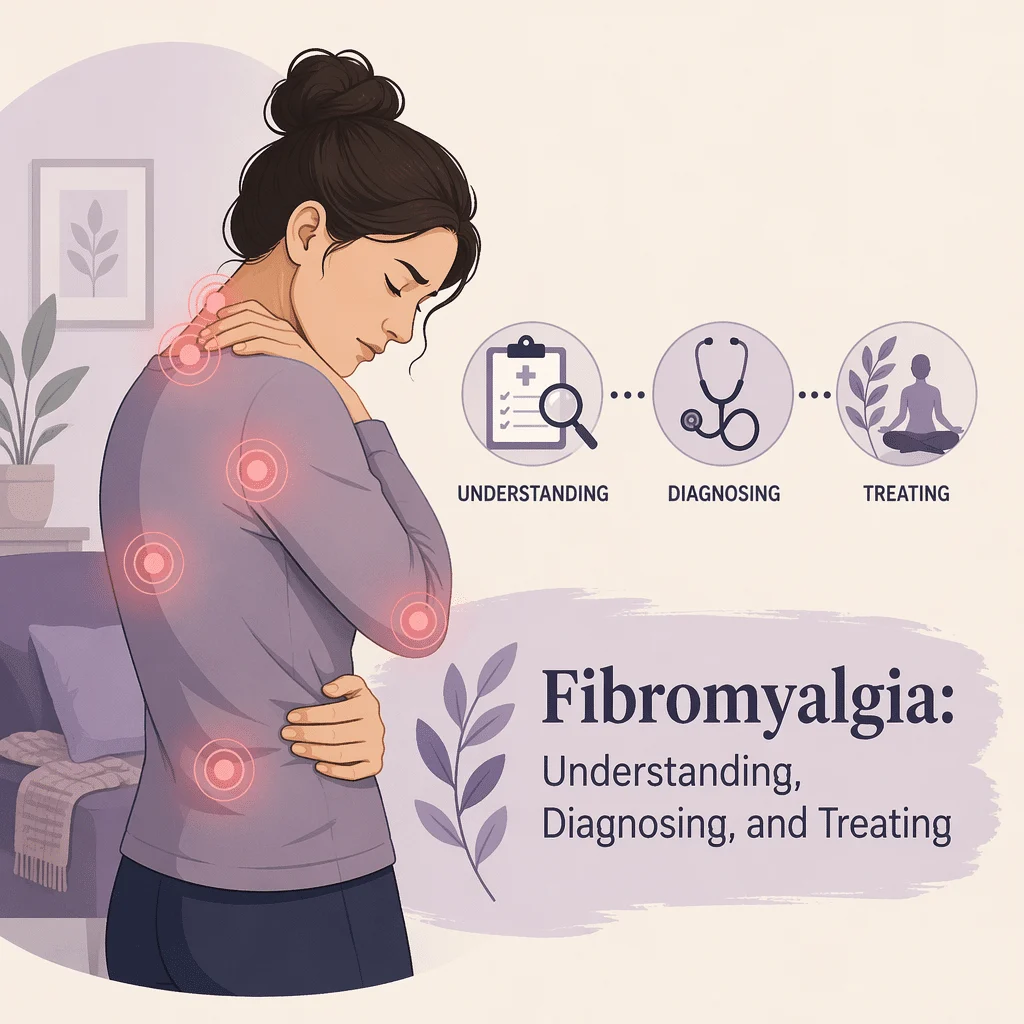
Als je met fibromyalgie leeft, weet je al twee dingen waar de geneeskunde eindelijk bij aansluit: de pijn is echt, en het zit niet “allemaal tussen je oren.” Fibromyalgie is een langdurige aandoening die wijdverspreide pijn, diepe vermoeidheid, niet-verkwikkende slaap en problemen met geheugen en concentratie veroorzaakt. Jarenlang werd veel mensen verteld dat hun klachten verzonnen of overdreven waren. Modern onderzoek vertelt een heel ander verhaal: het zenuwstelsel van iemand met fibromyalgie verwerkt pijn aantoonbaar anders, waardoor signalen die mild zouden moeten aanvoelen, worden versterkt.
In dit artikel lees je wat fibromyalgie is, wat het uitlokt, hoe artsen de diagnose stellen en welke behandelingen echt helpen. Je ziet ook waarom bloedtests de aandoening niet kunnen bevestigen, maar toch helpen om andere oorzaken van pijn en vermoeidheid uit te sluiten.
Wat fibromyalgie is, en waarom de pijn echt is
Fibromyalgie treft naar schatting 2 tot 4 procent van de volwassenen en is veel meer dan je moe en pijnlijk voelen. Het is een stoornis in de manier waarop het lichaam en de hersenen met pijn omgaan. Normaal gesproken rapporteert het zenuwstelsel letsel nauwkeurig. Bij fibromyalgie raakt dat systeem overreactief — een proces dat onderzoekers centrale sensitisatie noemen. De hersenen en het ruggenmerg versterken pijnsignalen, waardoor gewone druk, temperatuur of beweging echt pijn kan doen.
Pijnspecialisten plaatsen fibromyalgie tegenwoordig onder een categorie die nociplastische pijn wordt genoemd: pijn die voortkomt uit een verstoorde pijnverwerking, en niet uit weefselschade of zenuwletsel. Een review uit 2024 in het tijdschrift Pain, en een update uit 2026, beschrijven fibromyalgie allebei als een van de duidelijkste voorbeelden van dit mechanisme. In gewone taal: de bedrading die pijn doorgeeft en interpreteert, werkt overuren, ook als er op de pijnlijke plek niets gescheurd of gebroken is. Daarom zien standaard scans en bloedtests er normaal uit, en toch is de pijn volledig reëel.
Dit onderscheid is van belang voor de manier waarop u wordt behandeld en of u serieus wordt genomen. Uit een analyse van patiëntervaringen uit 2025 bleek dat wanneer zorgverleners moeilijk te diagnosticeren klachten wegwuiven of bagatelliseren, mensen daar echte schade van ondervinden: vertraagde diagnose, het mijden van zorg, schaamte en toenemende klachten. Fibromyalgie begrijpen als een echte aandoening van het zenuwstelsel is de eerste stap naar effectieve behandeling.
Wat veroorzaakt fibromyalgie? Triggers en risicofactoren
Onderzoekers hebben nog geen eenduidige oorzaak van fibromyalgie gevonden. De aandoening lijkt zich te ontwikkelen wanneer meerdere factoren samenkomen bij iemand die er gevoelig voor is. Erfelijkheid speelt een rol, want de aandoening komt vaak voor in families. Bovenop die aanleg zet een trigger de klachten vaak in gang.
Veelgenoemde triggers in het onderzoek zijn:
- Lichamelijk of emotioneel trauma, zoals een ongeluk, operatie of ernstige stress
- Infecties of ziekten die het immuunsysteem zwaar belasten
- Langdurige slechte of onderbroken slaap
- Andere chronische pijnaandoeningen die het zenuwstelsel voortdurend in staat van paraatheid houden
Bepaalde groepen lopen een hoger risico. Fibromyalgie wordt veel vaker vastgesteld bij vrouwen dan bij mannen, hoewel mannen waarschijnlijk onderdiagnostiseerd zijn. Een naast familielid met de aandoening hebben, leven met reumatoïde artritis of lupus, en aanhoudende stemmingsproblemen verhogen allemaal de kans. Geen van deze factoren betekent dat iemand zelf fibromyalgie heeft veroorzaakt of het had kunnen voorkomen.
Symptomen van fibromyalgie
De symptomen van fibromyalgie verschillen van persoon tot persoon en wisselen vaak van dag tot dag. Het belangrijkste kenmerk is wijdverspreide pijn, die aan beide kanten van het lichaam wordt gevoeld, zowel boven als onder de taille, en die minstens drie maanden aanhoudt. Mensen omschrijven het als een zeurende, brandende, kloppende of stekende pijn.
Naast pijn zijn de meest voorkomende klachten:
- Aanhoudende vermoeidheid die niet verbetert door rust
- Niet-verkwikkende slaap: wakker worden terwijl u moe bent, zelfs na een volledige nacht
- “Fibro-mist,” ofwel moeite met geheugen, concentratie en het vinden van woorden
- Verhoogde gevoeligheid voor licht, geluid, geuren of temperatuur
- Hoofdpijn, spijsverteringsproblemen zoals het prikkelbaredarmsyndroom, en stijfheid
Fibromyalgie gaat ook vaak samen met andere aandoeningen. Veel mensen met fibromyalgie ontwikkelen ook klinische depressie, en aanhoudende pijn kan een bestaande angststoornisverergeren. Het herkennen van deze overlappingen is geen teken dat de pijn psychologisch van aard is; het weerspiegelt hoe nauw pijn, slaap en stemming met elkaar verbonden zijn in het lichaam.
Hoe wordt fibromyalgie vastgesteld?
Er is geen laboratorium- of beeldvormend onderzoek dat fibromyalgie kan bevestigen. Artsen stellen de diagnose op klinische basis, aan de hand van criteria van het American College of Rheumatology. Deze richten zich op wijdverspreide pijn die drie maanden of langer aanhoudt, gecombineerd met vermoeidheid, niet-verkwikkende slaap en cognitieve klachten, nadat andere oorzaken zijn overwogen.
Omdat de symptomen overlappen met veel andere aandoeningen, worden bloedtests niet gebruikt om fibromyalgie aan te tonen, maar om aandoeningen uit te sluiten die er sterk op kunnen lijken. Hier is het nuttig om je labuitslag te begrijpen. De onderstaande tabel toont de tests die artsen het vaakst aanvragen en wat elke test helpt uitsluiten.
| Bloedtest | Wat het helpt uitsluiten |
|---|---|
| TSH (schildklierstimulerend hormoon) | Een trage schildklier, die vermoeidheid, pijn en een neerslachtig gevoel veroorzaakt |
| CRP en BSE | Ontstekings- of auto-immuunziekte, zoals reumatoïde artritis |
| Volledig bloedbeeld (CBC) | Bloedarmoede of infectie die de vermoeidheid zou kunnen verklaren |
| Vitamine D (25-OH) | Vitamine D-tekort, dat verband houdt met bot- en spierpijn |
| Ferritine | IJzertekort, een veelvoorkomende en behandelbare oorzaak van vermoeidheid |
| Creatinekinase (CK) | Spierziekte of spierschade (myopathie) |
| Antinucleaire antistoffen (ANA) | Lupus en verwante auto-immuunaandoeningen |
Afhankelijk van je klachten kan je arts de schildklierfunctie controleren door een TSH schildklier bloedtestaan te vragen, verborgen ontstekingen opsporen met een C-reactief proteïne (CRP) bloedtest, en een bezinkingssnelheid van erytrocyten (BSE)-testtoevoegen. Een bloedpanel omvat doorgaans een volledig bloedbeeld (CBC). Omdat een laag voedingsstoffengehalte een veelvoorkomende en behandelbare oorzaak van vermoeidheid is, kan je arts ook een vitamine D bloedtest aanvragen en de ijzervoorraden controleren met een ferritine bloedtest. Om spierziekte uit te sluiten, vragen artsen soms een creatinekinase (CK) bloedtestaan, en om te screenen op auto-immuunaandoeningen kunnen ze een antinucleaire antistoffen (ANA) bloedtestaanvragen. Wanneer deze uitslagen normaal zijn ondanks echte, aanhoudende klachten, ondersteunt dat patroon juist een diagnose van fibromyalgie in plaats van deze uit te sluiten.
Behandelingen die echt helpen
Fibromyalgie kan nog niet worden genezen, maar wel worden behandeld, en veel mensen herwinnen een goede kwaliteit van leven. De meest effectieve aanpak combineert beweging, therapie en, indien nodig, medicatie. Zorg werkt het best wanneer deze is afgestemd op je klachten en samen met je arts wordt opgesteld.
Beweging en lichaamsbeweging
Beweging is de meest aanbevolen behandeling voor fibromyalgie, ook al voelt bewegen tegenstrijdig aan als je pijn hebt. Een systematische review uit 2025 toonde aan dat aerobe oefeningen de pijn merkbaar verminderen, met de beste resultaten bij zachte, geleidelijke routines: ongeveer twee tot drie sessies per week, licht beginnen en langzaam opbouwen over zes tot twaalf weken. Een afzonderlijke netwerkanalyse uit 2025 meldde dat oefeningen in het water op korte termijn het meest helpen, terwijl krachttraining (weerstandstraining) de grootste langetermijnwinst oplevert. Het belangrijkste is om klein te beginnen en geleidelijk op te bouwen, zodat je een opvlamming voorkomt.
Therapieën en zelfmanagement
Gesprekstherapieën en lichaamsgerichte benaderingen vormen een aanvulling op de behandeling. Cognitieve gedragstherapie, een gestructureerde vorm van begeleiding, helpt veel mensen omgaan met pijn, slaapproblemen en de frustratie die een chronische aandoening met zich meebrengt. Zachte oefeningen zoals tai chi, yoga, stretching en gedoseerde dagelijkse activiteit kunnen de frequentie van opvlammingen verminderen. Fysiotherapie, warmwatertherapie en stressverminderingstechnieken worden ook veel gebruikt met goede resultaten.
Medicijnen
Geen enkel medicijn werkt voor iedereen, en medicijnen zijn doorgaans één onderdeel van een breder behandelplan en geen oplossing op zichzelf. Een netwerk-meta-analyse uit 2024 van medicijnen bij chronische pijn concludeerde dat duloxetine, een SNRI-antidepressivum, het meest consistent helpend is, waarbij milnacipran ook veelbelovend bleek. Een review uit 2023 gericht op fibromyalgie kwam tot een vergelijkbare conclusie en merkte op dat de dosering van duloxetine op de persoon afgestemd moet worden. Andere veelvoorgeschreven opties zijn pregabaline en amitriptyline, die pijn kunnen verlichten en de slaap kunnen verbeteren. Elk medicijn moet regelmatig met je arts worden geëvalueerd, zowel op werkzaamheid als op bijwerkingen.
Wanneer een arts raadplegen
De symptomen van fibromyalgie overlappen met aandoeningen die snelle behandeling vereisen, dus het is de moeite waard om je te laten onderzoeken in plaats van er alleen mee om te gaan. Maak een afspraak als je het volgende opmerkt:
- Wijdverspreide pijn en vermoeidheid die meer dan een paar weken aanhouden
- Nieuwe symptomen zoals gewrichtszwelling, koorts, onverklaarbaar gewichtsverlies of een huiduitslag
- Spierzwakte, zeer donkere urine of ernstige spierpijn na het starten van een nieuw medicijn
- Somberheid, hopeloosheid of gedachten aan zelfbeschadiging
Als je al eens niet serieus genomen bent, geef dan niet op. Fibromyalgie is een erkende medische aandoening, en je verdient een zorgverlener die je klachten serieus neemt.
Nieuwste wetenschappelijke ontwikkelingen bij fibromyalgie
Het onderzoek naar fibromyalgie is in een stroomversnelling geraakt, en de richting is hoopvol. Dit is wat recente studies voor jou betekenen.
Een duidelijker beeld van het mechanisme. Pijnwetenschappers zijn het er steeds meer over eens dat fibromyalgie wordt veroorzaakt door een verstoorde pijnverwerking, niet door schade op de plek waar het pijn doet. Dit onderzoek uit 2024 en 2026 is belangrijk omdat het fibromyalgie definitief uit de categorie “verbeelding” haalt en het een vaste plek geeft in de reguliere geneeskunde, wat al leidt tot betere behandelrichtlijnen.
De zoektocht naar een bloedtest. Een systematische review uit 2025 onderzocht mogelijke biomarkers: stoffen in het bloed die fibromyalgie op een dag zouden kunnen aantonen. De eerlijke conclusie: een aantal kandidaten ziet er veelbelovend uit, maar geen enkele is betrouwbaar genoeg om de aandoening te diagnosticeren. Voorlopig blijven bloedtests een hulpmiddel om andere ziekten uit te sluiten, niet om fibromyalgie te bevestigen. Een normale uitslag betekent dus niet dat er niets aan de hand is.
Sterker bewijs dat bewegen helpt. Recente hoogwaardige reviews hebben vastgesteld welke vormen van beweging het meest helpen en hoe je ze het beste kunt doseren. Zo zijn vage adviezen omgezet in concrete, zachtere plannen die makkelijker vol te houden zijn. Daarmee is een effectieve, goedkope behandeling voor de meeste mensen bereikbaar.
Erkenning van de schade die ongeloof aanricht. Misschien wel het belangrijkste: onderzoekers zijn begonnen te documenteren wat patiënten al lang wisten: niet serieus genomen worden vertraagt de diagnose en verslechtert de uitkomsten. Dit bewijs zet zorgverleners ertoe aan beter te luisteren en klachten eerder te erkennen.
Goed leven met fibromyalgie
Goed leven met fibromyalgie draait om een gestage, realistische zelfzorg in plaats van één grote doorbraak. Doseren — dat wil zeggen: een beetje doen en rusten voordat je te ver gaat — helpt de vicieuze cirkel van overbelasting en terugval te doorbreken. Je slaap beschermen, een rustige dagelijkse routine aanhouden en stress beheersen verminderen de klachten op de lange termijn.
Steun maakt ook echt een verschil. Contact met anderen die begrijpen wat je doormaakt — via patiëntengroepen of vertrouwde vrienden — verlicht het gevoel van isolement dat de aandoening met zich mee kan brengen. Met de juiste combinatie van beweging, therapie en medische zorg ervaren veel mensen met fibromyalgie dat hun klachten veel beter te hanteren worden.
Glossarium
| Termijn | Definitie |
|---|---|
| Fibromyalgie | Een chronische aandoening met wijdverspreide pijn, vermoeidheid en een verhoogde gevoeligheid voor pijn. |
| Centrale sensitisatie | Een toestand waarbij het zenuwstelsel overreactief wordt en pijnsignalen versterkt. |
| Nociplastische pijn | Pijn die ontstaat door een verstoorde pijnverwerking, niet door weefselschade of zenuwletsel. |
| Fibromist (fibro fog) | Alledaagse problemen met geheugen, concentratie en het vinden van woorden, die veel voorkomen bij fibromyalgie. |
| Wijdverspreide pijn | Pijn aan beide kanten van het lichaam, boven en onder de taille, die drie maanden of langer aanhoudt. |
| Comorbiditeit | Een aandoening die gelijktijdig met fibromyalgie voorkomt, zoals depressie of het prikkelbaredarmsyndroom. |
| Gloed | Een tijdelijke verergering van klachten, vaak uitgelokt door stress, slechte slaap of overbelasting. |
| SNRI | Serotonine-noradrenalineheropnameremmer, een geneesmiddelenklasse (zoals duloxetine) die wordt gebruikt bij pijn. |
veelgestelde vragen
Is fibromyalgie een echte aandoening?
Ja. Fibromyalgie is een erkende medische aandoening, geclassificeerd door grote gezondheidsinstanties en bestudeerd in duizenden onderzoeken. Hersenscans en pijnonderzoek tonen meetbare verschillen aan in de manier waarop het zenuwstelsel pijn verwerkt. De pijn, vermoeidheid en hersenmist zijn echt, niet ingebeeld, en serieus genomen worden is een belangrijk onderdeel van goede zorg.
Hoe stellen artsen fibromyalgie vast?
Er bestaat geen specifieke bloedtest of scan voor fibromyalgie. Artsen stellen de diagnose op basis van je klachten, voornamelijk wijdverspreide pijn die drie maanden of langer aanhoudt, samen met vermoeidheid en concentratieproblemen. Bloedonderzoek wordt aangevraagd om andere oorzaken uit te sluiten, zoals schildklieraandoeningen, bloedarmoede of auto-immuunziekten, en niet om fibromyalgie zelf te bevestigen.
Welke medicijnen worden gebruikt bij fibromyalgie?
De best onderzochte optie is duloxetine, een SNRI-antidepressivum dat ook pijn verlicht. Pregabaline, amitriptyline en milnacipran worden ook vaak voorgeschreven. Geen enkel medicijn werkt voor iedereen, en ze werken het best in combinatie met beweging en therapie. Je arts stemt de keuze en dosering af op jouw klachten.
Kan fibromyalgie genezen worden?
Er is nog geen genezing, maar dat betekent niet dat er niets aan te doen is. Met de juiste combinatie van geleidelijke beweging, therapie, goede slaapgewoonten en soms medicatie kunnen veel mensen hun klachten aanzienlijk verminderen en hun dagelijks leven terugkrijgen. Het is een aandoening die je in de loop van de tijd beheert, in plaats van simpelweg te doorstaan.
Waarom komt fibromyalgie vaker voor bij vrouwen?
Fibromyalgie wordt veel vaker vastgesteld bij vrouwen, en onderzoekers denken dat hormonale, immunologische en pijnverwerkingsverschillen hieraan kunnen bijdragen. Toch kunnen ook mannen en kinderen het ontwikkelen, en bij mannen wordt het waarschijnlijk te weinig gediagnosticeerd omdat het vaak als een vrouwenkwaal wordt beschouwd. Iedereen met aanhoudende wijdverspreide pijn verdient een beoordeling.
Wat veroorzaakt een fibromyalgie-opvlamming?
Een opvlamming is een tijdelijke toename van klachten. Veelvoorkomende uitlokkende factoren zijn stress, slechte of verstoorde slaap, te veel doen op een goede dag, weersveranderingen, ziekte en hormonale schommelingen. Door je persoonlijke triggers te leren kennen en je activiteiten te doseren, kun je opvlammingen na verloop van tijd minder frequent en minder ernstig maken.
Bronnen
- Fibromyalgie — National Institute of Arthritis and Musculoskeletal and Skin Diseases (NIAMS), U.S. National Institutes of Health (geraadpleegd juli 2026).
- Fibromyalgie: symptomen en oorzaken — Mayo Clinic (geraadpleegd juli 2026).
- Fibromyalgie: symptomen, diagnose en behandeling — Cleveland Clinic (geraadpleegd juli 2026).
- Het concept van nociplastische pijn — wat nu? Kosek E. Pain, 2024.
- Nociplastische pijn: feiten, controverses en toekomstige vraagstukken. Hauser W, Kosek E. European Journal of Pain, 2026.
- Genegeerd, afgewezen en gebagatelliseerd: de schadelijke gevolgen van ongeldigverklaring in de gezondheidszorg. Bontempo AC, et al. Psychological Bulletin, 2025.
- Aerobe bewegingstherapie voor pijnvermindering bij fibromyalgie: een systematische review en meta-analyse. Casanova-Rodriguez D, et al. European Journal of Pain, 2025.
- De meest effectieve therapeutische oefeningen voor pijnintensiteit bij vrouwen met fibromyalgie: een systematische review en netwerk-meta-analyse. Rodriguez-Dominguez AJ, et al. Brazilian Journal of Physical Therapy, 2025.
- Antidepressiva voor pijnbehandeling bij volwassenen met chronische pijn: een netwerk-meta-analyse. Birkinshaw H, et al. Health Technology Assessment, 2024.
- Duloxetine bij fibromyalgiesyndroom: een systematische review en meta-analyse. Migliorini F, et al. Journal of Orthopaedic Surgery and Research, 2023.
- Fibromyalgie: vooruitgang in pathofysiologie, diagnostische biomarkers, genetische inzichten en behandelingsupdates. Benjamin NZY, et al. Disease-a-Month, 2025.
Verder lezen
- Reumatoïde artritis: een complete gids over symptomen, diagnose en behandeling
- Artritis: Inzicht in de oorzaken, symptomen en behandelingen
- Magnesiumtekort: symptomen, oorzaken en behandelingen
- Vitamine B12-tekort: symptomen, oorzaken en behandelingen
- Hoge cortisolspiegel: symptomen en oorzaken
Begrijp uw laboratoriumresultaten met AI DiagMe.
Geen bloedtest kan fibromyalgie vaststellen, maar de juiste laboratoriumuitslagen helpen andere oorzaken van pijn en vermoeidheid uit te sluiten — van schildklierproblemen tot een tekort aan ijzer of vitamine D. AI DiagMe helpt je uitslagen zoals TSH, CRP, ferritine en vitamine D begrijpelijk te maken, zodat je beter voorbereid naar je afspraak gaat. Het is bedoeld om je uitslagen te begrijpen, niet om een diagnose te stellen, en het vervangt nooit je arts.
Ontvang binnen enkele minuten een interpretatie van uw resultaten.