
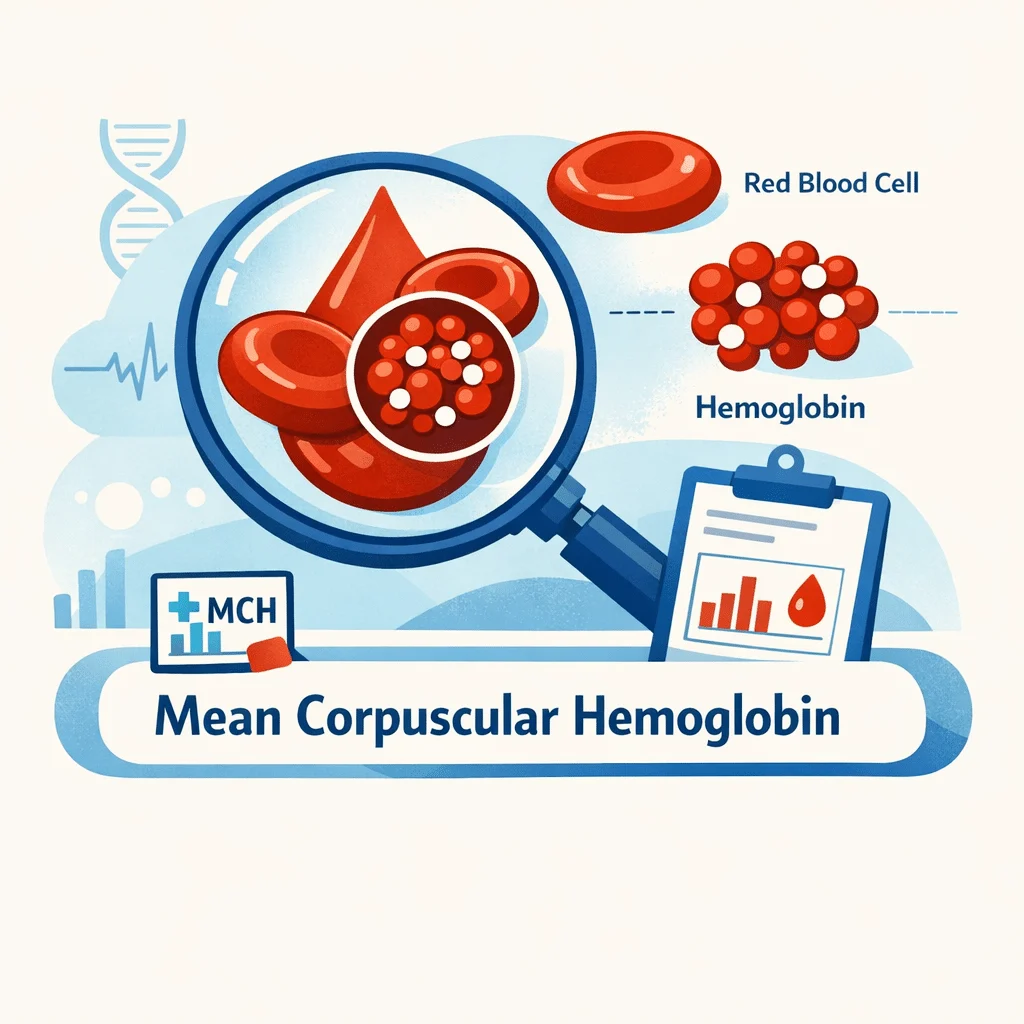
L'esame MCH misura la quantità media di emoglobina contenuta in ciascun globulo rosso, un valore che i medici chiamano emoglobina corpuscolare media, o MCH. È uno degli indici eritrocitari riportati automaticamente ogni volta che si esegue un emocromo completo. In questo articolo scoprirai cosa significa il tuo valore MCH, cosa può indicare un risultato alto o basso, come si confronta con altri parametri correlati come MCV e MCHC, e quando un risultato merita una chiamata al medico piuttosto che un approccio attendistico.
Cos'è l'emoglobina corpuscolare media (MCH)?
L'emoglobina corpuscolare media è il peso medio dell'emoglobina contenuta in un singolo globulo rosso, generalmente espressa in picogrammi (pg), un'unità pari a un millesimo di miliardesimo di grammo. L'emoglobina è la proteina ricca di ferro che dà al sangue il suo colore rosso e svolge il compito di trasportare l'ossigeno dai polmoni a ogni tessuto del corpo.
Il midollo osseo, il tessuto molle all'interno delle ossa, produce continuamente nuovi globuli rossi e li carica di emoglobina prima di immetterli nel circolo sanguigno. Il valore MCH è essenzialmente una fotografia di quanto funziona bene questo processo di caricamento. Poiché riflette il contenuto di emoglobina di una cellula media anziché l'emoglobina totale nel sangue, si comporta in modo diverso rispetto a un semplice dosaggio dell'emoglobina e aggiunge un ulteriore livello di informazioni all'emocromo completo.
Perché il tuo valore MCH è importante
I globuli rossi e l'ossigeno che trasportano influenzano quasi ogni sistema del corpo, quindi una variazione nel test del sangue MCH può essere un segnale precoce molto prima che tu noti i sintomi. I medici di solito non agiscono sull'MCH da solo. Lo leggono invece insieme all'emoglobina, all'ematocrito e agli altri indici dei globuli rossi per avere un quadro più completo della tua risultati dell'emocromo.
In pratica, un MCH basso riscontrato durante un controllo di routine potrebbe spingere il medico a chiederti dell'alimentazione, della stanchezza o di mestruazioni abbondanti, mentre un MCH alto potrebbe portare a domande sul consumo di alcol, sui farmaci o sulla qualità della dieta. Usato in questo modo, l'MCH diventa un punto di partenza per una conversazione, non una diagnosi in sé.
MCH, MCV e MCHC: qual è la differenza?
L'MCH viene spesso confuso con due valori correlati, MCV e MCHC, perché tutti e tre descrivono i globuli rossi e spesso variano insieme. Capire la differenza tra loro rende il tuo referto di laboratorio molto più facile da leggere.
L'MCV, ovvero volume corpuscolare medio, misura la dimensione media dei tuoi globuli rossi in femtolitri. L'MCH misura la quantità media di emoglobina per cellula in picogrammi. L'MCHC, ovvero concentrazione corpuscolare media dell'emoglobina, misura quanto è concentrata quell'emoglobina rispetto al volume della cellula, espressa in grammi per decilitro; puoi approfondire nella nostra guida al test del sangue MCHC e ai suoi risultati. In pratica, le cellule piccole di solito contengono meno emoglobina (MCV basso e MCH basso insieme), mentre le cellule grandi ne contengono di più (MCV alto e MCH alto insieme), ed è per questo che i tre valori tendono a variare nella stessa direzione.
| Marcatore | Cosa misura | Intervallo tipico per adulti |
|---|---|---|
| MCV | Dimensione media di un globulo rosso | 80–100 fL |
| MCH | Quantità media di emoglobina per globulo rosso | 27–33 pag. |
| MCHC | Concentrazione di emoglobina all'interno della cellula | 32–36 g/dL |
Come leggere i risultati del tuo test del sangue MCH
Quando ricevi il referto, cerca la riga dell'MCH con il valore misurato, la sua unità (pg) e l'intervallo di riferimento riportato accanto. La maggior parte dei laboratori fissa il range di normalità per gli adulti tra 27 e 33 pg, anche se i valori esatti possono variare leggermente da un laboratorio all'altro in base alle apparecchiature e alla popolazione utilizzata per stabilirli.
Gli intervalli di riferimento sono costruiti statisticamente per includere circa il 95% di una popolazione sana, il che significa che una piccola percentuale di persone sane può naturalmente ricadere appena fuori dall'intervallo indicato senza avere alcun problema sottostante. Un valore contrassegnato da un asterisco, un colore o una freccia significa semplicemente che si trova al di fuori di questa finestra statistica, non che ci sia necessariamente qualcosa che non va. Solo il tuo medico, lavorando con la tua storia completa e gli altri risultati degli esami, può dirti cosa significa il tuo valore specifico per te.
Perché i laboratori usano intervalli di riferimento diversi
Potresti notare che l'intervallo MCH riportato su un referto non corrisponde esattamente a quello che trovi altrove. È normale. Ogni laboratorio calibra i propri analizzatori e definisce la propria popolazione di riferimento, quindi gli intervalli possono variare leggermente in base alla regione, al tipo di strumentazione, alla fascia d'età e persino all'etnia. Per questo motivo, confrontare il tuo risultato con l'intervallo stampato dal tuo laboratorio è sempre più affidabile che confrontarlo con un valore proveniente da un'altra fonte.
MCH basso: cosa può significare
Un valore MCH basso, talvolta chiamato ipocromia, indica che i tuoi globuli rossi contengono meno emoglobina del normale. Di solito è il segnale che l'organismo ha difficoltà a produrre o a caricare una quantità sufficiente di emoglobina nei nuovi globuli rossi.
Carenza di ferro
La carenza di ferro è di gran lunga la causa più comune di un risultato basso al test MCH nel sangue, poiché il ferro è un elemento fondamentale della molecola dell'emoglobina. Senza abbastanza ferro, il midollo osseo non riesce semplicemente a produrre una quantità sufficiente di emoglobina, e i globuli rossi di nuova formazione risultano più piccoli e più pallidi del solito. Le persone con carenza di ferro riferiscono spesso una stanchezza persistente che non migliora con il riposo, un pallore insolito all'interno della palpebra inferiore, unghie fragili, diradamento dei capelli o una maggiore sensibilità al freddo. Se il tuo MCH è basso, il tuo medico controllerà in genere la ferritina, che riflette le tue riserve di ferro e il loro eventuale esaurimento, e potrebbe richiedere un pannello più ampio per interpretare i risultati del pannello del metabolismo del ferro nel loro insieme.
Talassemia e altre cause ereditarie
Le talassemie sono un gruppo di malattie del sangue ereditarie che compromettono la capacità dell'organismo di produrre catene normali di emoglobina, generando globuli rossi più piccoli con un MCH basso dalla nascita e non per una carenza alimentare. Le persone con tratto talassemico presentano spesso un MCH stabilmente basso che non risponde all'integrazione di ferro: è proprio questo uno degli indizi che spinge il medico verso un test genetico anziché verso una valutazione della carenza di ferro. Per confermare questa diagnosi si utilizza un esame del sangue specifico chiamato elettroforesi dell'emoglobina.
Infiammazione cronica e malattie di lunga durata
Infezioni prolungate, malattie renali e alcune condizioni infiammatorie croniche possono anch'esse abbassare l'MCH, perché l'infiammazione persistente interferisce con il modo in cui l'organismo gestisce e utilizza il ferro, anche quando le riserve totali di ferro non sono esaurite. Questo quadro, talvolta chiamato anemia da malattia cronica, di solito migliora una volta che la malattia di base viene trattata o tenuta sotto controllo.
MCH alto: cosa può significare
Un valore di MCH elevato, talvolta definito ipercromia, indica che i tuoi globuli rossi sono in media più grandi e contengono più emoglobina del normale. Questo quadro si sovrappone molto spesso a un MCV alto nello stesso referto, poiché le cellule più grandi hanno generalmente spazio per contenere più emoglobina.
Carenza di vitamina B12 o folati
La causa principale di un MCH alto è l'anemia megaloblastica, che si sviluppa per una carenza di vitamina B12 o di vitamina B9, chiamata anche folato. Entrambe le vitamine sono indispensabili per la normale divisione e maturazione dei globuli rossi nel midollo osseo, e senza una quantità sufficiente di una o dell'altra il midollo produce globuli rossi anormalmente grandi e immaturi. Oltre ai classici sintomi dell'anemia, una carenza di B12 in particolare può causare sintomi neurologici come formicolio o intorpidimento alle mani e ai piedi, difficoltà di equilibrio o problemi di memoria: ecco perché i medici prendono sul serio un MCH alto anziché considerarlo una semplice curiosità di laboratorio. Per confermare la causa si ricorre di solito a un dosaggio diretto dei livelli di vitamina B12 e cosa indicano i risultati alterati insieme a un esame del folato nel sangue e i suoi valori di riferimento.
Consumo di alcol, malattie del fegato e altre cause
Il consumo cronico e abbondante di alcol può aumentare l'MCH agendo direttamente sulle membrane dei globuli rossi e interferendo con l'assorbimento delle vitamine del gruppo B. Alcune malattie del fegato alterano la normale produzione di globuli rossi attraverso un meccanismo diverso e possono dare lo stesso risultato elevato. Meno frequentemente, una tiroide ipoattiva (ipotiroidismo) e alcuni farmaci, tra cui certi anticonvulsivanti che riducono l'assorbimento del folato, sono associati a un valore MCH più alto.
Una guida alle decisioni: cosa fare in base al tuo MCH
Poiché il passo successivo più adatto dipende molto dalla direzione in cui il risultato del tuo esame MCH è anomalo e da cosa altro compare nel referto, una semplice guida alle decisioni può aiutarti a impostare la conversazione con il tuo medico, senza sostituirla.
| Il tuo risultato MCH | Cosa fare di solito |
|---|---|
| Basso, con ferritina bassa | Approfondimento per carenza di ferro; revisione dell'alimentazione e integrazione di ferro su consiglio del tuo medico |
| Basso, con ferritina normale e nessuna risposta al ferro | Possibile tratto talassemico; potrebbe essere presa in considerazione l'elettroforesi dell'emoglobina |
| Alto, con stanchezza o sintomi neurologici | Dosaggio di vitamina B12 e folato; valutazione medica tempestiva |
| Leggermente fuori range, nessun sintomo | Spesso si ripete semplicemente l'esame dopo qualche mese per confermare un'eventuale tendenza |
Quando consultare il medico per i tuoi risultati MCH
La maggior parte dei risultati anomali all'esame MCH non sono emergenze mediche, e molti si risolvono una volta identificata e trattata la causa sottostante, come una carenza di ferro. Tuttavia, alcune situazioni richiedono attenzione più tempestiva rispetto a un normale controllo di routine.
Contatta il tuo medico prima possibile se il tuo MCH è molto al di fuori del range di riferimento e non solo leggermente anomalo, poiché scostamenti maggiori hanno più probabilità di riflettere un processo sottostante reale. Hai anche sintomi di anemia come stanchezza marcata, difficoltà respiratoria con le normali attività, pallore insolito o battito cardiaco accelerato, perché i sintomi associati a un valore anomalo hanno più peso del numero da solo. Noti sintomi neurologici come formicolio, intorpidimento o problemi di equilibrio, che possono accompagnare una carenza di vitamina B12 e meritano una valutazione tempestiva. Il tuo MCH è cambiato in modo significativo rispetto a un esame precedente, poiché una tendenza chiara è spesso più informativa di una singola misurazione. Sei in gravidanza e noti un MCH in calo, in particolare nel secondo o terzo trimestre, poiché il fabbisogno di ferro aumenta notevolmente in questo periodo.
Per un'anomalia lieve e isolata senza sintomi, il tuo medico potrebbe semplicemente suggerirti di ricontrollare il valore dopo qualche mese, invece di iniziare subito un trattamento. Per una deviazione più significativa, di solito si raccomanda un monitoraggio più ravvicinato o ulteriori esami; in caso di anomalia grave o di una condizione sottostante confermata, il tuo medico elaborerà un piano di follow-up personalizzato.
Consigli su alimentazione e stile di vita per un MCH equilibrato
L'alimentazione svolge un ruolo di supporto importante una volta che il tuo medico ha individuato la causa di un risultato anomalo del test MCH nel sangue, ma deve affiancare — e non sostituire — le indicazioni mediche.
Se il tuo MCH è basso
Punta sugli alimenti ricchi di ferro quando un MCH basso è legato a una carenza di ferro. Il ferro eme, presente nella carne rossa magra, nel pollame e nei frutti di mare, viene assorbito più facilmente rispetto al ferro non eme contenuto in lenticchie, ceci, tofu e spinaci. Abbinare i pasti ricchi di ferro a una fonte di vitamina C — come agrumi, peperoni o broccoli — migliora sensibilmente la quantità di ferro assorbita dall'organismo. Il tè e il caffè contengono composti chiamati tannini che possono ridurre l'assorbimento del ferro, quindi può essere utile evitarli intorno ai pasti se stai cercando attivamente di aumentare le tue riserve di ferro.
Se il tuo MCH è alto
Quando una carenza vitaminica è alla base di un MCH elevato, dai la priorità agli alimenti ricchi di vitamina B12, tra cui frattaglie, pesce grasso come il salmone, uova e latticini; chi segue una dieta vegana spesso ha bisogno di alimenti arricchiti o di un integratore per raggiungere livelli adeguati di B12. Tra le fonti di folati troviamo le verdure a foglia verde scura come spinaci e cavolo riccio, insieme a lenticchie, asparagi e avocado. Poiché l'alcol interferisce con il modo in cui l'organismo assorbe e utilizza le vitamine del gruppo B, ridurne il consumo può favorire il recupero insieme a qualsiasi trattamento consigliato dal tuo medico.
Ultimi progressi scientifici
Le ricerche più recenti continuano ad affinare il modo in cui i clinici utilizzano l'MCH e gli altri indici eritrocitari nella pratica quotidiana. Una revisione sistematica con meta-analisi del 2025 ha raccolto dati da dodici studi condotti in Arabia Saudita, riscontrando una variazione considerevole negli intervalli di riferimento dell'MCH riportati tra regioni e laboratori diversi, anche dopo aver corretto per età e sesso. Cosa significa per te: i valori normali non sono uguali per tutti, e l'intervallo specifico riportato sul tuo referto di laboratorio — non un numero trovato online — è quello che dovrebbe guidare la lettura del tuo risultato. Questa scoperta è ancora in fase di conferma su altre popolazioni, quindi va intesa come un invito all'interpretazione specifica per laboratorio, non come una nuova regola definitiva.
Uno studio di laboratorio decennale separato ha esaminato come l'MCH si comporta quando combinato con il conteggio dei globuli rossi e l'ampiezza di distribuzione eritrocitaria (una misura di quanto variano le dimensioni delle cellule) per individuare forme rare e più difficili da diagnosticare di talassemia che richiedono conferma genetica. I ricercatori hanno scoperto che aggiungere questi valori aggiuntivi a un risultato MCH basso migliorava significativamente il rilevamento di questi casi poco comuni rispetto all'analisi del solo MCH. Cosa significa per te: se il tuo MCH rimane basso nonostante livelli di ferro normali, il fatto che il tuo medico valuti insieme diversi indici eritrocitari, e non solo il valore MCH da solo, è un approccio genuinamente basato sull'evidenza per individuare precocemente le cause ereditarie. Come per la maggior parte degli studi di laboratorio condotti in un singolo centro, questi risultati sono preliminari e necessiterebbero di conferma su gruppi di pazienti più ampi e diversificati prima di modificare la pratica di screening di routine.
Domande frequenti sul test del sangue MCH
È possibile avere un MCH normale ed essere comunque anemici?
Sì, è possibile. L'anemia è definita da una quantità totale di emoglobina bassa nel sangue, che è una misurazione diversa dalla quantità media di emoglobina per cellula rilevata dall'MCH. Potresti avere un MCH normale insieme a un numero ridotto di globuli rossi, il che può verificarsi dopo una perdita di sangue improvvisa o in presenza di alcune malattie croniche. È esattamente per questo che i medici leggono tutti i valori dell'emocromo insieme, piuttosto che basarsi su un singolo dato.
Cosa significa un MCH basso in un esame del sangue?
Un risultato basso al test MCH significa che i tuoi globuli rossi contengono meno emoglobina rispetto alla media attesa per un adulto sano, nella maggior parte dei casi perché l'organismo non dispone di ferro sufficiente per caricare completamente ogni nuova cellula. I tratti talassemici, l'infiammazione cronica e alcune malattie croniche possono produrre lo stesso quadro. Il tuo medico verificherà in genere la ferritina e altri marcatori del ferro per individuare la causa specifica prima di consigliare un trattamento.
Cosa significa un MCH alto in un esame del sangue?
Un MCH alto di solito indica che i tuoi globuli rossi sono più grandi della media e contengono più emoglobina del previsto, il che è spesso collegato a una carenza di vitamina B12 o folati. L'uso cronico di alcol, alcune patologie epatiche e una tiroide ipoattiva possono anch'essi aumentare questo valore. Poiché la carenza di vitamina B12 può colpire il sistema nervoso se non trattata, un MCH alto merita generalmente di essere discusso con il tuo medico piuttosto che tenuto sotto osservazione a tempo indeterminato.
Alcuni farmaci possono influenzare l'esame del sangue MCH?
Sì, alcuni farmaci possono influenzare il valore dell'MCH. Certi anticonvulsivanti, ad esempio, possono ridurre l'assorbimento di folati e nel tempo possono far aumentare l'MCH. Comunica sempre al tuo medico tutti i farmaci e gli integratori che assumi, poiché questo contesto lo aiuta a interpretare correttamente un risultato anomalo dell'MCH nel sangue, evitando di attribuirlo a una causa sbagliata.
Come si dovrebbe interpretare un MCH borderline?
Un valore di MCH appena fuori dal range normale richiede attenzione, non allarme. Ciò che conta di più rispetto al singolo numero è l'andamento nel tempo: un valore stabile, al limite della norma e senza sintomi, può semplicemente riflettere la tua baseline personale, mentre un valore che continua ad allontanarsi dalla norma è più probabile che segnali un problema in sviluppo che vale la pena approfondire. Il contesto, compresi i tuoi sintomi e gli altri valori del sangue, fa sempre parte del quadro complessivo.
La gravidanza influenza l'MCH?
Durante la gravidanza, il volume totale del sangue aumenta notevolmente, ma il valore dell'MCH di solito rimane abbastanza stabile. Tuttavia, il fabbisogno di ferro aumenta significativamente per sostenere la crescita del feto e della placenta, quindi un MCH in calo, in particolare nel secondo o terzo trimestre, può indicare una carenza di ferro in sviluppo. I medici in genere adattano il modo in cui interpretano gli indici dei globuli rossi durante la gravidanza, tenendo conto di questi normali cambiamenti fisiologici.
Glossario
| Termine | Definizione |
|---|---|
| MCH (emoglobina corpuscolare media) | La quantità media di emoglobina contenuta in un singolo globulo rosso, misurata in picogrammi (pg). |
| Emoglobina | La proteina ricca di ferro all'interno dei globuli rossi che trasporta l'ossigeno dai polmoni al resto del corpo. |
| Ipocromia | Una condizione in cui i globuli rossi contengono meno emoglobina del normale, spesso associata a un MCH basso. |
| Ipercromia | Una condizione in cui i globuli rossi contengono più emoglobina del normale, spesso associata a un MCH alto. |
| MCV (volume corpuscolare medio) | La dimensione media di un globulo rosso, misurata in femtolitri (fL). |
| MCHC (concentrazione media di emoglobina corpuscolare) | La concentrazione media di emoglobina all'interno dei globuli rossi, in rapporto al loro volume. |
| Ferritina | Una proteina che immagazzina il ferro all'interno delle cellule; il suo livello nel sangue riflette la quantità di ferro di riserva nell'organismo. |
| Talassemia | Un gruppo di malattie del sangue ereditarie che compromettono la normale produzione di emoglobina. |
| Anemia megaloblastica | Un tipo di anemia causata dalla carenza di vitamina B12 o di folati, caratterizzata da globuli rossi anormalmente grandi. |
| Intervallo di riferimento | L'intervallo di valori considerati normali per una popolazione sana, stabilito individualmente da ciascun laboratorio. |
Fonti
- Emoglobina corpuscolare media (MCH) — Clinica di Cleveland
- Indici eritrocitari (globuli rossi) — MedlinePlus, National Library of Medicine (NIH)
- Anemia da carenza di vitamina B12 — National Heart, Lung, and Blood Institute (NIH)
- Naila Shaheen et al. — Hematological parameters’ reference intervals in apparently healthy individuals in Saudi Arabia: a systematic review and meta-analysis — Frontiers in Medicine, 2025 — https://doi.org/10.3389/fmed.2025.1522492
- Bente Fjeld et al. — Additional value of red blood cell parameters in predicting uncommon α-thalassemia; experience from 10 years of α-globin gene sequencing and copy number variation analysis — International Journal of Laboratory Hematology, 2022 — https://doi.org/10.1111/ijlh.14010
Approfondimenti
- Scopri come leggere i tuoi esami del sangue nel complesso
- Capisci l'emoglobina e il suo legame con l'MCH
- Esplora un risultato elevato della capacità totale di legame del ferro
- Scopri cosa include di solito un emocromo completo
- Analizza i valori alti di MCV e le loro cause più comuni
Leggere un risultato MCH insieme ai valori di emoglobina, MCV, ferritina e vitamina B12 può sembrare come mettere insieme un puzzle senza avere l'immagine di riferimento. AI DiagMe ti aiuta a tradurre questi valori correlati in un linguaggio semplice, così puoi vedere il quadro complessivo del tuo referto invece di concentrarti su una singola voce segnalata. È pensato per aiutarti a capire i tuoi risultati e a preparare domande più mirate per il medico, non per farti una diagnosi né per sostituire il giudizio del tuo dottore.
Scopri i tuoi referti con AI DiagMe
Ottieni l'interpretazione dei tuoi risultati in pochi minuti