

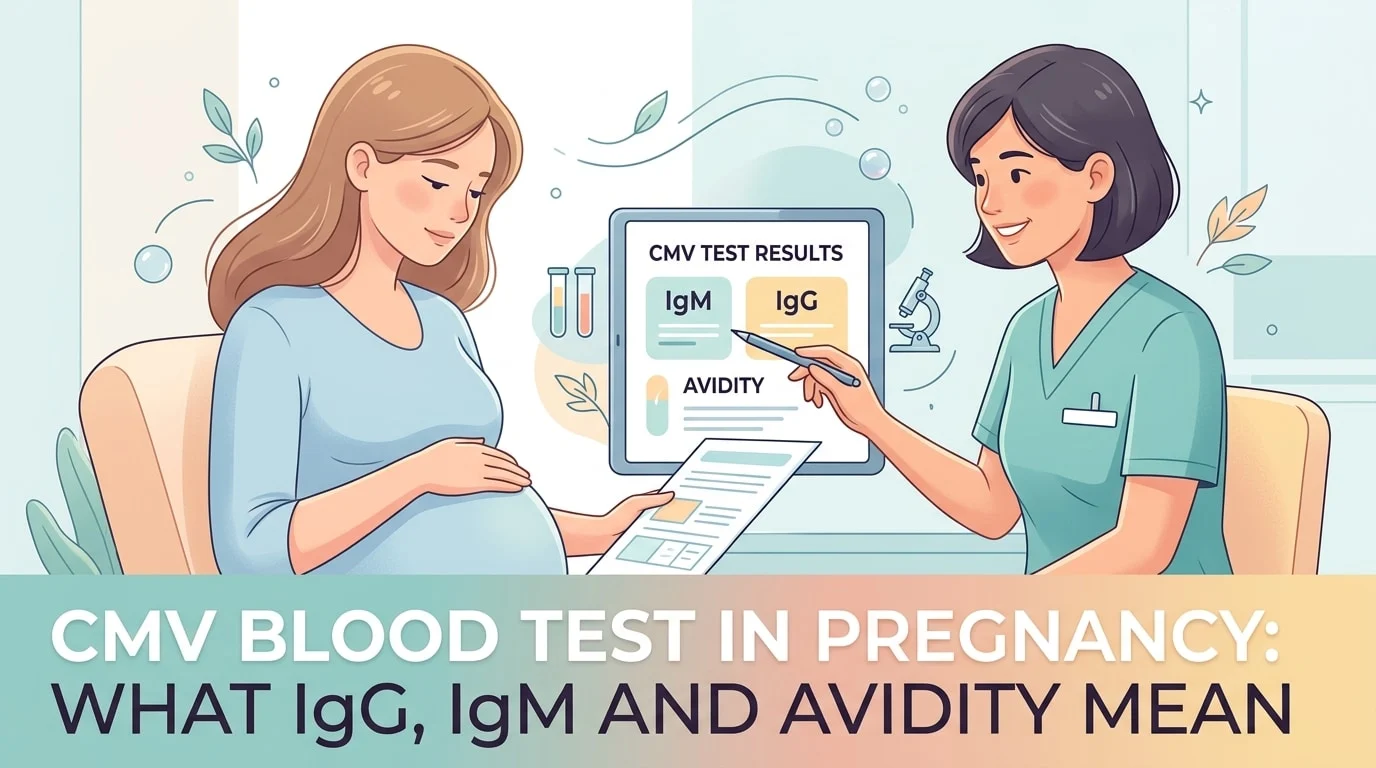
Hasil pemeriksaan darah CMV termasuk yang paling sulit dibaca sendiri. Biasanya hasilnya terdiri dari dua baris, IgG dan IgM, kadang ditambah nilai ketiga yang disebut aviditas — dan kombinasi ketiganya jauh lebih penting daripada satu nilai saja. Topik ini sedang ramai dibicarakan karena Prancis baru saja mengambil langkah lebih jauh dari kebanyakan negara: pada 4 Agustus 2026, otoritas kesehatan nasionalnya menerbitkan protokol lengkap yang memberi panduan jelas kepada para klinisi tentang apa yang harus dilakukan setelah skrining sitomegalovirus pada trimester pertama. Amerika Serikat belum mengambil langkah tersebut. Dalam artikel ini, Anda akan memahami arti setiap pola hasil, bagaimana praktik di AS berbeda, dan apa yang terjadi ketika infeksi baru dikonfirmasi.
Mengapa tes CMV kembali menjadi perbincangan
Cytomegalovirus sangat umum dan biasanya tidak berbahaya. Sekitar separuh orang dewasa sudah pernah terinfeksi, sebagian besar tanpa pernah menyadarinya. Kekhawatiran muncul pada kondisi yang spesifik: infeksi pertama dalam dua bulan sebelum pembuahan atau selama trimester pertama dapat menjangkau janin dan menyebabkan gangguan pendengaran atau efek neurologis. CMV kongenital memengaruhi sebagian kecil kelahiran, namun tercatat sebagai penyebab infeksi terbesar dari kecacatan bawaan.
Prancis kini merekomendasikan agar setiap wanita hamil yang belum kebal atau yang status kekebalannya tidak diketahui ditawarkan pemeriksaan serologi, diulang setiap empat minggu hingga usia kehamilan 14 minggu, dan skrining dihentikan setelah titik tersebut karena risiko bahaya di luar trimester pertama hampir nol. Panduan di AS masih bersifat selektif. Mayo Clinic mencatat bahwa skrining CMV rutin bukan merupakan standar dalam perawatan kehamilan di Amerika; pemeriksaan dilakukan ketika ada paparan yang diketahui, ketika muncul gejala seperti demam dan pembengkakan kelenjar, ketika USG menunjukkan temuan yang mengindikasikan infeksi, atau ketika ibu mengalami gangguan imun.
Cara membaca hasil tes darah CMV
Dua kelas antibodi berperan penting. Antibodi IgM muncul lebih awal dan mengindikasikan kemungkinan infeksi yang baru terjadi. Antibodi IgG muncul belakangan dan bertahan seumur hidup, menandai kontak masa lalu dengan virus. Perpustakaan kami juga menjelaskan panel tes serologi dan kegunaannya.
| Pola hasil | Apa yang disarankan | Langkah selanjutnya yang umum |
|---|---|---|
| IgG negatif, IgM negatif | Tidak ada riwayat infeksi, sehingga tidak ada kekebalan | Konseling pencegahan; tes diulang jika kemungkinan terpapar |
| IgG positif, IgM negatif | Infeksi di masa lalu, tidak ada tanda infeksi baru | Biasanya tidak diperlukan pemeriksaan lebih lanjut |
| IgG positif, IgM positif, avidity rendah | Sesuai dengan infeksi pertama yang baru terjadi | Dirujuk ke spesialis kedokteran ibu dan janin; PCR cairan ketuban dipertimbangkan |
| IgG positif, IgM positif, avidity tinggi | Infeksi lama; IgM bisa bertahan lama atau muncul kembali | Ketenangan pikiran, dengan tinjauan konteks klinis |
| IgG berubah menjadi positif di antara dua sampel | Serokonversi, artinya infeksi terjadi di antara dua pengambilan darah | Rujukan ke spesialis dan penentuan waktu infeksi |
Mengapa IgM positif saja tidak membuktikan apa pun
Inilah bagian dari laporan yang paling sering disalahartikan. CDC menyatakan dengan jelas bahwa IgM saja tidak cukup untuk mendiagnosis infeksi pertama, karena IgM dapat tetap terdeteksi selama berbulan-bulan, muncul kembali saat reaktivasi, atau menjadi positif akibat penyakit virus lain yang tidak berkaitan. Tingkat hasil positif palsu cukup tinggi sehingga tidak ada keputusan yang boleh didasarkan hanya pada baris tersebut.
Pengujian aviditas membantu memecahkan sebagian masalah ini. Pengujian ini mengukur seberapa kuat antibodi IgG mengikat virus. Setelah infeksi pertama, ikatan dimulai dengan lemah dan berkembang menjadi kuat dalam waktu sekitar dua hingga empat bulan, sehingga aviditas rendah menunjukkan kejadian yang baru terjadi, sedangkan aviditas tinggi menunjukkan infeksi yang sudah lama. Ada satu catatan penting di Amerika Serikat: uji aviditas komersial belum mendapat persetujuan FDA, sehingga laboratorium dan dokter menginterpretasikannya dengan hati-hati. Pembaca yang ingin membandingkan pola di berbagai jenis infeksi juga dapat meninjau hasil IgG dan IgM Toksoplasma, yang mengikuti logika antibodi yang sama.
Infeksi CMV juga dapat meningkatkan jumlah sel darah putih, itulah mengapa sebagian orang pertama kali menyadari adanya sesuatu yang tidak biasa setelah meninjau jumlah limfosit tinggi dan penyebabnya. Temuan tersebut bersifat tidak spesifik dan tidak pernah dapat dijadikan diagnosis tersendiri. Perpustakaan kami juga membahas secara rinci tes darah imunoglobulin G (IgG).
Apa yang terjadi ketika infeksi baru dikonfirmasi
Serologi menentukan waktu infeksi pada ibu. Namun, tes ini tidak dapat memberi tahu apakah virus telah mencapai janin. Pertanyaan tersebut dijawab melalui PCR pada cairan ketuban, yang umumnya ditawarkan mulai sekitar usia kehamilan 18 minggu dan tidak lebih awal dari sekitar 21 hari setelah dugaan infeksi pada ibu. Hasil negatif memberikan ketenangan; hasil positif mengalihkan perawatan ke tim spesialis dengan pemantauan USG berkala dan, dalam banyak protokol, MRI janin di akhir kehamilan.
Pengobatan antiviral telah mengubah cara pandang terhadap kondisi ini. Valasiklovir oral dosis tinggi yang dimulai lebih awal setelah infeksi trimester pertama dapat menurunkan kemungkinan penularan ke janin. Prancis kini telah memasukkan ini ke dalam jalur nasionalnya melalui kerangka penggunaan compassionate-use. Di AS, obat ini digunakan secara off-label di pusat-pusat khusus dan bukan sebagai perawatan rutin, sehingga ketersediaannya bergantung pada tempat Anda ditangani.
Untuk bayi baru lahir, aturannya berbeda. Tes antibodi tidak dapat mendiagnosis CMV kongenital pada bayi, karena IgG ibu dapat melewati plasenta. Diagnosis bergantung pada PCR dari sampel air liur atau urine yang diambil dalam tiga minggu pertama kehidupan. Panduan kami juga mencakup panel lengkap tes darah selama kehamilan.
Kemajuan ilmiah terkini
Penelitian terbaru menjelaskan mengapa panduan medis terus berkembang. Berikut ini adalah temuan-temuannya, dalam bahasa yang mudah dipahami.
Pengobatan antiviral secara bermakna mengurangi penularan. Sebuah meta-analisis yang menggabungkan data individual dari beberapa uji klinis, mencakup lebih dari 500 wanita yang terinfeksi sekitar waktu pembuahan atau di awal kehamilan, menemukan bahwa virus menjangkau janin sekitar sepertiga lebih jarang pada wanita yang mendapat pengobatan dibandingkan yang tidak. Artinya bagi Anda: hasil serologi yang mengkhawatirkan kini membuka pilihan pengobatan, bukan sekadar menunggu dan memantau.
Waktu sangat menentukan manfaat pengobatan. Sebuah tim dari Israel memperbarui protokolnya sendiri dengan memulai pengobatan beberapa minggu lebih awal dan melihat penurunan signifikan pada hasil amniosentesis positif dibandingkan dengan kelompok yang tidak diobati dalam uji coba awal mereka. Artinya bagi Anda: nilai pemeriksaan dini bukan sekadar administratif, melainkan klinis, karena jendela waktu untuk pengobatan yang efektif sangatlah singkat.
Skrining trimester pertama secara menyeluruh sangat memungkinkan. Sebuah studi kohort, yaitu kelompok yang dipantau dari waktu ke waktu, melibatkan lebih dari 3.000 ibu hamil di Barcelona dan melaporkan tingkat penerimaan tes yang tinggi. Sekitar satu dari lima wanita ternyata tidak memiliki kekebalan, dan sedikit kasus infeksi baru yang ditemukan berhasil ditangani tanpa adanya infeksi janin yang terkonfirmasi. Artinya bagi Anda: skrining sebagian besar bertujuan mengidentifikasi siapa yang membutuhkan saran pencegahan, bukan siapa yang sudah bermasalah.
Serologi memiliki keterbatasan nyata. Sebuah seri kasus dari Kanada menggambarkan CMV kongenital pada bayi yang ibunya memiliki hasil IgM negatif pada trimester kedua. Artinya bagi Anda: hasil normal di kemudian hari tidak menghilangkan nilai pemeriksaan dini, dan ketika USG menunjukkan kekhawatiran, PCR cairan ketuban adalah pemeriksaan yang memberikan kepastian. Sebuah tinjauan dari Inggris tahun 2024 mencapai kesimpulan serupa dan mencatat bahwa kebijakan skrining masih sangat bervariasi antar negara.
Kapan harus berbicara dengan dokter Anda
- Anda sedang hamil atau merencanakan kehamilan dan sering berada di sekitar anak-anak kecil, yang merupakan sumber utama penularan.
- Anda mengalami demam, kelelahan, sakit tenggorokan, atau pembengkakan kelenjar di awal kehamilan.
- Pemeriksaan USG melaporkan temuan seperti hambatan pertumbuhan, pembesaran ventrikel, atau perubahan pada usus.
- Hasil tes darah CMV Anda menunjukkan IgM positif, aviditas rendah, atau perubahan antara dua sampel.
- Bayi baru lahir Anda tidak lulus skrining pendengaran, yang merupakan pemicu yang diakui untuk pemeriksaan CMV di beberapa negara bagian.
Pencegahan tetap menjadi langkah terkuat dan tidak memerlukan biaya apa pun. Cuci tangan setelah mengganti popok dan membersihkan hidung anak, hindari berbagi peralatan makan, gelas, dan sikat gigi, hindari ciuman di mulut dengan balita, serta bersihkan permukaan yang terkena air liur anak. Infeksi sebelumnya tidak memberikan perlindungan penuh terhadap infeksi ulang, sehingga kebiasaan ini tetap bermanfaat bahkan bagi orang tua yang sudah pernah terinfeksi. Untuk konteks umum tentang cara membaca hasil pemeriksaan apa pun, lihat rentang normal hasil tes darah dan apa artinya.
Glosarium
| Ketentuan | Definisi |
|---|---|
| CMV (cytomegalovirus) | Virus dari keluarga herpes yang sangat umum. Sebagian besar infeksi tidak menimbulkan gejala dan tidak disadari. |
| Serologi | Tes darah yang mencari antibodi, bukan kuman itu sendiri, untuk menunjukkan apakah sistem imun Anda pernah bertemu dengannya. |
| IgM | Antibodi yang pertama kali terbentuk saat infeksi. Kehadirannya menunjukkan infeksi yang baru terjadi, namun belum membuktikannya. |
| IgG | Antibodi yang terbentuk belakangan dan bertahan dalam jangka panjang. Ini menandakan kontak di masa lalu dengan virus tersebut. |
| Aviditas IgG | Ukuran seberapa kuat antibodi mengikat virus. Aviditas rendah menunjukkan infeksi yang baru terjadi, sedangkan aviditas tinggi menunjukkan infeksi yang sudah lama. |
| Infeksi primer | Infeksi pertama seseorang terhadap suatu kuman tertentu, berbeda dengan reaktivasi atau reinfeksi. |
| Serokonversi | Perubahan dari hasil antibodi negatif menjadi positif antara dua kali pengambilan darah. |
| CMV Kongenital | Infeksi yang sudah ada pada bayi sejak lahir karena virus menyeberangi plasenta selama kehamilan. |
| PCR | Metode laboratorium yang mendeteksi materi genetik virus, memastikan keberadaannya secara nyata dalam sampel. |
| Amniosentesis | Pengambilan sejumlah kecil cairan ketuban, yang di sini digunakan untuk mendeteksi keberadaan virus di sekitar janin. |
Pertanyaan yang sering diajukan
Apakah hasil CMV IgG positif merupakan kabar buruk?
Umumnya tidak. IgG positif dengan IgM negatif berarti Anda pernah terinfeksi di masa lalu dan sistem imun Anda telah merespons. Dalam kehamilan, pola ini biasanya menenangkan, karena risiko tertinggi bagi bayi berasal dari infeksi pertama kali pada awal kehamilan. Namun kekebalan tidak bersifat mutlak, sehingga tindakan pencegahan kebersihan tetap perlu dilakukan.
Apakah Amerika Serikat memeriksa semua ibu hamil untuk CMV?
Tidak. Skrining CMV prenatal universal bukan praktik standar di AS. Pemeriksaan ditujukan bagi wanita dengan gejala, paparan yang diketahui, temuan USG yang mencurigakan, atau kondisi imunosupresi. Skrining bayi baru lahir terus berkembang di tingkat negara bagian, dengan beberapa negara bagian memeriksa setiap bayi dan yang lain memeriksa bayi yang gagal tes pendengaran.
Apa perbedaan antara tes darah CMV dan PCR CMV?
Tes darah CMV mengukur antibodi, yaitu catatan tubuh Anda tentang pertemuan dengan virus tersebut. PCR mencari virus itu sendiri dalam sampel seperti cairan ketuban, air liur, atau urine. Antibodi menjawab apakah dan kira-kira kapan Anda terinfeksi; PCR menjawab apakah virus sedang ada saat ini dalam sampel tertentu tersebut.
Apakah saya perlu berpuasa sebelum tes darah CMV?
Tidak. Serologi CMV adalah pengambilan darah standar yang tidak memerlukan puasa maupun persiapan khusus. Hasil biasanya tersedia dalam beberapa hari. Uji aviditas mungkin memerlukan waktu lebih lama, karena lebih sedikit laboratorium yang menjalankannya dan sampel terkadang dikirim ke laboratorium rujukan.
Apakah infeksi CMV dapat diobati selama kehamilan?
Tidak ada obatnya, tetapi pengobatan antivirus dengan valasiklovir yang dimulai lebih awal setelah infeksi trimester pertama dapat mengurangi kemungkinan virus mencapai janin. Penggunaan ini bersifat off-label di Amerika Serikat dan umumnya ditangani oleh spesialis kedokteran ibu-janin, sehingga keputusannya bersifat individual dan dibuat setelah diskusi mendalam mengenai manfaat dan efek samping.
Bayi saya mengalami CMV kongenital tetapi tampak baik-baik saja. Apa yang harus dilakukan sekarang?
Sebagian besar bayi baru lahir yang terinfeksi tidak menunjukkan tanda-tanda yang terlihat saat lahir, namun sebagian dapat mengalami gangguan pendengaran di kemudian hari. Itulah mengapa pemantauan terstruktur terhadap pendengaran dan perkembangan dianjurkan setidaknya selama beberapa tahun pertama kehidupan. Ketika bayi menunjukkan gejala saat lahir, pengobatan antivirus dapat memperbaiki hasil pendengaran dan perkembangan bagi sebagian besar dari mereka.
Sumber
- Centers for Disease Control and Prevention — Pemeriksaan Laboratorium untuk CMV dan CMV Kongenital, 2024 — baca panduan CDC
- MedlinePlus, US National Library of Medicine, National Institutes of Health — Cytomegalovirus (CMV) Tests, 2024 — baca halaman MedlinePlus
- Mayo Clinic — Cytomegalovirus (CMV) infection: diagnosis and treatment, 2025 — baca halaman Mayo Clinic
- Chatzakis C. et al. — Efek valasiklovir pada pencegahan sekunder infeksi sitomegalovirus kongenital, setelah infeksi maternal primer yang terjadi perikonepsional atau pada trimester pertama kehamilan: meta-analisis data pasien individual — American Journal of Obstetrics and Gynecology, 2023 — baca penelitiannya
- Amir J. et al. — Protokol yang diperbarui untuk pencegahan sekunder infeksi sitomegalovirus kongenital dengan valasiklovir setelah infeksi pada awal kehamilan — Clinical Infectious Diseases, 2023 — baca penelitiannya
- Sánchez-Durán M. Á. et al. — Universal Cytomegalovirus Screening in the First Trimester of Pregnancy: The Multicentre Observational Cohort Study in the Area of Barcelona (CITEMB Study) — BJOG, 2026 — baca penelitiannya
- Chan E. S. et al. — Serologi Sitomegalovirus (CMV) Maternal: Keterbatasan Diagnostik IgM dan Aviditas IgG CMV dalam Mendeteksi Infeksi CMV Kongenital — Pediatric and Developmental Pathology, 2024 — baca penelitiannya
- Khalil A. et al. — Congenital Cytomegalovirus Infection: Update on Screening, Diagnosis and Treatment (Scientific Impact Paper No. 56) — BJOG, 2024 — baca ulasannya
- Haute Autorité de Santé — Skrining sitomegalovirus trimester pertama pada kehamilan: tata laksana dan tindak lanjut, 4 Agustus 2026 — baca panduan Prancis
Bacaan lebih lanjut
- Cara Membaca Hasil Tes Darah Anda: Panduan Lengkap
- Hitung Sel Darah Lengkap (CBC): Cara Membaca Hasil Anda
- Hasil Tes Darah Abnormal: Apa Artinya dan Apa yang Harus Dilakukan
- Berapa Lama Hasil Tes Darah Keluar? Garis Waktu Berdasarkan Jenis Tes
- Apa yang Dapat Anda Harapkan Selama Tes Darah: Proses Lengkapnya
Pahami hasil lab Anda dengan AI DiagMe.
Pemeriksaan darah CMV jarang datang sendiri. Biasanya hadir sebagai bagian dari panel prenatal yang lebih lengkap, bersama pemeriksaan darah lengkap, golongan darah dan skrining antibodi, tes glukosa, serta serologi lainnya — dan maknanya baru terlihat jelas ketika semua hasil dibaca bersama-sama. AI DiagMe menerjemahkan laporan tersebut ke dalam bahasa yang mudah dipahami, sehingga Anda sudah mengerti apa yang diukur dan mengapa sebelum menemui dokter. Layanan ini membantu Anda memahami hasil Anda, bukan untuk mendiagnosis, dan tidak menggantikan dokter atau bidan Anda.
Dapatkan interpretasi hasil Anda dalam hitungan menit.