





एल्बुमिन ब्लड टेस्ट (Albumin Blood Test) यह मापता है कि आपका लिवर रक्त में कितना मुख्य प्रोटीन छोड़ता है, और यह परिणाम एक ही संख्या में आपके पोषण, लिवर और किडनी की स्थिति को समझने में मदद करता है। बहुत से लोग इस मार्कर (Marker) से पहली बार एक सामान्य मेटाबॉलिक पैनल (Metabolic Panel) में मिलते हैं और जल्दी जानना चाहते हैं कि उनका मान सामान्य है या डॉक्टर से बात करने योग्य। यह गाइड बताती है कि शरीर में एल्बुमिन क्या काम करता है, सामान्य रेंज क्या होती है, स्तर क्यों घटते या बढ़ते हैं, और डॉक्टर कोई निष्कर्ष निकालने से पहले इस परिणाम को अन्य मार्करों के साथ कैसे जोड़ते हैं। आपको यहाँ एक तुलना तालिका, शब्दावली, हालिया शोध और एक संक्षिप्त FAQ भी मिलेगा, ताकि आप अपनी अगली डॉक्टर अपॉइंटमेंट में स्पष्ट और सटीक सवाल लेकर जा सकें।
शरीर में एल्बुमिन (Albumin) क्या काम करता है
एल्बुमिन एक प्रोटीन है जो लगभग पूरी तरह लिवर द्वारा बनाया जाता है, और यह आपके रक्त प्लाज्मा में मौजूद कुल प्रोटीन का लगभग आधा हिस्सा होता है। रक्तप्रवाह में आने के बाद यह कई ऐसे काम करता है जो आपके शरीर के आंतरिक वातावरण को स्थिर रखते हैं और अंगों को जरूरी चीजें पहुँचाते हैं।
इसी नाम का एक प्रोटीन भोजन में भी पाया जाता है — देखें अंडे का एल्बुमिन (Egg Albumin) पोषण की दृष्टि से क्या लाभ देता है.
अपने रक्तप्रवाह को एक व्यस्त डिलीवरी नेटवर्क की तरह समझें। एल्बुमिन छोटे वाहक वाहनों के एक बेड़े की तरह काम करता है — यह तरल पदार्थ को रक्त वाहिकाओं के अंदर बनाए रखता है, हार्मोन और विटामिन को उनके गंतव्य तक पहुँचाता है, और आपके रक्त की रासायनिक संरचना को संतुलित रखने में मदद करता है। इस बेड़े का एक बड़ा हिस्सा खो जाना — चाहे उत्पादन कम होने से हो या अधिक नुकसान से — इस नेटवर्क के काम करने के तरीके को प्रभावित करता है।
चार मुख्य कार्य जो जानना जरूरी हैं
- ऑन्कोटिक दबाव (Oncotic Pressure) बनाए रखना, जो तरल पदार्थ को रक्त वाहिकाओं के अंदर रखता है — ताकि वह आसपास के ऊतकों में न रिसे और सूजन न हो।
- थायरॉइड हार्मोन (Thyroid Hormones), विटामिन A, D, E और K, फैटी एसिड (Fatty Acids), बिलीरुबिन (Bilirubin) और कई दवाओं जैसे पदार्थों को रक्तप्रवाह के ज़रिए एक जगह से दूसरी जगह पहुँचाना।
- रक्त का pH संतुलित रखना (Buffering Blood pH), जिससे आपका शरीर उस संकीर्ण एसिड-बेस संतुलन को बनाए रख सके जो कोशिकाओं के सामान्य कामकाज के लिए जरूरी है।
- एंटीऑक्सीडेंट सहायता प्रदान करना — कुछ ऐसे प्रतिक्रियाशील अणुओं को बाँधकर और निष्क्रिय करके जो अन्यथा ऊतकों को नुकसान पहुँचा सकते हैं।
क्योंकि यह मार्कर (Marker) शरीर की कई प्रणालियों को प्रभावित करता है, इसलिए डॉक्टर इसे कई कारणों से जाँचते हैं। यह आमतौर पर लिवर फंक्शन पैनल (Liver Function Panel), पोषण संबंधी मूल्यांकन और कॉम्प्रिहेंसिव मेटाबॉलिक पैनल (Comprehensive Metabolic Panel) में शामिल होता है। डॉक्टर इसे किडनी और सूजन (Inflammation) से जुड़े मार्करों के साथ भी देखते हैं। अकेले एल्बुमिन (Albumin) का एक मान पूरी तस्वीर नहीं बताता — यह तब सबसे उपयोगी होता है जब आपके डॉक्टर इसे समय के साथ एक व्यापक नैदानिक (Clinical) संदर्भ में देखते हैं।
एल्बुमिन (Albumin) की सामान्य रेंज और रिपोर्ट में परिणाम कैसे दिखते हैं
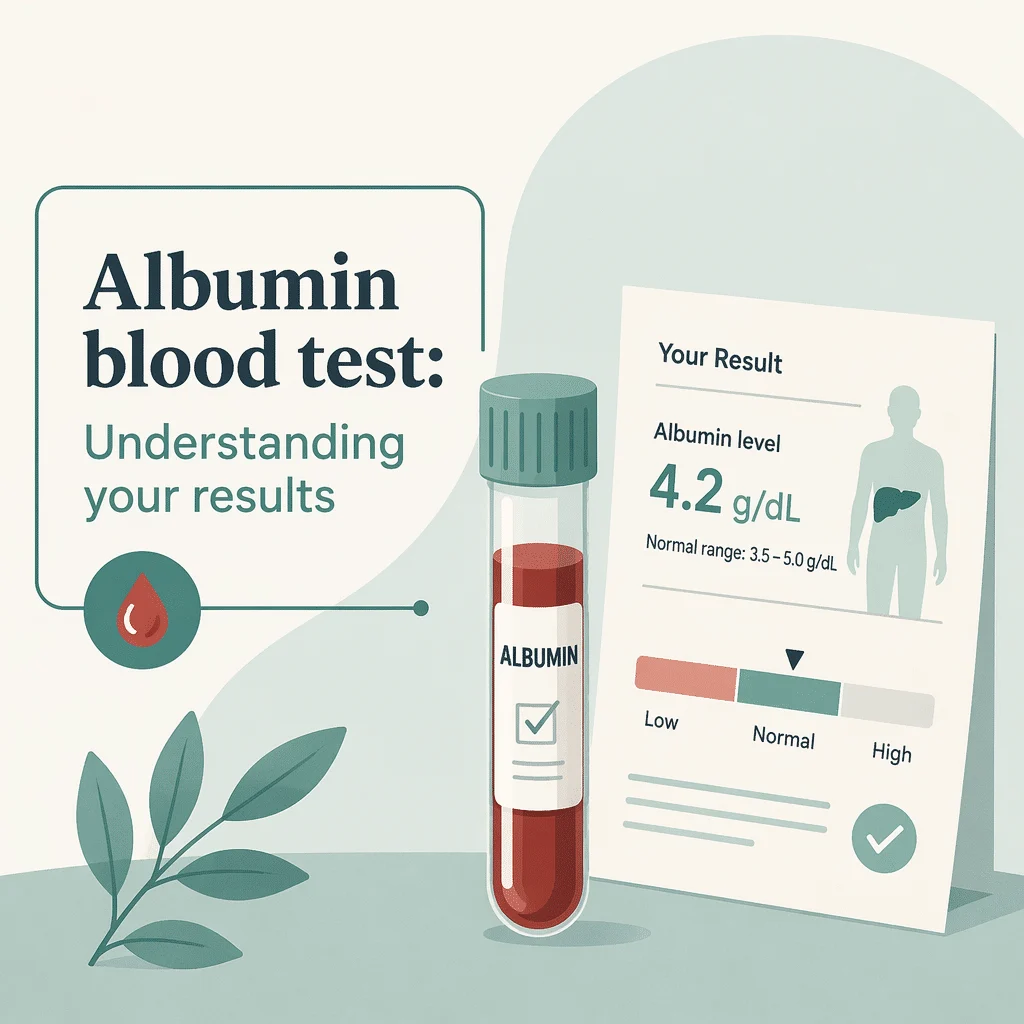
लैब रिपोर्ट में एल्बुमिन (Albumin) आमतौर पर बायोकेमिस्ट्री (Biochemistry) या प्रोटीन (Protein) सेक्शन में दिखता है, जिसके साथ उस लैब की अपनी संदर्भ सीमा (Reference Range) भी दी होती है। वयस्कों के लिए सामान्य रेंज लगभग 3.5 से 5.0 ग्राम प्रति डेसीलीटर (g/dL) होती है, जो लगभग 35 से 50 ग्राम प्रति लीटर (g/L) के बराबर है। अलग-अलग लैब अपने उपकरणों और स्थानीय आबादी के अनुसार थोड़ी भिन्न सीमाएँ इस्तेमाल कर सकती हैं, इसलिए किसी सार्वभौमिक संख्या पर निर्भर रहने की बजाय हमेशा अपनी रिपोर्ट पर छपी संदर्भ सीमा देखें।
परिणाम आमतौर पर इस तरह दिखता है: ALBUMIN 4.2 g/dL, संदर्भ सीमा 3.5 से 5.0 g/dL। जब कोई मान इस सीमा से बाहर होता है, तो लैब अक्सर एक तीर (Arrow), रंग कोड (Color Code) या अन्य चिह्न लगाती है।
अपना परिणाम देखते समय यह ज़रूर जाँचें
- देखें कि आपका मान आपकी लैब की अपनी संदर्भ सीमा के अंदर है या नहीं — किसी अन्य स्रोत की संख्या से तुलना न करें।
- जाँचें कि परिणाम के पास कोई तीर, रंग या तारे (*) का चिह्न तो नहीं है, जो इसे असामान्य बताता हो।
- किसी महत्वपूर्ण बदलाव का पता लगाने के लिए मौजूदा मान की तुलना पिछले एल्बुमिन (Albumin) परीक्षणों से करें।
- देखें कि संबंधित परिणाम — जैसे कुल प्रोटीन (Total Protein), लिवर एंजाइम (Liver Enzymes) या किडनी मार्कर (Kidney Markers) — भी असामान्य तो नहीं हैं।
- हाल की परिस्थितियों पर ध्यान दें — जैसे बीमारी, सर्जरी, गर्भावस्था या खान-पान में बड़ा बदलाव — जो किसी अस्थायी बदलाव की वजह हो सकती हैं।
एल्बुमिन कम होने के कारण (हाइपोएल्बुमिनेमिया / Hypoalbuminemia)
सामान्य सीमा से कम मान को हाइपोएल्बुमिनेमिया (Hypoalbuminemia) कहते हैं — यह अधिक सामान्य और आमतौर पर अधिक महत्वपूर्ण निष्कर्ष होता है। इसे कम करने वाले कई अलग-अलग कारण हो सकते हैं, और यह पता लगाने के लिए कि आप पर कौन-सा कारण लागू होता है, अकेले एल्बुमिन मान की बजाय आमतौर पर अतिरिक्त जाँच की ज़रूरत होती है।
लिवर से जुड़े कारण
चूँकि लिवर ही रक्त में मौजूद लगभग सारा एल्बुमिन (Albumin) बनाता है, इसलिए लिवर की कोशिकाओं को नुकसान पहुँचाने वाली स्थितियाँ — जैसे सिरोसिस (Cirrhosis) या क्रोनिक हेपेटाइटिस (Chronic Hepatitis) — इसके उत्पादन को सीधे कम कर सकती हैं। इस संदर्भ में कम मान अक्सर अन्य लिवर मार्करों में बदलाव के साथ आता है, इसलिए डॉक्टर आमतौर पर पूरी तस्वीर स्पष्ट करने के लिए पूरा लिवर पैनल (Liver Panel) माँगते हैं। अपने AST (SGOT) परीक्षण के परिणाम के साथ अपने ALT स्तर यह एक चिकित्सक को यह आकलन करने में मदद करता है कि क्या केवल कम संश्लेषण क्षमता के बजाय, चल रही लिवर कोशिका क्षति भी कम एल्बुमिन (Albumin) मान में योगदान दे रही है।
किडनी से संबंधित कारण
नेफ्रोटिक सिंड्रोम (Nephrotic Syndrome) और अन्य स्थितियाँ जो किडनी की फ़िल्टरिंग इकाइयों को नुकसान पहुँचाती हैं, इस प्रोटीन को मूत्र में रिसने देती हैं, जिससे रक्त में इसका स्तर तेज़ी से गिर जाता है — भले ही लिवर सामान्य रूप से इसका उत्पादन करता रहे। इस कारण की जाँच करते समय डॉक्टर आमतौर पर मूत्र एल्बुमिन-टू-क्रिएटिनिन अनुपात (Urine Albumin-to-Creatinine Ratio) के साथ-साथ सामान्य किडनी फ़ंक्शन टेस्ट भी करवाते हैं, और वे अक्सर आपकी अनुमानित ग्लोमेरुलर फिल्ट्रेशन दर (ईजीएफआर) यह देखने के लिए कि किडनी कुल मिलाकर कितनी कुशलता से फ़िल्टर कर रही है।
पोषण संबंधी कारण
चूँकि एल्बुमिन (Albumin) का उत्पादन पर्याप्त प्रोटीन और कैलोरी सेवन पर निर्भर करता है, इसलिए कुपोषण, लंबे समय तक प्रतिबंधात्मक आहार, या सीलिएक रोग (Celiac Disease) जैसी मैलएब्सॉर्प्शन (Malabsorption) स्थितियाँ धीरे-धीरे इसके स्तर को कम कर सकती हैं। यह पोषण संबंधी कारण ही एक वजह है कि चिकित्सक अब एल्बुमिन को केवल प्रोटीन सेवन के बजाय समग्र शारीरिक क्षमता के एक व्यापक संकेतक के रूप में देखने लगे हैं। चूँकि एल्बुमिन धीरे-धीरे बदलता है, इसलिए पोषण संबंधी कारण से इसका स्तर गिरने और सुधरने में हफ्ते लग जाते हैं — कुछ अन्य मार्करों की तरह यह जल्दी नहीं बदलता।
सूजन संबंधी कारण
शायद सबसे महत्वपूर्ण नैदानिक बारीकियाँ यह है कि एल्बुमिन (Albumin) एक नेगेटिव एक्यूट-फेज़ रिएक्टेंट (Negative Acute-Phase Reactant) की तरह व्यवहार करता है, यानी गंभीर सूजन के दौरान लिवर जानबूझकर इसका उत्पादन कम कर देता है और संसाधनों को अन्य रक्षात्मक प्रोटीनों की ओर मोड़ देता है। दीर्घकालिक सूजन संबंधी स्थितियाँ, सक्रिय संक्रमण, हाल की सर्जरी और गंभीर बीमारी — ये सभी पोषण स्थिति से स्वतंत्र रूप से एल्बुमिन को दबा सकती हैं। इसीलिए केवल एक कम मान को अकेले कुपोषण का संकेत नहीं मानना चाहिए। यही कारण है कि कई लैब अब एल्बुमिन के साथ एक सूजन मार्कर (Inflammation Marker) की रिपोर्ट भी देती हैं; कम एल्बुमिन परिणाम को एक सीआरपी (CRP - C-Reactive Protein) टेस्ट जो भी बढ़ा हुआ हो, वह आहार की बजाय सूजन (Inflammation) को मुख्य कारण की ओर इशारा करता है।
| वर्ग | सामान्य कारणों में | आमतौर पर साथ दिखने वाले संकेत |
|---|---|---|
| जिगर | सिरोसिस (Cirrhosis), क्रोनिक हेपेटाइटिस (Chronic Hepatitis), फैटी लिवर रोग (Fatty Liver Disease) | AST/ALT का बढ़ा हुआ स्तर, पीलिया (Jaundice), थकान |
| किडनी | नेफ्रोटिक सिंड्रोम (Nephrotic Syndrome), क्रोनिक किडनी रोग (Chronic Kidney Disease) | मूत्र में झाग, सूजन, मूत्र एल्बुमिन-टू-क्रिएटिनिन अनुपात (Urine Albumin-to-Creatinine Ratio) का बढ़ा हुआ स्तर |
| पोषण | कुपोषण, मैलएब्सॉर्प्शन (Malabsorption), प्रतिबंधात्मक आहार | वज़न कम होना, प्रीएल्बुमिन (Prealbumin) का कम होना, मांसपेशियों का क्षीण होना |
| सूजन | संक्रमण, सर्जरी, दीर्घकालिक सूजन संबंधी रोग, गंभीर बीमारी | CRP का बढ़ा हुआ स्तर, बुखार, हाल ही में अस्पताल में भर्ती |
| डिहाइड्रेशन/हेमोकॉन्सेंट्रेशन (Dehydration/Hemoconcentration) (एल्बुमिन का उच्च स्तर) | शरीर से तरल पदार्थ की कमी, पर्याप्त तरल पदार्थ न लेना | प्यास लगना, पेशाब कम आना, कुल प्रोटीन (Total Protein) का बढ़ा होना |
उच्च एल्बुमिन (High Albumin) और डिहाइड्रेशन (Dehydration) के कारण
एल्बुमिन का बढ़ा हुआ स्तर, जिसे हाइपरएल्बुमिनेमिया (Hyperalbuminemia) कहते हैं, कम स्तर की तुलना में बहुत कम देखा जाता है और अकेले यह किसी बीमारी का संकेत शायद ही देता है। इसका सबसे आम कारण है निर्जलीकरण (Dehydration) — जब शरीर में तरल पदार्थ की मात्रा कम हो जाती है, तो रक्त में मौजूद हर प्रोटीन, जिसमें एल्बुमिन भी शामिल है, सांद्र हो जाता है और स्तर कृत्रिम रूप से अधिक दिखने लगता है। गंभीर दस्त, पर्याप्त पानी न पीना, अत्यधिक मूत्रवर्धक दवाओं का उपयोग और लंबे समय तक उल्टी होना इसके सामान्य कारण हैं। पर्याप्त तरल पदार्थ लेने के बाद आमतौर पर कुछ ही दिनों में यह मान सामान्य सीमा में आ जाता है, और आपके डॉक्टर शायद केवल यह सलाह दें कि तरल पदार्थ की पूर्ति के बाद दोबारा जाँच करवाएं, बजाय किसी विस्तृत जाँच के।
एक कम सामान्य कारण यह भी है कि बहुत अधिक प्रोटीन युक्त आहार के साथ पर्याप्त पानी न पीना — इससे बिना किसी अंतर्निहित बीमारी के भी एल्बुमिन में हल्की, अस्थायी वृद्धि हो सकती है। यदि पर्याप्त तरल पदार्थ लेने के बाद भी एल्बुमिन का स्तर बढ़ा हुआ आता है, तो आपके डॉक्टर इसे एक स्थायी पैटर्न मानने से पहले किडनी की कार्यप्रणाली और दवाओं के उपयोग की अधिक व्यापक जाँच करेंगे।
एल्बुमिन (Albumin), कुल प्रोटीन (Total Protein) और एल्बुमिन-टू-ग्लोब्युलिन अनुपात (Albumin-to-Globulin Ratio)
लैब रिपोर्ट में एल्बुमिन अकेले शायद ही आता है। कुल प्रोटीन (Total Protein) एल्बुमिन और ग्लोब्युलिन (Globulins) नामक प्रोटीन के दूसरे समूह की मिली-जुली सांद्रता को दर्शाता है — ग्लोब्युलिन में एंटीबॉडी और विभिन्न ट्रांसपोर्ट अणु शामिल होते हैं। एल्बुमिन को ग्लोब्युलिन से विभाजित करने पर एल्बुमिन-टू-ग्लोब्युलिन अनुपात (A/G Ratio) मिलता है, जो एक त्वरित स्क्रीनिंग संख्या है जो डॉक्टरों को यह तय करने में मदद करती है कि कुल प्रोटीन का असामान्य परिणाम मुख्यतः एल्बुमिन की ओर से है या ग्लोब्युलिन की ओर से।
एल्बुमिन-टू-ग्लोब्युलिन अनुपात का घटना अक्सर लिवर की बीमारी, किडनी से प्रोटीन का रिसाव, या पुराने संक्रमण अथवा प्रतिरक्षा संबंधी स्थिति के कारण ग्लोब्युलिन में वृद्धि की ओर इशारा करता है। अनुपात का बढ़ना कम सामान्य है और यह ग्लोब्युलिन उत्पादन में कमी या निर्जलीकरण से एल्बुमिन के सांद्र होने का संकेत हो सकता है। चूँकि ये तीनों मान आपस में बहुत गहराई से जुड़े हैं, इसलिए बहुत से लोगों को अपनी ब्लड टेस्ट में कुल प्रोटीन (Total Proteins) के परिणाम एल्बुमिन के साथ-साथ देखना उपयोगी लगता है, और अपना एल्बुमिन-टू-ग्लोब्युलिन अनुपात (Albumin-to-Globulin Ratio) जब भी लैब रिपोर्ट में यह शामिल हो, क्योंकि यह संयोजन किसी भी एक अकेले आँकड़े की तुलना में अधिक पूरी तस्वीर देता है।
पोषण मार्कर (Nutrition Marker) के रूप में एल्बुमिन और प्रीएल्बुमिन (Prealbumin) की तुलना
जब विशेष रूप से पोषण का आकलन किया जाता है, तो प्रयोगशालाएं कभी-कभी एल्बुमिन के साथ या उसके बजाय एक अलग, तेज़ी से बदलने वाले प्रोटीन को मापती हैं। इसकी पूरी जानकारी आप हमारी समर्पित गाइड में पढ़ सकते हैं जो प्रीएल्बुमिन (Prealbumin) स्तर और ट्रांसथायरेटिन (Transthyretin)पर है — लेकिन व्यावहारिक दृष्टि से मुख्य अंतर समय का है: एल्बुमिन की अर्ध-आयु लगभग तीन सप्ताह होती है, इसलिए यह पिछले एक महीने की आपकी प्रोटीन स्थिति को दर्शाता है, जबकि प्रीएल्बुमिन केवल दो से तीन दिनों में बदल जाता है और आहार में बदलाव पर बहुत जल्दी प्रतिक्रिया देता है।
इससे प्रीएल्बुमिन (Prealbumin) कुछ दिनों से हफ्तों के भीतर पोषण संबंधी बदलाव को ट्रैक करने के लिए अधिक उपयोगी हो जाता है, जबकि एल्बुमिन (Albumin) लंबे समय के लिवर, किडनी और समग्र शारीरिक मूल्यांकन के लिए एक अधिक स्थापित मार्कर बना रहता है। दोनों प्रोटीन में एक समान कमज़ोरी है — सूजन (Inflammation) के मामले में: तीव्र बीमारी इन दोनों को दबा देती है, चाहे व्यक्ति कितना भी अच्छा खाना खा रहा हो। इसलिए डॉक्टर आमतौर पर किसी भी परिणाम को CRP जैसे मार्कर के साथ मिलाकर देखते हैं।
अपने एल्बुमिन (Albumin) परिणाम के बारे में डॉक्टर से कब मिलें
अधिकांश अलग-थलग, हल्के असामान्य एल्बुमिन (Albumin) परिणामों के लिए तत्काल कार्रवाई की आवश्यकता नहीं होती, लेकिन कुछ विशेष स्थितियों में आपके स्वास्थ्य सेवा प्रदाता से जल्द बात करना ज़रूरी है।
- यदि कम एल्बुमिन (Albumin) परिणाम के साथ-साथ आपके पैरों, टखनों या पेट में नई या बढ़ती हुई सूजन दिखे, तो कुछ दिनों के भीतर डॉक्टर से मिलें।
- यदि असामान्य रिपोर्ट के साथ बिना किसी कारण थकान, अनजाने में वजन कम होना या पेशाब में झाग आना हो, तो जल्द अपॉइंटमेंट लें।
- यदि आपका एल्बुमिन (Albumin) पिछले परिणाम की तुलना में काफी कम हो गया हो — भले ही नया मान तकनीकी रूप से सामान्य सीमा में हो — तो फॉलो-अप जांच के बारे में पूछें।
- हाल ही में हुई कोई सर्जरी, संक्रमण या अस्पताल में भर्ती होने की जानकारी डॉक्टर को दें, क्योंकि ये सूजन (Inflammation) के कारण एल्बुमिन को अस्थायी रूप से कम कर सकते हैं — न कि किसी दीर्घकालिक बीमारी से।
- यदि आपका एल्बुमिन (Albumin) अधिक आया हो, तो पानी पीने की मात्रा और दवाओं के उपयोग के बारे में डॉक्टर से चर्चा करें, क्योंकि यह स्थिति आमतौर पर हानिरहित और ठीक होने योग्य होती है।
जब हल्का कम मान बिना किसी लक्षण या अन्य असामान्य मार्कर (Marker) के अकेले आए, तो एक से तीन महीने में दोबारा जांच जैसी सामान्य निगरानी अक्सर उचित होती है।
एल्बुमिन (Albumin) का अन्य लैब पैनल के साथ उपयोग
डॉक्टर एल्बुमिन (Albumin) को अकेले नहीं देखते। यह आमतौर पर एक व्यापक मेटाबॉलिक पैनल (Comprehensive Metabolic Panel) या लिवर फंक्शन पैनल (Liver Function Panel) में शामिल होता है, जहाँ यह लिवर एंजाइम (Liver Enzymes), एल्कलाइन फॉस्फेटेज़ (Alkaline Phosphatase), बिलीरुबिन (Bilirubin) और कुल प्रोटीन (Total Protein) जैसे मार्करों के साथ होता है। जब किडनी की बीमारी का संदेह हो, तो डॉक्टर एल्बुमिन के साथ क्रिएटिनिन, eGFR और यूरिन एल्बुमिन-टू-क्रिएटिनिन रेशियो (Urine Albumin-to-Creatinine Ratio) को मिलाकर देखते हैं ताकि पता चल सके कि किडनी सही तरह से फ़िल्टर कर रही है या प्रोटीन लीक हो रहा है। जब सूजन या कुपोषण की मुख्य आशंका हो, तो CRP-टू-एल्बुमिन रेशियो (CRP-to-Albumin Ratio) या प्रीएल्बुमिन (Prealbumin) जैसे पोषण-केंद्रित मार्कर उपयोगी संदर्भ देते हैं जो अकेला एल्बुमिन नहीं दे सकता।
नीचे दी गई तालिका पहली नज़र में परिणाम समझने का एक सरल तरीका प्रस्तुत करती है, हालाँकि आपके डॉक्टर हमेशा किसी एक सीमा पर निर्भर रहने की बजाय आपका पूरा इतिहास और लक्षण देखकर निर्णय लेंगे।
| आपका एल्बुमिन (Albumin) पैटर्न | उपयोगी अगली जांच | इससे क्या संकेत मिल सकता है |
|---|---|---|
| लिवर एंजाइम बढ़े होने के साथ कम एल्बुमिन | पूरा लिवर पैनल, लगातार रहने पर इमेजिंग | लिवर रोग से उत्पादन क्षमता में कमी |
| पेशाब में झाग या सूजन के साथ कम एल्बुमिन | यूरिन एल्बुमिन-टू-क्रिएटिनिन रेशियो (Urine Albumin-to-Creatinine Ratio), eGFR | किडनी के ज़रिए प्रोटीन का रिसाव |
| CRP बढ़े होने के साथ कम एल्बुमिन | संक्रमण, सर्जरी या फ्लेयर के लिए क्लिनिकल इतिहास | सूजन के कारण उत्पादन में कमी, न कि आहार की वजह से |
| वजन कम होने और कम प्रीएल्बुमिन के साथ कम एल्बुमिन | आहार का इतिहास, पोषण मूल्यांकन | वास्तविक पोषण की कमी |
| प्यास या कम पेशाब के साथ उच्च एल्बुमिन | हाइड्रेशन की स्थिति, तरल पदार्थ लेने के बाद दोबारा जांच | डिहाइड्रेशन के कारण परिणाम का सांद्रित होना |
हालिया वैज्ञानिक प्रगति
एल्बुमिन (Albumin) पर शोध अब केवल एक साधारण पोषण मार्कर की पारंपरिक भूमिका से कहीं आगे बढ़ चुका है, और कई हालिया अध्ययन यह समझाने में मदद करते हैं कि डॉक्टर अब इसे अकेले प्रोटीन गिनती के बजाय एक व्यापक स्वास्थ्य संकेत के रूप में क्यों देखते हैं।
2023 की एक समीक्षा में पाया गया कि अस्पताल की कई अलग-अलग स्थितियों में — हृदय रोग से लेकर किडनी की समस्याओं और कैंसर देखभाल तक — एल्बुमिन (Albumin) का कम स्तर खराब परिणामों से जुड़ा होता है। आपके लिए इसका क्या मतलब है: अस्पताल में भर्ती होने के दौरान एल्बुमिन का कम आना जरूरी नहीं कि कुपोषण का संकेत हो — इसे बेहतर तरीके से एक सामान्य संकेतक (Marker) के रूप में समझें जो यह बताता है कि आपका शरीर कितने शारीरिक तनाव में है। सरल शब्दों में कहें तो एल्बुमिन एक नेगेटिव एक्यूट-फेज रिएक्टेंट (Negative Acute-Phase Reactant) की तरह काम करता है, यानी सूजन (Inflammation) से लड़ते समय लीवर जानबूझकर इसका उत्पादन कम कर देता है और संसाधनों को कहीं और लगा देता है। PubMed और Consensus के अनुसार, यह पैटर्न हृदय रोग विज्ञान (Cardiology), नेफ्रोलॉजी (Nephrology), ऑन्कोलॉजी (Oncology) और संक्रामक रोग (Infectious Disease) — सभी क्षेत्रों में एक समान देखा गया (Gremese et al., 2023, Journal of Clinical Medicine)।
स्ट्रोक रजिस्ट्री डेटा के एक बड़े 2024 विश्लेषण में, जिसे एक व्यवस्थित समीक्षा और मेटा-विश्लेषण के साथ जोड़ा गया, पाया गया कि अस्पताल में भर्ती होते समय एल्बुमिन (Albumin) का असामान्य रूप से कम या असामान्य रूप से अधिक होना — दोनों ही — स्ट्रोक के बाद दीर्घकालिक जटिलताओं की अधिक संभावना से जुड़े थे। आपके लिए इसका क्या मतलब है: यह एक और प्रमाण है कि एल्बुमिन अकेले देखने की बजाय आपके डॉक्टर के लिए एक सामान्य संकेतक (Marker) के रूप में सबसे उपयोगी है, जिसे पूरी नैदानिक तस्वीर के साथ मिलाकर समझा जाए। शोधकर्ताओं ने रिस्ट्रिक्टेड क्यूबिक स्प्लाइन मॉडल (Restricted Cubic Spline Model) का उपयोग किया — एक सांख्यिकीय विधि जो सीधी रेखा की बजाय घुमावदार संबंधों को पहचानती है — जिससे पता चला कि यह पैटर्न केवल "कम हमेशा बुरा" नहीं था, बल्कि U-आकार का वक्र (U-Shaped Curve) बनाता था (Thuemmler et al., 2024, Nutrients)।
लगभग 2,800 अस्पताल में भर्ती बुजुर्ग वयस्कों पर किए गए 2025 के एक अध्ययन में CRP-टू-एल्बुमिन अनुपात (CRP-to-Albumin Ratio) — जो एक सूजन संकेतक (Inflammation Marker) को एल्बुमिन के साथ जोड़ता है — की तुलना एक अन्य पोषण स्कोर से की गई, ताकि शुरुआती परिणामों का अनुमान लगाया जा सके। आपके लिए इसका क्या मतलब है: एल्बुमिन को CRP जैसे सूजन संकेतक के साथ मिलाने पर अकेले किसी एक जांच से बेहतर जानकारी मिलती है — यही कारण है कि आपके डॉक्टर दोनों जांचें एक साथ करवा सकते हैं, खासकर अस्पताल में भर्ती होने के दौरान। यह संयुक्त अनुपात अस्पताल में भर्ती होने के पहले सप्ताह में जोखिम पहचानने के लिए विशेष रूप से उपयोगी साबित हुआ, जबकि अलग पोषण स्कोर लंबे समय तक रहने पर किए गए आकलन के लिए बेहतर रहा (Capurso et al., 2025, Nutrients)।
कुल मिलाकर, यह शोध उन अधिकांश लोगों के लिए एक आश्वस्त करने वाली बात को पुष्ट करता है जो एक नियमित परिणाम देख रहे हैं: सामान्य सीमा से बाहर एक अकेला एल्बुमिन (Albumin) मान, खासकर बिना किसी लक्षण के, शायद ही कभी कोई आपात स्थिति होती है। यह एक शुरुआती संकेत है जिसे आपके डॉक्टर आपके इतिहास, लक्षणों और अन्य टेस्टों के साथ मिलाकर देखेंगे। CRP-टू-एल्बुमिन रेशियो (CRP-to-Albumin Ratio) जैसे संयुक्त मार्करों का बढ़ता उपयोग इस व्यापक बदलाव को दर्शाता है — परिणामों को अलग-थलग देखने की बजाय संदर्भ में समझने की ओर।
शब्दकोष
| अवधि | सरल भाषा में स्पष्टीकरण |
|---|---|
| एल्बुमिन | रक्त प्लाज़्मा में सबसे अधिक मात्रा में पाया जाने वाला प्रोटीन, जो लिवर द्वारा बनाया जाता है। यह रक्त वाहिकाओं में तरल पदार्थ को बनाए रखने और शरीर में विभिन्न पदार्थों को पहुँचाने में मदद करता है। |
| हाइपोएल्ब्यूमिनमिया | एल्बुमिन (Albumin) स्तर के सामान्य संदर्भ सीमा से नीचे होने का चिकित्सीय शब्द। |
| हाइपरएल्बुमिनेमिया (Hyperalbuminemia) | एल्बुमिन (Albumin) स्तर के सामान्य संदर्भ सीमा से ऊपर होने का चिकित्सीय शब्द, जो अक्सर डिहाइड्रेशन (Dehydration) के कारण होता है। |
| नेगेटिव एक्यूट-फेज रिएक्टेंट (Negative Acute-Phase Reactant) | एक पदार्थ, जैसे एल्बुमिन (Albumin), जिसका उत्पादन लीवर सूजन (Inflammation) या तीव्र बीमारी के दौरान कम कर देता है — चाहे पोषण की स्थिति कुछ भी हो। |
| ऑन्कोटिक प्रेशर (Oncotic Pressure) | वह खिंचाव बल जो एल्बुमिन (Albumin) जैसे प्रोटीन बनाते हैं, ताकि तरल पदार्थ ऊतकों में रिसने की बजाय रक्त वाहिकाओं के अंदर बना रहे। |
| कुल प्रोटीन | रक्त के नमूने में एल्बुमिन (Albumin) और ग्लोब्युलिन (Globulins) का संयुक्त माप। |
| एल्बुमिन-टू-ग्लोब्युलिन अनुपात (Albumin-to-Globulin Ratio / A/G Ratio) | एल्बुमिन और ग्लोब्युलिन स्तरों की तुलना करने वाला एक परिकलित अनुपात (Calculated Ratio), जो असामान्य कुल प्रोटीन परिणाम के कारण का पता लगाने में सहायता करता है। |
| प्रीएल्बुमिन (Transthyretin) | एक अलग, तेज़ी से बदलने वाला प्रोटीन (Protein) जिसे कभी-कभी एल्बुमिन के साथ जाँचा जाता है, ताकि पोषण स्थिति में अल्पकालिक बदलावों को ट्रैक किया जा सके। |
| नेफ़्रोटिक सिंड्रोम | एक किडनी की स्थिति जिसमें बड़ी मात्रा में एल्बुमिन (Albumin) रक्त से मूत्र में रिसने लगता है। |
| सी-रिएक्टिव प्रोटीन (सीआरपी) | एक अलग रक्त मार्कर (Blood Marker) जो सूजन (Inflammation) के दौरान बढ़ता है और अक्सर एल्बुमिन के साथ मिलकर देखा जाता है। |
अक्सर पूछे जाने वाले प्रश्नों
क्या कुछ दवाएँ एल्बुमिन ब्लड टेस्ट (Albumin Blood Test) के परिणाम को प्रभावित कर सकती हैं?
हाँ। कॉर्टिकोस्टेरॉइड्स (Corticosteroids) और एनाबॉलिक स्टेरॉइड्स (Anabolic Steroids) एल्बुमिन (Albumin) के उत्पादन को बढ़ा सकते हैं, जबकि कुछ दवाएं इस प्रोटीन से कसकर जुड़ जाती हैं और इसके स्तर को मापने या समझने के तरीके को प्रभावित कर सकती हैं। इंसुलिन (Insulin) और कुछ हार्मोन थेरेपी (Hormone Therapy) भी मामूली बदलावों से जुड़ी पाई गई हैं। इसलिए, अपने डॉक्टर को रिपोर्ट समझाने से पहले अपनी हर प्रिस्क्रिप्शन दवा, सप्लीमेंट और बिना पर्चे की दवा के बारे में ज़रूर बताएं।
क्या एल्बुमिन का कम स्तर हमेशा खराब पोषण का संकेत होता है?
नहीं, और यह इस जाँच के बारे में सबसे आम गलतफहमियों में से एक है। सूजन (Inflammation), संक्रमण (Infection), हाल की सर्जरी, और लिवर या किडनी की बीमारी — ये सभी एल्बुमिन को कम कर सकते हैं, भले ही व्यक्ति पर्याप्त खाना खा रहा हो। डॉक्टर आमतौर पर एल्बुमिन के साथ CRP जैसे मार्करों को देखते हैं, और कभी-कभी प्रीएल्बुमिन (Prealbumin) भी जोड़ते हैं, ताकि पोषण संबंधी कारण को सूजन संबंधी कारण से अलग किया जा सके।
एल्बुमिन ब्लड टेस्ट (Albumin Blood Test) का किडनी की कार्यक्षमता से क्या संबंध है?
किडनी की देखभाल में 'एल्बुमिन' (Albumin) शब्द दो अलग-अलग जाँचों में इस्तेमाल होता है, और इन्हें अलग समझना ज़रूरी है। यह रक्त परीक्षण (Blood Test) आपके खून में मौजूद एल्बुमिन को मापता है, जबकि एक अलग मूत्र परीक्षण — एल्बुमिन-टू-क्रिएटिनिन रेशियो (Albumin-to-Creatinine Ratio) — यह जाँचता है कि एल्बुमिन मूत्र में रिस तो नहीं रहा। स्वस्थ किडनियाँ एल्बुमिन को खून में रखती हैं और मूत्र में नहीं आने देतीं, इसलिए मूत्र में एल्बुमिन मिलना — जिसे एल्बुमिनुरिया (Albuminuria) कहते हैं — अक्सर किडनी को नुकसान का शुरुआती संकेत होता है, जबकि खून में एल्बुमिन का स्तर गिरना लगातार प्रोटीन की अधिक हानि का संकेत हो सकता है।
क्या गर्भावस्था सामान्य एल्बुमिन ब्लड टेस्ट (Albumin Blood Test) के परिणाम को प्रभावित कर सकती है?
हाँ। गर्भावस्था के दौरान रक्त की मात्रा काफी बढ़ जाती है, जिससे एल्बुमिन (Albumin) का स्तर स्वाभाविक रूप से पतला हो जाता है और धीरे-धीरे कम होता जाता है — खासकर तीसरी तिमाही तक। लेकिन अचानक या बहुत अधिक गिरावट इस सामान्य बदलाव से अलग होती है और इसकी तुरंत जाँच करानी चाहिए, क्योंकि यह कभी-कभी प्रीएक्लेम्पसिया (Preeclampsia) जैसी जटिलता का संकेत हो सकती है।
बिना किसी लक्षण के मेरा एल्बुमिन (Albumin) स्तर सामान्य सीमा से थोड़ा बाहर क्यों आया?
बिना किसी लक्षण के हल्का असामान्य परिणाम आना सामान्य है और अक्सर यह किसी अस्थायी कारण को दर्शाता है — जैसे हाल की बीमारी, शरीर में पानी की मात्रा, या विभिन्न प्रयोगशालाओं के बीच सामान्य अंतर। कई स्वास्थ्य विशेषज्ञ आगे की जाँच करने से पहले एक निश्चित समय के बाद जाँच दोहराने की सलाह देते हैं, ताकि यह देखा जा सके कि मान सामान्य हो जाता है या नहीं।
क्या एल्बुमिन ब्लड टेस्ट (Albumin Blood Test) से पहले उपवास (Fasting) ज़रूरी है?
आमतौर पर नहीं। हाल ही में खाना खाने से एल्बुमिन (Albumin) के स्तर पर कोई खास असर नहीं पड़ता, इसलिए इस जाँच के लिए आमतौर पर खाली पेट रहना ज़रूरी नहीं होता। हालाँकि, अगर आपके रक्त परीक्षण में अन्य जाँचें भी शामिल हैं जिनके लिए खाली पेट रहना ज़रूरी है — जैसे ग्लूकोज (Glucose) या लिपिड पैनल (Lipid Panel) — तो आपके डॉक्टर पूरी विज़िट के लिए खाली पेट रहने को कह सकते हैं।
सूत्रों का कहना है
- MedlinePlus (National Library of Medicine, NIH) — Albumin Blood Test, 2024 — link
- Cleveland Clinic — Albumin Blood Test, 2024 — link
- National Institute of Diabetes and Digestive and Kidney Diseases (NIDDK, NIH) — Albuminuria: Albumin in the Urine, 2016 — link
- Gremese E, et al. — Serum Albumin Levels: A Biomarker to Be Repurposed in Different Disease Settings in Clinical Practice — Journal of Clinical Medicine, 2023 — link
- Thuemmler R, et al. — Serum Albumin and Post-Stroke Outcomes: Analysis of UK Regional Registry Data, Systematic Review, and Meta-Analysis — Nutrients, 2024 — link
- Capurso C, et al. — C-Reactive Protein/Albumin Ratio vs. Prognostic Nutritional Index as the Best Predictor of Early Mortality in Hospitalized Older Patients — Nutrients, 2025 — link
अग्रिम पठन
- BUN (यूरिया / Urea): अपने टेस्ट परिणाम को समझें
- एल्कलाइन फॉस्फेटेज (ALP) परीक्षण: अपने परिणामों को समझना
- फेरिटिन: आपके स्वास्थ्य के लिए इस रक्त मार्कर को समझना
- मूत्र क्रिएटिनिन (Urine Creatinine) स्तर: गाइड और व्याख्या
- विटामिन B12 (Vitamin B12): इसकी भूमिका और आपके लैब परिणामों को समझें
एल्बुमिन (Albumin) अकेले पूरी कहानी शायद ही कभी बताता है, और इसे कुल प्रोटीन (Total Protein), प्रीएल्बुमिन (Prealbumin), क्रिएटिनिन (Creatinine) और सीआरपी (CRP) जैसे संबंधित परिणामों के साथ देखने पर अक्सर यह स्पष्ट हो जाता है कि किसी एक असामान्य मान का क्या अर्थ है। रिपोर्ट की एक ही लाइन पर ध्यान केंद्रित करने के बजाय कई मार्करों (Markers) को एक साथ देखना — यही वह तरीका है जो संरचित सहायता से समझना आसान हो जाता है। AI DiagMe आपको आपके अपने लैब परिणामों में इन संबंधों को समझने में मदद करता है — बिना कोई निदान (Diagnosis) दिए और बिना आपके डॉक्टर की राय की जगह लिए।
AI DiagMe की मदद से अपने लैब परिणामों को समझें
कुछ ही मिनटों में अपने परिणामों का विश्लेषण प्राप्त करें