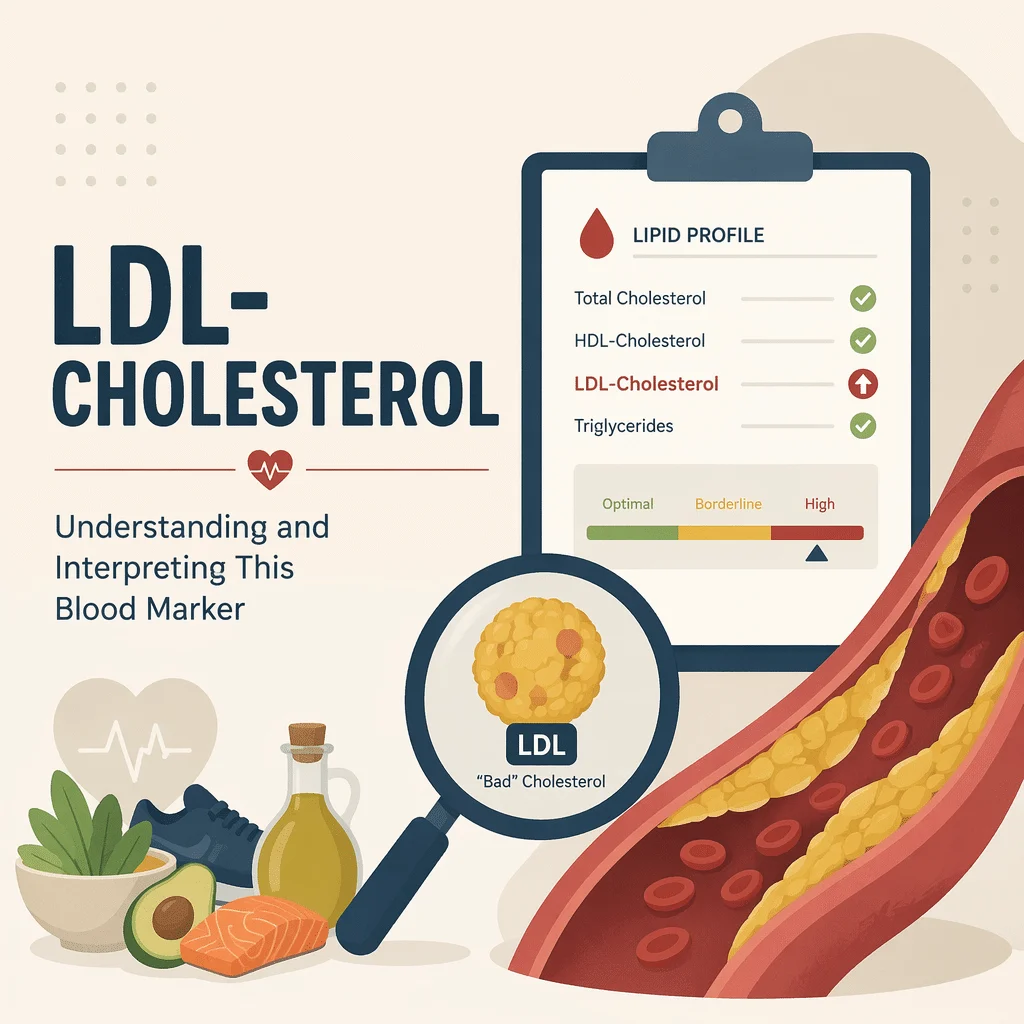
Il colesterolo LDL è la forma di colesterolo che i medici monitorano con maggiore attenzione nella valutazione della salute cardiovascolare, ed è spesso chiamato “colesterolo cattivo” perché livelli elevati sono associati all'accumulo di placche nelle arterie. Un semplice esame del sangue lo misura nell'ambito di un profilo lipidico di routine, e il risultato viene solitamente espresso in milligrammi per decilitro (mg/dL). Questa guida spiega cos'è il colesterolo LDL, come viene calcolato, quali valori sono considerati nella norma e cosa tende a farlo aumentare, con uno sguardo anche a come le ricerche più recenti stanno affinando il modo in cui i medici utilizzano questo marcatore insieme a strumenti più nuovi come il dosaggio dell'ApoB.
Cos'è il colesterolo LDL e perché viene chiamato “cattivo”
Il colesterolo di per sé non è dannoso. È una sostanza cerosa, simile ai grassi, di cui ogni cellula del corpo ha bisogno per costruire le membrane, produrre ormoni e sintetizzare la vitamina D. Poiché il colesterolo non si scioglie nel sangue, viaggia nel flusso sanguigno all'interno di particelle chiamate lipoproteine. La lipoproteina a bassa densità, o LDL, è uno di questi trasportatori ed è responsabile del trasporto del colesterolo dal fegato al resto del corpo.
L'LDL si guadagna la reputazione di colesterolo «cattivo» perché, quando ne circola troppo, il colesterolo in eccesso può depositarsi nelle pareti delle arterie. Nel corso degli anni, questo accumulo forma placche che restringono e irrigidiscono i vasi sanguigni: un processo chiamato aterosclerosi. È proprio questo restringimento che alla lunga aumenta il rischio di infarto e ictus, motivo per cui abbassare il colesterolo LDL è diventato uno degli obiettivi principali della prevenzione cardiovascolare. Le lipoproteine ad alta densità (HDL), al contrario, aiutano a trasportare il colesterolo in eccesso al fegato per eliminarlo, ed è per questo che vengono chiamate «colesterolo buono».
Valori normali, borderline e alti del colesterolo LDL
I valori target del colesterolo LDL non sono uguali per tutti. I medici interpretano il risultato tenendo conto del rischio cardiovascolare complessivo della persona, inclusi pressione arteriosa, abitudine al fumo, diabete, storia familiare e presenza di una malattia cardiovascolaregià diagnosticata. La tabella seguente riporta le categorie generali utilizzate nella maggior parte delle linee guida cliniche statunitensi per gli adulti senza fattori di rischio aggiuntivi.
| Livello di colesterolo LDL | Categoria |
|---|---|
| Inferiore a 100 mg/dL | Ottimale |
| Da 100 a 129 mg/dL | Quasi ottimale |
| Da 130 a 159 mg/dL | Borderline alto |
| Da 160 a 189 mg/dL | Alto |
| 190 mg/dL o superiore | Molto alto |
Queste categorie generali cambiano per chi ha già una malattia cardiovascolare o diversi fattori di rischio, poiché un target più stringente riduce la probabilità di un nuovo evento. Un aggiornamento del 2026 alle linee guida nazionali sulla dislipidemia, discusso più avanti, raccomanda ora un obiettivo di colesterolo LDL inferiore a 55 mg/dL per gli adulti ad altissimo rischio cardiovascolare che ricevono trattamento dopo un evento pregresso, e un obiettivo inferiore a 70 mg/dL per molte persone con malattia accertata o fattori di rischio importanti, anche senza un evento precedente. Chiunque esamini un referto di laboratorio insieme a queste categorie dovrebbe comunque rivolgersi a un medico, poiché i fattori di rischio personali influenzano il target considerato appropriato.
Come si misura e si calcola il colesterolo LDL
Un profilo lipidico standard riporta il colesterolo totale, il colesterolo HDL e i trigliceridi misurati direttamente dal campione di sangue. Il colesterolo LDL, invece, è stato tradizionalmente stimato anziché misurato direttamente, utilizzando una formula che combina gli altri tre valori. Il metodo originale, noto come equazione di Friedewald, funziona abbastanza bene quando i trigliceridi sono vicini alla norma, ma diventa meno preciso man mano che i trigliceridi aumentano o quando il colesterolo LDL stesso è molto basso.
Per colmare questa lacuna, molti laboratori sono passati a metodi di calcolo più recenti, tra cui le equazioni di Martin-Hopkins e di Sampson, che tengono conto in modo più preciso del rapporto tra trigliceridi e altre particelle lipidiche. Alcuni laboratori offrono anche la misurazione diretta dell'LDL, che bypassa completamente il calcolo e misura le particelle di LDL per via chimica. La misurazione diretta o una di queste equazioni più raffinate è generalmente consigliata quando i trigliceridi sono elevati, poiché è proprio in quella situazione che la formula più vecchia perde di precisione. Chi esamina un profilo lipidico non ha bisogno di sapere quale formula abbia usato il laboratorio, ma capire che il valore può variare leggermente a seconda del metodo spiega perché i risultati del colesterolo LDL vengono talvolta riverificati con un campione a digiuno o con un approccio di calcolo diverso.
Cosa fa aumentare il colesterolo LDL
I livelli di colesterolo LDL riflettono una combinazione di fattori genetici, alimentari e legati allo stile di vita; nella maggior parte dei casi non esiste una causa unica, ma un insieme di fattori. Tra i più comuni troviamo i seguenti.
- Un'alimentazione ricca di grassi saturi e grassi trans, presenti nei cibi fritti, nei tagli di carne grassi e in molti prodotti da forno confezionati
- Il sovrappeso o l'accumulo di peso in eccesso intorno all'addome
- La mancanza di attività fisica regolare
- Il fumo, che può anche abbassare il colesterolo HDL protettivo
- Alcune condizioni di salute, tra cui il diabete di tipo 2, l'ipotiroidismo e la malattia renale cronica
- Fattori genetici, tra cui l'ipercolesterolemia familiare, una condizione ereditaria che causa livelli molto elevati di colesterolo LDL fin dalla giovane età
- Alcuni farmaci, come certi steroidi e immunosoppressori
Anche l'età ha un ruolo, poiché il colesterolo LDL tende ad aumentare gradualmente durante la mezza età in molte persone, per poi stabilizzarsi o diminuire leggermente in età avanzata. Questo è uno dei motivi per cui i medici raccomandano spesso un esame di riferimento pannello lipidico nella prima età adulta, con controlli ripetuti ogni quattro-sei anni per le persone a rischio medio, e con maggiore frequenza per chi presenta fattori di rischio o un risultato anomalo.
LDL, HDL, colesterolo totale e ApoB a confronto
Un singolo valore di colesterolo LDL racconta solo una parte della storia, ed è per questo che viene quasi sempre interpretato insieme ad altri marcatori lipidici. colesterolo HDL agisce in senso opposto rispetto all'LDL, contribuendo a eliminare il colesterolo in eccesso anziché trasportarlo, quindi un basso livello di HDL può aggravare il rischio associato a un alto livello di LDL. Colesterolo totale somma semplicemente LDL, HDL e una parte dei trigliceridi, quindi può perdere dettagli importanti quando LDL e HDL si muovono in direzioni opposte. Il confronto tra LDL e colesterolo totale o HDL viene talvolta sintetizzato tramite un rapporto colesterolo, che alcuni medici utilizzano come ulteriore strumento per valutare il rischio.
L'apolipoproteina B, o ApoB, è emersa come marcatore complementare che alcuni medici richiedono oggi insieme al colesterolo LDL o al suo posto. Ogni particella LDL, insieme ad altre particelle che ostruiscono le arterie come i remnant VLDL, trasporta esattamente una molecola di ApoB: un test dell'ApoB conta quindi il numero effettivo di queste particelle, anziché stimare il colesterolo che contengono. Questa distinzione è particolarmente importante per le persone con trigliceridielevati, diabete o obesità, dove le particelle LDL possono diventare più piccole e povere di colesterolo: ciò significa che un valore di colesterolo LDL apparentemente normale può comunque essere associato a un numero elevato di particelle. La ricerca su questa distinzione è approfondita nella sezione successiva. Per uno sguardo più dettagliato ai marcatori lipidici basati sulle particelle, consulta le guide di questo sito su test dell'ApoB e la nostra Informativa apolipoproteina A1, la principale proteina trasportata dalle particelle HDL.
Stile di vita e altri modi per influenzare il colesterolo LDL
Poiché il colesterolo LDL risponde sia alle abitudini quotidiane che alla genetica, le modifiche dello stile di vita sono di solito il primo passo consigliato in caso di valori borderline o elevati, insieme ai farmaci quando il rischio è più alto. Gli approcci basati sull'evidenza includono i seguenti.
- Sostituire i grassi saturi e i grassi trans con grassi insaturi provenienti da fonti come olio d'oliva, frutta secca e pesce grasso
- Aumentare l'apporto di fibre solubili da avena, legumi e frutta, che possono contribuire a ridurre l'assorbimento del colesterolo nell'intestino
- Praticare regolare attività aerobica, come camminare a passo svelto, quasi tutti i giorni della settimana
- Raggiungere o mantenere un peso sano per il tuo corpo
- Smettere di fumare, il che può migliorare nel tempo sia il colesterolo LDL che quello HDL
- Limitare il consumo di alcol, poiché un consumo eccessivo può peggiorare il profilo lipidico complessivo
Quando le modifiche dello stile di vita non sono sufficienti, o quando il rischio cardiovascolare è già elevato, i medici possono aggiungere farmaci per abbassare il colesterolo come le statine, l'ezetimibe o le più recenti opzioni iniettabili. Queste decisioni dipendono dal calcolo del rischio individuale, non dal solo valore di LDL: è per questo che lo stesso risultato può portare a raccomandazioni diverse per due persone diverse.
Quando consultare un medico per il colesterolo LDL
Poiché il colesterolo LDL alto raramente causa sintomi di per sé, la maggior parte delle persone lo scopre attraverso controlli di routine piuttosto che perché si sente male. Le situazioni seguenti sono buoni motivi per fissare un appuntamento con il proprio medico.
- Un primo profilo lipidico mostra un colesterolo LDL superiore a 160 mg/dL, o superiore a 190 mg/dL indipendentemente da altri fattori
- Una storia familiare di infarto precoce, ictus o colesterolo molto alto, che può indicare un'ipercolesterolemia familiare
- Una diagnosi già accertata di malattia cardiaca, diabete o malattia renale cronica, insieme a un valore di LDL borderline o elevato
- Dolore toracico improvviso, difficoltà respiratorie o altri sintomi che potrebbero indicare un evento cardiovascolare: in questi casi è necessario il pronto soccorso, non un appuntamento ordinario
- Incertezza su come leggere il risultato di un profilo lipidico o su ogni quanto ripetere l'esame
Aggiornamenti scientifici recenti
La ricerca sui lipidi ha fatto passi da gigante negli ultimi due o tre anni, e tre sviluppi sono particolarmente rilevanti per come si interpretano oggi i valori del colesterolo LDL.
Un'ampia revisione sistematica del 2025, che ha raccolto dati da 15 studi e oltre 590.000 partecipanti, ha rilevato che l'ApoB — il marcatore che conta le particelle lipidiche descritto in precedenza in questo articolo — riflette il rischio cardiovascolare di una persona in modo più accurato rispetto al colesterolo LDL in quasi tutti gli studi analizzati. In parole semplici: quando il colesterolo LDL e l'ApoB davano indicazioni discordanti sul livello di rischio, l'ApoB si è rivelato il miglior predittore di futuri infarti e ictus. Cosa significa per te: questo non rende il test standard del colesterolo LDL meno utile per lo screening di routine, ma spiega perché il medico potrebbe suggerirti un dosaggio dell'ApoB come approfondimento, soprattutto se i trigliceridi sono elevati o in presenza di diabete, poiché sono proprio queste le situazioni in cui il colesterolo LDL e il numero di particelle tendono a raccontare storie diverse.
Una revisione sistematica correlata del 2025, focalizzata specificamente su persone con sindrome metabolica o diabete di tipo 2, ha evidenziato uno schema simile: molti di questi individui avevano valori di colesterolo LDL apparentemente rassicuranti, mentre l'ApoB e il colesterolo non-HDL — un marcatore che combina l'LDL con altre particelle che ostruiscono le arterie — rimanevano elevati. Cosa significa per te: se convivi con il diabete o la sindrome metabolica, un valore normale di colesterolo LDL è una buona notizia, ma potrebbe non essere il quadro completo; il tuo medico potrebbe voler esaminare altri marcatori lipidici invece di basarsi sul solo colesterolo LDL.
Separatamente, i ricercatori di laboratorio hanno continuato a perfezionare il modo in cui viene calcolato il colesterolo LDL. Confronti pubblicati nel 2020 e di nuovo nel 2025 hanno confermato che le formule di calcolo più recenti, tra cui le equazioni di Sampson e Martin-Hopkins, stimano il colesterolo LDL in modo più accurato rispetto alla vecchia formula di Friedewald quando i trigliceridi superano circa 150-200 mg/dL. Cosa significa per te: se i tuoi trigliceridi sono elevati, il tuo laboratorio potrebbe già utilizzare una di queste formule aggiornate, oppure il tuo medico potrebbe richiedere una misurazione diretta dell'LDL per evitare gli errori piccoli ma significativi che possono verificarsi con il metodo più vecchio in presenza di trigliceridi alti.
Infine, un importante aggiornamento delle linee guida nazionali pubblicato nel 2026 ha ripristinato obiettivi numerici specifici per il trattamento del colesterolo LDL, sostituendo un approccio precedente che si concentrava solo sulle riduzioni percentuali. Le indicazioni aggiornate fissano un obiettivo inferiore a 55 mg/dL per gli adulti ad altissimo rischio cardiovascolare in trattamento dopo un precedente infarto o ictus, e inferiore a 70 mg/dL per molte persone con malattia cardiovascolare accertata o fattori di rischio importanti. Chiarisce inoltre che il dosaggio dell'ApoB è più utile come approfondimento una volta che gli obiettivi per il colesterolo LDL e i valori correlati sono già stati raggiunti, in particolare per le persone con trigliceridi elevati, diabete o colesterolo LDL difficile da abbassare. Cosa significa per te: se tu o un familiare avete una malattia cardiaca nota, aspettati che questi obiettivi numerici più specifici vengano discussi nelle prossime visite, e sappi che il dosaggio dell'ApoB, se raccomandato, serve ad aggiungere dettagli e non a sostituire il risultato del tuo colesterolo LDL.
Glossario
| Termine | Senso |
|---|---|
| LDL (lipoproteine a bassa densità) | Una particella che trasporta il colesterolo dal fegato alle cellule di tutto il corpo. Livelli elevati sono associati all'accumulo di placche nelle arterie. |
| HDL (lipoproteine ad alta densità) | Una particella che aiuta a rimuovere il colesterolo in eccesso dal sangue e a riportarlo al fegato per essere eliminato. |
| Trigliceridi | Un tipo di grasso misurato nel sangue che immagazzina le calorie non utilizzate sotto forma di energia. Livelli elevati possono influire sulla precisione del calcolo del colesterolo LDL. |
| Aterosclerosi | L'accumulo progressivo di placche grasse nelle pareti delle arterie, che nel tempo restringe i vasi sanguigni e aumenta il rischio di infarto e ictus. |
| ApoB (apolipoproteina B) | Una proteina presente sulla superficie dell'LDL e di altre particelle che ostruiscono le arterie. Misurare l'ApoB conta direttamente il numero di queste particelle. |
| Colesterolo non-HDL | Il colesterolo totale meno il colesterolo HDL, che racchiude in un unico valore l'LDL insieme ad altre particelle che ostruiscono le arterie. |
| Equazione di Friedewald | La formula originale utilizzata per stimare il colesterolo LDL a partire dal colesterolo totale, dal colesterolo HDL e dai trigliceridi. |
| Equazioni di Martin-Hopkins e Sampson | Formule più recenti per stimare il colesterolo LDL, più accurate dell'equazione di Friedewald quando i trigliceridi sono elevati. |
| Ipercolesterolemia familiare | Una condizione ereditaria che causa valori molto alti di colesterolo LDL fin dalla nascita, aumentando il rischio di malattie cardiache precoci se non trattata. |
| Statina | Una classe di farmaci molto diffusa che abbassa il colesterolo LDL riducendo la produzione di colesterolo nel fegato. |
Domande frequenti
Qual è un livello di colesterolo LDL pericolosamente alto?
La maggior parte delle linee guida statunitensi considera un livello di colesterolo LDL pari o superiore a 190 mg/dL molto alto, indipendentemente dagli altri fattori di rischio, e spesso porta a ulteriori accertamenti per escludere una causa ereditaria come l'ipercolesterolemia familiare. Detto questo, il concetto di “pericoloso” dipende dal contesto. A chi ha già una malattia cardiaca potrebbe essere consigliato di trattare un valore anche di 100 mg/dL, mentre chi non ha altri fattori di rischio potrebbe essere semplicemente monitorato a valori simili. Il tuo medico può spiegarti cosa significa un risultato specifico per il tuo rischio individuale.
Si può abbassare il colesterolo LDL senza farmaci?
Per molte persone con colesterolo LDL lievemente o moderatamente elevato, cambiamenti nell'alimentazione, attività fisica regolare, gestione del peso e smettere di fumare possono abbassare in modo significativo il colesterolo LDL nel giro di settimane o mesi. Il grado di miglioramento varia da persona a persona e dipende da quanto l'aumento sia dovuto allo stile di vita rispetto alla genetica. Chi ha valori molto alti o una malattia cardiovascolare già diagnosticata ha più probabilità di aver bisogno di farmaci, oltre ai cambiamenti dello stile di vita, per raggiungere il proprio obiettivo.
Il digiuno influisce sull'esame del colesterolo LDL?
Il digiuno per nove-dodici ore prima di un profilo lipidico è tradizionalmente raccomandato, principalmente perché migliora l'accuratezza della misurazione dei trigliceridi, che a sua volta influisce sul calcolo tradizionale del colesterolo LDL. Alcuni laboratori e medici accettano oggi profili lipidici senza digiuno per lo screening generale, poiché le ricerche suggeriscono che la differenza è spesso minima per la maggior parte delle persone. Il tuo medico o il laboratorio ti indicheranno se il digiuno è necessario per il tuo esame specifico.
Il colesterolo LDL nei bambini è uguale a quello degli adulti?
Il colesterolo può essere misurato anche nei bambini, e le linee guida pediatriche utilizzano valori di riferimento diversi da quelli degli adulti, poiché i livelli normali variano in base all'età e allo sviluppo. In genere si raccomanda uno screening universale una volta tra i nove e gli undici anni, e di nuovo nella prima età adulta; nei bambini con una storia familiare di colesterolo alto o di malattie cardiache precoci, il test può essere eseguito prima o con maggiore frequenza.
Qual è la differenza tra colesterolo LDL e colesterolo VLDL?
Le VLDL, o lipoproteine a densità molto bassa, sono particelle simili alle LDL ma trasportano principalmente trigliceridi anziché colesterolo, pur contenendone una piccola quota; nel flusso sanguigno si trasformano poi in LDL. Il colesterolo VLDL di solito non viene misurato direttamente nel profilo lipidico standard, ma viene stimato a partire dal valore dei trigliceridi: ecco perché trigliceridi molto elevati possono influire sull'accuratezza del calcolo del colesterolo LDL.
Ogni quanto bisogna controllare il colesterolo LDL?
Agli adulti in buona salute si consiglia in genere di eseguire un profilo lipidico completo, incluso il colesterolo LDL, ogni quattro-sei anni a partire dai vent'anni circa. Chi ha fattori di rischio come diabete, pressione alta, fumo, obesità o una storia familiare di malattie cardiache precoci viene spesso sottoposto al test con maggiore frequenza, a volte ogni anno; chi è già in terapia per il colesterolo alto di solito lo ricontrolla alcuni mesi dopo l'inizio o la modifica del trattamento.
Fonti
- Centers for Disease Control and Prevention — About Cholesterol — CDC, 2025 — link
- MedlinePlus, National Library of Medicine — Cholesterol — NIH/MedlinePlus, 2025 — link
- Mayo Clinic — High blood cholesterol: Diagnosis and treatment — Mayo Clinic, 2025 — link
- Sehayek D, Cole J, Bjornson E, et al. — ApoB, LDL-C, and non-HDL-C as markers of cardiovascular risk — Journal of Clinical Lipidology, 2025 — link
- Witt C, Renfroe LG, Lyons TS — Discordance between serum cholesterol concentration and atherogenic lipoprotein particle number in people with metabolic disease: A systematic review — Diabetes, Obesity and Metabolism, 2025 — link
- Sampson M, Ling C, Sun Q, et al. — A New Equation for Calculation of Low-Density Lipoprotein Cholesterol in Patients With Normolipidemia and/or Hypertriglyceridemia — JAMA Cardiology, 2020 — link
- American College of Cardiology / American Heart Association — 2026 Guideline on the Management of Dyslipidemia — Circulation, 2026 — link
Approfondimenti
- Test del colesterolo HDL: comprendere i risultati
- Test del colesterolo totale: una guida completa per interpretare i risultati
- Lipoproteina(a): comprendere questo marcatore del rischio cardiovascolare
- Advanced Lipid Panel: il tuo progetto per la resilienza del cuore e dello stress
- I migliori integratori per il colesterolo: benefici, rischi e guida
Scopri i tuoi referti con AI DiagMe
Il colesterolo LDL è solo un elemento di un quadro cardiovascolare più ampio, che comprende anche il colesterolo HDL, i trigliceridi e, sempre più spesso, l'ApoB. Vedere questi risultati insieme, accanto a marcatori come il colesterolo totale o la lipoproteina(a), aiuta spesso a capire meglio cosa dice davvero un profilo lipidico sulla salute del tuo cuore. AI DiagMe ti aiuta a comprendere questi valori in modo semplice e chiaro, così puoi parlare con il tuo medico in modo più consapevole, senza sostituire la diagnosi o i consigli che solo un professionista sanitario può darti.
Ottieni l'interpretazione dei tuoi risultati in pochi minuti