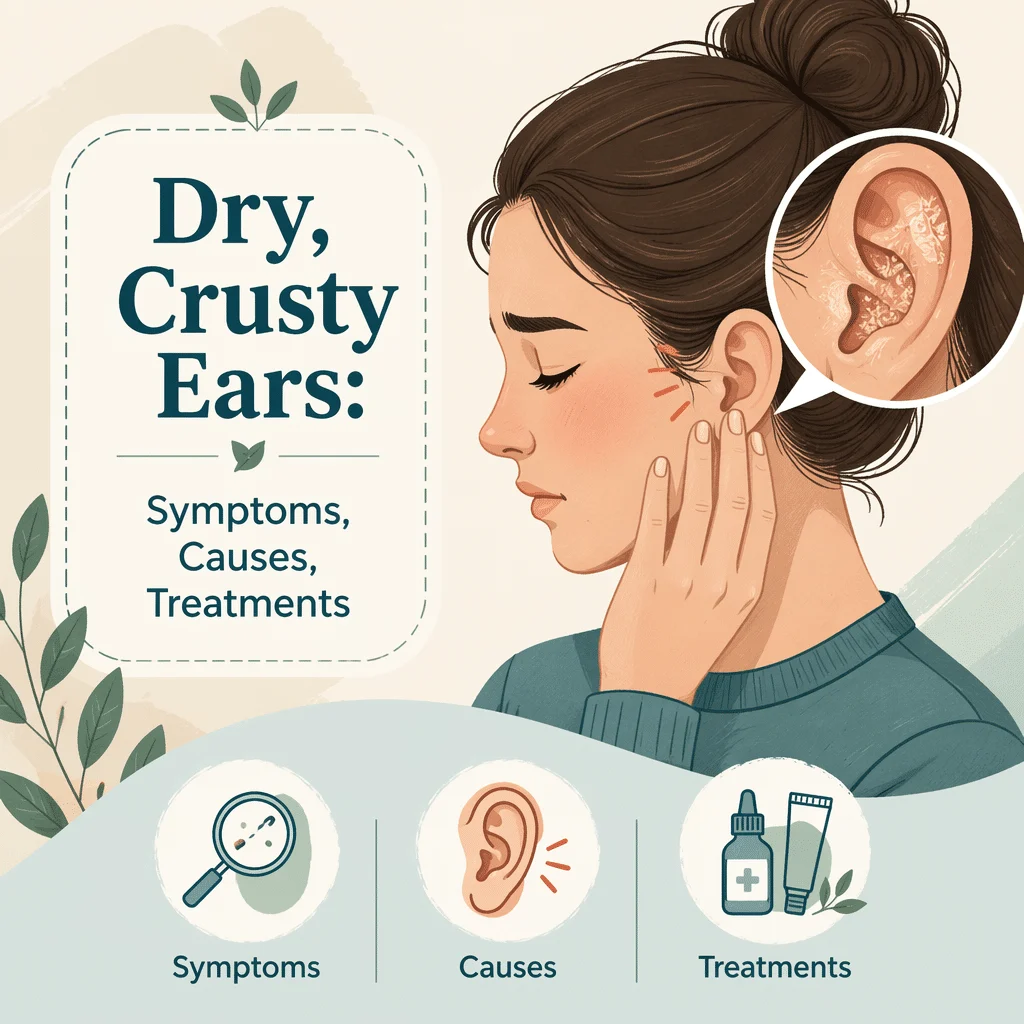
Kuivat ja rupiset korvat ovat yleisiä, ja tärkein yksittäinen vihje on se, missä kohtaa korvaa kuivuus esiintyy. Hilseily ulkokorvan poimuissa viittaa eri syyhyn kuin rupeutuminen korvalehden, korvakäytävän syvien osien tai korvan takaisen uurteen alueella. Useimmat syyt ovat tavallisia ihotiloja, jotka rauhoittuvat hellävaraisella ja kärsivällisellä hoidolla. Muutama vaatii lääkärin arviota. Ja yksi niistä – karhea kohta, joka jatkuvasti rupeutuu eikä koskaan oikein parannu – ei saisi jäädä seurattavaksi. Tässä artikkelissa opit lukemaan kuivuuden sijainnin merkitystä, mitkä arkiset tavat hiljaa pahentavat tilannetta, mikä todella auttaa ja milloin parantumatonta kohtaa kannattaa näyttää ammattilaiselle.
Miksi korvan tarkka kohta auttaa selvittämään syyn
Korvan iho ei ole yhtenäinen pinta. Ulkokorvan kuppi ja poimut ovat täynnä talirauhasia. Korvalehti on pehmeä ja usein lävistettynä. Korvakäytävä on lämmin, suljettu ja niin ohuen ihon peittämä, että se rikkoutuu helposti. Korvan takainen uurre on pimeä, kostea ja lähes koskaan tarkasteltu. Jokaisessa näistä mikroympäristöistä esiintyy erilaisia ongelmia, minkä vuoksi sijaintiin perustuva lähestymistapa rajaa syyn nopeammin kuin pelkkä oireiden luettelo.
Alla oleva taulukko on suuntaa-antava lähtökohta, ei diagnoosi. Ihotilat voivat mennä päällekkäin, ja samassa korvassa voi esiintyä kahta eri tilaa samanaikaisesti.
| Kuivuuden sijainti | Tyypilliset piirteet | Ensisijaisesti harkittavat syyt | Järkevät ensiaskeleet |
|---|---|---|---|
| Ulkokorva ja sen poimut | Rasvainen kellertävä hilseily tai kuiva vaaleanpunainen hilseily ulkokorvan kupissa | Seborrheinen dermatiitti, eksema, psoriasis | Hajusteeton perusvoide, hellävarainen puhdistusaine – seuraa, jos vaiva toistuu |
| Korvalehti ja lävistyskohteet | Kutiseva punoitus, erittely tai rupeutuminen napin ympärillä | Kosketusallergia, useimmiten nikkelille | Vaihda implanttilaatuiseen titaanikoruun, pidä kohta puhtaana, kysy allergiatestauksesta |
| Korvakäytävän sisäosa | Syvä kutina, hilseily, joskus kostea rupeutuminen, arkuus tai kipu | Ulkokorvatulehdus, korvakäytävän eksema, liiallinen puhdistaminen | Lopeta vanupuikkojen käyttö, pidä vesi poissa korvasta ja kysy lääkäriltä ennen kuin käytät mitään korvatippoja |
| Korvan takana | Hilseilevä rupeutuma tai raaka näköinen halkeama poimussa | Seborrooinen dermatiitti, psoriasis | Pehmennysvoide tai lääkinnällinen hoito lääkärin ohjeen mukaan |
| Korvalehden reuna | Yksittäinen karhea läiskä, joka rupeutuu, vuotaa verta tai kasvaa hitaasti | Kertynyt auringon aiheuttama vaurio, aktiininen keratoosi, ihosyöpä | Lääkärin tutkimus odottamisen sijaan |
Ulkokorva ja sen poimut
Korvalehden näkyvä osa harjanteineen ja keskikuoppineen on yksi kehon rasvaisimmista alueista. Näihin uriin kertyvä hilse johtuu yleensä yhdestä kolmesta pitkäaikaisesta ihotaudista.
Seborrooinen dermatiitti
Tämä on yleisin korvan poimujen hilseilyn syy. Se aiheuttaa rasvaista, kellertävää hilsettä punertavalla pohjalla, ja se kulkee tyypillisesti aalloittain: kuukausia rauhallisena, sitten pahenee kylmällä säällä tai stressaavina aikoina. Se liittyy Malassezia-nimiseen hiivasieneen, joka elää haitattomasti kaikkien iholla mutta aiheuttaa tulehduksen joillakin ihmisillä. Sama prosessi aiheuttaa hilseilyä päänahassa, minkä vuoksi hilsepäisillä ihmisillä on niin usein myös hilseilevät korvat. Kliiniset palvelut suosittelevat hoitona seleeniä, sinkkiä tai kivihiilitervaä sisältäviä lääkinnällisiä shampooita sekä sienilääkevoiteita.
Ekseema
Korvan ekseema näyttää kuivemmalta ja punaisemmalta kuin seborrooinen dermatiitti, kutisee voimakkaammin ja esiintyy usein myös muissa taipeissa, kuten kyynärpäissä tai kaulalla. Se kertoo ihon suojaesteen heikkoudesta, jolloin kosteus haihtuu helposti ja iho reagoi herkästi ärsykkeisiin. Oppaassamme kerrotaan selkokielellä miten ekseema vaikuttaa ihon suojaesteen toimintaan. Kun tulehduksessa näkyy patologin tunnistama nesteen kertyminen ihoon, lääkärit voivat käyttää tarkempaa nimitystä, ja tiimimme käsittelee spongiottisen dermatiitin löydöksen merkitystä.
Psoriasis
Psoriasis aiheuttaa paksumpia, teräväreunaisia plakkeja hopeanharmaalla hilseellä, ja se esiintyy tyypillisesti korvalehden reunalla ja sen takaisessa poimussa. Se harvoin esiintyy pelkästään korvassa, joten kannattaa tarkistaa kyynärpäät, polvet, hiusraja ja kynnet saman kuvion varalta. Tiimimme kuvaa psoriasiksen eri tyypit ja niiden laukaisevat tekijät.
Korvanipukka ja lävistyskodat
Korvanipukkaan rajoittuva rupeutuma – varsinkin siisti rengas lävistyksen ympärillä – viittaa vahvasti kosketusallergiaan eikä yleiseen ihotautiin. Nikkeli on tyypillisin syyllinen. Sitä esiintyy runsaasti edullisissa koruissa, ja herkistyminen alkaa usein lävistyksen yhteydessä, koska metalli on kosketuksissa rikkinäisen ihon kanssa viikkoja kanavan parantuessa.
Merkki on kuvio. Kosketusallergia noudattaa tarkalleen sen esineen muotoa, joka on koskettanut ihoa: ympyrä nappikoru-kohdassa, viiva rengaskorun lepopaikassa, tahra korvan yläreunassa hiustuotteesta tai silmälasien sangasta. Se kutisee ennemmin kuin sattuu, ja oireet helpottavat, kun aiheuttaja poistetaan. Käytännöllisin ensimmäinen askel on vaihtaa implanttiluokan titaaniin tai kirurgiseen teräkseen.
On tärkeää erottaa allergia lävistystulehduksesta, sillä niitä hoidetaan eri tavoin. Tulehdus on yleensä kivulias, lämmin ja yhä paheneva turvotus, johon liittyy paksua eritettä, ja se voi pahentua päivien kuluessa. Allergia kutisee, pysyy kosketusalueella eikä leviä. Jos aiheuttaja on todella epäselvä, lääkäri voi järjestää lapputestin tai verikokeita – ja tiimimme selittää mitä allergian verikoe voi ja ei voi osoittaa.
Korvakäytävän sisäosa
Korvakäytävällä on omat sääntönsä, sillä sen iho on poikkeuksellisen ohut ja sijaitsee suoraan ruston ja luun päällä, ja käytävän päässä on tärykalvo.
Ulkokorvatulehdus
Ulkoinen välikorvatulehdus, joka tunnetaan yleisesti nimellä uimarin korva, on korvakäytävän tulehdus, joka seuraa usein uimisen tai kylpemisen jälkeen korvaan jäänyttä vettä. Se aiheuttaa tyypillisesti ensin kutinaa, sitten yllättävän voimakasta arkuutta sekä joskus kosteaa rupeutumista tai eritettä. Mayo Clinic toteaa, että korvakäytävän luonnolliset puolustusmekanismit – kuten korvavahat ja ohut suojakalvo – voivat vaurioitua tai hävitä vamman tai pitkittyneen kosteuden vuoksi. Tiimimme kuvaa myös korvatulehduksen oireet tarkemmin.
Korvakäytävän eksema ja liiallisen puhdistamisen ansa
Eksema voi esiintyä itse korvakäytävässä aiheuttaen sietämätöntä syvää kutinaa ja hienoja valkoisia hilseitä ilman minkäänlaista tulehdusta. Yleisin pahentava tekijä on henkilön oma puhdistusrutiini. Kutinan raapiminen vanupuikolla, hiuspinnillä tai kynnellä rikkoo suojakalvon, mikä saa ihon kutisemaan enemmän, mikä taas johtaa lisää puhdistamiseen. MedlinePlus toteaa yksiselitteisesti, että korvakäytävään ei pidä koskaan yrittää laittaa mitään esinettä – kuten vanupuikkoa – puhdistamiseksi, ja huomauttaa, että poistoyritykset voivat toisinaan aiheuttaa korvakäytävän tulehduksen.
Kaksi asiaa on syytä sanoa suoraan. Korvakynttilöiden käyttö ei ole turvallinen puhdistusmenetelmä, ja siihen liittyy todellinen riski palovammoista ja vahantukkeutumisesta. Korvatipat – mukaan lukien kortikosteroidi- ja antibioottivalmisteet – ovat lääkärin päätös, ei itsepalveluhankinta, sillä oikea valinta riippuu siitä, mikä on tulehtunut ja onko tärykalvo ehjä. Joitakin valmisteita vältetään kokonaan, jos epäillään tärykalvon perforaatiota. Jos korvakäytävän kuivuuteen liittyy verenvuotoa, tiimimme käsittelee korvan verenvuodon mahdollisia syitä.
Korvan takana: paikka, jota kukaan ei tarkista
Korvan takainen poimu on klassinen paikka sekä seborrooiselle dermatiitille että psoriasikselle, ja se on juuri se kohta, johon ihmiset eivät juuri koskaan katso. Se on lämmin, suojainen ja helppo jättää huomaamatta peilistä. Hilse kertyy huomaamatta, ja poimuun voi kehittyä kivulias halkeama, joka kirvelee ihon liikkuessa.
Sinne valuu myös kaikki, mitä päänahasta ja hiuksista tippuu: shampoo, hoitoaine, muotoilutuotteet ja hiusväri. Jos korvan takainen hilseily alkaa jonkin hiustuotteen vaihdon jälkeen, se on merkittävä vihje. Pyydä jotakuta katsomaan tai käytä käsipeiliä sen sijaan, että olettaisit alueen olevan kunnossa. Koska korvan iho harvoin oireilee yksinään, on hyödyllistä tietää, miten lääkärit lähestyvät ihottumaa eri puolilla kehoa.
Kun kuiva, rupimainen läiskä ei ole pelkkää kuivaa ihoa
Tämä on se osa, jonka useimmat korvien kuivuutta käsittelevät artikkelit jättävät mainitsematta – ja juuri siksi korvaasi kannattaa tarkastella huolellisesti eikä vain kostuttaa sitä.
Korvan reuna altistuu auringolle paljon elämän aikana. Se työntyy esiin päästä, hiukset peittävät sen harvoin, ja se on yksi useimmin unohdetuista kohdista aurinkosuojaa levitettäessä. Vuosien altistuminen kertyy. National Cancer Institute toteaa, että auringon, solariuminlamppujen ja rusketuslaitteiden ultraviolettisäteily aiheuttaa vaurioita, jotka voivat johtaa ihosyöpään.
Auringon vaurioittamaan ihoon voi kehittyä aktiinisia keratooseja: pieniä karheita, hilseileviä läiskiä, jotka tuntuvat hiekkapaperille ja jotka on usein helpompi tunnistaa tunnustelemalla kuin katsomalla. Niitä pidetään syövän esiasteina, ja kliiniset lähteet toteavat, että varhainen havaitseminen on tärkeää, koska aktiininen keratoosi voi kehittyä invasiiviseksi levyepiteelisyöväksi – useimmat levyepiteelisyövät syntyvät tällaisista alueista tai niiden läheisyydestä. Vain pieni osa muuttuu koskaan syöväksi, joten tämä on syy käydä näyttämässä läiskä lääkärille – ei syy pelästyä.
Käytännön sääntö on yksinkertainen. Tavallinen kuiva iho paranee yleensä ainakin jonkin verran muutaman viikon johdonmukaisella hellävaraisella hoidolla. Laikkua, joka käyttäytyy eri tavalla, kannattaa tutkituttaa. Kiinnitä huomiota yksittäiseen laikkuun, joka ei parane, joka toistuvasti rupeutuu ja vuotaa verta pienestäkin kosketuksesta, haavaan, joka näyttää parantuvan mutta avautuu uudelleen, hitaasti kasvavaan tai paksuuntuvaan muutokseen tai sellaiseen, joka näyttää ja tuntuu selvästi erilaiselta kuin ympäröivä iho. Mikään näistä löydöksistä ei yksinään tarkoita syöpää, ja lääkäri pystyy arvioimaan ne kaikki lyhyessä vastaanottoajassa.
Arjen hoitokeinot, jotka auttavat – ja mitä kannattaa välttää
Tavallisiin syihin auttaa yksinkertainen mutta tehokas lähestymistapa. Pese korvanlehti miedolla, hajusteettomalla puhdistusaineella vaahtoavan saippuan sijaan. Levitä korvanlehteen ja sen taakse kevyt perusvoide, kun iho on vielä hieman kostea. Hajusteettomuus on tärkeää, sillä hajusteet ovat yleinen kosketusallergeeni. Kuivaa korvat taputtamalla uinnin tai suihkun jälkeen ja anna mahdollinen vesi valua pois kallistamalla päätä. Hoida myös hilseilevä päänahka, sillä korvien ja päänahan hilseily kulkevat usein käsi kädessä.
Yhtä tärkeää on tietää, mitä ei pidä tehdä. Ei koskaan vanupuikkoja, hiusneuloja tai kynsiä korvakäytävään. Ei korvakynttilöitä. Ei aiemmasta vaivasta jääneitä reseptitippoja eikä toisen henkilön lääkkeitä. Ei hilseen hankausta tai nypimistä, sillä se pitkittää juuri sitä tulehdusta, jota yrität rauhoittaa. Eikä päivittäistä syvää puhdistusta – liiallinen puhdistaminen on yksi yleisimmistä kuivan ja kutisevan korvakäytävän syistä.
Milloin mennä lääkäriin
- Korvasärky, kuume tai paksu, värillinen tai pahanhajuinen erite
- Selvästi heikentynyt kuulo, jatkuva tukkoisuuden tunne tai uusi korvassa soiva ääni
- Laikku, joka ei ole parantunut kahden–neljän viikon johdonmukaisesta hellävaraisesta hoidosta huolimatta
- Laikku, joka toistuvasti rupeutuu, vuotaa helposti verta tai kasvaa hitaasti
- Nopeasti leviävä punoitus, korvan turvotus tai voimakas yöllinen korvasärky
- Toistuvat ulkokorvatulehdukset, erityisesti diabeteksen tai heikentyneen immuniteetin yhteydessä
- Korvan takana oleva halkeillut tai verinen iho, joka ei umpeudu
Mitä verikokeilla voidaan selvittää
On hyvä olla rehellinen: kuiviin ja rupeutuviin korviin ei ole olemassa verikoetta. Diagnoosi tehdään katsomalla korvaa, kysymällä oireista ja toisinaan ottamalla sivelynäyte tai pieni ihopalanen. Verikokeet tulevat ajankohtaisiksi vasta, kun iho-oirekuva viittaa laajempaan sairauteen tai kun tulehdukset toistuvat jatkuvasti.
Tässä tilanteessa lääkäri saattaa tutkia kilpirauhasen toimintaa, sillä kilpirauhasen vajaatoiminta aiheuttaa usein yleistä ihon kuivuutta. Tiimimme selittää miten kilpirauhasen viitearvot luetaan. Rautatilannetta saatetaan tarkistaa, kun kuivuuteen liittyy hiusten ohenemista ja väsymystä – oppaassamme käydään läpi rautastatuksen tutkimuspaneelin merkkiaineet. Verensokeri tarkistetaan usein, kun ulkokorvan tulehdukset toistuvat, ja tiimimme selittää mitä glukoositasot tarkoittavat. Sinkkiä mitataan joskus silloin, kun ihon paraneminen on heikkoa – oppaassamme käsitellään sinkin verikokeen tulosten tulkitseminen. Allergiatestaus on aiheellinen vain silloin, kun kosketusperäinen laukaisija on todella epäilyksenä eikä sitä voida tunnistaa esitietojen perusteella.
Mikään näistä kokeista ei diagnosoi korvasairautta. Ne kuvaavat sitä taustaa, jota vasten iho käyttäytyy – se on erilainen ja vaatimattomampi tehtävä.
Uusimmat tieteelliset edistysaskeleet
Tuore tutkimus on tarkentanut muutamia seikkoja, jotka ovat tärkeitä kaikille hilseilevien korvien kanssa painiville. Kaikki alla mainitut tutkimukset ovat viimeaikaisia katsauksia olemassa olevaan näyttöön yksittäisten kokeiden sijaan, mikä tekee niistä luotettavampia kuin mikään yksittäinen tutkimus.
Seborrooinen dermatiitti on todella yleinen. Vuoden 2024 katsaus, jossa yhdistettiin 121 tutkimusta yli miljoonalta ihmiseltä, arvioi, että noin neljä sadasta aikuisesta maailmanlaajuisesti sairastaa sitä. Mitä tämä tarkoittaa sinulle: hilseily korvan poimuissa on tavallinen löydös, ja se on yksi ensimmäisistä asioista, joita lääkäri harkitsee.
Ekseeman voiteita on vertailtu keskenään. Vuoden 2024 Cochrane-katsaus kokosi yhteen 291 tutkimusta, joihin osallistui noin 46 000 henkilöä, ja havaitsi, että vahvemmat paikalliset kortikosteroidit, takrolimuusi ja uudemmat JAK-estäjiksi kutsutut hoidot – lääkkeet, jotka vaimentavat tulehdussignaalia ihosolujen sisällä – sijoittuivat johdonmukaisesti tehokkaimpien joukkoon. Rohkaisevaa on, että lyhyet paikallisen kortikosteroidin hoitokuurit eivät näyttäneet ohentavan ihoa; ohentumista raportoitiin vain hyvin pienellä osalla niistä, jotka käyttivät niitä useita kuukausia. Mitä tämä tarkoittaa sinulle: lyhyet, kohdennetut lääkärin määräämät hoitokuurit ovat tavanomainen lähestymistapa, ja erityisesti korvakäytävä on aina lääkärin harkittava asia.
Ravinnolla voi olla tukeva rooli. Vuoden 2024 katsaus, joka kattoi 13 tutkimusta ja lähes 14 000 ihmistä, havaitsi, että seborrooisesta dermatiitista kärsivillä ihmisillä oli taipumus alhaisempiin sinkin sekä D- ja E-vitamiinin veritasoihin. Kyse on yhteydestä eikä syy-seuraussuhteen todistuksesta, ja tutkijat totesivat selvästi, että lisäravinteita testaavia kokeita tarvitaan vielä. Mitä tämä tarkoittaa sinulle: se on yksi syy, miksi lääkäri saattaa tarkastella laajempaa verikuvaa sen sijaan, että hoitaisi ihoa erikseen – mutta se ei ole syy aloittaa lisäravinteita omatoimisesti.
Karheita, auringon vaurioittamia ihomuutoksia on vaikea arvioida silmämääräisesti. Vuoden 2024 katsaus aktiinisen keratoosin arvioinnista havaitsi vain vähäisen tai kohtalaisen yksimielisyyden lääkäreiden välillä nykyisiä visuaalisia menetelmiä käytettäessä, ja se vahvisti, että tila on merkityksellinen, koska sillä on mahdollisuus kehittyä levyepiteelikarsinoomaksi vaaleaihoisilla ihmisillä, joilla on merkittävä elinikäinen aurinkoaltistus. Mitä tämä tarkoittaa sinulle: jos koulutetut lääkärit kokevat näiden muutosten luokittelun silmämääräisesti hankalaksi, korvassasi oleva pysyvä karhea kohta ei ole asia, jota kannattaa arvioida itse kotona.
Korvatipat eivät ole keskenään vaihdettavissa. Vuoden 2024 käytännön katsaus, joka oli linjassa Yhdysvaltojen korva-, nenä- ja kurkkutautien ohjeiden kanssa, korosti, että paikallisantibioottivalinta ja sen annostelutekniikka vaikuttavat molemmat siihen, parantuuko ulkokorvan tulehdus, ja että hankalat tapaukset vaativat lähettämistä jatkohoitoon toistuvien hoitokuurien sijaan. Mitä tämä tarkoittaa sinulle: tipat, jotka auttoivat kaveriasi, saattavat olla väärät tipat sinulle.
Lopuksi huomio siitä, miksi verensokeri nousee esille. Sairaalatutkimuksessa, jossa seurattiin 140 potilasta, joilla oli harvinainen vakava komplikaatio – ulkokorvan tulehduksen leviäminen lähellä olevaan luuhun – todettiin, että kaikilla heistä oli huonosti hallinnassa oleva diabetes. Komplikaatio itsessään on harvinainen, ja kyseessä oli kuvaileva tutkimus eikä kliininen koe. Mitä tämä tarkoittaa sinulle: se selittää, miksi lääkäri saattaa tarkistaa verensokerin, kun ulkokorvan tulehdus uusiutuu toistuvasti tai aiheuttaa kipua, joka on selvästi pahempaa yöllä.
Sanasto
| Termi | Määritelmä |
|---|---|
| Aktiininen keratoosi | Pieni karhea, hilseilevä ihomuutos, jonka aiheuttavat vuosien aurinkoaltistus. Sitä pidetään syövän esiasteena, eli pienellä osalla se voi ajan myötä kehittyä ihosyöväksi. |
| Serumen | Lääketieteellinen nimitys korvavahalle. Se on suojaava aine, joka kerää pölyä ja bakteereja, ja poistuu normaalisti itsestään ilman apua. |
| Kosketusihottuma | Ihon tulehdus, jonka aiheuttaa ihoon koskettava aine – joko ärsyttävä aine tai allergeeni, kuten nikkeli. Se noudattaa tyypillisesti kosketuksessa olleen esineen muotoa. |
| Emollientti | Kosteusvoide, joka pehmentää ihoa ja auttaa sitä pidättämään kosteutta. Hajusteettomia versioita suositellaan korvien alueelle. |
| Helix | Korvan kaareva ulkoreunus. Koska se altistuu paljon auringolle, se on yleinen paikka auringon vaurioittamalle iholle. |
| Malassezia | Hiivasieni, joka elää lähes kaikkien iholla vaarattomasti, mutta aiheuttaa tulehdusta ihmisillä, joilla on taipumus seborrooiseen dermatiittiin. |
| Ulkokorvatulehdus | Korvakäytävän tulehdus tai infektio, jota kutsutaan usein uimarin korvaksi. Tyypillisiä laukaisevia tekijöitä ovat kosteuden kertyminen ja korvakäytävän ärtyminen. |
| Epikutaanitesti | Dermatologinen testi, jossa pieniä määriä epäiltyjä allergeeneja laitetaan selkään muutamaksi päiväksi kosketusallergian tunnistamiseksi. |
| Seborrooinen dermatiitti | Yleinen pitkäaikainen ihotauti, joka aiheuttaa rasvaista kellertävää hilseilyä runsasrasvaisilla alueilla, kuten hiuspohjassa, kulmakarvoissa, korvan poimuissa ja korvan takaisessa uurteessa. |
| Tärykalvo | Tärykalvo, korvakäytävän sisäpäässä. Se, onko tärykalvo ehjä, vaikuttaa siihen, mitkä korvatipat ovat turvallisia käyttää. |
Usein kysytyt kysymykset
Miksi korvani on samaan aikaan kuoriutunut ja kostea?
Kuoriutuminen, johon liittyy kosteutta, tarkoittaa yleensä, että ihon pinta on rikki ja erittää nestettä eikä ole vain kuiva. Tulehtunut eksema, infektoitunut naarmu, ärtynyt lävistys ja ulkoinen välikorvatulehdus voivat kaikki aiheuttaa tätä. Neste kuivuu kellertäväksi ruoveksi, joka sitten halkeilee ja alkaa taas erittää. Koska kostea, rikki oleva iho on helpompi bakteerien kolonisoida, kosteuden, ruovettumisen ja kivun yhdistelmä kannattaa tutkituttaa sen sijaan, että hoitaisi alueen pelkällä kosteusvoiteella. Pidä alue puhtaana ja kuivana, vältä ruven repimistä ja käy lääkärissä, jos ilmenee kipua, leviävää punoitusta tai eritystä.
Ovatko korvassani olevat valkoiset hilseet vain hilsettä?
Hyvin usein kyllä, siinä mielessä, että niillä on sama syy. Hilseily ja korvan seborroinen dermatiitti ovat sama prosessi, joka ilmenee kahdessa vierekkäisessä paikassa – siksi pelkän korvan hoitaminen tuottaa usein pettymyksen. Hiuspohjan hoitaminen lääkinnällisellä shampuolla parantaa yleensä myös korvien tilannetta. Paksut, hopeanväriset ja teräväreuniset hilseet viittaavat enemmän psoriasikseen, ja korvakäytävän syvistä osista tuleva hilseily kutinoineen saattaa puolestaan viitata korvakäytävän eksemaan.
Onko kuoriutuva korvalävistys infektio vai allergia?
Oirekuva erottaa ne yleensä toisistaan. Allergia kutisee, pysyy siinä alueessa, johon metalli koskettaa, ja helpottaa, kun korut vaihdetaan. Tulehdus sen sijaan sattuu, tuntuu lämpimältä, turvottaa ja leviää helposti välittömän alueen ulkopuolelle, ja siitä erittyy usein paksumpaa nestettä. Ajoituskin auttaa: allergia voi ilmaantua kuukausia tai vuosia sen jälkeen, kun lävistys on ollut ongelmitta, kun taas tulehdus seuraa yleensä tuoretta lävistystä, korujen vaihtoa tai kolhaisua. Leviävä punoitus, kuume tai paheneva kipu on syytä arvioida nopeasti – erityisesti korvan ylärustoon tehtyjen lävistysten kohdalla.
Onko kuiva, hilseilevä korvavahat normaalia?
Kuiva, hilseilevä korvavaha on normaali muunnelma. Korvavahan koostumus on osittain perinnöllistä, ja joillakin ihmisillä muodostuu luonnostaan kuivempaa ja mureampaatyyppistä vahaa, joka voi näyttää hilseilyltä korvakäytävän suulla. Jos siihen ei liity kutinaa, kipua tai kuulon muutosta, se ei vaadi mitään toimenpiteitä. Tärkeintä on olla yrittämättä kaivaa sitä pois. Korvakäytävän puhdistaminen itse yleensä vain työntää vahaa syvemmälle ja voi vahingoittaa ihoa. Jos vaha todella tukkii käytävän ja heikentää kuuloa, terveydenhuollon ammattilainen voi poistaa sen turvallisesti.
Voiko kuiva, hilseilevä korva vaikuttaa kuulooni?
Ulkokorvan kuiva iho ei itsessään heikennä kuuloa. Ääni voi kuitenkin vaimentua, jos hilse ja vaha kertyvät niin paljon, että ne tukkivat korvakäytävän, tai jos käytävän limakalvo turpoaa ulkokorvatulehduksen yhteydessä. Tällainen kuulon muutos on yleensä tilapäinen ja korjaantuu, kun tukos tai tulehdus on hoidettu. Kuulon heikkeneminen, joka jatkuu, alkaa äkillisesti tai johon liittyy korvien soiminen tai huimaus, vaatii nopeaa lääkärin arviota eikä kotikonsteja – nämä oireet johtuvat syistä, jotka eivät liity korvan ihoon.
Kuinka kauan minun pitää odottaa ennen lääkärille menoa?
Kaksi–neljä viikkoa johdonmukaista hellävaraista hoitoa on kohtuullinen kokeilu ulkokorvan tavalliseen kuivuuteen. Jos selvää paranemista ei tapahdu tässä ajassa, terveydenhuollon ammattilainen voi selvittää, mistä on todella kyse, ja määrätä tarkemmin kohdennettua hoitoa. Älä odota, jos sinulla on kipua, kuumetta, eritystä tai kuulon muutosta, tai jos jokin kohta kuoriutuu toistuvasti, vuotaa verta kevyestä kosketuksesta tai laajenee hitaasti. Nämä tilanteet arvioidaan pikemmin kuin myöhemmin.
Lähteet
- Mayo Clinic — Uimarin korva (ulkokorvatulehdus): oireet ja syyt, 2025 — mayoclinic.org
- Cleveland Clinic — Seborrooinen dermatiitti: esiintymisalueet ja hoito, 2024 — my.clevelandclinic.org
- MedlinePlus Medical Encyclopedia, National Library of Medicine — Korvavahan tukos, 2025 — medlineplus.gov
- National Cancer Institute — Ihosyöpä: syyt, ehkäisy ja hoito, 2025 — cancer.gov
- Marques E, Chen TM — Actinic keratosis — StatPearls, National Library of Medicine, 2023 — ncbi.nlm.nih.gov
- Polaskey MT, Chang CH, Daftary K, et al. — The global prevalence of seborrheic dermatitis: a systematic review and meta-analysis — JAMA Dermatology, 2024 — doi.org/10.1001/jamadermatol.2024.1987
- Lax SJ, Van Vogt E, Candy B, et al. — Topical anti-inflammatory treatments for eczema: a Cochrane systematic review and network meta-analysis — Clinical and Experimental Allergy, 2024 — doi.org/10.1111/cea.14556
- Woolhiser E, Keime N, Patel A, et al. — Nutrition, obesity and seborrheic dermatitis: systematic review — JMIR Dermatology, 2024 — doi.org/10.2196/50143
- Burstein SE, Maibach H — Actinic keratosis metrics — Archives of Dermatological Research, 2024 — doi.org/10.1007/s00403-024-03305-5
- Lee J, Yau S — Approach to otitis externa in general practice — Australian Journal of General Practice, 2024 — doi.org/10.31128/AJGP-01-24-7096
- Krishnakumar L, Vinayakumar V, Suchit Roy BR, et al. — Skull base osteomyelitis: marauders of the skull — Indian Journal of Otolaryngology and Head and Neck Surgery, 2023 — doi.org/10.1007/s12070-023-04405-w
Lisälukemista
- Tiimimme selittää kuinka luet verenkuvan
- Tämä opas käsittelee matalan ferritiinin syyt ja oireet
- Tiimimme kertoo korkean TSH-arvon oireet
- Tämä artikkeli selittää korvassa tuntuvien pistelyjen syyt
- Oppaamme käsittelee mitä verikoeotossa tapahtuu
Ymmärrä laboratoriotuloksiasi tekoälyn DiagMen avulla
Kuivat ja hilseilevät korvat diagnosoidaan ihoa tutkimalla, ei verikokeella. Laboratoriotutkimukset ovat tärkeitä vain silloin, kun oireet viittaavat laajempaan kokonaisuuteen – ja juuri silloin tulosten tulkitseminen yksin voi olla hankalaa. AI DiagMe muuttaa laboratorioraportit selkokieliseksi, olipa kyse kilpirauhashormonien, raudan ja ferritiinin, verensokerin tai sinkin arvoista – niin pääset vastaanotolle ymmärtäen, mitä luvut kertovat. Se auttaa sinua ymmärtämään tuloksesi; se ei diagnosoi eikä korvaa lääkäriäsi.
Tulkitse tuloksesi muutamassa minuutissa