








A red blood cell count measures how many oxygen-carrying cells circulate in a set volume of your blood, and it is one of the first values doctors check when investigating fatigue, breathlessness, or an abnormal full blood count. This article explains what the count actually measures, how to read it against your lab’s reference range, what a high or low result can mean, and when it is worth a conversation with your doctor. In this article you’ll learn how the count differs from related markers like haemoglobin and haematocrit, the two main directions a result can move in, and practical steps for each situation.
What a red blood cell count measures
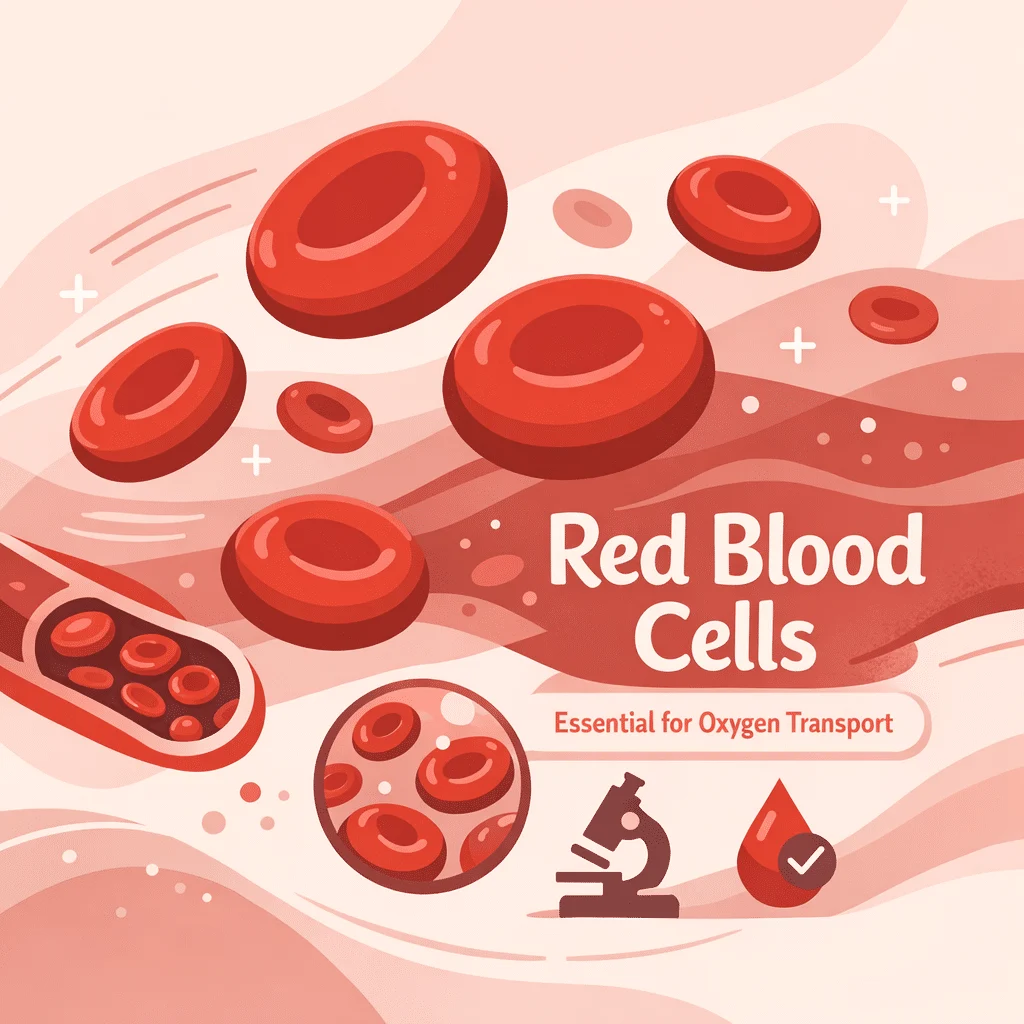
Red blood cells, also called erythrocytes, are the most numerous cells in your blood. Their job is to carry oxygen from your lungs to every tissue in your body, then carry carbon dioxide back to be exhaled. A red blood cell count simply tallies how many of these cells are present in a fixed volume of blood, usually reported as millions of cells per microlitre (million/µL) or, on some reports, as trillions per litre (×10¹²/L). Both units describe the same thing, just on a different scale.
Your bone marrow, the soft tissue inside your bones, produces roughly two million new red blood cells every second. During development, these cells lose their nucleus to make room for more oxygen-carrying capacity, which also means they cannot repair themselves once damaged. Each cell typically survives about 120 days before it is broken down and replaced.
The role of haemoglobin
Haemoglobin is the iron-rich protein packed inside every red blood cell, and it is what actually binds and releases oxygen. A single red blood cell contains hundreds of millions of haemoglobin molecules, and haemoglobin is also what gives blood its red colour. Because the count and haemoglobin usually move together, doctors read them side by side rather than in isolation. You can find more detail in our guide to haemoglobin and what this key blood marker measures.
Red blood cell count versus haemoglobin and haematocrit
These three values are reported together on nearly every full blood count, and it helps to know how they differ. The count is simply the number of cells. Haemoglobin measures the oxygen-carrying protein inside those cells. Haematocrit measures the percentage of your total blood volume that is made up of red cells. A person can have a normal cell count but low haemoglobin if the cells are smaller or contain less haemoglobin than usual, which is one reason your doctor rarely looks at the count alone.
The table below compares what each value represents and where you can learn more about the related markers.
| Marker | What it measures | Typical unit |
|---|---|---|
| Red blood cell count | Number of red cells in a set volume of blood | Million/µL or ×10¹²/L |
| Haemoglobin | Oxygen-carrying protein inside red cells | g/dL |
| Haematocrit | Percentage of blood volume made up of red cells | % |
| MCV, MCH, MCHC | Size and haemoglobin content of individual red cells | fL, pg, g/dL |
For a fuller walkthrough of how all these values sit together on one report, see our guide to reading a full blood count and its main sections, and our explainer on haematocrit and what this related blood test marker means.
Why this marker matters
Red blood cells interact with nearly every system in the body because every tissue depends on a steady oxygen supply. When the count drifts too low or too high, the consequences build gradually rather than appearing overnight. A persistently low count, called anaemia, can lead to ongoing fatigue, reduced concentration, and in severe or untreated cases, strain on the heart. A persistently high count, called polycythaemia, thickens the blood and raises the risk of blood clots, which can contribute to a stroke or heart attack.
Anaemia affects roughly a quarter of the global population, with iron deficiency the most common underlying cause. Polycythaemia is far less common, but it is exactly the kind of finding that benefits from being caught early on a routine blood test rather than discovered only after symptoms appear.
How to read your red blood cell count result
On a lab report, this marker usually appears in the full blood count section, labelled RBC, erythrocytes, or occasionally red cell count. Your result sits next to a reference range, the span of values considered typical for a healthy population of your sex and age. If your result falls inside that range, it is generally reported as normal.
The table below shows typical adult reference ranges. Treat these as a general guide only, since exact cutoffs vary by laboratory, method, and population.
| Group | Typical reference range |
|---|---|
| Adult men | 4.7–6.1 million/µL (4.7–6.1 ×10¹²/L) |
| Adult women | 4.2–5.4 million/µL (4.2–5.4 ×10¹²/L) |
| Children | 4.0–5.5 million/µL (4.0–5.5 ×10¹²/L) |
Several factors can legitimately shift these ranges. Sex is the biggest driver, since higher testosterone levels in men stimulate more red cell production. Age, pregnancy, and even the altitude where you live also matter, because thinner air at high elevation prompts the body to make more red cells to compensate. For a broader picture of how reference ranges are built and why they differ between labs, our guide to normal blood test ranges and how they are set covers the topic in depth, and our step-by-step guide on how to read your blood test results as a whole report explains how to weigh a single flagged value against the rest of your panel.
Low red blood cell count: what it can mean
A count below the reference range is a sign of anaemia, though anaemia itself is more precisely defined by low haemoglobin than by the cell count alone. There are several common underlying causes, and they tend to fall into a few recognisable patterns.
Iron deficiency anaemia
This is the most frequent cause of a low count worldwide. Without enough iron, the bone marrow cannot build enough haemoglobin, so it produces smaller, less effective red cells. Typical symptoms include fatigue, pale skin, brittle nails, and hair thinning. Doctors often follow up a low count with an iron studies panel to confirm the diagnosis; our guide to the iron studies panel and what each marker in it means explains how ferritin, serum iron, and transferrin saturation fit together.
Vitamin B12 or folate deficiency
A shortage of vitamin B12 or folate (vitamin B9) disrupts red cell production in a different way. Instead of making cells smaller, the bone marrow produces abnormally large, immature cells that do not function well. This can cause neurological symptoms such as tingling or numbness in addition to the usual anaemia symptoms. Our article on folic acid testing and what your results indicate explains this mechanism further.
Haemolytic anaemia and other causes
Haemolytic anaemia results from red blood cells being destroyed faster than the bone marrow can replace them, which can stem from immune disorders, inherited conditions, or mechanical damage. Signs include jaundice, dark urine, and sudden fatigue. Chronic diseases, kidney disease, and pregnancy can also lower the count without a clear nutritional cause, since pregnancy increases blood plasma volume faster than red cell production, diluting the count even when iron stores are adequate. Our guide to blood tests during pregnancy and what each result tracks covers this pattern in more detail.
High red blood cell count: what it can mean
A count above the reference range is called polycythaemia or erythrocytosis, and it makes the blood thicker, which raises the risk of clotting.
Primary polycythaemia
Polycythaemia vera is a rare blood cancer caused by a genetic mutation in bone marrow stem cells that drives overproduction of red blood cells independent of the body’s actual oxygen needs. Symptoms often include facial redness, itching after a hot bath or shower, headaches, and dizziness. A blood test for the JAK2 gene mutation usually confirms this diagnosis.
Secondary polycythaemia
This is far more common and represents the body’s adaptive response to a chronic shortage of oxygen. Chronic lung disease such as COPD, long-term smoking, sleep apnoea, and living at high altitude are typical triggers, since the body increases red cell production to compensate for lower oxygen availability. Certain kidney conditions and tumours can occasionally cause the same effect by boosting the hormone erythropoietin, which stimulates red cell production.
Dehydration and false elevation
Not every high result reflects more red cells. If you are dehydrated, the liquid portion of your blood shrinks while the number of red cells stays the same, which concentrates the sample and can push the count above the reference range temporarily. This usually resolves once you rehydrate, which is why a high count is often rechecked after a period of normal fluid intake before further testing begins.
Comparing anaemia and polycythaemia at a glance
Because these two conditions sit at opposite ends of the same marker, a side-by-side view can make the pattern easier to follow.
| Feature | Low count (anaemia) | High count (polycythaemia) |
|---|---|---|
| Common symptoms | Fatigue, pale skin, shortness of breath | Facial redness, itching, headaches |
| Most common cause | Iron deficiency | Chronic low blood oxygen (secondary) |
| Main health risk | Reduced oxygen delivery to tissues | Thicker blood, higher clot risk |
| Typical first follow-up test | Iron studies, B12, folate | JAK2 mutation testing, oxygen levels |
Can you have anaemia with a normal red blood cell count?
Yes, and this is a common point of confusion. Anaemia is technically defined by low haemoglobin rather than by a low cell count on its own. It is possible to have a normal number of red cells that are individually too small or carry too little haemoglobin, a pattern called hypochromic anaemia. This is why doctors always look at the count alongside haemoglobin, haematocrit, and the red cell indices rather than judging the count in isolation. Our guides to low MCHC and what it means for your red cells and low ferritin and how it relates to iron stores walk through this scenario in more detail.
When to see a doctor
Most single, mildly abnormal results are not emergencies, but a few situations warrant prompt attention.
- A result your doctor has specifically flagged or asked you to discuss.
- New or worsening fatigue, breathlessness, dizziness, or a rapid heartbeat.
- Facial redness, persistent itching (especially after a hot shower), or unexplained headaches alongside a high result.
- Yellowing of the skin or eyes, dark urine, or sudden pallor, which can signal red cell destruction.
- A markedly abnormal result, or several related CBC values that are abnormal together, rather than one mild, isolated flag.
If none of these apply and your result is only slightly outside the range with no symptoms, your doctor will likely suggest a simple recheck in a few weeks or months rather than immediate action.
Practical steps based on your result
General guidance can help you understand what to expect, though only your doctor can tailor next steps to your specific situation.
If your count is slightly low, a follow-up test in a few months is common, and increasing iron-rich foods such as lean meat, lentils, and spinach, paired with a source of vitamin C to boost absorption, is often a reasonable first step. If your count is very low, or you have significant symptoms, prompt medical evaluation is important, since the underlying cause needs to be identified before starting any supplement, as the wrong one can be ineffective or mask a more serious problem. If your count is high, staying well hydrated, limiting alcohol, and quitting smoking are practical steps while your doctor investigates the cause; persistent elevation always deserves a proper work-up rather than self-management.
Latest scientific advances
A 2024 systematic review looked at how red blood cell measurements change as people age and how they might be used as an early biomarker of ageing-related health changes. Researchers found that several red cell values, including haemoglobin concentration, cell size (MCV), and the variation in cell size (RDW), shift in fairly consistent ways as people get older, alongside changes in oxidative stress inside the cells. In plain terms, this means your red blood cell panel may reflect more than just anaemia or polycythaemia; it could eventually help flag general ageing-related changes in the body before other symptoms appear. This is still an emerging research area, and the findings are preliminary rather than something used in routine clinical decision-making today, so no current guideline recommends ordering a FBC specifically to “measure ageing.” The same review also found that interventions such as diet, certain plant compounds, and regular physical activity were being studied for their effects on these red cell changes, though the evidence for any specific intervention is still being confirmed.
Separately, a 2023 commentary in a major internal medicine journal made the case that red blood cell indices, including the count itself, are not redundant with each other despite moving in the same general direction. What this means for you practically is that your doctor is not just looking at one number on your FBC; the combination of your count, haemoglobin, haematocrit, and indices like MCHC together carries more diagnostic information than any single value alone, which is one reason a full panel is usually read as a pattern rather than line by line.
Glossary
| Term | Definition |
|---|---|
| Erythrocyte | The medical term for a red blood cell. |
| Anaemia | A condition defined by low haemoglobin, often accompanied by a low red blood cell count. |
| Polycythaemia (erythrocytosis) | A red blood cell count above the reference range, which thickens the blood. |
| Haemoglobin (Hb) | The iron-rich protein inside red blood cells that carries oxygen. |
| Haematocrit (Hct) | The percentage of total blood volume made up of red blood cells. |
| Bone marrow | The soft tissue inside bones where red blood cells are produced. |
| Reference range | The span of values considered typical for a healthy population on a lab report. |
| Polycythemia vera | A rare blood cancer caused by a JAK2 gene mutation that overproduces red blood cells. |
| Erythropoietin (EPO) | A hormone, mainly made by the kidneys, that stimulates red blood cell production. |
| Hypochromic | Describes red blood cells that contain less haemoglobin than expected. |
Frequently asked questions
What is considered a normal red blood cell count?
For most adult men, a typical reference range is about 4.7 to 6.1 million cells per microlitre of blood. For adult women, it is generally about 4.2 to 5.4 million per microlitre, and for children, roughly 4.0 to 5.5 million per microlitre. These figures can vary slightly between laboratories depending on the equipment and reference population used, so always compare your result to the range printed on your own report rather than to a number found online.
What does a slightly elevated red blood cell count usually mean?
A mildly high result is often explained by everyday factors such as dehydration, smoking, or living at a higher altitude, and it does not automatically indicate a serious problem. Doctors typically confirm hydration status first and may simply repeat the test after a period of good fluid intake. If the elevation persists across more than one test, further evaluation for causes such as chronic lung disease or, rarely, a bone marrow condition may follow.
What symptoms come with a high red blood cell count?
Many people with a mildly high count have no symptoms at all, which is why it is often discovered incidentally during routine blood tests. When symptoms do occur, they can include headaches, dizziness, facial redness, itching after a warm shower, blurred vision, and, less commonly, joint pain or nosebleeds. These symptoms warrant a conversation with your doctor, particularly if they are new or persistent.
Does normal red blood cell count vary by age?
Yes. Children generally have somewhat lower reference ranges than adults, and ranges can shift again in older age as bone marrow activity and other health conditions change. Reference ranges are typically split by sex from puberty onwards because of hormonal differences, and pregnancy also lowers the expected range temporarily due to increased blood plasma volume.
How is a high red blood cell count usually treated?
Treatment depends entirely on the underlying cause. If dehydration explains the result, rehydration alone may resolve it. If a chronic lung condition or sleep apnoea is responsible, treating that condition is the priority. For polycythaemia vera, your doctor may recommend medication to slow red cell production, along with routine therapeutic phlebotomy, a procedure that removes a small volume of blood to reduce thickness and clotting risk.
Can exercise or altitude change my red blood cell count?
Yes, both can raise it through normal physiological adaptation. Regular endurance exercise can modestly increase your count over time as your body adapts to deliver oxygen more efficiently to working muscles, typically a change of about five to ten percent. Living or training at high altitude has a similar, often larger effect, because thinner air prompts the body to produce more red cells to maintain adequate oxygen delivery. It is worth mentioning recent travel or an altitude training programme to your doctor when discussing results.
Sources
- Red Blood Cell (RBC) Count — MedlinePlus, National Library of Medicine (NIH): https://medlineplus.gov/lab-tests/red-blood-cell-rbc-count/
- High Red Blood Cell Count: Symptoms, Meaning, Causes — Cleveland Clinic: https://my.clevelandclinic.org/health/symptoms/17810-high-red-blood-cell-count
- High red blood cell count, Causes — Mayo Clinic: https://www.mayoclinic.org/symptoms/high-red-blood-cell-count/basics/causes/sym-20050858
- Somu Yadav, Deepika, Pawan Kumar Maurya — A Systematic Review of Red Blood Cells Biomarkers in Human Aging — The Journals of Gerontology: Series A, 2024: https://doi.org/10.1093/gerona/glae004
Because a red blood cell count rarely tells the full story on its own, many people find it useful to see it alongside related values such as haemoglobin, haematocrit, and iron markers like ferritin, all interpreted together rather than as isolated numbers. Understanding these connections helps explain why your doctor asks about diet, symptoms, and medication history even when only one line on your report is flagged. AI DiagMe helps understand a full complete blood count, including your red blood cell count, haemoglobin, and haematocrit, in plain language so you can see the pattern across your results. It is designed to help you understand your report and prepare better questions, not to diagnose you or replace your doctor’s judgement.
Understand your lab results with AI DiagMe
Get your results interpreted in minutes