









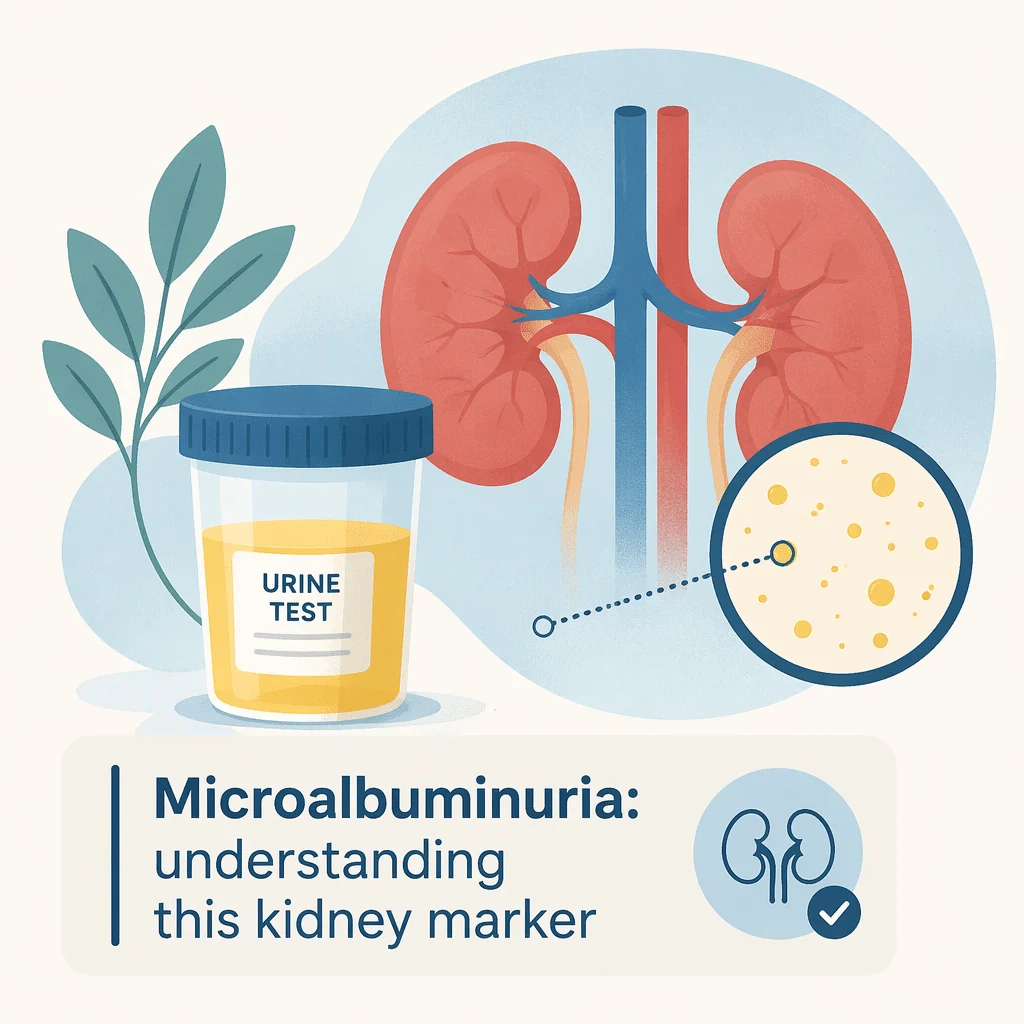
Microalbuminuria is the presence of small amounts of albumin — a protein that normally stays in your blood — in your urine, and it is one of the earliest signs that the kidney’s filter is under strain. The quantity is too small to show up on a standard urine dipstick, yet a targeted test detects it easily, most often through the urine albumin-to-creatinine ratio (ACR). Finding albumin in urine this early opens a valuable window to protect both your kidneys and your heart, well before you would feel anything.
In this article you will learn what microalbuminuria is, how the ACR test works and how to read its numbers, why diabetes and high blood pressure make it so important, what can push the result up, what you can do about it, and what recent research adds. One point up front: current kidney guidelines increasingly call this range moderately increased albuminuria rather than microalbuminuria, though both terms describe the same finding.
What is microalbuminuria?
To make sense of this marker, it helps to picture what the kidneys do and where albumin fits in.
Albumin and the kidney’s filter
Your kidneys work like a vast, fine filtration plant. Every day they pass your entire blood supply through millions of tiny filters called glomeruli, keeping the substances your body needs and sending waste out in the urine. Albumin is the most abundant protein in your blood, made by the liver, and it helps hold fluid inside your vessels whilst ferrying hormones and medicines around the body.
A healthy filter is almost watertight to large molecules like albumin, so very little escapes into the urine. When the filter is slightly damaged, small amounts begin to leak through. That leak is microalbuminuria. Because albumin belongs in the blood, finding it in urine suggests the filtering barrier is no longer perfectly sealed.
Why the prefix “micro”
The “micro” simply means the amount is small — larger than normal, but too little for a routine dipstick to flag reliably. A dedicated microalbumin urine test is needed to measure it. This early stage is important precisely because it is subtle: the kidneys can leak a little albumin for years before blood-based kidney numbers move at all, which is why a sensitive urine test catches trouble first.
How microalbuminuria is measured: the ACR test
The standard way to check for albumin in urine is the urine albumin-to-creatinine ratio, written as ACR or uACR. Instead of measuring albumin alone, the lab compares it to creatinine, a steady waste product of muscle. You can explore how this is calculated in our dedicated guide to the albumin-to-creatinine ratio.
Why a ratio, and which sample
Urine can be dilute after a big drink or concentrated after a hot day, which would make raw albumin misleading. Dividing albumin by creatinine cancels out that swing and corrects for how dilute or concentrated the sample is, so the result is far more reliable. A convenient microalbumin/creatinine ratio can be run on a single spot sample, ideally a first-morning one; a 24-hour collection is only occasionally needed.
Reading the numbers
Laboratories print reference values beside your result, usually in milligrams of albumin per gram of creatinine (mg/g) or milligrams per millimole (mg/mmol). The widely used thresholds, aligned with the international KDIGO categories, are shown below.
| Category (KDIGO) | ACR in mg/g | ACR in mg/mmol | What it usually reflects |
|---|---|---|---|
| Normal to mildly increased (A1) | under 30 | under 3 | Filtration barrier working as expected |
| Moderately increased (A2) — the microalbuminuria range | 30 to 300 | 3 to 30 | An early, small albumin leak worth confirming and monitoring |
| Severely increased (A3) — once called macroalbuminuria | over 300 | over 30 | A larger protein loss that needs fuller assessment |
US kidney authorities such as the National Institute of Diabetes and Digestive and Kidney Diseases consider an ACR above 30 mg/g higher than normal. One elevated reading is never enough to conclude anything: because a fever, a urinary infection, or hard exercise can push the number up briefly, doctors usually confirm the result with one or two repeat tests a few weeks apart.
What the test involves and how to prepare
The microalbumin urine test is simple and low-effort. In most cases you give a small urine sample at the clinic or lab, often from your first trip to the bathroom in the morning, when urine is most concentrated and the reading is most stable. No fasting or special preparation is usually required, and there is no risk beyond the ordinary steps of collecting urine.
A few habits improve accuracy. Where possible, avoid strenuous exercise in the day before the test, mention any current urinary infection or fever, and tell your clinician about the medicines and supplements you take, since some can nudge the result. If the first sample is raised, expect to repeat it: a diagnosis of persistent albuminuria rests on two or three consistent results over several weeks rather than a single value.
Why microalbuminuria matters
This marker is valuable because it works as an early alarm for two connected systems rather than one.
An early warning for the kidneys
In people with diabetes, a rising ACR is often the first measurable sign of kidney involvement, appearing before symptoms and before blood filtering declines. Catching it here matters because this is the stage when protective steps can slow, halt, or sometimes reverse the damage. To see the full renal picture, doctors pair the urine result with a blood estimate of filtering called the estimated glomerular filtration rate, and may order a broader kidney function panel.
A signal for the heart and blood vessels
Albumin in the urine is not only about the kidneys. The same small-vessel fragility that lets albumin slip through the kidney filter tends to affect vessels in the heart and arteries too. For that reason, microalbuminuria is treated as an independent risk marker for cardiovascular disease, even in people without diabetes. A raised ACR can prompt a doctor to look more closely at blood pressure, cholesterol, and overall heart risk, turning a simple urine test into a wider health check.
Why catching it early changes the outcome
The practical value of microalbuminuria lies in timing. By the time kidney damage is advanced enough to show on standard blood tests or to cause symptoms, much of the harm is already done and harder to undo. A small albumin leak, by contrast, is a soft early signal — a prompt to tighten control of the underlying causes whilst the filters are still largely intact. This is the reasoning behind routine ACR screening in higher-risk groups: it buys time, and time is the single most useful thing in slowing kidney disease.
What causes high microalbuminuria?
Several conditions can loosen the kidney filter enough for albumin to escape. By far the two most common are diabetes and high blood pressure.
| Cause | How it can lead to albumin in the urine |
|---|---|
| Type 1 and type 2 diabetes | Chronic high blood sugar slowly injures the tiny filtering vessels, a process known as diabetic kidney disease |
| High blood pressure | Sustained pressure strains the filters and forces albumin through the barrier |
| Glomerular kidney diseases | Direct inflammation of the filters, as in some autoimmune conditions such as lupus, increases their leakiness |
| Obesity and metabolic syndrome | Added metabolic stress on the kidneys can raise albumin excretion over time |
| Temporary triggers | Fever, urinary infection, dehydration, or intense exercise can raise the result briefly without lasting kidney disease |
Because diabetes and blood pressure drive most persistent cases, testing is built into the regular follow-up of anyone living with diabetes or high blood pressure. It is also why doctors separate a one-off rise from persistent albuminuria: transient triggers fade once they pass, whereas a true leak keeps showing up on repeat testing. Persistent albumin in the urine without diabetes or high blood pressure still deserves investigation, since it can point to another kidney or systemic condition.
Protecting your kidneys when albumin appears in the urine
Finding albumin early is useful precisely because there is a lot that can be done at this stage. Management is not about the urine number alone; it targets the conditions driving the leak and the general health of your blood vessels.
The everyday foundations matter most: keeping blood sugar and blood pressure in a healthy range, cutting back on excess salt, staying physically active, not smoking, and reaching or maintaining a healthy weight. These steps ease the load on the kidney filters and often help the ACR settle over time. Careful use of over-the-counter painkillers is worth a mention too, since frequent high-dose anti-inflammatory drugs can strain the kidneys.
On the medical side, doctors frequently use blood-pressure medicines known as ACE inhibitors and ARBs, which both lower pressure and reduce albumin loss. As noted below, SGLT2 inhibitors have also become an important option for protecting the kidneys in many people with albuminuria. Every medication decision is individual and belongs with your doctor, but the underlying message is hopeful: at the microalbuminuria stage, the path of kidney damage can often be slowed or reversed.
Is a low or normal result reassuring?
Yes. A normal or undetectable ACR means the filtering barrier is doing its job and keeping albumin in the blood where it belongs. There is no such thing as a harmful “too low” level of albumin in urine — the lower, the better. A normal result is the outcome everyone is aiming for, and in someone with diabetes or high blood pressure it is a sign that current management is protecting the kidneys.
One nuance is worth knowing: a normal ACR does not rule out every kidney problem. A few conditions damage parts of the kidney other than the filters and may not raise albumin early, which is why doctors read this test alongside your history and other results rather than on its own.
Latest scientific advances
Research over the last few years has sharpened why this small urine finding deserves attention.
- A little albumin counts, and earlier than once thought. A 2023 review in the European Heart Journal described a kidney-disease “blind spot”: albumin can start leaking, and heart and kidney risk can start rising, at levels still labelled almost normal — before the usual definition of kidney disease is met. What this means for you: a result in the higher part of the normal range is not automatically nothing, and it can be worth repeating and watching. This is still an area doctors are actively studying.
- Albuminuria predicts heart problems, not only kidney ones. A 2025 UK study that followed more than 450,000 people found that, in the earliest stages of kidney disease, those who also had albumin in the urine faced a clearly higher chance of heart failure, major heart events, and death than those without it — whilst people with mildly reduced filtering but no leak fared much better. What this means for you: the urine test adds information a blood test alone can miss.
- The test is moving beyond diabetes. Reviews published in 2025 and 2026 argue that the urine albumin-to-creatinine ratio should be measured more widely — including in people with heart failure or high blood pressure, not just those with diabetes — because it flags risk early and can help guide treatment.
- Newer medicines can lower it. SGLT2 inhibitors, a drug class first used for diabetes, reduce albumin in the urine and protect the kidneys. A 2025 pooled analysis of randomised trials found they trimmed albuminuria by a modest amount across a wide range of starting levels, and a 2025 meta-analysis in JAMA found they slowed kidney-disease progression whether or not much albumin was present. What this means for you: if you have albuminuria, there are now well-studied options a doctor can consider, though the choice is always individual.
Taken together, this research points in one direction: albumin in the urine is a meaningful early signal, and acting on it — through lifestyle, steady blood-pressure and blood-sugar control, and modern medicines where appropriate — can improve both kidney and heart outcomes.
When to see a doctor
Any confirmed microalbuminuria should be discussed with your GP, who will coordinate follow-up and decide whether a kidney specialist (nephrologist) is needed. Seek a medical review, and possibly a referral, in situations such as these:
- The result stays raised or keeps climbing despite good control of diabetes or blood pressure.
- The ratio rises above 300 mg/g, moving into the severely increased range.
- Your blood filtering (eGFR) starts to fall on repeat tests.
- You notice blood in the urine, or persistent foamy urine, which can accompany protein loss.
- You have swelling in the ankles or around the eyes, or unusual, lasting fatigue.
For context on how a broader picture of urinary protein is assessed, our overview of protein in urine explains the related tests and follow-up.
Glossary
| Term | Plain-language definition |
|---|---|
| Albumin | The most abundant protein in blood, made by the liver; it should stay in the blood, not the urine |
| Albuminuria | Albumin present in the urine, a sign the kidney filter is leaking |
| Microalbuminuria | A small albumin leak (ACR 30 to 300 mg/g), now often called moderately increased albuminuria |
| Urine albumin-to-creatinine ratio (ACR) | A urine test comparing albumin to creatinine to gauge how much albumin is being lost |
| Creatinine | A steady waste product of muscle used to correct the test for urine concentration |
| Glomerulus | One of the millions of tiny filters inside the kidney that clean the blood |
| Proteinuria | A broader term for excess protein of any kind in the urine |
| eGFR | An estimate, from a blood test, of how much blood the kidneys filter each minute |
| Diabetic kidney disease | Kidney damage caused by long-standing high blood sugar, a leading cause of albuminuria |
Frequently asked questions
Is microalbuminuria the same as proteinuria?
They overlap but are not identical. Proteinuria means any type of protein appears in the urine, whilst albuminuria refers specifically to albumin, the main blood protein. Microalbuminuria is a small amount of albumin, detected by a sensitive test before an ordinary dipstick protein test would turn positive. In practice, albumin is the protein doctors monitor most closely for early kidney and cardiovascular risk, which is why the ACR test targets it specifically rather than measuring total protein.
Can microalbuminuria be reversed or go away?
Often, yes, especially when it is caught early. Tightening control of blood sugar and blood pressure, alongside lifestyle changes and appropriate medicines, can lower the amount of albumin in the urine and sometimes return the ratio to normal. The earlier the leak is found, the better the chances, which is one of the main reasons this test is carried out routinely in people at risk. Any treatment plan should be guided by your doctor rather than started on your own.
Do I need a 24-hour urine collection, or is a spot sample enough?
For most people a single spot sample is enough, and it is usually the preferred method. Because the microalbumin/creatinine ratio corrects for how dilute or concentrated the urine is, a first-morning sample gives a reliable result without the inconvenience of collecting urine all day. A full 24-hour collection is reserved for particular situations where a doctor wants to measure total daily protein loss precisely. Your clinician will choose the approach that fits your case.
Can exercise, dehydration, or a period affect the test?
Yes. Intense exercise, a fever, a urinary tract infection, marked dehydration, and menstrual blood in the sample can all raise albumin readings temporarily, without meaning you have lasting kidney disease. This is exactly why a single high result is not treated as a diagnosis. Doctors confirm a raised value by repeating the test, ideally when you are well, rested, and not in the middle of a temporary trigger, before drawing any conclusion.
What does a high microalbumin/creatinine ratio mean on my report?
A result between 30 and 300 mg/g falls in the moderately increased range and suggests an early albumin leak worth confirming and monitoring. Above 300 mg/g points to a larger protein loss that needs fuller assessment. A high number is a prompt to look further, not a verdict: your doctor weighs it against repeat tests, your blood pressure and blood sugar, your eGFR, and your overall history before deciding what, if anything, it means for you.
How often should I be tested for albumin in urine?
It depends on your risk. Many people with diabetes or high blood pressure are advised to have an ACR check at least once a year, and more often if a previous result was raised or if kidney protection is being adjusted. People without risk factors do not usually need routine testing unless a doctor has a specific reason. Your care team will set a schedule based on your diagnoses, past results, and treatment.
Sources
- National Institute of Diabetes and Digestive and Kidney Diseases (NIDDK) — Albuminuria: Albumin in the Urine — niddk.nih.gov
- MedlinePlus, U.S. National Library of Medicine — Microalbuminuria test — medlineplus.gov
- Mayo Clinic — Protein in urine (proteinuria) — mayoclinic.org
- Ruilope LM, Ortiz A, Lucia A, et al. — Prevention of cardiorenal damage: importance of albuminuria — European Heart Journal, 2023 — doi.org/10.1093/eurheartj/ehac683
- Yaqoob K, Naderi H, Thomson RJ, et al. — Prognostic impact of albuminuria in early-stage chronic kidney disease on cardiovascular outcomes: a cohort study — Heart, 2025 — doi.org/10.1136/heartjnl-2024-324988
- Bozkurt B, Rossignol P, Vassalotti JA — Albuminuria as a diagnostic criterion and a therapeutic target in heart failure and other cardiovascular disease — European Journal of Heart Failure, 2025 — doi.org/10.1002/ejhf.3683
- Butler J, Jamil A, Cherney DZI, et al. — Albuminuria and heart failure — European Heart Journal, 2026 — doi.org/10.1093/eurheartj/ehag426
- Ferreira JP, et al. — Effects of SGLT2 inhibitors across the spectrum of albuminuria in cardiovascular–kidney–metabolic conditions: a pooled analysis of randomised trials — Diabetes, Obesity & Metabolism, 2025 — consensus.app
- Neuen BL, et al. — SGLT2 Inhibitors and Kidney Outcomes by Glomerular Filtration Rate and Albuminuria: a meta-analysis — JAMA, 2025 — consensus.app
Further reading
- Urinalysis results: interpretation guide
- Comprehensive metabolic panel: how to read your results
- High BUN and creatinine levels explained
- BUN/creatinine ratio: meaning and levels
- Urine creatinine levels: guide and interpretation
A microalbuminuria result rarely travels alone. It usually sits beside other kidney and metabolic numbers — your urine albumin-to-creatinine ratio, blood creatinine, estimated filtration rate (eGFR), and blood sugar — and the meaning comes from reading them together. AI DiagMe turns those values into clear, plain-language explanations so you can walk into your appointment with better questions. It is built to help you understand your results, not to diagnose you, and it never replaces your doctor.
Understand your lab results with AI DiagMe
Get your results interpreted in minutes