
































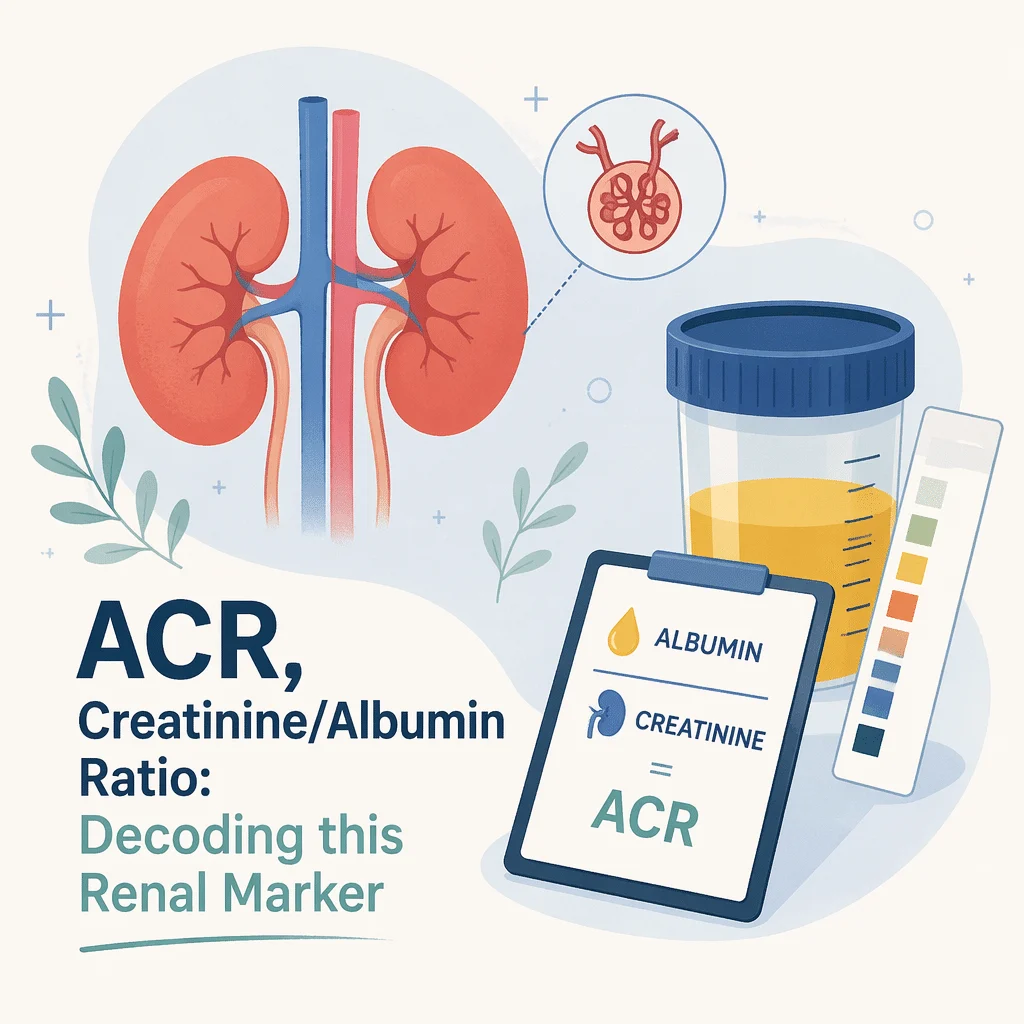
يقيس اختبار ACR كمية الألبومين، وهو بروتين صغير، التي تتسرب إلى البول مقارنةً بالكرياتينين، وهو مادة نفايات تقوم الكلى في الأحوال الطبيعية بتصفيتها. ويُعدّ هذا الاختبار من أبسط الطرق للكشف المبكر عن تلف الكلى قبل ظهور أي أعراض، وهو بالغ الأهمية بشكل خاص إذا كنت تعاني من السكري أو ارتفاع ضغط الدم. في هذا المقال، ستتعرف على كيفية قياس نسبة الألبومين إلى الكرياتينين في البول (UACR)، وما تعنيه فئات الألبومينيا وفق KDIGO (A1 وA2 وA3)، وكيف ترتبط هذه النتيجة بمعدل الترشيح الكبيبي المقدَّر (eGFR) لتحديد مرحلة صحة الكلى بشكل كامل، ومتى يستحق الأمر مناقشة أرقامك مع طبيبك.
ما الذي يقيسه اختبار ACR فعلياً
تقوم الكلى السليمة بتصفية الفضلات من الدم مع الاحتفاظ بالبروتينات المفيدة كالألبومين. وعندما تتضرر الوحدات الترشيحية الدقيقة داخل الكلى، المعروفة بالكبيبات، تبدأ بالسماح لكميات صغيرة من الألبومين بالتسرب إلى البول. يقارن اختبار ACR تركيز الألبومين في عينة البول بتركيز الكرياتينين في العينة ذاتها، مما يُصحح أثر تخفيف البول أو تركيزه في تلك اللحظة.
نظراً لأن هذه النسبة تأخذ في الاعتبار مستوى الترطيب، فإن عينة بول عشوائية واحدة، أي عينة تُجمع في أي وقت من اليوم، تُعطي تقديراً موثوقاً بشكل معقول دون الحاجة إلى جمع البول على مدار 24 ساعة كاملة. وهذا ما يجعل الاختبار عملياً جداً للفحص الروتيني في عيادة الطبيب أو المختبر.
قبل أن يصبح هذا النهج القائم على النسبة معياراً راسخاً، كان الأطباء يعتمدون على شرائط تحليل البول القديمة أو على جمع البول لمدة 24 ساعة كاملة للكشف عن تسرب البروتين. تُعدّ اختبارات الشرائط مفيدة في رصد الكميات الكبيرة من البروتين، غير أنها كثيراً ما تفوّت الارتفاعات الطفيفة المبكرة في الألبومين التي صُمّم هذا القياس تحديداً للكشف عنها. أما جمع البول لمدة 24 ساعة فقد يكون أكثر دقة في بعض الحالات، إلا أن مطالبة المريض بجمع كل قطرة بول طوال يوم كامل أمر غير عملي للفحص الروتيني. يحقق نهج عينة البول الفورية توازناً عملياً مثالياً: فهو حساس بما يكفي للكشف عن التغيرات الكلوية المبكرة، وبسيط بما يكفي لتكراره كل عام دون أن يُعيق الحياة اليومية.
لماذا يطلب الأطباء نسبة الألبومين إلى الكرياتينين في البول
يطلب الأطباء هذا الفحص في المقام الأول للكشف عن تلف كلوي مبكر وصامت لدى أشخاص لا تظهر عليهم أي أعراض. تمتلك الكلى احتياطياً وظيفياً كبيراً، لذا لا تظهر أعراض ملحوظة كالتورم أو التعب إلا بعد فقدان جزء كبير من وظائفها. إن الكشف المبكر عن الألبومين في البول يفتح الباب أمام علاجات قادرة على إبطاء التلف أو حتى إيقافه.
- داء السكري من النوع الأول أو الثاني، حيث يُعدّ الفحص السنوي ممارسة معيارية
- ارتفاع ضغط الدم، الذي يمكن أن يُلحق الضرر تدريجياً بالأوعية الدموية الدقيقة في الكلى
- وجود تاريخ عائلي للإصابة بأمراض الكلى
- أمراض القلب والأوعية الدموية، إذ ترتبط الألبومينية في البول ارتباطاً وثيقاً بخطر الإصابة بها
- متابعة أمراض الكلى المعروفة أو تقييم مدى فاعلية العلاج
كثيراً ما يراجع الأشخاص المصابون بالسكري أو ارتفاع ضغط الدم هذه النتيجة إلى جانب فحص وظائف الكلى أشمل يضم عدة قياسات متعلقة بالدم والبول.
يعود السبب في توجيه الفحص نحو الفئات الأكثر عرضة للخطر بدلاً من عموم السكان إلى كون تلف الكلى أكثر احتمالاً للظهور أولاً في هذه الفئات. ففي مرض السكري، يمكن لارتفاع سكر الدم المستمر أن يُلحق الضرر بالأوعية الدموية الدقيقة داخل الكبيبات الكلوية بمرور الوقت، وهي عملية كثيراً ما تبدأ بصمت لسنوات قبل أن يشعر الشخص بأي تغيير. وفي ارتفاع ضغط الدم، يُحدث الضغط المرتفع المستمر داخل الأوعية الكلوية الرقيقة نمطاً مشابهاً من التلف التدريجي. ولأن كلتا الحالتين شائعتان وكلتيهما قادرتان على إتلاف أنسجة الكلى بصمت، توصي الإرشادات الطبية المتخصصة باستمرار بأن يخضع البالغون المصابون بأي منهما لفحص نسبة الألبومين إلى الكرياتينين مرة واحدة على الأقل في السنة، إلى جانب فحص دوري لمعدل الترشيح الكبيبي المقدّر، حتى يمكن رصد أي تغيير في مرحلة لا تزال قابلة للسيطرة عليها.
كيفية إجراء الاختبار وكيفية الاستعداد له
الإجراء نفسه سريع وغير جراحي. تُقدِّم عينة بول، وعادةً ما تكون عينة الصباح الأولى هي الأنسب عند الإمكان، إذ تكون أكثر تركيزاً واتساقاً مقارنةً بالعينات التي تُجمع في وقت لاحق من اليوم. لا حاجة للصيام، ولا يُستخدم أي إبرة.
نصائح للحصول على نتيجة دقيقة
- تجنَّب التمارين الشاقة في الـ 24 ساعة التي تسبق الفحص، إذ يمكن للنشاط البدني المكثف أن يرفع مستويات الألبومين بصورة مؤقتة
- أخبِر طبيبك أو مقدِّم الرعاية الصحية بأي حمى أو التهاب في المسالك البولية، لأن كليهما قد يُسبِّب ارتفاعاً مؤقتاً في القراءة
- حاوِل تجنُّب إجراء الفحص خلال فترة الدورة الشهرية إن أمكن، إذ قد يُؤثِّر وجود الدم في البول على دقة النتائج
- احرِص على شرب كميات معقولة من الماء، وتجنَّب شرب كميات كبيرة بشكل غير معتاد قُبيل أخذ العينة مباشرةً
نظرًا لأن عوامل يومية عديدة قد تُسبب ارتفاعًا مؤقتًا، فإن نتيجةً مرتفعةً واحدة عادةً ما تُؤكَّد بإعادة الفحص خلال الأسابيع التالية قبل إصدار أي تشخيص. تعتمد معظم المختبرات في الولايات المتحدة على طريقة المقايسة المناعية الآلية لقياس الألبومين، وهي حساسة بما يكفي للكشف عن الكميات الصغيرة ذات الصلة بالتغيرات الكلوية المبكرة. تتوفر النتائج عادةً في غضون يوم أو يومين، ويتلقاها كثير من الأشخاص عبر بوابة المريض الإلكترونية قبل موعدهم التالي بوقت كافٍ. إذا كنت ستُجري تحليل دم في نفس اليوم، فإن دليلنا حول ما الذي تتوقعه خلال فحص الدم يتناول ما يحدث عادةً في تلك الجزء من الزيارة.
فهم نتائج فحص ACR وتصنيفات KDIGO
تُعبَّر النتائج بوحدة ملليغرام من الألبومين لكل غرام من الكرياتينين (mg/g) في الولايات المتحدة، وإن كانت دول أخرى تستخدم عادةً mg/mmol. وتُصنِّف منظمة أمراض الكلى: تحسين النتائج العالمية (KDIGO)، وهي هيئة دولية تُصدر إرشادات معتمدة على نطاق واسع لأمراض الكلى، النتائجَ إلى ثلاث فئات للبيلة الألبومينية تُعرف بـ A1 وA2 وA3.
| فئة KDIGO | نطاق ACR (ملغ/غ) | الوصف | ما يعنيه ذلك عادةً |
|---|---|---|---|
| A1 | أقل من 30 | طبيعي إلى مرتفع قليلاً | تُعدُّ عادةً نتيجة طبيعية، وكلما انخفضت الأرقام كلما كان الخطر أقل |
| A2 | 30 إلى 300 | مرتفع بشكل معتدل | يُعرف أحياناً بالبيلة الألبومينية الدقيقة (Microalbuminuria)؛ وهو مؤشر مبكر يستدعي المتابعة وإدارة عوامل الخطر |
| A3 | أعلى من 300 | مرتفع بشكل حاد | يُعرف أحياناً بالبيلة الألبومينية الكبيرة (Macroalbuminuria)؛ وعادةً ما يستدعي مراقبة أكثر دقة ومناقشة خيارات العلاج مع الطبيب |
النتائج التي تقع ضمن نطاق A2 أو A3 لا تعني بالضرورة أنك مصاب بمرض كلوي خطير. فثمة عوامل كثيرة قد ترفع الألبومين بصورة مؤقتة، ولهذا يحرص الأطباء عادةً على رصد نمط النتائج عبر فحصين أو ثلاثة بدلاً من الاستناد إلى رقم واحد فقط. لمزيد من التفاصيل حول تفسير نطاق الارتفاع المعتدل تحديداً، يتناول دليلنا المخصص عن البيلة الألبومينية الدقيقة كمؤشر لصحة الكلى هذه الفئة بعمق، وهو مرجع مكمِّل يستحق الاحتفاظ به إلى جانب هذا المقال.
تجدر الإشارة إلى أن الحدود الرقمية الدقيقة المذكورة أعلاه تنطبق على وحدة القياس الأمريكية الشائعة، وهي الملليغرام لكل غرام. إذا كانت نتيجة تحليلك مُعبَّرًا عنها بالملليغرام لكل ميلي مول، فإن الفئات الثلاث ذاتها لا تزال سارية، غير أن الأرقام الفاصلة بينها ستبدو مختلفة؛ لذا من المفيد التحقق من الوحدة التي استخدمها مختبرك قبل مقارنة نتيجتك بأي جدول تجده على الإنترنت. وعند الشك، فإن تسمية الفئة نفسها — A1 أو A2 أو A3 — تُطبع عادةً مباشرةً على التقرير، وهي المرجع الأكثر موثوقية.
العلاقة بين نسبة الألبومين إلى الكرياتينين في البول ومعدل الترشيح الكبيبي المقدَّر في تحديد مرحلة أمراض الكلى
تكشف نسبة الألبومين إلى الكرياتينين في البول جزءًا واحدًا فقط من صورة صحة الكلى. الجزء الأساسي الآخر هو معدل الترشيح الكبيبي المقدَّر (eGFR)، الذي يُحسب من قياس الكرياتينين في الدم ويُقدِّر مدى كفاءة الكلى في تصفية الدم بشكل عام. تجمع إرشادات KDIGO بين القيمتين في جدول يُحدِّد مرحلة G استنادًا إلى eGFR، وفئة A استنادًا إلى الألبومينيوريا، لوصف مستوى خطر الإصابة بأمراض الكلى المزمنة.
تكتسب هذه المقاربة المزدوجة أهميتها لأن معدل الترشيح الكبيبي المقدَّر وهذه النسبة قد يتغيران باستقلالية عن بعضهما. فقد يكون لدى الشخص معدل ترشيح طبيعي مع ارتفاع في الألبومين بالبول، أو انخفاض في معدل الترشيح مع مستويات طبيعية من الألبومين، وكل تركيبة من هذه التركيبات تحمل مستوى مخاطر مختلفًا. مراجعة نتيجة فحص معدل الترشيح الكبيبي المقدَّر (eGFR) إلى جانب فحص ACR يُعطي صورةً أكثر اكتمالًا بكثير مقارنةً بأي رقم منفرد، ولهذا السبب يُطلب كلاهما معًا عادةً لكل من يعاني من السكري أو ارتفاع ضغط الدم أو عوامل خطر كلوية أخرى.
ثمة مؤشران إضافيان يظهران أحيانًا في نفس لوحة التحاليل، ومن المفيد فهمهما في سياقهما الصحيح. فـ مستوى الكرياتينين في الدم هو القياس الخام المستخدم في حساب معدل الترشيح الكبيبي المقدَّر، في حين يُتيح نيتروجين اليوريا في الدم (BUN) نافذةً أخرى على مدى كفاءة التخلص من الفضلات. لا يُغني أيٌّ من هذه الفحوصات عن الآخر؛ بل تتكامل معًا لتُقدِّم تقييمًا أشمل لوظائف الكلى.
يصف الأطباء أحيانًا هذا الإطار المشترك لمعدل الترشيح الكبيبي المقدَّر والألبومينيوريا باستخدام تشبيه الجدول البياني البسيط: يمتد معدل الترشيح على أحد المحورين من الوظيفة الطبيعية نزولًا عبر مراحل متدنية تدريجيًا، بينما تمتد فئة A على المحور الآخر من A1 إلى A3. إن الموضع الإجمالي للشخص على هذا الجدول — لا أيٌّ من الرقمين منفردًا — هو ما يُحدِّد التكرار الموصى به للمتابعة، وما إذا كان ينبغي النظر في أدوية وقائية بعينها. وهذا أيضًا هو السبب في أن نتيجة البول المنفردة، دون أي سياق لمعدل الترشيح، لا تستطيع في الغالب أن تروي القصة كاملة وحدها، ولهذا يُطلب كلاهما معًا عادةً خلال فحص صحة الكلى.
ما الأسباب التي قد تؤدي إلى ارتفاع أو شذوذ نتيجة فحص نسبة الألبومين إلى الكرياتينين في البول
ثمة حالات وأسباب عديدة قد ترفع نسبة الألبومين في البول، تتراوح بين أسباب بسيطة ومؤقتة وأخرى أكثر أهمية وتستمر لفترة أطول.
أسباب مؤقتة أو غير خطيرة
- ممارسة تمارين مكثفة مؤخراً
- الحمى أو المرض الحاد
- التهاب المسالك البولية
- الجفاف أو، في حالات أقل شيوعاً، شرب كميات كبيرة جداً من السوائل
- الحمل، حيث تكون التغيرات الطفيفة شائعة وتخضع لمتابعة منفصلة
أسباب قد تستدعي متابعة طبية
- تغيرات الكلى المرتبطة بالسكري، والمعروفة غالبًا بالاعتلال الكلوي السكري
- ارتفاع ضغط الدم غير المضبوط الذي يؤثر على الأوعية الدموية الصغيرة في الكلى
- مرض الكلى المزمن الناجم عن أسباب أخرى
- بعض أمراض المناعة الذاتية أو أمراض الكبيبات الكلوية
- أمراض القلب والأوعية الدموية، إذ ترتبط الألبومينيا في البول ارتباطًا وثيقًا بمخاطر القلب والأوعية الدموية
إذا جاءت نتيجتك مرتفعة، فسيأخذ طبيبك في الحسبان عادةً صورتك الصحية الشاملة، بما في ذلك حالتك فيما يخص السكري or التحكم في ضغط الدم، قبل اتخاذ قرار بشأن الخطوات التالية. وقد يراجع طبيبك أيضًا قائمة أدويتك الأخيرة، إذ إن عددًا محدودًا من الأدوية قد يؤثر على قراءات ألبومين البول، كما قد يسألك عن أي مرض حديث أو مستوى الترطيب ومستوى النشاط البدني، للتمييز بين التغيير الحقيقي والارتفاع المؤقت.
متى يجب زيارة الطبيب
النتيجة المرتفعة قليلًا والمعزولة شائعة وكثيرًا ما تعود إلى الطبيعي عند إعادة الفحص، لذا نادرًا ما تستدعي إجراءً عاجلًا بمفردها. غير أنه من المفيد التواصل مع مقدم الرعاية الصحية في الحالات التالية:
- جاءت نتيجتك ضمن النطاق A2 أو A3 في أكثر من مناسبة
- لديك سكري أو ارتفاع في ضغط الدم ولم تُجرِ فحص الكشف عن الألبومين في البول خلال العام الماضي
- لاحظت أن بولك رغوي أو فقاعي، أو ظهر تورم غير مبرر في ساقيك أو حول عينيك، أو طرأ تغير ملحوظ وغير مبرر على تكرار التبول
- لديك تاريخ عائلي بمرض الكلى ولم تُجرِ قط فحص الكشف الأساسي
- تحوّلت نتيجة كانت طبيعية سابقًا إلى غير طبيعية، مما يستدعي التحقيق في هذا التغيير
لا تعني أيٌّ من هذه العلامات بالضرورة وجود خطأ جسيم، غير أنها دوافع منطقية للتحدث مع طبيبك، الذي يستطيع تفسير هذه النسبة جنبًا إلى جنب مع نتيجة eGFR وضغط الدم وتاريخك الطبي الشامل. إحضار سجل مكتوب بنتائجك الأخيرة، أو مراجعة بوابة نتائج المختبر معًا خلال الزيارة، قد يجعل هذه المحادثة أكثر فائدة، لا سيما إذا أجريت الفحص في أكثر من مكان على مدار السنوات الماضية.
أحدث التطورات العلمية
وفقًا لـ PubMed وConsensus، أسهمت عدة دراسات بارزة نُشرت في السنوات الأخيرة في تطوير فهم الأطباء لنسبة الألبومين إلى الكرياتينين في البول، لا سيما فيما يتعلق باستراتيجية الفحص ودورها بوصفها مؤشرًا صحيًا أشمل، لا مجرد مؤشر خاص بالكلى.
أصدرت منظمة KDIGO إرشادات سريرية محدَّثة عام 2024 أعادت فيها تأكيد وتحسين طريقة الجمع بين نتائج eGFR والألبومين في البول لتصنيف درجة خطر مرض الكلى المزمن (Stevens et al., 2024). ما يعنيه هذا بالنسبة لك: تعكس شبكة التصنيف الحالية التي يستخدمها طبيبك أحدث توافق الخبراء، لذا فإن الفئة المُحددة اليوم تتبع معيارًا معترفًا به عالميًا ويُحدَّث بانتظام، وليس معيارًا قديمًا.
أجرى باحثون تحليلًا تلويًا على بيانات المشاركين الفردية، أي إعادة تحليل موحدة للبيانات الخام من مجموعات دراسية منفصلة عديدة بدلًا من الاكتفاء بنتائجها الإجمالية، وشمل هذا التحليل معلومات من أكثر من 100 مجموعة بحثية، وأكد أن انخفاض معدل الترشيح الكبيبي المقدر وارتفاع قيم ألبومين البول كلاهما يتنبآن بشكل مستقل بمجموعة من النتائج الصحية، بما فيها الأحداث القلبية الوعائية والاستشفاء، حتى عند مستويات تغيير خفيفة نسبيًا (Grams et al., 2023). ما يعنيه هذا بالنسبة لك: حتى النتيجة التي تتجاوز النطاق الطبيعي بشكل طفيف تُعدّ مؤشراً ذا قيمة لصحتك العامة، وليست مجرد فارق بسيط يمكن تجاهله.
وفي سياق منفصل، كشف تحليل تلوي واسع النطاق يقارن بين نسبة الألبومين ومقياس بديل لبروتين البول أن نسبة الألبومين إلى الكرياتينين ارتبطت بصورة أكثر اتساقًا بالنتائج الكلوية والقلبية الوعائية المستقبلية عبر مجموعات واسعة من المرضى (Heerspink et al., 2025). ما يعنيه هذا بالنسبة لك: إذا أتاح لك المختبر خيار اختبارات بروتين البول، فإن النسخة المعتمدة على الألبومين تمنح طبيبك في الغالب إشارة أوضح.
أجرت دراسة فحص واقعية تُعرف بـ SALINE اختباراً لمجموعة جمع البول المنزلية التي تُرسَل بالبريد إلى مرضى السكري وارتفاع ضغط الدم وأمراض القلب والأوعية الدموية، يعقبها قياس مختبري للنسبة (van Mil et al., 2025). أتمّ نحو 4 من كل 10 مرضى مدعوين الاختبار المنزلي، وتبيّن أن الغالبية العظمى ممن ثبت لديهم ارتفاع في النتيجة يعانون من عامل خطر مُكتشَف حديثاً أو غير مُسيطَر عليه جيداً ويستحق المعالجة. ما يعنيه هذا بالنسبة لك: أساليب الجمع المنزلية المريحة باتت مُعتمَدة بشكل متزايد، وقد تُسهّل مواكبة الفحوصات الدورية الموصى بها، لا سيما إذا كان التنقل إلى المختبر أمراً غير مريح.
وأخيرًا، استعرضت مراجعة عام 2026 الألبومينيا في البول في سياق قصور القلب تحديدًا، مشيرةً إلى أن ارتفاع مستويات الألبومين في البول شائع في هذه الحالة ومرتبط باستقلالية بنتائج أسوأ، على الرغم من أن الفحص الروتيني له لم يُقنَّن بعد في إرشادات رعاية قصور القلب بالقدر ذاته الذي هو عليه في إرشادات السكري وأمراض الكلى (Butler et al., 2026). ما يعنيه هذا بالنسبة لك: قد تحمل نتيجتك أهمية لصحة القلب إلى جانب صحة الكلى، وهذا سبب إضافي لعدم إغفال رقم شاذ يتكرر باستمرار.
مسرد المصطلحات
| شرط | تعريف |
|---|---|
| الألبومين | بروتين صغير تحتجزه الكلى السليمة في الدم عادةً. وجوده في البول قد يكون علامة مبكرة على تلف الكلى. |
| الكرياتينين | مادة نفايات ناتجة عن النشاط العضلي الطبيعي، تُرشّحها الكلى السليمة بمعدل ثابت نسبياً، مما يجعلها مفيدة للمقارنة في الاختبارات القائمة على النسب. |
| نسبة الألبومين إلى الكرياتينين في البول (UACR) | الاسم الرسمي لفحص ACR؛ وهو نسبة الألبومين إلى الكرياتينين المقاسة في عينة البول، وتُرفع النتيجة عادةً بوحدة ملليغرام لكل غرام. |
| الألبومينوريا (بروتين الألبومين في البول) | المصطلح العام للدلالة على وجود الألبومين في البول بمستويات تتجاوز الحدود الطبيعية المتوقعة، بصرف النظر عن السبب الدقيق. |
| بيلة الألبومين الدقيقة | مصطلح قديم لا يزال شائعاً للفئة A2 وفق تصنيف KDIGO ذات الارتفاع المعتدل، وتتراوح عموماً بين 30 و300 ملغ/غ. |
| معدل الترشيح الكبيبي التقديري (eGFR) | تقدير محسوب لمدى كفاءة الكلى في ترشيح الدم، يُستنتج من قياس الكرياتينين في الدم مع الأخذ بعين الاعتبار العمر والجنس. |
| الكُبيبات | وحدات الترشيح الدقيقة الموجودة داخل كل كلية، حيث يتم تنقية الدم؛ وغالبًا ما يكون تلف هذه الوحدات هو السبب الذي يسمح للألبومين بالتسرب إلى البول. |
| مرض الكلى المزمن (CKD) | انخفاض طويل الأمد في وظيفة الكلى أو بنيتها، يُصنَّف باستخدام مزيج من معدل الترشيح الكبيبي المقدَّر (eGFR) وفئة الألبومينوريا. |
| KDIGO | اختصار لـ Kidney Disease: Improving Global Outcomes، وهي منظمة دولية تُصدر إرشادات سريرية معتمدة على نطاق واسع في مجال رعاية أمراض الكلى. |
الأسئلة الشائعة
هل أحتاج إلى الصيام قبل إجراء اختبار ACR؟
لا يُشترط الصيام لإجراء اختبار نسبة الألبومين إلى الكرياتينين في البول. يمكنك تناول الطعام والشراب بشكل طبيعي قبله. أما إذا طلب منك طبيبك إجراء فحوصات دم في نفس الزيارة، كقياس سكر الصيام أو تحليل الدهون، فاتبع تعليمات الصيام الخاصة بتلك الفحوصات تحديدًا.
كيف يُحسب نسبة الألبومين إلى الكرياتينين؟
يقوم المختبر بقسمة تركيز الألبومين المقاس في عينة البول على تركيز الكرياتينين في نفس العينة، ثم يُعبَّر عن النتيجة بوحدة ملليغرام من الألبومين لكل غرام من الكرياتينين. لا تحتاج إلى إجراء أي حساب بنفسك؛ إذ يُجري المختبر هذه العملية تلقائيًا وتظهر النتيجة كقيمة نسبة واحدة في تقريرك.
هل يمكن تخفيض نسبة الألبومين إلى الكرياتينين المرتفعة؟
في كثير من الحالات، نعم، لا سيما عندما يكون السبب الكامن قابلًا للسيطرة عليه. فضبط ضغط الدم بشكل أفضل، وتحسين إدارة مستوى السكر في الدم لدى مرضى السكري، وتخفيض الوزن الزائد، وبعض الأدوية المستخدمة عادةً لحماية الكلى والقلب، كل ذلك قد يُساعد على تقليل الألبومين في البول بمرور الوقت. وطبيبك هو الأقدر على اقتراح النهج المناسب بناءً على نتيجتك وتاريخك الصحي.
هل تعني نتيجة اختبار ACR المرتفعة قليلًا دائمًا وجود مرض كلوي؟
ليس بالضرورة. ثمة عوامل مؤقتة عديدة، منها ممارسة الرياضة مؤخرًا، أو التهاب المسالك البولية، أو الحمى، أو الجفاف، يمكن أن تتسبب في ارتفاع عابر لنتيجة واحدة دون وجود أي مرض كلوي كامن. لهذا السبب يلجأ الأطباء عادةً إلى إعادة الفحص قبل الوصول إلى استنتاجات قاطعة، لا سيما حين يكون الارتفاع طفيفًا.
كم مرة ينبغي لمرضى السكري أو ارتفاع ضغط الدم إجراء هذا الفحص؟
الفحص السنوي توصية شائعة للبالغين المصابين بالسكري أو ارتفاع ضغط الدم، وإن كان طبيبك قد يقترح تكراراً مختلفاً بناءً على عوامل الخطر الخاصة بك، والنتائج السابقة، وما إذا كنت تعاني بالفعل من حالة كلوية مشخَّصة. إذا لم تكن متأكداً من موعد آخر فحص أجريته، فهذا سؤال مناسب تطرحه في زيارتك القادمة للطبيب.
ما الفرق بين نسبة الألبومين إلى الكرياتينين (ACR) وتحليل البول الاعتيادي؟
اختبار تحليل البول الشامل هو فحص مسحي أوسع نطاقاً يكشف عن مواد عديدة في آنٍ واحد، منها الدم والجلوكوز والبروتين العام، وغالباً ما يُجرى بشريط الغمس (الديبستيك) الذي لا يتمتع بحساسية كافية للكشف عن كميات صغيرة من الألبومين. أما اختبار نسبة الألبومين إلى الكرياتينين (ACR) فهو قياس دقيق وموجَّه، صُمِّم تحديداً للكشف حتى عن الارتفاعات الطفيفة في الألبومين، مما يجعله الأداة المفضَّلة للكشف المبكر عن أمراض الكلى لدى المرضى المعرَّضين للخطر. لمزيد من المعلومات حول تفسير لوحة البول الشاملة، راجع دليل تفسير نتائج تحليل البول.
للمزيد من القراءة
- البروتين في البول: الأسباب والأعراض والمخاطر
- فحص التمثيل الغذائي الشامل: كيفية قراءة نتائجك
- القيم الطبيعية في تحليل الدم: جدول مرجعي مشروح
- كيفية قراءة نتائج فحص الدم: دليل شامل
- نتائج تحليل الدم غير الطبيعية: ماذا تعني وماذا تفعل
مصادر
- مركز السيطرة على الأمراض والوقاية منها (CDC) — فحص مرض الكلى المزمن — مرض الكلى المزمن، CDC — https://www.cdc.gov/kidney-disease/testing/index.html
- المكتبة الوطنية للطب (NIH) — نسبة الميكروألبومين إلى الكرياتينين — اختبار MedlinePlus الطبي — https://medlineplus.gov/lab-tests/microalbumin-creatinine-ratio/
- كليفلاند كلينيك — ما هي نسبة الألبومين إلى الكرياتينين في البول؟ — مكتبة كليفلاند كلينيك الصحية — https://my.clevelandclinic.org/health/diagnostics/urine-albumin-creatinine-ratio
- Stevens PE, Levin A, وآخرون — إرشادات KDIGO السريرية 2024 لتقييم وإدارة مرض الكلى المزمن — Kidney International، 2024 — https://www.kidney-international.org/article/S0085-2538(23)00766-4/fulltext
- Grams ME, Coresh J, Matsushita K, وآخرون — معدل الترشيح الكبيبي المقدَّر والألبومينيا والنتائج السلبية: تحليل تلوي لبيانات المشاركين الأفراد — JAMA، 2023 — https://pubmed.ncbi.nlm.nih.gov/37787795/
- Heerspink HJL, وآخرون — البروتينيا أو الألبومينيا كمؤشرات لخطر أمراض الكلى والقلب والأوعية الدموية — Annals of Internal Medicine، 2025 — https://consensus.app/papers/details/a016f0e854eb53529c0f63ec60696319/
- van Mil D, وآخرون — فاعلية برنامج فحص الألبومينيا المنزلي المنهجي (SALINE) — eClinicalMedicine، 2025 — https://www.ncbi.nlm.nih.gov/pmc/articles/PMC12005226/
- Butler J, Jamil A, Cherney DZI, وآخرون — الألبومينيا وقصور القلب — European Heart Journal، 2026 — https://pubmed.ncbi.nlm.nih.gov/42284132/
افهم نتائج مختبرك باستخدام AI DiagMe
قد يبدو فهم نتيجة فحص ACR إلى جانب eGFR والكرياتينين وBUN أمرًا مرهقًا حين تصلك الأرقام دون سياق كافٍ. إدراك العلاقة بين هذه المؤشرات الكلوية يساعدك على إجراء حوار أكثر وعيًا مع طبيبك حول نتائجك وما قد تعنيه لصحتك. هذا النوع من التفسير مخصص لدعم فهمك، وليس لتشخيص حالة ما أو الإحلال محل نصيحة مقدم الرعاية الصحية.
احصل على تفسير نتائجك في دقائق