





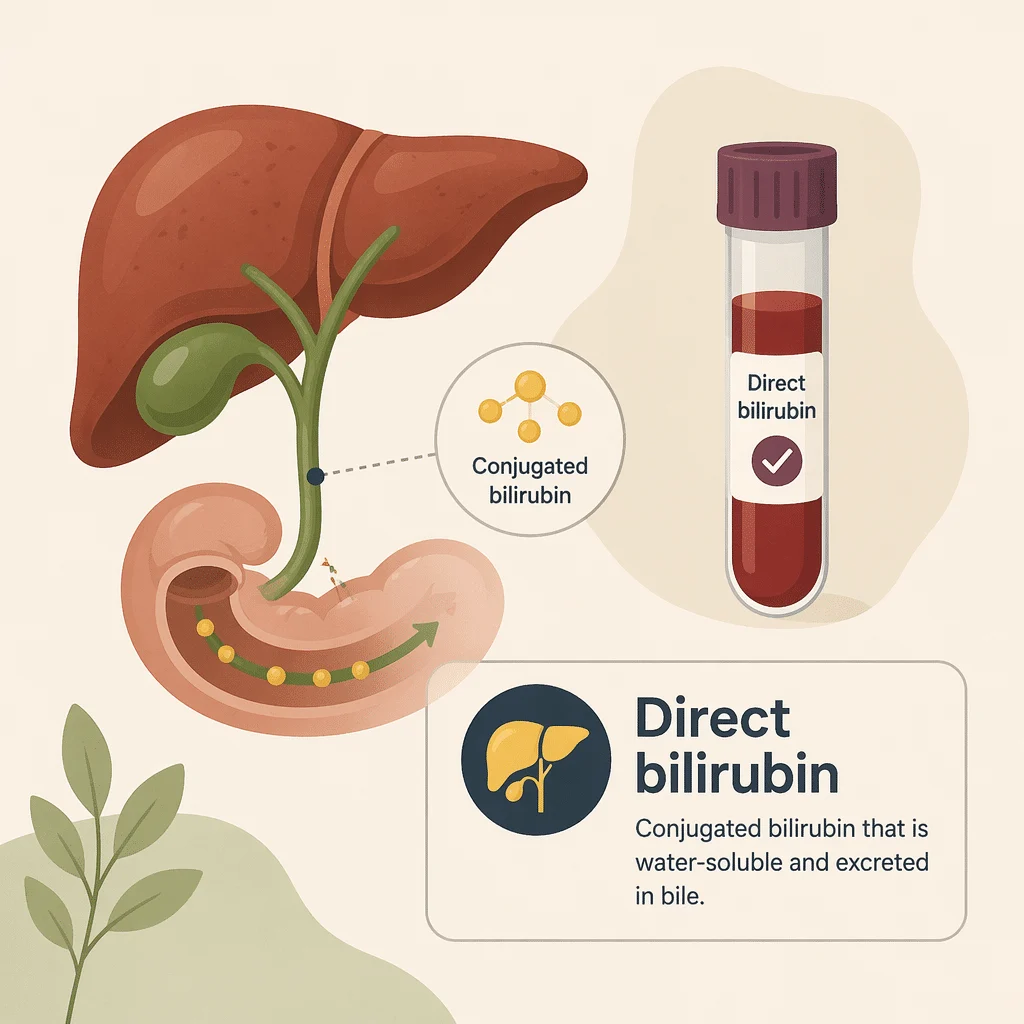
Suora bilirubiini on se osa bilirubiinista, jonka maksa on jo käsitellyt ja valmistanut poistettavaksi sapen kautta. Kun tämä arvo on laboratoriotuloksessa viitearvon yläpuolella, se viittaa yleensä maksaan tai sappiteihin eikä punasoluongelmaan. Tässä oppaassa selitetään, mitä suora bilirubiini mittaa, miten se eroaa epäsuorasta ja kokonaisbilirubiinista, mitä korkea tai matala tulos voi tarkoittaa ja mitä kysymyksiä kannattaa ottaa esille seurantakäynnillä. Tavoitteena on tarjota selkeä, asiallinen lähtökohta, jota voit käyttää lääkärisi neuvojen tukena – ei niiden korvaajana.
Mitä suora bilirubiini on ja mistä se tulee
Bilirubiini syntyy vanhojen punasolujen hajoamistuotteena. Noin 120 päivän verenkierrossa olon jälkeen punasolut hajoavat, pääasiassa pernassa. Tässä prosessissa vapautuu hemoglobiinia, joka muuttuu keltaoranssiksi pigmentiksi nimeltä epäsuora (eli konjugoimaton) bilirubiini. Koska tämä alkumuoto ei liukene veteen, sen täytyy kulkea verenkierrossa albumiini-nimiseen proteiiniin kiinnittyneenä.
Maksa ottaa prosessin siitä jatkoon. Maksakolut liittävät epäsuoraan bilirubiiniin glukoronihapon nimisen sokerimolekyylin – tätä vaihetta kutsutaan konjugaatioksi. Konjugoituaan pigmentistä tulee vesiliukoinen, ja se saa uuden nimen: suora bilirubiini. Tämä muunnettu muoto voidaan sitten vapauttaa sappeen, kuljettaa suolistoon ja lopulta poistaa elimistöstä ulosteen mukana – se on myös syy ulosteen tyypilliseen ruskeaan väriin.
Miksi maksa vaivautuu muuntamaan sen
Konjugaatio on olemassa siksi, että elimistö tarvitsee turvallisen tavan pakata ja erittää aine, joka muuten kertyisi kudoksiin. Toimiva maksa muuntaa epäsuoran bilirubiinin tehokkaasti, joten veressä pitäisi milloin tahansa olla vain pieni määrä suoraa bilirubiinia. Kun sitä kertyy normaalia enemmän, se viittaa joko sappivirtauksen ongelmaan tai maksakoluvaurioon – ei pigmentin liikatuotantoon.
Suora bilirubiini verrattuna epäsuoraan ja kokonaisbilirubiiniin
Maksan toimintaa kuvaavissa laboratoriotuloksissa näytetään yleensä kolme toisiinsa liittyvää bilirubiiniarvoa yhdessä, ja niiden keskinäisen suhteen ymmärtäminen on tärkeämpää kuin minkään yksittäisen luvun tarkastelu erikseen.
- Lääkärit seuraavat myös kokonaisbilirubiiniarvoja, jotka yhdistävät molemmat fraktiot ja antavat kokonaiskuvan tilanteesta.
- Suora (konjugoitu) bilirubiini kuvastaa sitä, mitä maksa on jo käsitellyt.
- Epäsuora (konjugoimaton) bilirubiini lasketaan vähentämällä suora bilirubiini kokonaisbilirubiinista.
Lääkärit käyttävät näiden kolmen arvon muodostamaa kuviota yhdessä asiaan liittyvien entsyymien kanssa tulkitakseen täydellisen maksan toimintakokeiden paneelista ja erottaakseen toisistaan eri sairauskategoriat. Pelkästään epäsuoran bilirubiinin kohoaminen viittaa usein punasolujen lisääntyneeseen hajoamiseen tai lievään perinnölliseen konjugaatiohäiriöön, kuten Gilbertin oireyhtymään. Suoran bilirubiinin selvä kohoaminen puolestaan viittaa maksaan tai sappiteihin, ja tämä artikkeli keskittyy juuri siihen.
Suoran bilirubiinin viitearvot
Viitearvot vaihtelevat hieman laboratorioiden välillä käytettyjen laitteiden ja menetelmien mukaan, joten tarkista aina oman tuloksesi vieressä ilmoitettu viitearvo. Yleisohjeena voidaan sanoa, että useimmissa aikuisten laboratorioissa suoran bilirubiinin taso alle 0,3 mg/dl (noin 5,1 mikromolia litrassa) katsotaan normaaliksi. Suora bilirubiini muodostaa tavallisesti pienen osan kokonaisbilirubiinista – tyypillisesti selvästi alle neljänneksen.
Iällä ja sukupuolella on vain vähän vaikutusta aikuisten viitearvoihin. Tärkein poikkeus koskee vastasyntyneitä, joiden vielä kehittyvä maksa voi kamppailla bilirubiinin konjugoimisen kanssa, minkä vuoksi vastasyntyneillä esiintyvää keltaisuutta seurataan tarkasti ensimmäisten elinpäivien aikana käyttäen eri viiterajoja kuin aikuisilla.
Mitä korkea suoran bilirubiinin arvo voi tarkoittaa
Kohonnut suoran bilirubiinin tulos kertoo lääkärille, että itse konjugaatio toimii – pigmentti on jo käsitelty – mutta jokin häiritsee sen erittymistä sappeen tai poistumista verenkierrosta. Syyt jaetaan yleensä kahteen pääryhmään: sappivirtaukseen vaikuttavat ongelmat, joita kutsutaan usein kolestaattisiksi tai obstruktiivisiksi, sekä suoraan maksasoluihin vaikuttavat ongelmat, joita kutsutaan usein hepatosellulaarisiksi.
Sappiteihin ja sappivirtaukseen liittyvät syyt
Kun sappi ei pääse virtaamaan vapaasti maksasta suolistoon, konjugoitunut bilirubiini kertyy takaisin verenkiertoon. Yleisiä syitä ovat sappitien tukkivat sappikivet, sappiteiden tulehdus eli kolangiitti sekä haiman tai sappiteiden kasvaimet, jotka painavat sappien kulkureittiä. Nämä tilat nostavat usein alkalisen fosfataasin arvoja ja kohottavat gamma-glutamyylitransferaasin (GT) arvoja suoran bilirubiinin ohella, ja niihin liittyy usein tumma virtsa sekä vaaleat, savenvärisiä ulosteita, koska bilirubiinia pääsee suolistoon tavallista vähemmän.
Maksasoluihin liittyvät syyt
Vaurio tai tulehdus maksasolujen sisällä voi myös heikentää konjugoidun bilirubiinin vapautumista sappeen, vaikka fyysistä tukosta ei olisikaan. Autoimmuuni- ja lääkeainehepatiitti ovat yleisiä esimerkkejä, ja lääkärit sulkevat pois myös virusten aiheuttamat syyt tilaamalla merkkiaineita, kuten HBs-antigeeni hepatiitti B:tä varten ja anti-HCV hepatiitti C:tä varten, sekä kirroosiseulonnan. Näissä tilanteissa lääkärit seuraavat AST-testin tuloksia ja ALT-arvot selvittääkseen, nouseeko se selvästi enemmän kuin alkalinen fosfataasi – tämä auttaa arvioimaan, onko ongelma ensisijaisesti itse maksasoluissa vai sappitiehyissä.
Harvinaisempia syitä
Pienessä joukossa perinnöllisiä tiloja, kuten Dubin-Johnsonin oireyhtymässä ja Rotorin oireyhtymässä, maksan kyky kuljettaa jo konjugoitua bilirubiinia sappeen on heikentynyt. Nämä tilat ovat yleensä hyvänlaatuisia eivätkä etene vakavaksi maksasairaudeksi, mutta ne vaativat silti asianmukaisen diagnoosin, jotta kohonneen suoran bilirubiinin huolestuttavammat syyt voidaan sulkea pois.
Hepatosellulaarinen vs. kolestaattinen kuvio: nopea vertailu
Alla oleva taulukko tiivistää, miten lääkärit tyypillisesti erottavat nämä kaksi laajaa kuviota toisistaan, kun suora bilirubiini on koholla. Tämä on yleinen opas, ei diagnostinen työkalu, ja omia tuloksiasi tulee aina tulkita koko kliinisen kokonaistilanteen yhteydessä.
| Ominaisuus | Kolestaattinen (sapenvirtaus) kuvio | Hepatosellulaarinen (maksasolu) kuvio |
|---|---|---|
| Alkalinen fosfataasi (ALP) | Selvästi koholla | Normaali tai lievästi koholla |
| AST ja ALT | Normaali tai lievästi koholla | Selvästi koholla |
| Tyypilliset oireet | Kutina, vaaleat ulosteet, tumma virtsa | Väsymys, pahoinvointi, epämukavuus oikeassa ylävatsan alueella |
| Yleisiä esimerkkejä | Sappikivet, kolangiitti, sappitiehyitä puristavat kasvaimet | Virus- tai autoimmuunihepatiiitti, kirroosi, lääkeaineiden aiheuttama maksavaurio |
| Tavallinen seuraava vaihe | Vatsan ultraääni tai MRCP | Virushepatiitin testipaneeli ja lääkityksen tarkistus |
Oireita, joita kannattaa seurata
Koska suora bilirubiini on vesiliukoinen, kohonneet pitoisuudet voivat siirtyä virtsaan ja vähentää suolistoon päätyvää määrää, mikä aiheuttaa tunnistettavan oirejoukon.
- Keltaisuus eli ihon ja silmänvalkuaisten kellastuminen.
- Tumma, teenvärinen virtsa.
- Vaalea tai savenvärinen uloste.
- Kutina, jota voi esiintyä, kun sappihapot kertyvät ihoon.
- Epämukavuus oikeassa ylävatsan alueessa, erityisesti sappikiviin liittyvissä syissä.
Väsymys ja ruokahaluttomuus voivat liittyä kaikkiin näistä syistä, mutta ne ovat epäspesifisiä ja esiintyvät monissa muissakin tiloissa, joten ne eivät yksinään ole luotettavia merkkejä.
Milloin mennä lääkäriin
Ota yhteyttä lääkäriin viipymättä, jos huomaat ihon tai silmänvalkuaisten kellastumista, tavallista tummempaa virtsaa, vaaleita ulosteita tai jatkuvaa kipua oikeassa ylävatsan alueella. Hakeudu kiireelliseen hoitoon, jos nämä oireet esiintyvät yhdessä kuumeen, sekavuuden tai voimakkaan kivun kanssa, sillä tämä yhdistelmä voi viitata sappitieinfektioon, joka vaatii nopeaa hoitoa. Jos kyseessä on lievä, oireeton yksittäinen kohonnut arvo, sopiva ensimmäinen askel on yleensä seurantakäynti, jolla testi toistetaan ja seurataan arvon kehitystä – lääkärisi päättää tulosten perusteella, tarvitaanko kuvantamistutkimuksia tai lisäverikokeita.
Viimeaikaiset tieteelliset edistysaskeleet
Bilirubiinitutkimus on edennyt pitkälle siitä, kun tätä pigmenttiä pidettiin pelkkänä aineenvaihdunnan jätteenä, ja useat viimeaikaiset analyysit ovat tarkentaneet suoran bilirubiinin mittausten käyttöä käytännön lääketieteessä.
Utahissa toteutetussa laajassa, 15 vuotta kestäneessä syntymäkohorttitutkimuksessa, joka julkaistiin The Journal of Pediatrics -lehdessä, havaittiin, että fraktioitu bilirubiinimittaus tunnisti luotettavasti vauvat, joilla myöhemmin todettiin biliaarinen atreesia eli sappiteiden vakava tukos (Kastenberg ym., 2023). Mitä tämä tarkoittaa sinulle: vaikka tutkimus keskittyi vastasyntyneiden seulontaan eikä aikuisten tutkimiseen, se vahvistaa laajempaa periaatetta, joka pätee myös aikuisiin – suora bilirubiini on erittäin herkkä merkki sappivirtauksen ongelmista, minkä vuoksi lääkärit tukeutuvat siihen voimakkaasti tutkiessaan keltaisuutta kaikenikäisillä. Fraktioitu bilirubiini tarkoittaa yksinkertaisesti sitä, että bilirubiini jaetaan suoraan ja epäsuoraan osaan sen sijaan, että ilmoitettaisiin vain yksi kokonaisluku.
Aiheeseen liittyvässä systemaattisessa katsauksessa ja meta-analyysissä, jossa koottiin tietoja yli 1,8 miljoonasta vastasyntyneestä, todettiin, että suoran tai konjugoidun bilirubiinin mittaus tunnisti sappitietukokset erittäin tarkasti ja oli parempi kuin muut seulontamenetelmät, kuten pelkkä ulosteen värin tarkistaminen (Gopal ym., 2024, PLOS ONE). Mitä tämä tarkoittaa sinulle: tämä laaja näyttö selittää osaltaan, miksi kohonnut suoran bilirubiinin arvo tulkitaan merkittäväksi signaaliksi, joka vaatii lisätutkimuksia eikä ole syytä sivuuttaa – vaikka kyseiset tutkimukset tehtiin vauvoilla. Biliaarinen atreesia on lasten sairaus, mutta diagnostinen logiikka on sama: suora bilirubiini osoittaa luotettavasti sappiteiden toimintahäiriöön eikä punasolujen hajoamiseen, ja tätä samaa periaatetta lääkärit soveltavat tutkiessaan aikuisia, joilla tämä arvo on selittämättömästi kohonnut.
Kaikki tämä kasvava tutkimusnäyttö tukee sitä, mitä kliininen käytäntö on jo pitkään olettanut: suora bilirubiini ei ole vain ohimennen kirjattava luku, vaan yksi luotettavimmista vihjeistä sen selvittämiseen, johtuuko poikkeava tulos sappivirtauksen ongelmasta vai maksasolujen ongelmasta. Mikään tässä tutkimuksessa ei anna aihetta huolestua yksittäisestä koetuloksesta – se selittää pikemminkin, miksi lääkärisi suhtautuu tähän arvooon vakavasti ja miksi merkittävän kohonneen arvon jatkoselvittely on aiheellista.
Sanasto
| Termi | Merkitys |
|---|---|
| Konjugoitu bilirubiini | Toinen nimitys suoralle bilirubiinille; tarkoittaa bilirubiinia, jonka maksa on kemiallisesti muokannut vesiliukoiseksi. |
| Konjugoimaton bilirubiini | Toinen nimitys epäsuoralle bilirubiinille – muoto, jota maksa ei ole vielä käsitellyt. |
| Kolestaasi | Sappivirtauksen hidastuminen tai tukkeutuminen maksasta suolistoon; yksi tärkeimmistä kohonneen suoran bilirubiinin syistä. |
| Keltatauti | Ihon ja silmien kellastuminen, joka ilmenee, kun bilirubiinia kertyy vereen ja kudoksiin. |
| Hepatosellulaarinen | Suoraan maksasoluihin liittyvä, vastakohtana sappea kuljettaville sappitiehyille. |
| Alkalinen fosfataasi (ALP) | Maksa- ja luuperäinen entsyymi, jonka arvo nousee selvästi sappivirtauksen estyessä. |
| Aspartaattiaminotransferaasi (AST) ja alaniiniaminotransferaasi (ALT) | Kaksi maksa-entsyymiä, joiden arvot nousevat pääasiassa silloin, kun maksasolut itse ovat vaurioituneet tai tulehtuneita. |
| Biliaarinen atreesia | Harvinainen, vakava sappitiehyiden tukkeutuminen vastasyntyneillä, joka havaitaan usein fraktionoidun bilirubiiniseulonnan avulla. |
Usein kysytyt kysymykset
Voivatko lääkkeet nostaa suoran bilirubiinin arvoa?
Kyllä. Tietyt antibiootit – muun muassa amoksisilliini-klavulaanihappo – sekä jotkin tulehduskipulääkkeet ja antiretroviraaliset lääkkeet voivat vaikuttaa sappivirtaukseen ja nostaa suoran bilirubiinin arvoa. Tätä ilmiötä kutsutaan joskus lääkeaineiden aiheuttamaksi kolestaasikseksi. Vaikutus häviää yleensä lääkkeen lopettamisen jälkeen, mutta kaikista muutoksista tulee keskustella hoitavan lääkärin kanssa – älä muuta annostusta itse. Kerro lääkärillesi aina kaikki käyttämäsi lääkkeet ja ravintolisät, kun käyt läpi poikkeavaa tulosta.
Miten sappitiehyeongelma erotetaan maksasoluongelmasta?
Lääkärit tarkastelevat koko maksa-arvojen kokonaiskuvaa eivätkä pelkästään suoraa bilirubiinia. Sappitiehyiden tukos nostaa tyypillisesti alkalista fosfataasia ja suoraa bilirubiinia yhdessä, kun taas maksasoluongelma – kuten hepatiitti – nostaa enemmän AST- ja ALT-arvoja. Kuvantamistutkimus, yleensä vatsan ultraääni, vahvistaa yleensä, kumpaa tyyppiä muutos edustaa.
Muuttuuko suoran bilirubiinin arvo paaston tai liikunnan seurauksena?
Pitkittynyt paasto voi nostaa kokonaisbilirubiinia hieman, mutta tämä vaikutus koskee pääasiassa epäsuoraa fraktiota eikä niinkään suoraa bilirubiinia. Raskas liikunta voi ohimenevästi vaikuttaa laajemmin maksan entsyymiarvoihin. Useimmat laboratoriot suosittelevat välttämään pitkää paastoa ja raskasta fyysistä rasitusta noin vuorokauden ajan ennen verinäytteenottoa, jotta tulos kuvastaisi mahdollisimman hyvin normaalia lähtötasoa.
Onko kohonnut suoran bilirubiinin arvo leikkauksen jälkeen syy huoleen?
Suoran bilirubiinin tilapäinen nousu on tavallista muutamana päivänä vatsa-alueen leikkauksen jälkeen, erityisesti toimenpiteissä, joissa käsitellään maksaa tai sappiteitä. Se heijastaa usein leikkauksen jälkeistä tulehdusreaktiota tai anestesian vaikutuksia eikä välttämättä viittaa uuteen komplikaatioon. Arvot palautuvat tyypillisesti normaaliksi yhden tai kahden viikon kuluessa. Jos kohonnut arvo jatkuu tai pahenee, asiasta kannattaa seurata kirurgisen hoitotiimin kanssa.
Muuttuvatko suoran bilirubiinin viitearvot iän myötä?
Aikuisilla viitearvot pysyvät melko vakaina eri ikäryhmissä ja sukupuolten välillä. Selkein poikkeus on vastasyntyneen aika, jolloin kypsymätön maksa konjugoi bilirubiinia hitaammin. Tämän vuoksi vastasyntyneille käytetään omia, ikäkohtaisia raja-arvoja aikuisten viitearvojen sijaan.
Mitä normaali suoran bilirubiinin arvo yhdistettynä korkeaan kokonaisbilirubiiniin yleensä tarkoittaa?
Tämä yhdistelmä viittaa epäsuoraan fraktioon eikä maksan sappijärjestelmään, koska suoran bilirubiinin osuus on normaali. Mahdollisia selityksiä ovat punasolujen lisääntynyt hajoaminen eli hemolyyttinen anemia tai lievä perinnöllinen konjugaatiohäiriö, kuten Gilbertin oireyhtymä. Lääkärisi määrää tyypillisesti lisätutkimuksia, jotka kohdistuvat punasolujen terveyteen syyn selvittämiseksi.
Lähteet
- Kastenberg ZJ, et al. — Fractionated Bilirubin Among 252,892 Utah Newborns with and Without Biliary Atresia: A 15-year Historical Birth Cohort Study — The Journal of Pediatrics, 2023 — https://doi.org/10.1016/j.jpeds.2022.12.041
- Gopal SH, et al. — Population-based screening strategies for biliary atresia in the newborn: A systematic review and meta-analysis — PLOS ONE, 2024 — https://consensus.app/papers/details/5c09cd3963b65b3795a7f32351d5c39a/
- National Library of Medicine (MedlinePlus) — Bilirubin Blood Test — U.S. National Institutes of Health, 2024 — https://medlineplus.gov/lab-tests/bilirubin-blood-test/
- Mayo Clinic Staff — Bilirubin blood test — Mayo Clinic, 2026 — https://www.mayoclinic.org/tests-procedures/bilirubin/about/pac-20393041
- Cleveland Clinic — Bilirubin Test: Understanding High vs. Low Levels & Causes — Cleveland Clinic, 2023 — https://my.clevelandclinic.org/health/diagnostics/17845-bilirubin
Lisälukemista
- Kokonaisbilirubiinitasot: täydellinen oppaasi tähän tärkeään markkeriin
- AST-normaalialue: tasojen ja syiden ymmärtäminen
- ALT-tasot: Merkitys, syyt ja normaalialueet -opas
- Gammaglutamyylitransferaasi (GGT): Täydellinen opas tähän maksaentsyymiin
- Alkalisen fosfataasin (ALP) testi: tulosten ymmärtäminen
Suora bilirubiini kertoo harvoin koko totuuden yksinään, ja sen vertaaminen muihin liittyviin arvoihin selventää tilannetta usein paljon paremmin kuin yksittäinen luku. Tarkastelemalla koko gamma-glutamyylitransferaasi ja maksan viitearvojen tulosjoukko yhdessä oireiden, kuten keltaisuuden tai virtsan ja ulosteen värimuutosten kanssa, antaa selkeämmän kuvan siitä, tarvitseeko sappivirtaus tai maksasolut tarkempaa seurantaa. AI DiagMe auttaa sinua ymmärtämään laboratoriotuloksesi selkokielellä, jotta voit mennä seuraavalle lääkärikäynnille selkeämpien kysymysten kanssa. Se ei diagnosoi sairauksia eikä korvaa lääkärisi arviota, mutta se voi tehdä raporttisi luvuista huomattavasti vähemmän pelottavia.
Ymmärrä laboratoriotuloksiasi tekoälyn DiagMen avulla
Tulkitse tuloksesi muutamassa minuutissa